





In today’s competitive job market, it’s not enough to have a resume; it has to be a killer resume that will make you stand out from the crowd and land you the interview, not to mention the job.
The Power of a Strong Resume in Job Interviews
A well-crafted resume is the cornerstone of a successful job search. It’s your chance to showcase your skills, experience, and accomplishments in a way that will grab the attention of hiring managers and convince them that you’re the perfect candidate for the job.
- According to a study by The Ladders, 93% of recruiters spend less than 10 seconds reviewing each resume; that means you have to have a resume that will make a strong impression fast.
- A well-written resume can increase your chances of getting an interview by 50% or more.
Tailoring Your Resume to Specific Job Descriptions
One of the most important things you can do to improve your chances of getting an interview is to tailor your resume to each specific job you apply for. Take the time to read the job description carefully and identify the skills and experience that the employer is looking for.
- Highlight your most relevant skills and experience in your resume summary and throughout your resume.
- Use the same keywords that are used in the job description in your resume.
- Customize your resume for each job you apply for.
Highlighting Skills and Experience for Interview Success
In addition to tailoring your resume to each job description, you need to make sure that you’re highlighting your skills and experience in a way that will make you stand out from the competition.
- Quantify your accomplishments whenever possible. For example, instead of saying “Increased sales,” you could say “Increased sales by 15% in one year.”
- Use action verbs to describe your accomplishments. For example, instead of saying “Managed a team of employees,” you could say “Led a team of employees to achieve a 20% increase in productivity.”
- Use specific examples to illustrate your skills and experience. For example, instead of saying “Excellent communication skills,” you could say “Developed and implemented a new communication strategy that resulted in a 20% increase in customer satisfaction.”
Using Keywords to Align with Interview Questions
When you’re writing your resume, it’s important to use keywords that are relevant to the jobs you’re applying for. This will help your resume get noticed by recruiters and hiring managers and make it more likely that you’ll get an interview.
- Identify the keywords that are most commonly used in job descriptions for the jobs you’re interested in.
- Incorporate these keywords into your resume summary, skills section, and throughout your resume.
- Use a resume builder like ResumeGemini that has a built-in keyword optimization tool.
Common Interview Questions and How to Prepare
In addition to having a strong resume, it’s also important to be prepared for the interview itself. This means knowing what questions to expect and how to answer them effectively.
- Some of the most common interview questions include:
- Tell me about yourself.
- Why are you interested in this job?
- What are your strengths and weaknesses?
- What are your career goals?
- Why should we hire you?
- To prepare for these questions, take some time to think about your answers and practice saying them out loud.
- You can also use the STAR method to answer interview questions. The STAR method stands for Situation, Task, Action, and Result. When answering a question, start by setting the Situation, then describe the Task you were responsible for, then explain the Action you took, and finally, share the Result of your actions.
Additional Tips for a Successful Job Interview
In addition to the tips above, here are a few additional tips to help you ace your next job interview:
- Dress professionally.
- Arrive on time.
- Be prepared to talk about your experience and skills.
- Ask questions about the job and the company.
- Follow up after the interview.
By following these tips, you can increase your chances of getting the job you want. Good luck!
Career Expert Tips:
- Select the ideal resume template to showcase your professional experience effectively.
- Master the art of resume writing to highlight your unique qualifications and achievements.
- Checkout the resume writing tips for guidance and best practices.
- Make your 2025 brighter with a new job. Build a powerful resume with ResumeGemini and save big, enjoy exclusive discounts on premium templates.
Frequently Asked Questions (FAQ’s)
How can my resume help me prepare for a job interview?
Your resume is the foundation for your job interview preparation. It provides the hiring manager with a snapshot of your skills, experience, and qualifications. By carefully crafting your resume, you can highlight your strengths and make a strong case for why you’re the right candidate for the job.
Here are a few ways your resume can help you prepare for a job interview:
- Identify your key skills and experience: Your resume should showcase your most relevant skills and experience for the job you’re applying for. By taking the time to identify your key skills and accomplishments, you can better prepare to answer questions about your qualifications during your interview.
- Practice answering common interview questions: By reviewing your resume, you can anticipate common interview questions that may be asked about your skills, experience, and career goals. Practicing your answers to these questions can help you feel more confident and prepared during your interview.
- Prepare questions for the interviewer: Your resume can also help you prepare questions to ask the interviewer during your job interview. By asking thoughtful questions about the company, the position, and the team, you can demonstrate your interest in the opportunity and your commitment to the job.
What are the most important sections of my resume to focus on for an interview?
The most important sections of your resume to focus on for an interview are:
- Summary: Your summary statement is a brief, attention-grabbing overview of your skills, experience, and career goals. It’s your chance to make a strong first impression on the hiring manager, so make sure it’s well-written and tailored to the job you’re applying for.
- Skills: Your skills section should list your most relevant skills for the job you’re applying for. Be specific and use keywords that the hiring manager will be looking for.
- Experience: Your experience section should highlight your most relevant work experience for the job you’re applying for. Use strong action verbs to describe your accomplishments and quantify your results whenever possible.
- Education: Your education section should list your degrees and certifications. If you have any relevant coursework or experience, be sure to include it here.
How do I tailor my resume to different job descriptions?
To tailor your resume to different job descriptions, you need to:
- Identify the key skills and experience required for the job. Take the time to carefully read the job description and identify the most important skills and experience required for the job.
- Highlight your relevant skills and experience on your resume. Once you’ve identified the key skills and experience required for the job, make sure to highlight your relevant skills and experience on your resume. Use strong action verbs to describe your accomplishments and quantify your results whenever possible.
- Customize your resume for each job application. Don’t just send out the same generic resume for every job application. Take the time to customize your resume for each job application by highlighting the skills and experience that are most relevant to the job you’re applying for.
What are some common interview questions and how can I prepare for them?
Some common interview questions include:
- Tell me about yourself.
- Why are you interested in this position?
- What are your strengths and weaknesses?
- Why should we hire you?
- What are your salary expectations?
- Practice your answers to common interview questions. The more you practice, the more confident and prepared you’ll feel during your interview.
- Research the company and the position. By researching the company and the position, you’ll be able to better tailor your answers to the interviewer’s questions.
- Be yourself. Don’t try to be someone you’re not. The interviewer wants to get to know the real you.
How can I use my resume to highlight my skills and experience?
To use your resume to highlight your skills and experience, you should:
- Use strong action verbs. When describing your accomplishments, use strong action verbs that convey your skills and experience.
- Quantify your results. Whenever possible, quantify your results to show the impact of your work.
- Use keywords. Use keywords throughout your resume that are relevant to the job you’re applying for.
- Highlight your relevant skills and experience. Make sure to highlight your relevant skills and experience in your resume summary, skills section, and experience section.
What are some tips for making a great first impression in an interview?
To make a great first impression in an interview, you should:
- Be on time. Punctuality is important, so make sure to arrive for your interview on time.
- Dress professionally. Your appearance says a lot about you, so make sure to dress professionally for your interview.
- Be prepared. Do your research on the company and the position, and practice your answers to common interview questions.
- Be confident. Confidence is key, so make sure to project a confident attitude during your interview.
- Be yourself. The interviewer wants to get to know the real you, so don’t try to be someone you’re not.
How can I follow up after an interview to increase my chances of getting the job?
To follow up after an interview to increase your chances of getting the job, you should:
- Send a thank-you note. Within 24 hours of your interview, send a thank-you note to the interviewer. In your note, thank the interviewer for their time and reiterate your interest in the position.
- Follow up with the hiring manager. About a week after your interview, follow up with the hiring manager to inquire about the status of your application.
- Stay positive. Don’t get discouraged if you don’t hear back from the hiring manager right away. Stay positive and continue to follow up until you get a response.
Next Step:
Looking for a seamless resume builder to elevate your job search? ResumeGemini has you covered. Our intuitive platform empowers you to craft a stellar resume that will make a lasting impression on hiring managers and open doors to your dream job. With ResumeGemini, you’ll have access to:
- Professional resume templates designed to showcase your skills and experience
- A comprehensive resume builder that guides you through every step of the writing process
- Expert tips and advice to optimize your resume for maximum impact
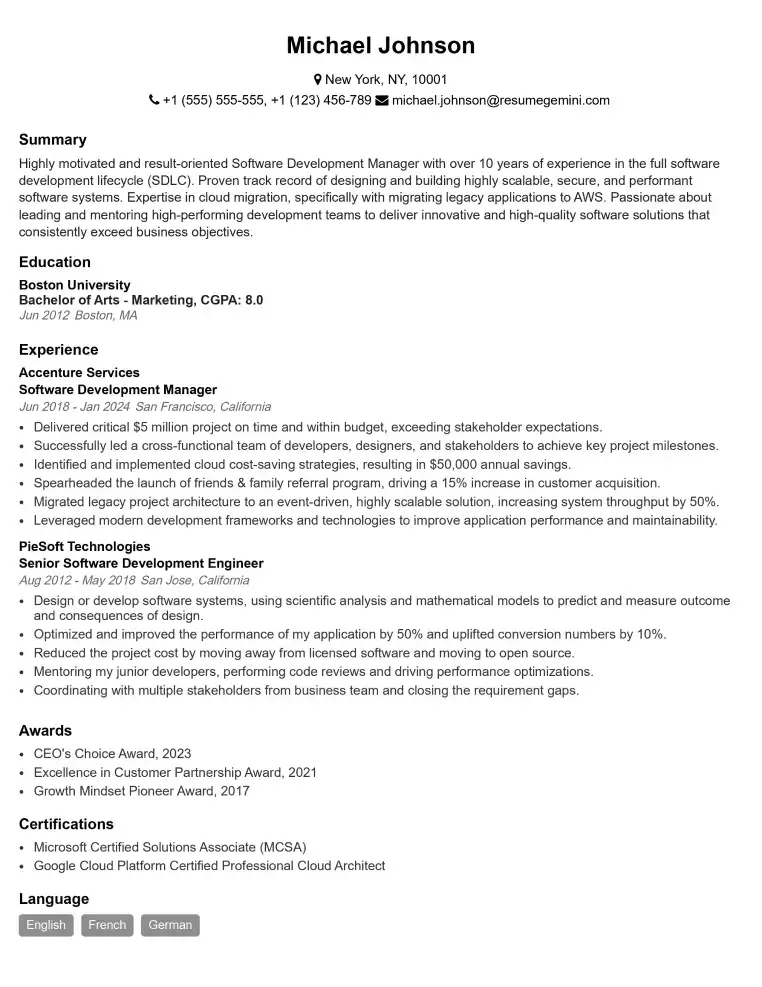
Elevate your job search with our premium resume templates. Here is an amazing resume template that can be used to build a professional and elegant resume. You can build a resume from scratch or revamp your existing resume. Impress hiring managers and secure your next opportunity.
- Top 50 Most Common Interview Questions
- The Psychology of a Great Resume: Hacks to Impress Recruiters
- What Mistakes to Avoid When Writing a Resume: A Comprehensive Guide
- Elevate Your Career with Expert Resume Building: Introducing ResumeGemini
- How to Write a Resume Using Google Gemini: Step-by-Step Guide