





In today’s competitive job market, creating a standout resume is crucial for landing your dream job. With the advent of 2026, resume writing trends have evolved, making it essential to stay updated on the latest best practices. This expert guide will provide you with a comprehensive roadmap to craft a compelling resume that will leave a lasting impression on hiring managers.
The Evolving Landscape of Resume Writing in 2026
The year 2026 brings forth new challenges and opportunities in resume writing. Here are key trends to consider:
- Emphasis on skills and competencies: Employers are increasingly looking for candidates who possess specific skills and competencies relevant to the role. Highlight your abilities and quantify your accomplishments to showcase your expertise.
- Digital optimization: Resumes are now often scanned by Applicant Tracking Systems (ATS) before reaching human eyes. Use relevant keywords and optimize your resume for ATS to increase your chances of being noticed.
- Visual appeal and readability: A visually appealing resume with clear and concise content is more likely to grab attention. Use appropriate formatting, fonts, and white space to enhance readability.
Step-by-Step Guide to Crafting a Compelling Resume
Crafting a standout resume requires a strategic approach. Follow these steps to guide you through the process:
1. Identify your target audience and research the industry:
Understand the specific job requirements and industry norms. Research the company and the position you’re applying for to tailor your resume accordingly.
2. Start with a strong headline and summary:
Your headline should be attention-grabbing and summarize your key skills and experience. The summary should provide a concise overview of your career history and why you’re the right fit for the role.
3. Highlight your relevant skills and experience:
Use bullet points to list your skills, quantifying them whenever possible. Showcase your accomplishments and the impact you’ve made in previous roles.
4. Include a dedicated education section:
List your educational background, including degrees, certifications, and relevant coursework. Highlight any honors or awards you’ve received.
5. Add additional sections as needed:
Consider including sections for awards, certifications, languages, extracurricular activities, or references. These sections can provide additional insights into your qualifications.
6. Proofread meticulously:
Before submitting your resume, proofread it carefully for any errors in grammar, spelling, or formatting. Ask a trusted friend or colleague to review it as well.
Essential Sections and Content for a High-Impact Resume
Your resume should include the following essential sections:
- Contact information: Include your name, address, phone number, email address, and LinkedIn profile URL.
- Headline: A concise statement summarizing your career focus and key skills.
- Summary: A brief overview of your experience, strengths, and career goals.
- Skills: A list of your relevant technical and soft skills, quantified where possible.
- Experience: A chronological listing of your work history, highlighting your accomplishments and impact.
- Education: A listing of your educational background, including degrees, certifications, and relevant coursework.
Tailoring Your Resume to Specific Job Applications
To increase your chances of success, tailor your resume to each job application. Here are some tips:
- Read the job description carefully: Identify the key requirements and skills sought by the employer.
- Highlight relevant experience and skills: Focus on showcasing the skills and experience that are most relevant to the job you’re applying for.
- Use keywords from the job description: Incorporate keywords from the job description into your resume to increase its visibility to ATS.
- Customize your resume for each application: Make minor adjustments to your resume to highlight the most relevant information for each specific job.
Formatting and Design Principles for Professional Resumes
The formatting and design of your resume play a crucial role in making a positive impression:
- Choose a professional template: Use a clean and professional resume template that enhances readability and visual appeal.
- Use appropriate fonts: Opt for fonts that are easy to read, such as Times New Roman, Arial, or Calibri.
- Maintain consistency: Ensure consistency in font, font size, and formatting throughout your resume.
- Use white space wisely: Sufficient white space improves readability and prevents your resume from appearing cluttered.
- Keep it concise: Aim for a resume that fits on one page, or two pages maximum.
The Power of Keywords and Quantifying Your Accomplishments
- Identify relevant keywords: Research the industry and job description to identify the most relevant keywords for your resume.
- Incorporate keywords naturally: Use keywords throughout your resume, but ensure they fit naturally within the context.
- Quantify your accomplishments: Use numbers and metrics to demonstrate the impact of your accomplishments.
- Use action verbs: Start your bullet points with strong action verbs that convey your achievements.
Common Pitfalls to Avoid in Resume Writing
Be mindful of these common pitfalls to ensure a polished and professional resume:
- Typos and grammatical errors: Proofread your resume carefully to avoid any errors in grammar, spelling, or formatting.
- Lack of focus: Avoid including irrelevant information or experiences that are not relevant to the job you’re applying for.
- Excessive length: Keep your resume concise and within the recommended length of one or two pages.
- Poor design: Choose a professional template and maintain consistency in formatting and design throughout your resume.
- Vague or generic language: Use specific and descriptive language to highlight your accomplishments and skills.
Resume Optimization Techniques for Maximum Impact
Consider these additional tips to optimize your resume for maximum impact:
- Use a professional resume builder: Services like ResumeGemini provide expert templates and guidance to help you create a standout resume.
- Get feedback from professionals: Ask a career counselor, resume writer, or trusted mentor to review your resume and provide feedback.
- Use a cover letter: A well-written cover letter can complement your resume and highlight your qualifications in more detail.
- Follow up after submitting: Reach out to the hiring manager to express your interest and inquire about the status of your application.
Career Expert Tips:
- Select the ideal resume template to showcase your professional experience effectively.
- Master the art of resume writing to highlight your unique qualifications and achievements.
- Checkout the resume writing tips for guidance and best practices.
- Make your 2025 brighter with a new job. Build a powerful resume with ResumeGemini and save big, enjoy exclusive discounts on premium templates.
Frequently Asked Questions (FAQ’s)
What are the key trends in resume writing for 2026?
In 2026, resume writing trends will continue to emphasize the following key elements:
- Quantifying accomplishments: Using specific numbers and metrics to demonstrate the impact of your work.
- Highlighting transferable skills: Emphasizing skills that are relevant to multiple industries and job roles.
- Tailoring to specific roles: Customizing your resume to match the requirements of each job application.
- Visual appeal: Using modern fonts, colors, and layout to create a visually appealing and easy-to-read document.
- Digital optimization: Ensuring your resume is optimized for online job boards and applicant tracking systems (ATS).
How can I write a resume that stands out in a competitive job market?
To write a standout resume in a competitive job market, follow these tips:
- Use strong action verbs: Start your bullet points with active verbs that showcase your skills and accomplishments.
- Quantify your results: Whenever possible, use numbers and metrics to demonstrate the impact of your work.
- Highlight relevant skills: Tailor your resume to each job application, emphasizing skills that are directly relevant to the role.
- Use keywords: Research common industry keywords and incorporate them into your resume, especially in your skills section.
- Proofread carefully: Before submitting your resume, carefully proofread it for any errors in grammar, spelling, and formatting.
What are the essential sections that every resume should include?
Every resume should include the following essential sections:
- Contact information: Your name, email address, phone number, and LinkedIn profile URL.
- Summary statement: A brief overview of your skills, experience, and career goals.
- Work experience: A chronological list of your previous jobs, including your job title, company name, dates of employment, and key accomplishments.
- Education: A list of your educational qualifications, including your degree, major, university, and graduation date.
- Skills: A list of your relevant skills, both hard and soft.
- Additional sections (optional): Depending on your industry and experience, you may also include additional sections such as Awards, Certifications, Languages, Accomplishments, Extracurricular Activities, and References.
How can I tailor my resume to specific job applications?
To tailor your resume to specific job applications, follow these steps:
- Read the job description carefully: Identify the key requirements and responsibilities of the role.
- Highlight relevant skills and experience: Emphasize skills and experience that are directly relevant to the job you’re applying for.
- Use industry-specific keywords: Research common keywords in your industry and incorporate them into your resume.
- Quantify your accomplishments: Use specific numbers and metrics to demonstrate the impact of your work.
- Proofread carefully: Before submitting your resume, carefully proofread it for any errors in grammar, spelling, and formatting.
What are the best formatting and design principles for professional resumes?
To create a professional and visually appealing resume, follow these formatting and design principles:
- Use a clean and modern font: Choose a font that is easy to read, such as Arial, Helvetica, or Times New Roman.
- Use a consistent font size: Use a font size that is easy to read, such as 11 or 12 points.
- Use white space effectively: Leave plenty of white space around your text to make it easy to read.
- Use section headings: Use section headings to organize your resume and make it easy to scan.
- Use bullet points: Use bullet points to list your accomplishments and skills.
How can I effectively use keywords and quantify my accomplishments on my resume?
To effectively use keywords and quantify your accomplishments on your resume, follow these tips:
- Research industry keywords: Research common keywords in your industry and incorporate them into your resume.
- Use keywords naturally: Avoid keyword stuffing and use keywords naturally throughout your resume.
- Quantify your accomplishments: Use specific numbers and metrics to demonstrate the impact of your work.
- Use action verbs: Start your bullet points with strong action verbs.
- Be specific: Provide specific details about your accomplishments and how they benefited your organization.
What are the common pitfalls to avoid in resume writing?
To avoid common pitfalls in resume writing, follow these tips:
- Avoid using too much jargon: Use clear and concise language that is easy to understand.
- Avoid being too vague: Provide specific details about your accomplishments and how they benefited your organization.
- Avoid using clichés: Use original and creative language to make your resume stand out.
- Avoid making it too long: Keep your resume concise and to the point, typically around one page.
- Avoid using unprofessional language or tone: Use professional language and tone throughout your resume.
How can I optimize my resume for maximum impact?
To optimize your resume for maximum impact, follow these tips:
- Use a professional and modern template: Choose a template that is visually appealing and easy to read.
- Use a consistent format: Use a consistent font, font size, and formatting style throughout your resume.
- Use keywords: Research common keywords in your industry and incorporate them into your resume.
- Quantify your accomplishments: Use specific numbers and metrics to demonstrate the impact of your work.
- Tailor your resume to the job you’re applying for: Highlight skills and experience that are directly relevant to the role.
Next Step:
With the expert tips and guidance provided in this blog, you now have a comprehensive understanding of the latest resume writing trends and best practices. To elevate your resume writing experience, we highly recommend using ResumeGemini. Our platform offers premium, ATS-friendly, customizable resume templates with over 3.6 million content examples. With ResumeGemini, you can create a standout resume that will effectively showcase your skills, experience, and accomplishments, giving you a competitive edge in the job market.
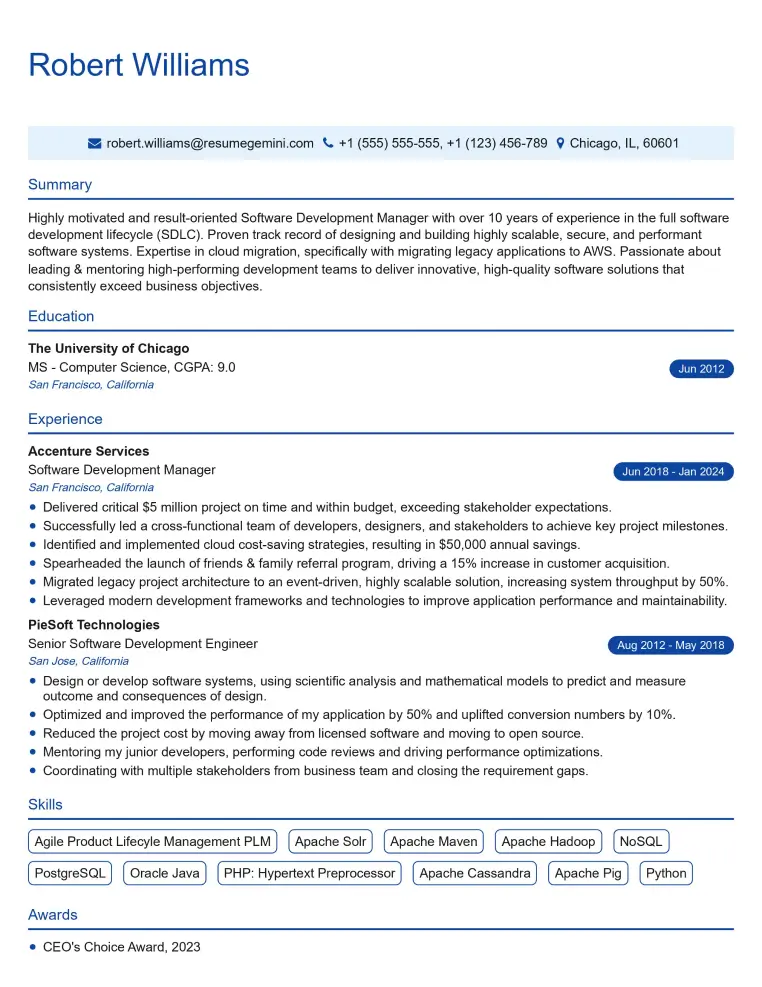
Elevate your job search with our premium resume templates. Here is an amazing resume template that can be used to build a professional and elegant resume. You can build a resume from scratch or revamp your existing resume. Impress hiring managers and secure your next opportunity.
- Top 50 Most Common Interview Questions
- The Psychology of a Great Resume: Hacks to Impress Recruiters
- What Mistakes to Avoid When Writing a Resume: A Comprehensive Guide
- Elevate Your Career with Expert Resume Building: Introducing ResumeGemini
- How to Write a Resume Using Google Gemini: Step-by-Step Guide