





Embarking on a career switch is a bold and exciting endeavor, but it can also be fraught with challenges. One of the most crucial aspects of a successful career transition is crafting an effective resume that showcases your skills and experience in a way that appeals to potential employers in your target industry. This ultimate guide will provide you with a comprehensive blueprint for writing a resume that will help you land your dream job.
Highlight Transferable Skills and Emphasize Adaptability
When making a career switch, it is essential to identify and highlight the transferable skills you possess that are relevant to your new field. These are skills that can be applied across different industries and roles, such as communication, problem-solving, teamwork, and adaptability. By emphasizing these transferable skills, you can demonstrate to potential employers that you have the necessary foundation to succeed in your new role.
Adaptability is another key quality that employers seek in candidates who are making a career switch. In a rapidly changing job market, the ability to learn new skills and adapt to different environments is highly valued. Make sure to highlight your adaptability in your resume by showcasing examples of how you have successfully transitioned between roles or industries in the past.
Quantify Your Accomplishments in Different Roles and Industries
Quantifying your accomplishments is essential for demonstrating the impact you have made in your previous roles. Use specific metrics and data whenever possible to illustrate your contributions and the value you added to your organizations. For example, instead of simply stating that you “managed a team,” you could say, “Led a team of 10 engineers, resulting in a 25% increase in project efficiency,”.
Even if your previous experience is not directly relevant to your new target industry, you can still quantify your accomplishments to demonstrate your skills and abilities. For instance, if you are transitioning from a sales role to a marketing role, you could highlight your success in generating leads, closing deals, or managing customer relationships.
Utilize ResumeGemini‘s Pre-Built Resume Samples for Career Switchers
ResumeGemini offers a vast collection of pre-built resume samples specifically designed for career switchers. These samples provide valuable guidance and inspiration, helping you craft a resume that effectively showcases your transferable skills and highlights your adaptability. By leveraging these pre-built samples, you can save time and ensure that your resume is tailored to the specific requirements of your target industry.
ResumeGemini’s resume builder is also an invaluable tool for career switchers. It provides a step-by-step process that guides you through each section of your resume, ensuring that you include all the necessary information and present it in a professional and visually appealing manner.
Craft a Compelling Cover Letter that Complements Your Resume
Your cover letter is an opportunity to expand on your resume and provide additional context for your career transition. Use your cover letter to highlight your motivation for making a switch, explain how your skills and experience align with the requirements of the role you are applying for, and demonstrate your enthusiasm for the new industry or field.
When writing your cover letter, be sure to tailor it specifically to each job you apply for. Take the time to research the company and the specific role you are interested in, and tailor your cover letter to highlight the most relevant aspects of your experience and qualifications.
Network and Seek Referrals to Enhance Your Job Search
Networking is an essential part of any job search, and it is especially important for career switchers. Attend industry events, connect with people on LinkedIn, and reach out to your personal and professional networks to let them know that you are looking for a new opportunity. You never know who might know of a job opening or be able to refer you to a hiring manager.
Referrals can be a powerful tool in your job search. When you are referred by someone, you have an instant connection with the hiring manager, and your application will be given more consideration. Make sure to ask your network for referrals and follow up with them regularly.
Additional Tips for Career Switchers:
- Be Patient and Persistent: Career transitions take time and effort. Don’t get discouraged if you don’t land your dream job right away. Keep applying for jobs, networking, and improving your skills.
- Be Open to New Experiences: Don’t limit yourself to applying for jobs that are exactly like your previous role. Be open to exploring different industries and roles that may not be directly related to your current experience.
- Get Certified: Earning a certification in your new field can demonstrate your commitment to the transition and provide you with valuable knowledge and skills.
- Volunteer or Intern: Gaining experience in your new field through volunteering or interning can be a great way to develop your skills and make connections.
Making a career switch can be a challenging but rewarding endeavor. By following the tips outlined in this guide, you can increase your chances of writing an effective resume that showcases your skills and experience, and landing your dream job.
Career Expert Tips:
- Select the ideal resume template to showcase your professional experience effectively.
- Master the art of resume writing to highlight your unique qualifications and achievements.
- Checkout the resume writing tips for guidance and best practices.
- Make your 2025 brighter with a new job. Build a powerful resume with ResumeGemini and save big, enjoy exclusive discounts on premium templates.
Frequently Asked Questions (FAQ’s)
Question_1: How can I write a resume that showcases my skills for a career change?
Craft a compelling career objective: Highlight your transferable skills and the specific industry or role you seek. Quantify your accomplishments where possible. Tailor your resume to each application: Research the target company and position, and tailor your resume to match their specific requirements. Use industry-specific keywords and demonstrate your understanding of their needs. Emphasize transferable skills: Transferable skills are those that apply across different industries and roles. Identify and highlight your transferable skills in your resume, such as communication, problem-solving, and teamwork. Showcase relevant experience: While you may not have direct experience in the new field, emphasize skills and accomplishments from your previous roles that are relevant to the desired position. Use action verbs and quantify results: Use strong action verbs to describe your accomplishments, and quantify your results whenever possible. This demonstrates your impact and contributions.
Question_2: How do I emphasize transferable skills and adaptability in my resume?
Identify transferable skills: Take inventory of your skills and identify those that are transferable to your target industry or role. Examples include problem-solving, communication, project management, and teamwork. Highlight transferable skills: Use keywords and phrases in your resume that highlight your transferable skills, such as “problem-solving,” “communication,” “project management,” and “teamwork.” Quantify accomplishments: Demonstrate the impact of your transferable skills by quantifying your accomplishments. For example, “Led a team of five to develop a new product that increased sales by 15%.” Use action verbs: Use strong action verbs that highlight your skills and contributions. For example, instead of “Responsible for project management,” write “Managed multiple projects simultaneously, resulting in on-time delivery and exceeded performance targets.”
Question_3: What are the common challenges faced by career switchers?
Lack of direct experience: Career switchers often lack direct experience in their new field. Skills gap: They may need to acquire new skills or enhance existing ones to meet the requirements of the new industry or role. Age or career level: Some career switchers may face challenges related to their age or career level, especially if they are making a significant shift. Competition: The job market can be competitive, especially for career switchers who are entering a new industry or field. Perception of transferable skills: Potential employers may not fully recognize or value transferable skills from previous roles.
Question_4: How can I network effectively to find my desired job?
Attend industry events: Attend conferences, workshops, and networking events related to your target industry. This is a great way to meet professionals, learn about the latest trends, and explore potential job opportunities. Join professional organizations: Join professional organizations related to your new field. This allows you to connect with others in your industry, stay informed about industry trends, and access professional development opportunities. Utilize social media: Utilize LinkedIn and other social media platforms to connect with professionals in your target industry. Engage in industry-related discussions, share relevant articles, and reach out to potential employers. Inform your network: Let your friends, family, and former colleagues know that you are looking for a career change. They may be able to refer you to potential employers or provide valuable industry insights. Consider a career coach: A career coach can provide guidance and support throughout the career transition process. They can help you identify your transferable skills, develop a strategic job search plan, and prepare for interviews.
Question_5: What are the best strategies for writing a cover letter that complements my resume?
Craft a compelling introduction: Begin with a strong hook that grabs the reader’s attention and highlights your key qualifications for the position. Address the specific job requirements: Tailor your cover letter to the specific job you are applying for. Research the company and position to identify the key requirements and highlight how your skills and experience align with those needs. Demonstrate your passion and fit: Explain why you are interested in the position and the company. Show that you have done your research and are genuinely excited about the opportunity. Provide specific examples: Quantify accomplishments and provide specific examples of how you have applied your skills and experience in previous roles. This helps the reader understand the impact of your contributions. Proofread carefully: Ensure your cover letter is well-written, error-free, and professional. Ask a friend, family member, or career counselor to review it before submitting it.
Question_6: How can I tailor my resume to ATS systems?
Use keywords: Identify relevant keywords from the job description and incorporate them throughout your resume. Use a professional font and layout: Use a professional font and a clean, easy-to-read layout. Avoid using unnecessary graphics or images that may not be recognized by ATS systems. Quantify your accomplishments: Use numbers and metrics to demonstrate your impact and contributions. ATS systems can easily parse numerical data. Proofread carefully: Ensure that your resume is error-free and grammatically correct. ATS systems may reject resumes with errors. Use ResumeGemini: ResumeGemini offers ATS-friendly resume templates that are optimized for Applicant Tracking Systems.
Next Step:
Craft a winning resume and cover letter with ResumeGemini Take advantage of ResumeGemini’s suite of career-boosting tools and industry-leading resume templates. Our platform offers step-by-step guidance, tailored templates, and expert insights to help you transition smoothly into your dream career. Start today and unlock your career potential with ResumeGemini.
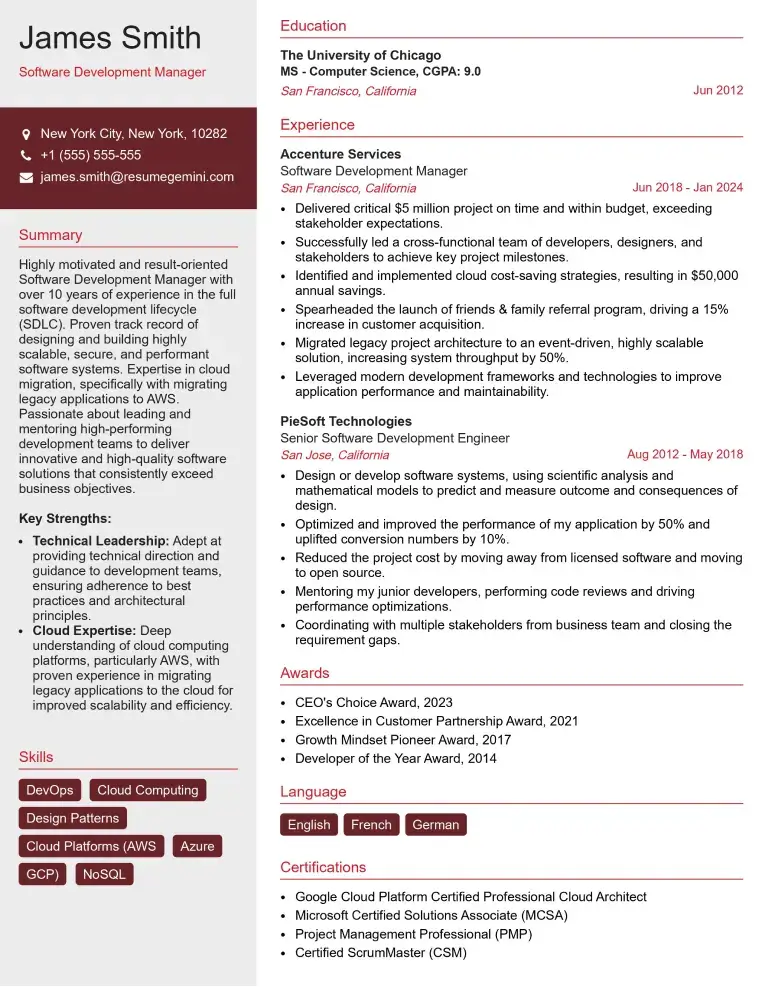
Elevate your job search with our premium resume templates. Here is an amazing resume template that can be used to build a professional and elegant resume. You can build a resume from scratch or revamp your existing resume. Impress hiring managers and secure your next opportunity.
- Top 50 Most Common Interview Questions
- The Psychology of a Great Resume: Hacks to Impress Recruiters
- What Mistakes to Avoid When Writing a Resume: A Comprehensive Guide
- Elevate Your Career with Expert Resume Building: Introducing ResumeGemini
- Crafting Your First Impression: How To Make Free Resume Online For Freshers