





As you navigate the mid-career seas, your resume becomes a powerful compass, guiding you towards the shores of success. Mid-career professionals, it’s time to cast your anchor and set sail for new horizons with a resume that reflects your experience, impact, and aspirations. Dive into our comprehensive guide and elevate your job search to unprecedented heights.
Tailoring Your Resume to Target Senior-Level Roles
Your mid-career resume should be a targeted masterpiece, tailored specifically to the senior-level roles you seek. Take time to thoroughly research the industry, job titles, and companies you’re pursuing. This will help you identify the keywords and skills that hiring managers are looking for. Incorporate these elements into your resume, showcasing your alignment with their requirements.
- Use job descriptions as a roadmap: Analyze job descriptions to extract key responsibilities and qualifications. Tailor your resume to highlight how your experience aligns with these requirements.
- Quantify your accomplishments: Use specific numbers and metrics to quantify your contributions and results. This helps hiring managers grasp the tangible impact of your work.
Highlighting Your Leadership and Management Experience
Mid-career professionals often possess significant leadership and management experience. Showcase these skills prominently on your resume by emphasizing your achievements in:
- Motivating and mentoring teams: Describe how you have effectively led, motivated, and developed your team members, resulting in increased productivity or improved outcomes.
- Strategic planning and execution: Highlight your ability to develop and implement strategic plans that have driven measurable results for your organization.
- Budget management and financial acumen: Demonstrate your expertise in managing budgets, allocating resources, and making sound financial decisions.
Demonstrating Your Adaptability and Continuous Learning
In today’s rapidly evolving business landscape, adaptability and continuous learning are essential for career success. Your resume should reflect your ability to:
- Embrace new challenges: Highlight situations where you stepped outside of your comfort zone, took on new responsibilities, or learned new skills.
- Engage in ongoing professional development: Showcase your commitment to continuous learning through certifications, workshops, or industry events you’ve attended.
- Adapt to changing technologies: Demonstrate your proficiency in adapting to new technologies and trends that are relevant to your industry.
Networking and Personal Branding for Mid-Career Professionals
Networking and personal branding play a crucial role in mid-career career development. Consider the following strategies:
- Attend industry events: Connect with professionals in your field by attending conferences, seminars, and networking events.
- Join professional organizations: Become an active member of professional organizations related to your industry or job function. This provides opportunities for networking, professional development, and career advancement.
- Build a strong online presence: Create a professional LinkedIn profile, optimize your personal website (if you have one), and engage in targeted social media activities to increase your visibility and credibility.
Additional Tips for Your Mid-Career Resume
In addition to the aforementioned strategies, consider these additional tips:
- Use a professional resume builder: Online resume builders like ResumeGemini can help you create a visually appealing and ATS-friendly resume in minutes.
- Get feedback from a professional: Ask a trusted mentor, career counselor, or recruiter to review your resume and provide feedback on its strength and areas for improvement.
- Customize your resume for each job application: Take the time to tailor your resume to each specific job you apply for, highlighting the skills and experiences that are most relevant to the role.
Conclusion:
Crafting a winning mid-career resume is an essential step in reinvigorating your career and achieving your professional goals. By following the strategies outlined in this comprehensive guide, you can create a resume that showcases your experience, impact, and aspirations. Remember, your resume is a powerful tool that can propel you towards the senior-level roles you seek. Seize this opportunity to elevate your career to new heights!
Career Expert Tips:
- Select the ideal resume template to showcase your professional experience effectively.
- Master the art of resume writing to highlight your unique qualifications and achievements.
- Checkout the resume writing tips for guidance and best practices.
- Make your 2025 brighter with a new job. Build a powerful resume with ResumeGemini and save big, enjoy exclusive discounts on premium templates.
Frequently Asked Questions (FAQ’s)
How can I make my resume stand out as a mid-career professional?
As a mid-career professional, your resume should reflect your years of experience and accomplishments. Here are some tips to make your resume stand out:
- Quantify your accomplishments: Use specific numbers and metrics to demonstrate the impact of your work.
- Highlight your skills and experience: Tailor your resume to each job you apply for, emphasizing the skills and experience that are most relevant to the role.
- Use a professional resume template: A well-designed resume template can help your resume look polished and professional.
- Proofread carefully: Make sure your resume is free of errors before submitting it.
What are the most important sections to include on my resume?
The most important sections to include on your resume are:
- Contact information: Make sure your name, address, phone number, and email address are easy to find.
- Summary: A brief overview of your skills, experience, and career goals.
- Work experience: A detailed list of your work history, including your job title, company name, dates of employment, and a description of your responsibilities.
- Education: A list of your educational background, including your degree, school name, and dates of attendance.
- Skills: A list of your skills and abilities, both hard and soft.
How do I quantify my accomplishments in a meaningful way?
Use specific numbers and metrics to demonstrate the impact of your work. For example, instead of saying “Increased sales,” you could say “Increased sales by 15%.”
Here are some examples of quantified accomplishments:
- Increased sales by 15%
- Reduced costs by 10%
- Improved customer satisfaction by 20%
- Launched a new product that generated $1 million in revenue
- Managed a team of 10 people
What are recruiters looking for in mid-career candidates?
Recruiters are looking for mid-career candidates who have a strong track record of success, are motivated and ambitious, and have the skills and experience necessary to be successful in the role they are applying for.
Here are some of the key qualities that recruiters look for in mid-career candidates:
- Experience: Mid-career candidates should have a minimum of 10 years of relevant experience.
- Skills: Mid-career candidates should have a strong foundation in the skills and abilities necessary for the role they are applying for.
- Motivation: Mid-career candidates should be motivated and ambitious, with a clear career plan.
- Leadership: Mid-career candidates should have demonstrated leadership skills, such as the ability to manage teams and projects.
- Communication: Mid-career candidates should have excellent communication skills, both written and verbal.
How can I leverage LinkedIn to enhance my job search?
LinkedIn is a powerful tool for mid-career professionals who are looking for a new job. Here are some tips on how to leverage LinkedIn to enhance your job search:
- Create a professional profile: Your LinkedIn profile should be a reflection of your professional brand. Make sure your profile is complete and up-to-date, and include a professional headshot.
- Join groups: LinkedIn groups are a great way to connect with other professionals in your field. Join groups that are relevant to your interests and career goals.
- Share content: Share articles, blog posts, and other content that is relevant to your field. This will help you establish yourself as an expert in your field and attract the attention of potential employers.
- Network: LinkedIn is a great way to network with other professionals. Reach out to people in your field, connect with them, and ask for informational interviews.
What are some common mistakes to avoid when writing a mid-career resume?
Here are some common mistakes to avoid when writing a mid-career resume:
- Using too much jargon: Avoid using too much jargon or technical language in your resume. Make sure your resume is easy to read and understand for people outside of your field.
- Not tailoring your resume to each job: Make sure you tailor your resume to each job you apply for. Highlight the skills and experience that are most relevant to the role.
- Including irrelevant information: Don’t include irrelevant information on your resume. Focus on including information that is relevant to the job you are applying for.
- Not proofreading your resume: Make sure you proofread your resume carefully before submitting it. Check for errors in grammar, spelling, and punctuation.
Next Step:
Now that you have learned how to write a winning mid-career resume, it’s time to put your new skills into action. ResumeGemini can help you create a professional and eye-catching resume that will get you noticed by employers. With our easy-to-use resume builder, you can create a resume in minutes. So what are you waiting for? Start building your new resume today!
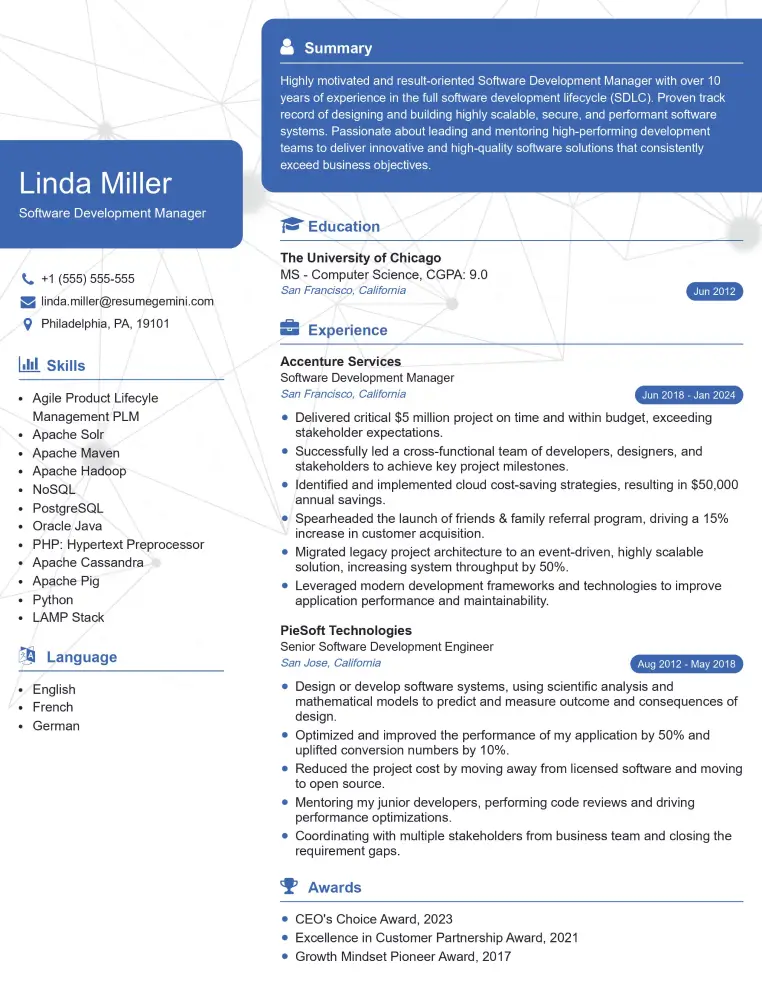
Elevate your job search with our premium resume templates. Here is an amazing resume template that can be used to build a professional and elegant resume. You can build a resume from scratch or revamp your existing resume. Impress hiring managers and secure your next opportunity.
- Top 50 Most Common Interview Questions
- The Psychology of a Great Resume: Hacks to Impress Recruiters
- What Mistakes to Avoid When Writing a Resume: A Comprehensive Guide
- Elevate Your Career with Expert Resume Building: Introducing ResumeGemini
- Crafting Your First Impression: How To Make Free Resume Online For Freshers