Feeling lost in a sea of interview questions? Landed that dream interview for Adoption Specialist but worried you might not have the answers? You’re not alone! This blog is your guide for interview success. We’ll break down the most common Adoption Specialist interview questions, providing insightful answers and tips to leave a lasting impression. Plus, we’ll delve into the key responsibilities of this exciting role, so you can walk into your interview feeling confident and prepared.
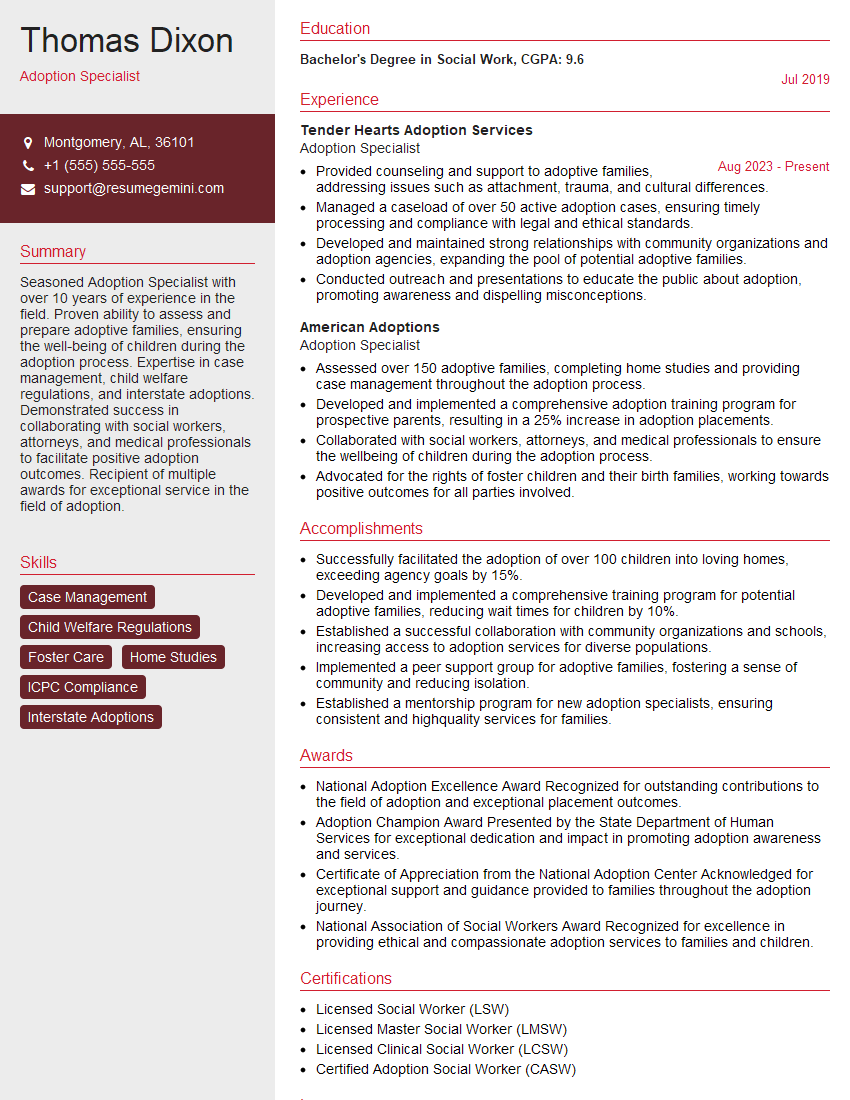
Acing the interview is crucial, but landing one requires a compelling resume that gets you noticed. Crafting a professional document that highlights your skills and experience is the first step toward interview success. ResumeGemini can help you build a standout resume that gets you called in for that dream job.






Essential Interview Questions For Adoption Specialist
1. Describe the ethical guidelines you follow while working with adoptive families and birth parents.
As an Adoption Specialist, I strictly adhere to the ethical guidelines set by the National Adoption Association (NAA) and other relevant regulatory bodies. These guidelines ensure the well-being and rights of all parties involved in the adoption process.
- Confidentiality: I maintain the privacy of all individuals involved and safeguard their personal information.
- Informed Consent: I provide clear and comprehensive information to adoptive families and birth parents, ensuring they make informed decisions.
- Non-discrimination: I treat all individuals equally, regardless of their race, religion, sexual orientation, or marital status.
- Cultural Sensitivity: I respect and value the cultural backgrounds of both adoptive families and birth parents.
- Best Interests of the Child: I prioritize the well-being and best interests of the child throughout the adoption process.
2. How do you support adoptive families through the emotional and legal complexities of the adoption process?
Emotional Support
- Counseling Referrals: I provide referrals to licensed therapists who specialize in adoption-related issues.
- Support Groups: I facilitate or connect adoptive families with support groups where they can share experiences and offer mutual support.
- Education and Resources: I provide workshops, webinars, and educational materials to help families understand the adoption process.
Legal Support
- Legal Documents: I help adoptive families navigate the legal complexities of adoption, including consent forms, adoption petitions, and post-placement reports.
- Attorney Referrals: I provide referrals to reputable adoption attorneys who can provide legal guidance and representation.
- Adoption Finalization: I guide families through the adoption finalization process, ensuring that the adoption is legally valid.
3. How do you assess the readiness of potential adoptive parents to provide a stable and loving home for a child?
- Home Study Evaluation: I conduct thorough home studies that include interviews, personal references, and background checks.
- Financial Stability: I evaluate the financial stability of potential adoptive parents to ensure they can provide for the child’s needs.
- Parenting Experience: I assess their parenting experience, knowledge, and skills. This includes evaluating their understanding of child development and discipline.
- Emotional Health: I assess the emotional health and well-being of potential adoptive parents. Psychological evaluations may be required.
- Support System: I evaluate the support system available to potential adoptive parents, including family, friends, and community resources.
4. How do you handle difficult conversations with birth parents who are considering placing their child for adoption?
- Empathetic Listening: I approach conversations with empathy and compassion, recognizing the difficult and emotional nature of their decision.
- Non-Judgmental Support: I remain non-judgmental and provide a safe space for birth parents to express their feelings and concerns.
- Information Provision: I provide clear and accurate information about adoption options, resources, and the impact of their decision on their child.
- Decision Respect: I respect the decision made by birth parents, regardless of whether or not they choose adoption.
- Post-Placement Support: I offer ongoing support to birth parents after the adoption is finalized, as they may experience a range of emotions.
5. How do you collaborate with other professionals to ensure the smooth placement of a child in an adoptive home?
- Social Workers: I collaborate with licensed social workers who provide support to both adoptive families and birth parents.
- Attorneys: I work closely with adoption attorneys to ensure the legal aspects of the adoption process are handled smoothly.
- Medical Professionals: I consult with medical professionals to gather information about the child’s health and any special needs.
- Therapists: I collaborate with therapists to provide counseling and support to adoptive families and birth parents.
- Child Welfare Agencies: I partner with child welfare agencies to coordinate placements and provide ongoing support.
6. What strategies do you employ to support adopted children in their adjustment to their new families?
- Transitional Counseling: I provide counseling and support to children during the transition into their adoptive home.
- Attachment-Focused Parenting: I educate adoptive parents on attachment-based parenting techniques to foster a strong bond between them and the child.
- Cultural Sensitivity: I consider the child’s cultural background and provide resources to help them maintain their identity.
- Peer Support: I facilitate connections with other adopted children through support groups or online communities.
- Long-Term Follow-Up: I maintain contact with adoptive families after the adoption is finalized to provide ongoing support and monitor the child’s well-being.
7. How do you stay up-to-date on the latest developments in adoption law and best practices?
- Continuing Education: I attend conferences, workshops, and trainings to expand my knowledge and skills.
- Professional Development: I actively participate in professional organizations such as the North American Council on Adoptable Children (NACAC).
- Legal Research: I regularly review current adoption laws and case precedents to ensure my practice is up-to-date.
- Collaboration with Experts: I consult with experts in the field, such as researchers, attorneys, and social workers, to stay informed about best practices.
- Online Resources: I utilize online resources and databases to access the latest research and information on adoption.
8. How do you handle cases where there are allegations of abuse or neglect towards an adopted child?
- Immediate Action: I prioritize the safety of the child and immediately notify the appropriate authorities if there are allegations of abuse or neglect.
- Collaboration with Child Protection Services: I work closely with Child Protection Services to investigate the allegations and determine the appropriate course of action.
- Support for Adoptive Family: I provide support and guidance to the adoptive family during the investigation and legal process.
- Confidentiality: I maintain confidentiality while adhering to mandatory reporting laws and ethical guidelines.
- Ongoing Monitoring: I continue to monitor the situation and provide support to both the adoptive family and the child as needed.
9. What are the unique challenges you have faced in your role as an Adoption Specialist?
- Emotional Toll: Working with families and children who are going through difficult experiences can be emotionally taxing.
- Legal Complexities: Adoption laws and regulations are complex and can vary across jurisdictions, which can present challenges.
- Time Constraints: The adoption process can be lengthy and time-sensitive, which can require efficient coordination.
- Diversity of Cases: Each adoption case is unique, which requires me to adapt my approach and tailor my services to meet the specific needs of individuals and families.
- Balancing Professionalism and Empathy: It’s crucial to maintain a professional demeanor while also being empathetic and compassionate.
10. Describe a successful adoption case where you played a significant role.
I worked with an adoptive family who had been yearning to adopt a child for several years. They had faced numerous setbacks, but remained determined to provide a loving home to a child in need. I facilitated the matching process, carefully considering their preferences and ensuring the child would be a good fit for their family.
Throughout the adoption process, I provided emotional support, legal guidance, and coordinated the necessary home study and background checks. I also worked closely with the birth mother, respecting her decision and ensuring she had access to counseling and resources.
The adoption was finalized successfully, and the adoptive family welcomed a beautiful child into their lives. It was a rewarding and fulfilling experience to witness the positive impact of adoption on both the child and the adoptive family.
Interviewers often ask about specific skills and experiences. With ResumeGemini‘s customizable templates, you can tailor your resume to showcase the skills most relevant to the position, making a powerful first impression. Also check out Resume Template specially tailored for Adoption Specialist.
Career Expert Tips:
- Ace those interviews! Prepare effectively by reviewing the Top 50 Most Common Interview Questions on ResumeGemini.
- Navigate your job search with confidence! Explore a wide range of Career Tips on ResumeGemini. Learn about common challenges and recommendations to overcome them.
- Craft the perfect resume! Master the Art of Resume Writing with ResumeGemini’s guide. Showcase your unique qualifications and achievements effectively.
- Great Savings With New Year Deals and Discounts! In 2025, boost your job search and build your dream resume with ResumeGemini’s ATS optimized templates.
Researching the company and tailoring your answers is essential. Once you have a clear understanding of the Adoption Specialist‘s requirements, you can use ResumeGemini to adjust your resume to perfectly match the job description.
Key Job Responsibilities
Adoption Specialists play a crucial role in facilitating the adoption process, ensuring the well-being of both children and adoptive families. Their responsibilities encompass a wide range of tasks, including:
1. Client Communication and Assessment
Communicating effectively with prospective adoptive parents and birth parents, providing guidance and emotional support throughout the adoption journey
- Conducting home studies and assessing the suitability of potential adoptive families
- Counseling birth parents and providing support during and after the adoption process
2. Case Management
Managing adoption cases from start to finish, coordinating with legal professionals, social workers, and medical personnel
- Preparing and submitting adoption petitions to the court
- Facilitating communication between all parties involved in the adoption process
3. Child Advocacy
Ensuring the best interests of the child throughout the adoption process, advocating for their rights and needs
- Representing children’s interests in court proceedings
- Monitoring the progress of adopted children and providing ongoing support
4. Community Outreach and Education
Educating the community about adoption and promoting the importance of finding permanent homes for children in need
- Hosting workshops and presentations on adoption
- Collaborating with community organizations to raise awareness about adoption
Interview Tips
Preparing thoroughly for an Adoption Specialist interview can significantly enhance your chances of success. Here are some insider tips to help you ace the interview:
1. Research the Organization
Learn about the adoption agency’s mission, values, and specific adoption programs. This will demonstrate your interest and enthusiasm for their work.
2. Highlight Your Skills and Experience
Emphasize your proficiency in case management, communication, advocacy, and child welfare. Share specific examples that showcase your abilities in these areas.
3. Demonstrate Your Passion for Adoption
Explain why you are passionate about helping children find loving homes. Share stories or experiences that illustrate your commitment to adoption.
4. Prepare for Common Interview Questions
Research common interview questions related to adoption, such as “Why do you want to become an Adoption Specialist?” and “What are your strengths and weaknesses in adoption work?” Prepare thoughtful and well-structured answers.
5. Ask Informed Questions
Asking informed questions during the interview shows your interest and engagement. Ask about the agency’s adoption process, the types of cases they handle, and any opportunities for professional development.
Next Step:
Now that you’re armed with the knowledge of Adoption Specialist interview questions and responsibilities, it’s time to take the next step. Build or refine your resume to highlight your skills and experiences that align with this role. Don’t be afraid to tailor your resume to each specific job application. Finally, start applying for Adoption Specialist positions with confidence. Remember, preparation is key, and with the right approach, you’ll be well on your way to landing your dream job. Build an amazing resume with ResumeGemini