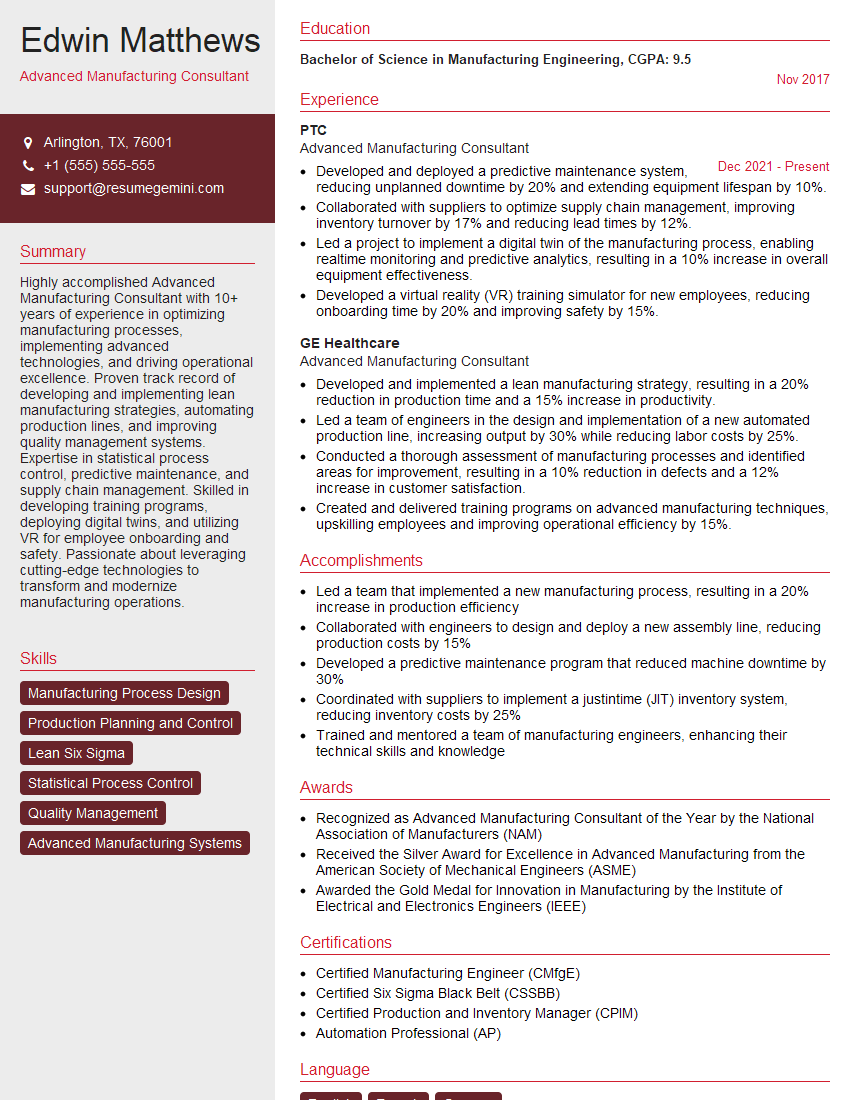
Feeling lost in a sea of interview questions? Landed that dream interview for Advanced Manufacturing Consultant but worried you might not have the answers? You’re not alone! This blog is your guide for interview success. We’ll break down the most common Advanced Manufacturing Consultant interview questions, providing insightful answers and tips to leave a lasting impression. Plus, we’ll delve into the key responsibilities of this exciting role, so you can walk into your interview feeling confident and prepared.
Acing the interview is crucial, but landing one requires a compelling resume that gets you noticed. Crafting a professional document that highlights your skills and experience is the first step toward interview success. ResumeGemini can help you build a standout resume that gets you called in for that dream job.






Essential Interview Questions For Advanced Manufacturing Consultant
1. Describe your approach to optimizing a manufacturing process for efficiency?
To optimize a manufacturing process for efficiency, I follow a comprehensive approach that involves:
- Process Analysis: Conducting a detailed analysis of the existing process to identify bottlenecks, waste, and areas for improvement.
- Data Collection: Gathering data on key performance indicators (KPIs), such as cycle time, downtime, and yield, to establish benchmarks and track progress.
- Lean Principles: Applying lean manufacturing techniques, such as value stream mapping and kaizen, to eliminate waste and improve flow.
- Automation and Technology Implementation: Evaluating and implementing automation solutions, such as robotics, sensors, and data analytics, to increase productivity and reduce labor costs.
- Employee Involvement: Engaging employees in the optimization process to gain their insights and foster a culture of continuous improvement.
2. How do you evaluate the effectiveness of a manufacturing system redesign?
Key Performance Indicators
- Cycle time reduction
- Increased production output
- Improved quality and yield
- Reduced downtime and waste
- Increased employee satisfaction and engagement
Comparative Analysis
- Comparing pre- and post-redesign data
- Benchmaking against industry benchmarks
- Conducting surveys with stakeholders, including employees, customers, and suppliers
3. Explain your understanding of advanced manufacturing technologies and their potential impact on the industry?
- Industrial Internet of Things (IIoT): Connecting devices and sensors to collect data and improve visibility, efficiency, and decision-making.
- Additive Manufacturing (3D Printing): Enabling the production of complex and customized parts with reduced lead times and material waste.
- Artificial Intelligence (AI) and Machine Learning: Automating tasks, optimizing processes, and predicting future outcomes.
- Blockchain: Enhancing supply chain transparency, traceability, and security.
- Cobots (Collaborative Robots): Working alongside humans to improve safety, productivity, and flexibility.
4. How do you approach the implementation of a new manufacturing technology in a complex and integrated production environment?
- Assessment and Planning: Conduct a thorough assessment of the current environment, identify implementation goals, and develop a detailed plan.
- Change Management: Engage stakeholders early on, communicate the benefits and challenges of the technology, and provide training and support.
- Phased Approach: Implement the technology in stages to minimize disruption and allow for gradual adaptation.
- Integration and Optimization: Integrate the new technology with existing systems and processes, optimizing performance and ensuring seamless operation.
- Continuous Evaluation: Monitor and evaluate the implementation, gather feedback, and make adjustments as needed to ensure ongoing success.
5. Describe your experience in developing and managing lean manufacturing initiatives?
- Value Stream Mapping: Conducted value stream mapping exercises to identify waste, optimize flow, and improve efficiency.
- Kaizen Events: Facilitated kaizen events to engage employees and continuously improve processes and reduce waste.
- 5S Implementation: Implemented 5S principles to organize and standardize work areas, reducing search time and improving productivity.
- Kanban and Pull Systems: Introduced kanban and pull systems to regulate inventory levels and improve production flow.
- TPM Implementation: Collaborated with maintenance teams to implement total productive maintenance (TPM) practices, focusing on preventive maintenance and equipment reliability.
6. How do you ensure the quality and accuracy of data collected from manufacturing equipment and processes?
- Sensor Calibration: Calibrate sensors regularly to ensure accurate data readings.
- Data Validation: Implement data validation techniques to identify and correct errors in data.
- Data Cleaning: Clean data to remove outliers, missing values, and any inconsistencies.
- Redundancy and Backup: Use redundant sensors and data storage systems to prevent data loss.
- Data Governance: Establish data governance policies to ensure data integrity and accessibility.
7. Describe your approach to managing and mitigating risks associated with advanced manufacturing technologies?
- Risk Assessment: Identify and assess potential risks associated with the implementation and operation of advanced manufacturing technologies.
- Mitigation Strategies: Develop and implement mitigation strategies to minimize the impact of identified risks.
- Contingency Planning: Establish contingency plans to respond to potential disruptions or failures.
- Regular Monitoring: Continuously monitor and review risks to ensure early detection and prompt response.
- Collaboration and Communication: Foster collaboration and communication among stakeholders to ensure a coordinated and effective risk management approach.
8. How do you stay up-to-date on the latest industry trends and advancements in advanced manufacturing?
- Industry Events and Conferences: Attend industry events and conferences to learn about new technologies and trends.
- Technical Publications: Subscribe to technical publications and journals to stay informed about the latest research and developments.
- Online Learning and Webinars: Engage in online learning platforms and webinars to access cutting-edge knowledge and best practices.
- Networking: Establish connections with peers and experts in the field to exchange ideas and share insights.
- Industry Research: Conduct ongoing research to identify emerging technologies and their potential impact on the industry.
9. Explain how you would approach the design and implementation of a smart factory?
- Data-Driven Decision Making: Leverage data from sensors and equipment to optimize processes, predict maintenance needs, and improve overall efficiency.
- Automated Production: Implement automation solutions, such as robots and self-driving vehicles, to increase productivity and reduce labor costs.
- Predictive Maintenance: Use AI and sensors to predict equipment failures and schedule maintenance proactively, minimizing downtime and increasing uptime.
- Virtual Reality (VR) and Augmented Reality (AR): Use VR and AR technologies for training, design validation, and remote assistance, enhancing safety and efficiency.
- Cybersecurity: Implement robust cybersecurity measures to protect the smart factory from cyberattacks and data breaches.
10. How do you collaborate with other stakeholders, such as engineers, production staff, and quality managers, to ensure the successful implementation of a manufacturing solution?
- Effective Communication: Establish clear communication channels and regularly update stakeholders on project progress and challenges.
- Cross-Functional Teams: Form cross-functional teams to foster collaboration and ensure that all perspectives are considered.
- Active Listening: Practice active listening to understand stakeholder needs and concerns.
- Stakeholder Engagement: Engage stakeholders in the decision-making process and involve them in testing and validation efforts.
- Regular Reviews: Conduct regular reviews to gather feedback and make necessary adjustments to the solution.
Interviewers often ask about specific skills and experiences. With ResumeGemini‘s customizable templates, you can tailor your resume to showcase the skills most relevant to the position, making a powerful first impression. Also check out Resume Template specially tailored for Advanced Manufacturing Consultant.
Career Expert Tips:
- Ace those interviews! Prepare effectively by reviewing the Top 50 Most Common Interview Questions on ResumeGemini.
- Navigate your job search with confidence! Explore a wide range of Career Tips on ResumeGemini. Learn about common challenges and recommendations to overcome them.
- Craft the perfect resume! Master the Art of Resume Writing with ResumeGemini’s guide. Showcase your unique qualifications and achievements effectively.
- Great Savings With New Year Deals and Discounts! In 2025, boost your job search and build your dream resume with ResumeGemini’s ATS optimized templates.
Researching the company and tailoring your answers is essential. Once you have a clear understanding of the Advanced Manufacturing Consultant‘s requirements, you can use ResumeGemini to adjust your resume to perfectly match the job description.
Key Job Responsibilities
Advanced Manufacturing Consultants play a crucial role in helping organizations enhance their manufacturing processes and achieve operational excellence. Their key responsibilities encompass:
1. Manufacturing Process Optimization
Analyze existing manufacturing processes to identify inefficiencies and areas for improvement.
- Develop and implement strategies to optimize production lines, reduce waste, and increase productivity.
- Evaluate new technologies and equipment to enhance manufacturing capabilities.
2. Lean Manufacturing Implementation
Lead the implementation of lean manufacturing principles to streamline operations and eliminate waste.
- Establish key performance indicators (KPIs) to measure improvements and track progress.
- Train and mentor manufacturing teams on lean concepts and best practices.
3. Quality Control and Assurance
Ensure compliance with quality standards and regulations throughout the manufacturing process.
- Develop and implement quality management systems to monitor and control product quality.
- Perform audits and inspections to identify and address quality issues.
4. Cost Reduction and Efficiency Improvement
Analyze and implement cost-saving initiatives to reduce manufacturing expenses.
- Identify areas for process refinement, material optimization, and supply chain optimization.
- Negotiate with suppliers and implement inventory management strategies to control costs.
Interview Tips
Preparing thoroughly for an Advanced Manufacturing Consultant interview is essential to showcase your skills and make a lasting impression. Here are some tips to help you ace the interview:
1. Research the Company and Role
Gain a deep understanding of the company’s industry, products, and manufacturing operations.
- Study the job description carefully to identify the specific requirements and desired qualifications.
- Read industry publications and news articles to stay informed about current trends and best practices.
2. Highlight Your Expertise
Quantify your accomplishments and provide specific examples of your experience in manufacturing optimization, lean implementation, quality control, and cost reduction.
- Use the STAR method (Situation, Task, Action, Result) to structure your answers and demonstrate your problem-solving abilities.
- Bring concrete examples of projects you have led, improvements you have implemented, and results you have achieved.
3. Demonstrate Your Industry Knowledge
Show your familiarity with advanced manufacturing technologies, such as automation, robotics, and additive manufacturing.
- Discuss industry trends and how they are shaping manufacturing practices.
- Share your insights on how emerging technologies can drive innovation and efficiency.
4. Practice Your Communication Skills
Advanced Manufacturing Consultants must be able to communicate effectively with technical and non-technical audiences.
- Practice your presentation skills by preparing for a mock interview.
- Work on your ability to clearly explain complex technical concepts in a concise and engaging manner.
5. Prepare Thoughtful Questions
Asking insightful questions at the end of the interview demonstrates your interest and engagement in the role.
- Prepare questions about the company’s long-term manufacturing strategy and vision.
- Inquire about the specific challenges the company is facing and how you can contribute to solving them.
Next Step:
Now that you’re armed with the knowledge of Advanced Manufacturing Consultant interview questions and responsibilities, it’s time to take the next step. Build or refine your resume to highlight your skills and experiences that align with this role. Don’t be afraid to tailor your resume to each specific job application. Finally, start applying for Advanced Manufacturing Consultant positions with confidence. Remember, preparation is key, and with the right approach, you’ll be well on your way to landing your dream job. Build an amazing resume with ResumeGemini