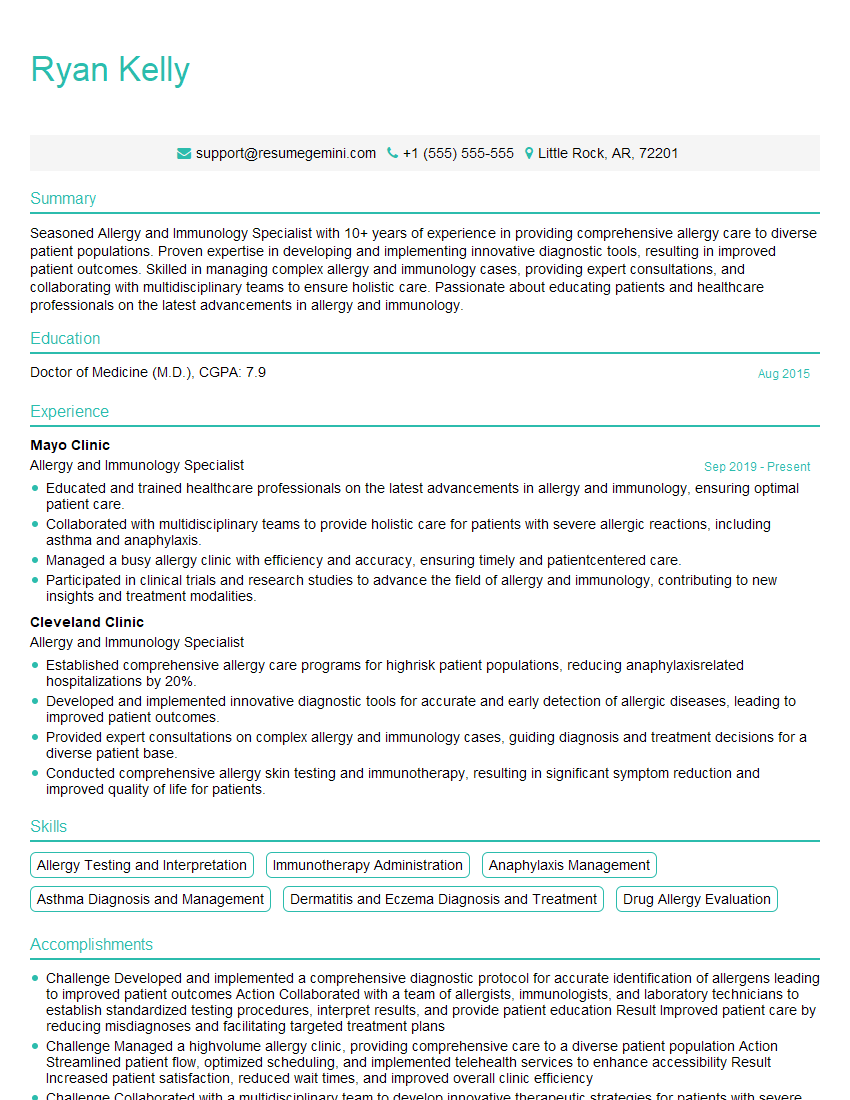
Are you gearing up for a career shift or aiming to ace your next interview? Look no further! We’ve curated a comprehensive guide to help you crack the interview for the coveted Allergy and Immunology Specialist position. From understanding the key responsibilities to mastering the most commonly asked questions, this blog has you covered. So, buckle up and let’s embark on this journey together.
Acing the interview is crucial, but landing one requires a compelling resume that gets you noticed. Crafting a professional document that highlights your skills and experience is the first step toward interview success. ResumeGemini can help you build a standout resume that gets you called in for that dream job.






Essential Interview Questions For Allergy and Immunology Specialist
1. What are the most common types of allergies seen in your practice?
- Seasonal allergies (hay fever) caused by pollen, mold, and dust mites
- Food allergies, particularly to peanuts, milk, and shellfish
- Insect sting allergies, such as to bees and wasps
- Drug allergies, including penicillin and other antibiotics
- Skin allergies, such as contact dermatitis and eczema
2. How do you approach the diagnosis of an allergy?
Medical history
- Review of symptoms and timing of their occurrence
- Past history of allergies or allergic reactions
- Family history of allergies
Physical examination
- Check for signs of allergic rhinitis, such as sneezing, runny nose, and congestion
- Examine the skin for hives, rashes, or other allergic reactions
- Listen to the lungs for wheezing or other signs of asthma
Allergy testing
- Skin prick test
- Blood test
3. What is the difference between an allergy and an intolerance?
- Allergies are triggered by the immune system’s reaction to a specific allergen.
- Intolerances are not mediated by the immune system and are typically caused by a lack of enzymes or other digestive issues.
- Symptoms of allergies can range from mild, such as sneezing and runny nose, to severe, such as anaphylaxis.
- Symptoms of intolerances are typically limited to digestive issues, such as gas, bloating, and diarrhea.
4. What are the different types of immunotherapy used to treat allergies?
- Subcutaneous immunotherapy (SCIT) involves injecting increasing doses of the allergen under the skin.
- Sublingual immunotherapy (SLIT) involves placing drops of the allergen under the tongue.
- Oral immunotherapy (OIT) involves consuming increasing doses of the allergen by mouth.
5. What are the risks and benefits of immunotherapy?
Risks
- Local reactions, such as redness, swelling, and itching at the injection site
- Systemic reactions, such as anaphylaxis
Benefits
- Reduced allergy symptoms
- Improved quality of life
- Potential for long-term remission
6. How do you manage patients with severe allergic reactions (anaphylaxis)?
- Immediate administration of epinephrine (adrenaline)
- Call for emergency medical help
- Monitor the patient’s vital signs and administer oxygen as needed
- Provide antihistamines and corticosteroids to reduce symptoms
7. What are the emerging trends in the diagnosis and treatment of allergies?
- Precision medicine: Using genetic testing to identify patients who are more likely to develop allergies or respond to specific treatments.
- Biologics: New drugs that target specific immune system pathways involved in allergies.
- Telemedicine: Using technology to provide virtual consultations and monitoring for patients with allergies.
8. What are the challenges in the management of allergic diseases?
- Underdiagnosis and misdiagnosis
- Lack of access to specialist care
- Patient non-adherence to treatment
- The increasing prevalence of allergies
9. How do you stay up-to-date on the latest advances in allergy and immunology?
- Attending conferences and workshops
- Reading medical journals and textbooks
- Participating in continuing medical education programs
- Collaborating with other healthcare professionals
10. What are your research interests in the field of allergy and immunology?
- Investigating the role of the microbiome in allergy development
- Developing new diagnostic tools for allergies
- Evaluating the efficacy and safety of new allergy treatments
- Improving access to care for patients with allergies
Interviewers often ask about specific skills and experiences. With ResumeGemini‘s customizable templates, you can tailor your resume to showcase the skills most relevant to the position, making a powerful first impression. Also check out Resume Template specially tailored for Allergy and Immunology Specialist.
Career Expert Tips:
- Ace those interviews! Prepare effectively by reviewing the Top 50 Most Common Interview Questions on ResumeGemini.
- Navigate your job search with confidence! Explore a wide range of Career Tips on ResumeGemini. Learn about common challenges and recommendations to overcome them.
- Craft the perfect resume! Master the Art of Resume Writing with ResumeGemini’s guide. Showcase your unique qualifications and achievements effectively.
- Great Savings With New Year Deals and Discounts! In 2025, boost your job search and build your dream resume with ResumeGemini’s ATS optimized templates.
Researching the company and tailoring your answers is essential. Once you have a clear understanding of the Allergy and Immunology Specialist‘s requirements, you can use ResumeGemini to adjust your resume to perfectly match the job description.
Key Job Responsibilities
An Allergy and Immunology Specialist is a highly trained medical professional who specializes in the diagnosis and treatment of allergic and immunologic disorders.
1. Patient Evaluation
Involves evaluating patients, taking their histories, and performing physical examinations to assess their symptoms, identify potential allergens, and develop treatment plans.
- Conduct comprehensive patient interviews to gather medical history, symptoms, and lifestyle factors.
- Perform physical examinations to identify signs and symptoms of allergic reactions or immune disorders.
2. Diagnosis and Treatment
Based on evaluation, they diagnose and develop personalized treatment plans.
- Diagnose a wide range of allergic and immunologic disorders, including asthma, allergies, eczema, and autoimmune diseases.
- Prescribe and administer medications, such as antihistamines, corticosteroids, and immunotherapy, to manage symptoms.
3. Allergy Testing
Conducting allergy tests to identify specific allergens and sensitivities.
- Perform skin prick tests, patch tests, and blood tests to determine the cause of allergic reactions.
- Interpret test results and provide patients with clear explanations of their allergies.
4. Immunotherapy
Providing immunotherapy (allergy shots) to desensitize patients to allergens and reduce their sensitivity.
- Administer immunotherapy injections according to established protocols and monitor patient responses.
- Educate patients about immunotherapy and its potential benefits and risks.
Interview Tips
To prepare effectively for an interview for an Allergy and Immunology Specialist position, consider the following tips:
1. Research the Company and Position
Research the healthcare organization and the specific role to gain insights into their mission, values, and areas of specialization. This will help you tailor your answers to the interviewer’s questions and demonstrate your interest in the opportunity.
- Visit the company’s website to learn about their history, services, and any recent news or developments.
- Read industry publications and attend conferences to stay updated on the latest advancements in allergy and immunology.
2. Highlight Your Skills and Experience
During the interview, emphasize your qualifications, skills, and experience that align with the key responsibilities of an Allergy and Immunology Specialist. Use specific examples to illustrate your abilities and provide quantifiable results whenever possible.
- Showcase your expertise in diagnosing and treating allergic and immunologic disorders, including any specialized training or certifications you have.
- Discuss your experience in performing allergy testing, administering immunotherapy, and providing patient education.
3. Demonstrate Patient-Centered Care
Emphasize your commitment to providing patient-centered care and building strong relationships with patients. Highlight your ability to listen attentively, communicate effectively, and show empathy and compassion.
- Describe instances where you went above and beyond to ensure patient satisfaction and improve their outcomes.
- Explain how you prioritize patient education and empower them to manage their conditions effectively.
4. Prepare Questions
Preparing thoughtful questions to ask the interviewer demonstrates your engagement and interest in the position. Ask questions about the company’s approach to patient care, their ongoing research and development initiatives, and opportunities for professional growth.
- Inquire about the organization’s commitment to continuing medical education and professional development for its staff.
- Ask about the collaboration opportunities with other healthcare professionals, such as pulmonologists, dermatologists, and primary care physicians.
Next Step:
Armed with this knowledge, you’re now well-equipped to tackle the Allergy and Immunology Specialist interview with confidence. Remember, a well-crafted resume is your first impression. Take the time to tailor your resume to highlight your relevant skills and experiences. And don’t forget to practice your answers to common interview questions. With a little preparation, you’ll be on your way to landing your dream job. So what are you waiting for? Start building your resume and start applying! Build an amazing resume with ResumeGemini.