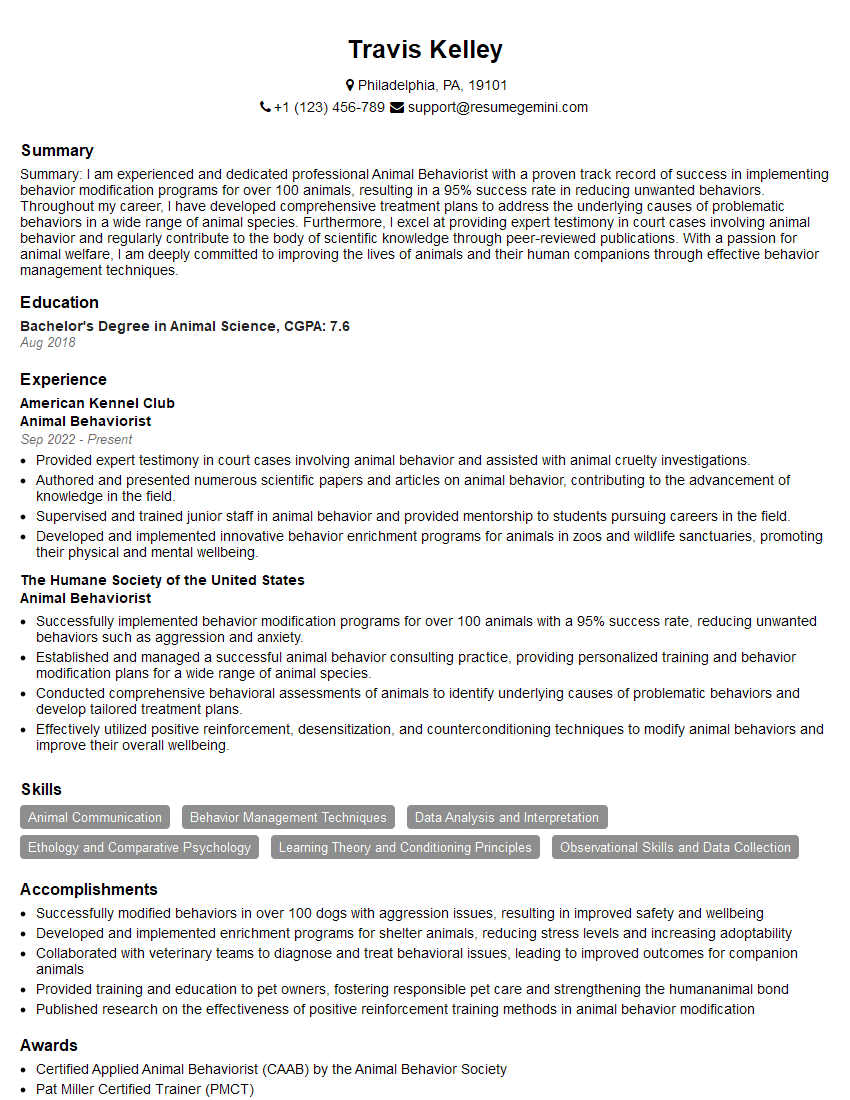
Ever felt underprepared for that crucial job interview? Or perhaps you’ve landed the interview but struggled to articulate your skills and experiences effectively? Fear not! We’ve got you covered. In this blog post, we’re diving deep into the Animal Behaviorist interview questions that you’re most likely to encounter. But that’s not all. We’ll also provide expert insights into the key responsibilities of a Animal Behaviorist so you can tailor your answers to impress potential employers.
Acing the interview is crucial, but landing one requires a compelling resume that gets you noticed. Crafting a professional document that highlights your skills and experience is the first step toward interview success. ResumeGemini can help you build a standout resume that gets you called in for that dream job.






Essential Interview Questions For Animal Behaviorist
1. Describe your approach to understanding and interpreting animal behavior?
My approach to understanding and interpreting animal behavior involves a multifaceted methodology:
- Observation: I meticulously observe the animal’s natural behavior in various contexts, noting body language, vocalizations, and interactions with its environment and conspecifics.
- Interview: I engage in thorough conversations with animal owners, trainers, or caregivers to gather historical data, lifestyle information, and potential triggers for problematic behaviors.
- Data collection: I systematically collect and analyze quantitative and qualitative data on behavior patterns, antecedents, and consequences, using methods such as ethograms, behavior diaries, and checklists.
- Hypothesis testing: I formulate hypotheses based on the collected data and design interventions or modifications to test and refine my understanding of the animal’s behavior.
2. How do you prioritize and address animal welfare concerns in your work?
Ethical Considerations:
- I adhere to the ethical guidelines and codes of conduct established by professional organizations and regulatory bodies.
- I prioritize minimizing any potential distress or harm to animals involved in my research or interventions.
Animal-Centered Approach:
- I focus on understanding and meeting the animal’s species-specific and individual needs.
- I consider the animal’s physical, emotional, and social well-being in all aspects of my work.
3. How do you use applied behavior analysis principles to identify and modify animal behavior?
I utilize applied behavior analysis principles in my work to effectively:
- Identify antecedents and consequences: I examine the environmental factors that trigger or reinforce problematic behaviors, as well as the potential rewards or punishments associated with these behaviors.
- Develop behavior modification plans: I design and implement tailored interventions that alter the antecedents and consequences to encourage desired behaviors and reduce undesirable ones.
- Monitor and evaluate progress: I continuously monitor the animal’s behavior and adjust the intervention plan as needed based on data and feedback.
4. Provide an example of a complex animal behavior case that you successfully resolved. What were the key challenges and how did you overcome them?
In a recent case, I worked with a pet owner whose dog exhibited severe separation anxiety. The key challenges were:
- Identifying triggers: It was crucial to determine the specific stimuli or situations that triggered the anxiety.
- Managing owner expectations: The owner initially expected quick results, but I had to manage their expectations and emphasize gradual progress.
Overcoming the Challenges:
- I conducted thorough interviews and observations to identify potential triggers, such as the owner leaving the house or being out of sight.
- I implemented a desensitization and counter-conditioning program to gradually expose the dog to the triggers while providing positive reinforcement.
- I educated the owner on the principles of animal behavior and the importance of consistency and patience.
5. What are your experiences with using technology and software in animal behavior analysis?
I have utilized various technologies and software in my work:
- Data collection apps: I employ mobile applications that allow for efficient and accurate recording of animal behavior observations.
- Behavior analysis software: I am proficient in using software for analyzing behavioral data, generating graphs, and identifying patterns.
- Telemedicine platforms: I have experience utilizing telemedicine platforms to provide remote consultations and monitor animals’ progress.
6. How do you stay updated on the latest research and advancements in animal behavior science?
- Scientific literature: I regularly review academic journals, attend conferences, and participate in workshops to stay abreast of new findings and methodologies.
- Professional organizations: I am actively involved in professional organizations such as the Animal Behavior Society and attend their meetings and webinars.
- Collaboration: I engage in collaborations with other animal behaviorists, researchers, and veterinarians to exchange knowledge and learn from their experiences.
7. What strategies do you employ to build rapport with animal owners and gain their trust?
- Empathy and listening: I approach clients with empathy and actively listen to their concerns and perspectives.
- Clear communication: I communicate my observations, analysis, and recommendations in a transparent and understandable manner.
- Respect for owner-animal bond: I acknowledge and respect the unique bond between owners and their animals.
8. Describe your experience with working with animals of different species. How do you adapt your approach based on the species?
I have worked with a diverse range of animal species, including dogs, cats, horses, birds, and zoo animals:
- Species-specific knowledge: I have acquired specialized knowledge about the behavior and communication patterns of each species.
- Adapting techniques: I adapt my observation, data collection, and intervention techniques to suit the unique characteristics and needs of different species.
- Interdisciplinary collaboration: When working with exotic or zoo animals, I collaborate with veterinarians, zookeepers, and wildlife experts to ensure a comprehensive understanding and approach.
9. How do you handle situations where animal behavior may be influenced by medical conditions or underlying health issues?
I take the following steps:
- Medical consultation: I consult with veterinarians to rule out or address any underlying medical conditions that may contribute to behavioral issues.
- Integrated approach: I collaborate with veterinarians and medical professionals to develop a comprehensive treatment plan that addresses both the medical and behavioral aspects.
- Holistic perspective: I consider the animal’s overall health and well-being, recognizing that physical and psychological factors can influence behavior.
10. What are your ethical considerations when working with animals in research or intervention settings?
- Animal welfare: I prioritize the well-being and comfort of animals involved in my work, ensuring they are treated with respect and compassion.
- Informed consent: I obtain informed consent from animal owners or guardians before conducting any research or interventions.
- Minimizing harm: I am committed to using non-invasive and minimally stressful techniques, and if necessary, I seek alternatives to animal experimentation.
Interviewers often ask about specific skills and experiences. With ResumeGemini‘s customizable templates, you can tailor your resume to showcase the skills most relevant to the position, making a powerful first impression. Also check out Resume Template specially tailored for Animal Behaviorist.
Career Expert Tips:
- Ace those interviews! Prepare effectively by reviewing the Top 50 Most Common Interview Questions on ResumeGemini.
- Navigate your job search with confidence! Explore a wide range of Career Tips on ResumeGemini. Learn about common challenges and recommendations to overcome them.
- Craft the perfect resume! Master the Art of Resume Writing with ResumeGemini’s guide. Showcase your unique qualifications and achievements effectively.
- Great Savings With New Year Deals and Discounts! In 2025, boost your job search and build your dream resume with ResumeGemini’s ATS optimized templates.
Researching the company and tailoring your answers is essential. Once you have a clear understanding of the Animal Behaviorist‘s requirements, you can use ResumeGemini to adjust your resume to perfectly match the job description.
Key Job Responsibilities
Animal Behaviorists are specialized professionals who study the behavior of animals, both in captivity and in the wild. They use their knowledge to help animals with behavioral problems, such as aggression, anxiety, and phobias. Animal Behaviorists also work with animal care professionals to develop training programs and enrichment activities for animals.Some of the key job responsibilities of an Animal Behaviorist include:
1. Conducting behavioral assessments
Animal Behaviorists conduct thorough behavioral assessments to identify the cause of an animal’s behavior problems. They collect information from multiple sources, including the animal’s owner, veterinarian, and other caregivers. They also observe the animal’s behavior in different settings and record their findings.
- Developing behavior modification plans
- Providing individualized training to animals
2. Developing behavior modification plans
Once they have identified the cause of an animal’s behavior problems, Animal Behaviorists develop behavior modification plans. These plans typically involve a combination of training, environmental enrichment, and medication.
- Conducting research on animal behavior
- Publishing their findings in scientific journals
3.Providing individualized training to animals
Animal Behaviorists also provide individualized training to animals to help them learn new behaviors and overcome their fear and anxieties. They use positive reinforcement techniques to encourage desired behaviors and discourage unwanted behaviors.
- Providing expert testimony in legal cases involving animals
- Educating the public about animal behavior
4. Conducting research on animal behavior
Animal Behaviorists conduct research on animal behavior to better understand the causes of behavior problems and develop new treatment methods. They publish their findings in scientific journals and present their work at conferences.
Interview Tips
Preparing for an interview for an Animal Behaviorist position can be daunting, but with the right preparation, you can increase your chances of success.
1. Research the company and the position
Before you go to your interview, take some time to research the company and the position you’re applying for. This will help you understand the company’s culture and values, as well as the specific requirements of the position.
- Practice answering common interview questions
- Be prepared to talk about your experience and qualifications
2. Practice answering common interview questions
There are a few common interview questions that you’re likely to be asked in an interview for an Animal Behaviorist position. It’s a good idea to practice answering these questions in advance so that you can feel confident and prepared during your interview.
- Dress professionally and arrive on time for your interview
- Be polite and respectful to the interviewer
3. Be prepared to talk about your experience and qualifications
The interviewer will want to know about your experience and qualifications as an Animal Behaviorist. Be prepared to talk about your education, training, and work experience. You should also be able to provide examples of your work and how you have helped animals with behavior problems.
- Follow up with the interviewer after the interview
- Thank the interviewer for their time and consideration
4. Dress professionally and arrive on time for your interview
First impressions matter, so it’s important to dress professionally and arrive on time for your interview. This will show the interviewer that you are serious about the position and that you respect their time.
5. Be polite and respectful to the interviewer
Throughout the interview, it’s important to be polite and respectful to the interviewer. This includes making eye contact, listening attentively to their questions, and answering their questions thoughtfully and professionally.
6. Follow up with the interviewer after the interview
After the interview, it’s a good idea to follow up with the interviewer. This shows that you are interested in the position and that you appreciate their time. You can send a thank-you note or email, or you can call the interviewer to ask if they have any additional questions.
Next Step:
Armed with this knowledge, you’re now well-equipped to tackle the Animal Behaviorist interview with confidence. Remember, preparation is key. So, start crafting your resume, highlighting your relevant skills and experiences. Don’t be afraid to tailor your application to each specific job posting. With the right approach and a bit of practice, you’ll be well on your way to landing your dream job. Build your resume now from scratch or optimize your existing resume with ResumeGemini. Wish you luck in your career journey!