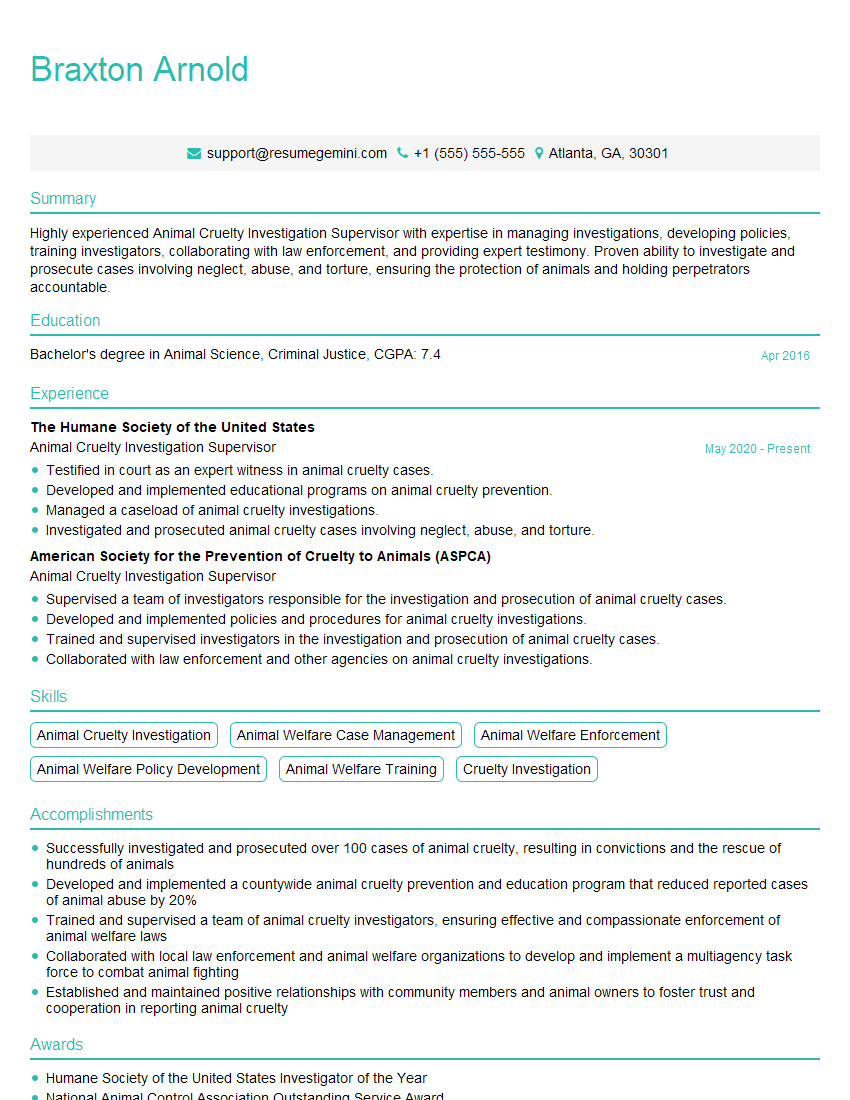
Ever felt underprepared for that crucial job interview? Or perhaps you’ve landed the interview but struggled to articulate your skills and experiences effectively? Fear not! We’ve got you covered. In this blog post, we’re diving deep into the Animal Cruelty Investigation Supervisor interview questions that you’re most likely to encounter. But that’s not all. We’ll also provide expert insights into the key responsibilities of a Animal Cruelty Investigation Supervisor so you can tailor your answers to impress potential employers.
Acing the interview is crucial, but landing one requires a compelling resume that gets you noticed. Crafting a professional document that highlights your skills and experience is the first step toward interview success. ResumeGemini can help you build a standout resume that gets you called in for that dream job.






Essential Interview Questions For Animal Cruelty Investigation Supervisor
1. How do you assess the credibility of witnesses and victims in animal cruelty cases?
- Review witness statements and compare them to other evidence.
- Interview witnesses in person to observe their demeanor and body language.
- Consider the witness’s relationship to the victim and the accused.
- Evaluate the witness’s knowledge and expertise on animal care.
- Determine the witness’s motivation for reporting the incident.
2. Describe the different types of evidence you would collect in an animal cruelty investigation.
Physical Evidence
- Injuries to the animal
- Animal remains
- Weapons or objects used in the abuse
Documentary Evidence
- Veterinary records
- Adoption papers
- Social media posts
3. How do you differentiate between intentional and unintentional animal cruelty?
- Consider the severity of the injuries.
- Review the circumstances surrounding the incident.
- Evaluate the suspect’s history of animal care.
- Determine the suspect’s intent or negligence.
- Consult with veterinarians and other animal welfare professionals.
4. What are the legal challenges in prosecuting animal cruelty cases?
- Difficulty obtaining evidence.
- Lack of specific animal cruelty laws in some jurisdictions.
- Sympathy for the animal abuser.
- Challenges in proving intent.
- Lack of resources for animal welfare agencies.
5. How do you stay up to date on the latest animal cruelty laws and best practices?
- Attend conferences and workshops.
- Read industry publications and journals.
- Network with other animal cruelty investigators.
- Stay informed about new legislation and case law.
- Consult with veterinarians and animal welfare experts.
6. Describe your experience in handling cases involving exotic or farm animals.
- Investigated allegations of abuse at exotic wildlife parks.
- Responded to reports of livestock neglect and mistreatment.
- Collaborated with veterinarians and animal experts to assess the animals’ condition.
- Enforced animal cruelty laws specific to these types of animals.
- Educated the public on the unique needs of exotic and farm animals.
7. How do you maintain your objectivity and avoid becoming emotionally involved in animal cruelty cases?
- Focus on the facts and evidence.
- Separate personal feelings from professional responsibilities.
- Seek support from colleagues, supervisors, and/or mental health professionals.
- Recognize the importance of self-care and well-being.
- Maintain a healthy work-life balance.
8. What are the most common types of animal cruelty you encounter in your work?
- Neglect (failure to provide food, water, shelter, or medical care)
- Physical abuse (beating, kicking, stabbing, or burning)
- Sexual abuse
- Abandonment
- Hoarding (keeping an excessive number of animals in unsanitary conditions)
9. How do you prioritize cases and allocate your resources effectively?
- Evaluate the severity of the abuse.
- Consider the availability of evidence.
- Assess the likelihood of successful prosecution.
- Consult with supervisors and animal welfare agencies.
- Utilize technology and data analysis to identify patterns and trends.
10. Describe your experience in working with other law enforcement agencies and animal welfare organizations.
- Collaborated with police and animal control officers to execute search warrants.
- Testified as an expert witness in animal cruelty cases.
- Conducted joint investigations with animal welfare agencies.
- Participated in community outreach programs aimed at preventing animal cruelty.
- Established partnerships with veterinary clinics and animal shelters.
Interviewers often ask about specific skills and experiences. With ResumeGemini‘s customizable templates, you can tailor your resume to showcase the skills most relevant to the position, making a powerful first impression. Also check out Resume Template specially tailored for Animal Cruelty Investigation Supervisor.
Career Expert Tips:
- Ace those interviews! Prepare effectively by reviewing the Top 50 Most Common Interview Questions on ResumeGemini.
- Navigate your job search with confidence! Explore a wide range of Career Tips on ResumeGemini. Learn about common challenges and recommendations to overcome them.
- Craft the perfect resume! Master the Art of Resume Writing with ResumeGemini’s guide. Showcase your unique qualifications and achievements effectively.
- Great Savings With New Year Deals and Discounts! In 2025, boost your job search and build your dream resume with ResumeGemini’s ATS optimized templates.
Researching the company and tailoring your answers is essential. Once you have a clear understanding of the Animal Cruelty Investigation Supervisor‘s requirements, you can use ResumeGemini to adjust your resume to perfectly match the job description.
Key Job Responsibilities
To ensure the effective execution of animal cruelty investigations, the Animal Cruelty Investigation Supervisor plays a vital role. Their responsibilities encompass a diverse range of tasks:
1. Investigation Management
Investigate and assess cases of alleged or suspected animal cruelty, ensuring compliance with legal regulations and ethical standards.
- Investigate complaints and reports of animal abuse and neglect.
- Gather and document evidence, including witness statements, physical examinations, and veterinary reports.
2. Collaboration and Communication
Establish and maintain effective relationships with stakeholders to facilitate timely and efficient investigations.
- Collaborate with law enforcement, animal welfare organizations, and veterinary professionals.
- Communicate findings and recommendations to the appropriate authorities and the public.
3. Team Leadership and Supervision
Provide guidance and support to a team of animal cruelty investigators to ensure a cohesive and successful investigative process.
- Set clear performance expectations and provide regular feedback to investigators.
- Address conflicts and performance issues within the team.
4. Training and Development
Stay abreast of best practices and legal updates to ensure continued professional development and enhanced investigative capabilities.
- Conduct training sessions for investigators on investigation techniques, ethical considerations, and legal protocols.
- Attend conferences and workshops to stay informed about advancements in the field.
Interview Tips
To excel in your interview for the Animal Cruelty Investigation Supervisor position, consider these strategies:
1. Research the Organization
Familiarize yourself with the organization’s mission, values, and track record in animal cruelty investigation. This knowledge will demonstrate your interest in the company and its work.
2. Highlight Relevant Experience
Emphasize your previous experience in animal welfare, law enforcement, or investigations. Showcase your expertise in handling animal cruelty cases and your ability to work effectively in a team environment.
3. Prepare for Behavioral Questions
Prepare for common behavioral interview questions that assess your teamwork skills, problem-solving abilities, and conflict resolution strategies. Consider examples from your past work experience that demonstrate your capabilities in these areas.
4. Ask Informed Questions
At the end of the interview, ask insightful questions to show your enthusiasm for the position and your commitment to the organization’s mission. These questions should reflect your understanding of the role and the organization’s priorities.
5. Practice and Seek Feedback
Practice your answers to common interview questions with a friend or colleague. Seek feedback on your delivery, body language, and overall presentation. This will help you feel more confident and prepared during the actual interview.
Next Step:
Now that you’re armed with the knowledge of Animal Cruelty Investigation Supervisor interview questions and responsibilities, it’s time to take the next step. Build or refine your resume to highlight your skills and experiences that align with this role. Don’t be afraid to tailor your resume to each specific job application. Finally, start applying for Animal Cruelty Investigation Supervisor positions with confidence. Remember, preparation is key, and with the right approach, you’ll be well on your way to landing your dream job. Build an amazing resume with ResumeGemini