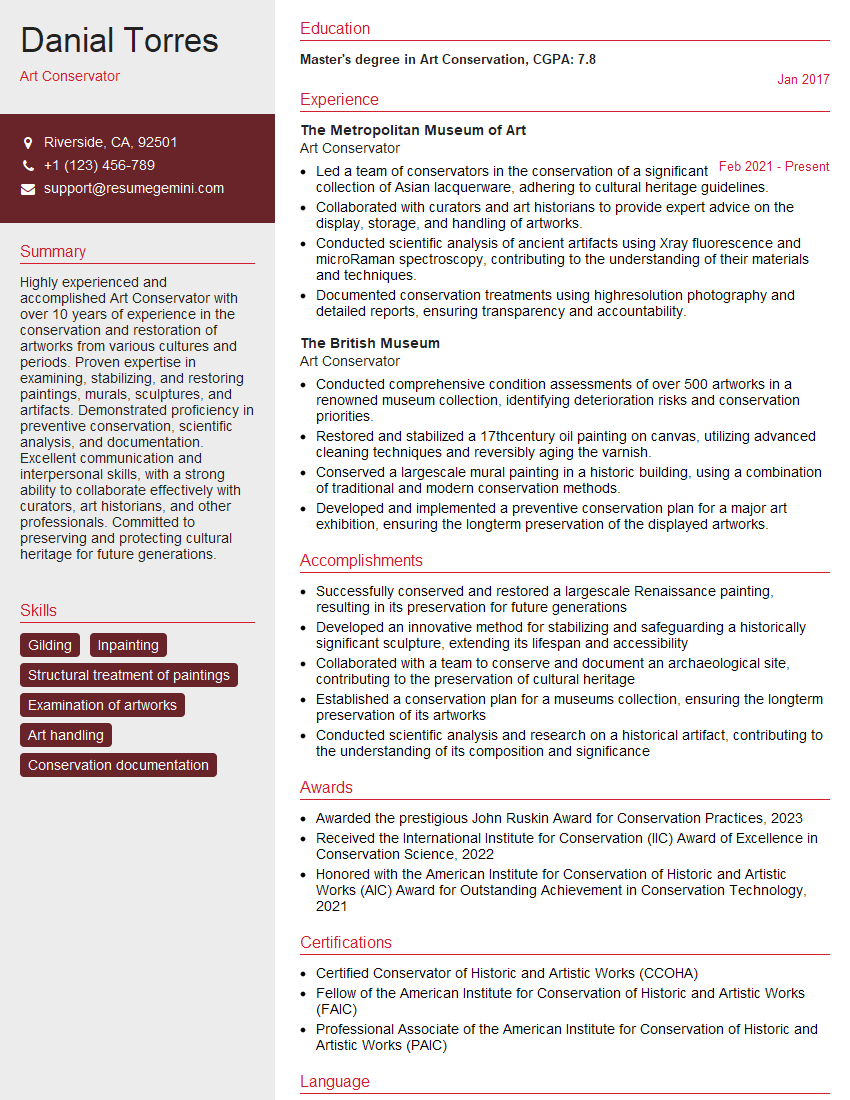
Are you gearing up for a career in Art Conservator? Feeling nervous about the interview questions that might come your way? Don’t worry, you’re in the right place. In this blog post, we’ll dive deep into the most common interview questions for Art Conservator and provide you with expert-backed answers. We’ll also explore the key responsibilities of this role so you can tailor your responses to showcase your perfect fit.
Acing the interview is crucial, but landing one requires a compelling resume that gets you noticed. Crafting a professional document that highlights your skills and experience is the first step toward interview success. ResumeGemini can help you build a standout resume that gets you called in for that dream job.






Essential Interview Questions For Art Conservator
1. Describe the steps involved in conserving a water-damaged painting.
Sample answer: Firstly, I would assess the damage to determine the extent of the water damage and decide on the appropriate treatment approach. Secondly, I would remove any excess water from the painting using a blotting paper or a vacuum cleaner. Next, I would remove the painting from its frame and place it on a flat surface. After that, I would clean the painting with a mild detergent solution to remove any dirt or debris. I would then apply a consolidant to strengthen the paint layer and prevent further damage. Finally, I would varnish the painting to protect it from further damage.
2. What are the different types of adhesives used in art conservation?
Types of Adhesives
- Animal glues
- Sturgeon glue
- Hide glue
- Synthetic adhesives
- Polyvinyl acetate (PVA)
- Ethylene vinyl acetate (EVA)
Factors to Consider When Choosing an Adhesive
- Reversible or irreversible
- Strength and durability
- Flexibility and tack
- Material compatibility
3. How would you restore a torn canvas painting?
Sample answer: Firstly, I would assess the tear and determine the best way to repair it. Secondly, I would clean the tear with a mild detergent solution to remove any dirt or debris. Next, I would apply a consolidant to strengthen the canvas around the tear. After that, I would use a needle and thread to sew the tear together. Finally, I would apply a varnish to protect the repaired area.
4. What are the ethical considerations in art conservation?
- Preservation vs. restoration
- Reversible vs. irreversible treatments
- Respect for the artist’s intent
- Transparency and documentation
- Collaboration with other professionals
5. What are the latest trends and developments in art conservation?
- Digital imaging and documentation
- Non-invasive techniques
- Preventive conservation
- Sustainability
- Climate change adaptation
6. How do you stay up-to-date with the latest developments in art conservation?
- Attending conferences and workshops
- Reading books and journals
- Visiting museums and conservation studios
- Networking with other professionals
7. What is your favorite aspect of art conservation?
Sample answer: Preserving history and culture. I love the idea that I am helping to preserve pieces of history and culture for future generations. It is an incredibly rewarding feeling to know that I am playing a role in safeguarding our artistic heritage.
8. What is the most challenging aspect of art conservation?
Sample answer: Balancing preservation and restoration. The most challenging aspect of art conservation is balancing the need to preserve the original work of art with the desire to restore it to its former glory. It is important to find a balance between preserving the integrity of the artwork and making it visually appealing.
9. What is the most important quality for an art conservator?
Sample answer: Attention to detail. The most important quality for an art conservator is attention to detail. It is essential to be able to carefully examine artworks and identify any damage or deterioration. Conservators must also be able to follow instructions precisely and work with great care to avoid further damage to the artwork.
10. What is your experience with working with different types of artwork?
Sample answer: Experience with various artworks. I have experience working with a variety of artwork, including paintings, sculptures, textiles, and furniture. I have also worked with different materials, such as canvas, wood, metal, and glass. This experience has given me a well-rounded understanding of the different techniques and materials used in art conservation.
Interviewers often ask about specific skills and experiences. With ResumeGemini‘s customizable templates, you can tailor your resume to showcase the skills most relevant to the position, making a powerful first impression. Also check out Resume Template specially tailored for Art Conservator.
Career Expert Tips:
- Ace those interviews! Prepare effectively by reviewing the Top 50 Most Common Interview Questions on ResumeGemini.
- Navigate your job search with confidence! Explore a wide range of Career Tips on ResumeGemini. Learn about common challenges and recommendations to overcome them.
- Craft the perfect resume! Master the Art of Resume Writing with ResumeGemini’s guide. Showcase your unique qualifications and achievements effectively.
- Great Savings With New Year Deals and Discounts! In 2025, boost your job search and build your dream resume with ResumeGemini’s ATS optimized templates.
Researching the company and tailoring your answers is essential. Once you have a clear understanding of the Art Conservator‘s requirements, you can use ResumeGemini to adjust your resume to perfectly match the job description.
Key Job Responsibilities
Art Conservators are responsible for preserving and restoring valuable works of art. Their duties may include:
1. Examination and Analysis of Artifacts
Examining artworks to assess their condition, identifying materials used in their creation and evaluating the extent of damage.
2. Conservation Treatments
Cleaning, stabilizing, and repairing damaged artworks using specialized techniques and materials, ensuring the preservation of their original aesthetic and historical integrity.
3. Documentation and Research
Documenting the condition of artworks before, during, and after conservation treatment, conducting research on materials and techniques used in their creation.
4. Environmental Monitoring and Control
Monitoring and controlling environmental factors such as temperature, humidity, and light to ensure the optimal preservation of artworks.
5. Education and Outreach
Educating the public about art conservation practices and the importance of preserving cultural heritage, conducting workshops and giving lectures.
6. Collaboration and Teamwork
Collaborating with curators, registrars, and other professionals to ensure the proper handling and storage of artworks.
Interview Tips
To ace your interview for an Art Conservator position, consider the following tips:
1. Research the Organization and Position
Familiarize yourself with the organization’s mission, values, and collection. Research the specific role and responsibilities of the Art Conservator position.
2. Highlight Your Technical Skills
Emphasize your expertise in conservation techniques, materials science, and art history. Showcase your proficiency in using specialized equipment and handling delicate artifacts.
3. Showcase Your Problem-Solving Abilities
Provide examples of how you have successfully solved complex conservation challenges. Discuss your analytical and decision-making skills in preserving artworks.
4. Demonstrate Your Passion for Art
Express your genuine appreciation for art and its historical significance. Share examples of how you have contributed to the preservation of cultural heritage.
5. Prepare Questions for the Interviewers
Asking thoughtful questions shows your interest in the position and organization. Inquire about the scope of conservation projects, the availability of research opportunities, and the institution’s commitment to preserving its collection.
6. Present Yourself Professionally
Dress appropriately and arrive on time for your interview. Maintain a confident and enthusiastic demeanor throughout the process.
Next Step:
Armed with this knowledge, you’re now well-equipped to tackle the Art Conservator interview with confidence. Remember, preparation is key. So, start crafting your resume, highlighting your relevant skills and experiences. Don’t be afraid to tailor your application to each specific job posting. With the right approach and a bit of practice, you’ll be well on your way to landing your dream job. Build your resume now from scratch or optimize your existing resume with ResumeGemini. Wish you luck in your career journey!