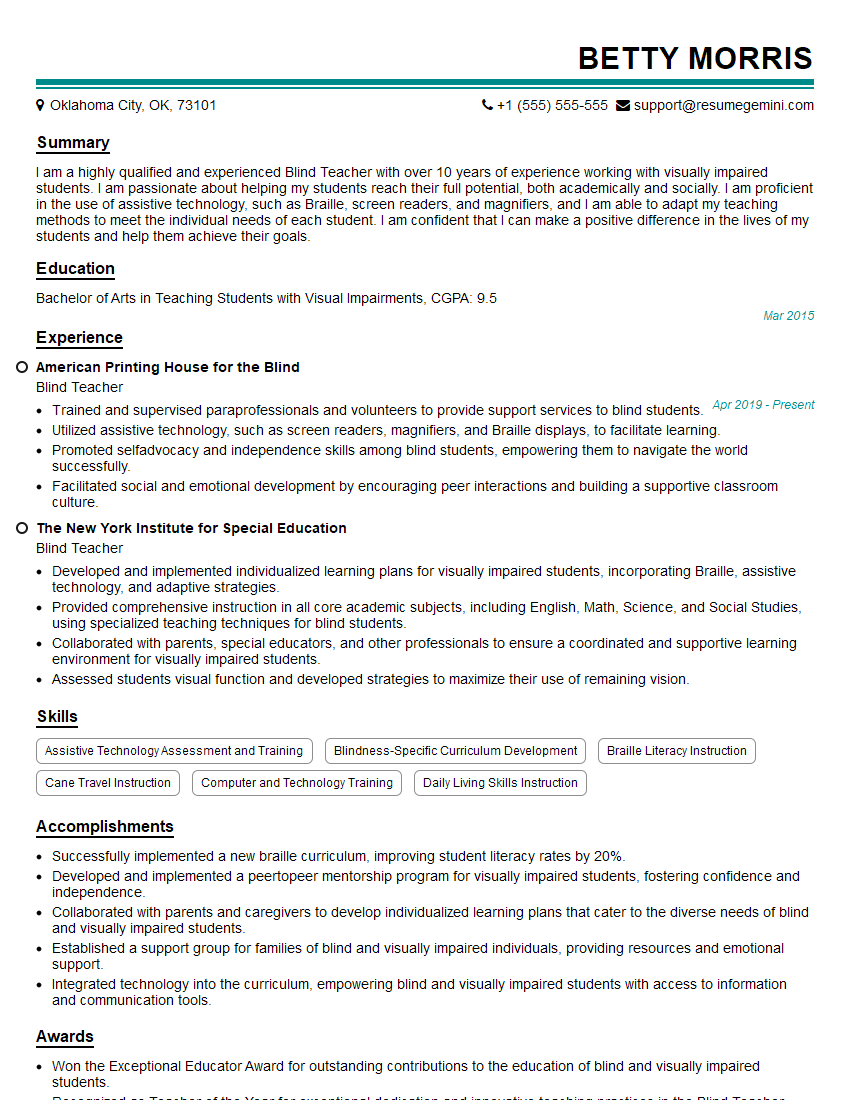
Feeling lost in a sea of interview questions? Landed that dream interview for Blind Teacher but worried you might not have the answers? You’re not alone! This blog is your guide for interview success. We’ll break down the most common Blind Teacher interview questions, providing insightful answers and tips to leave a lasting impression. Plus, we’ll delve into the key responsibilities of this exciting role, so you can walk into your interview feeling confident and prepared.
Acing the interview is crucial, but landing one requires a compelling resume that gets you noticed. Crafting a professional document that highlights your skills and experience is the first step toward interview success. ResumeGemini can help you build a standout resume that gets you called in for that dream job.






Essential Interview Questions For Blind Teacher
1. How do you plan to overcome the challenges of being a blind teacher, particularly in terms of mobility and communication?
- I have developed strong problem-solving skills and a keen sense of hearing, allowing me to navigate and communicate effectively in various environments.
- I utilize assistive technology, such as screen readers and speech-to-text software, to facilitate teaching and communication tasks.
2. What strategies do you employ to create an inclusive and engaging classroom environment for students with diverse needs, including those with visual impairments?
Differentiated Instruction
- I adapt teaching materials and present information in various formats, including auditory, tactile, and digital.
- I provide students with individualized accommodations based on their specific learning needs.
Collaborative Learning
- I encourage students to work collaboratively and support each other’s learning.
- I create group activities where students can share their perspectives and learn from one another.
3. How do you assess student learning and provide effective feedback, given your visual impairment?
- I utilize assistive technology to access student work electronically or have it read aloud to me.
- I provide verbal or written feedback through screen readers or collaborative tools with accessible features.
- I engage in regular conversations with students to monitor their progress and provide personalized guidance.
4. Describe your approach to classroom management and behavior support as a blind teacher.
- I establish clear rules and expectations with my students and ensure consistency in enforcement.
- I use auditory cues, such as tapping or clapping, to redirect students and reinforce desired behaviors.
- I collaborate with support staff, such as paraprofessionals or school counselors, to provide additional assistance when necessary.
5. How do you collaborate with parents and other stakeholders to support student learning and address their concerns?
- I use accessible communication channels, such as email, phone, or video conferencing, to stay connected with parents.
- I schedule regular meetings to discuss student progress, provide updates, and address any concerns.
- I maintain open communication and foster a collaborative partnership with parents to ensure student success.
6. Explain your strategies for planning and organizing lesson plans and teaching materials in an accessible format.
- I utilize accessible word processing software and digital tools to create and format lesson plans.
- I collaborate with support staff or fellow teachers to review and ensure materials are accessible for all students.
- I plan for alternative delivery methods, such as audio recordings or tactile representations, to accommodate diverse learning styles.
7. Describe your experience and knowledge of assistive technology relevant to teaching students with visual impairments.
- I am proficient in using screen readers, such as JAWS and NVDA, to access digital materials and navigate online platforms.
- I have experience working with specialized software and hardware, such as enlarged font software and tactile displays, to support students with visual impairments.
- I am committed to staying abreast of emerging assistive technology and incorporating it into my teaching practices.
8. How do you handle emergency situations, such as fire drills or medical emergencies, as a blind teacher?
- I familiarize myself with the classroom layout and evacuation routes through touch and repeated practice.
- I establish clear procedures for students to follow in case of an emergency and practice these regularly.
- I collaborate with support staff or other teachers to assist with evacuation or provide assistance in emergencies.
9. Explain how you promote self-advocacy and independence in students with visual impairments.
- I provide opportunities for students to practice navigating their environment, using assistive technology, and expressing their needs.
- I encourage students to participate in decision-making and problem-solving related to their education and daily lives.
- I connect students with resources and support systems to empower them beyond the classroom.
10. How does your blindness impact your teaching philosophy and approach to education?
- My blindness has taught me the importance of empathy, patience, and adaptability.
- I believe in creating an inclusive and equitable learning environment where all students feel valued and supported.
- I am passionate about empowering students with visual impairments to reach their full potential and succeed both academically and personally.
Interviewers often ask about specific skills and experiences. With ResumeGemini‘s customizable templates, you can tailor your resume to showcase the skills most relevant to the position, making a powerful first impression. Also check out Resume Template specially tailored for Blind Teacher.
Career Expert Tips:
- Ace those interviews! Prepare effectively by reviewing the Top 50 Most Common Interview Questions on ResumeGemini.
- Navigate your job search with confidence! Explore a wide range of Career Tips on ResumeGemini. Learn about common challenges and recommendations to overcome them.
- Craft the perfect resume! Master the Art of Resume Writing with ResumeGemini’s guide. Showcase your unique qualifications and achievements effectively.
- Great Savings With New Year Deals and Discounts! In 2025, boost your job search and build your dream resume with ResumeGemini’s ATS optimized templates.
Researching the company and tailoring your answers is essential. Once you have a clear understanding of the Blind Teacher‘s requirements, you can use ResumeGemini to adjust your resume to perfectly match the job description.
Key Job Responsibilities
Blind teachers play a crucial role in the education and development of visually impaired students. Their responsibilities encompass a wide range of tasks, including:
1. Educational Instruction
Creating and implementing individualized lesson plans that align with the students’ needs, learning styles, and the curriculum.
- Providing instruction in various subjects, including braille, assistive technology, daily living skills, and academic subjects.
- Assessing students’ progress and making necessary adjustments to the lesson plans.
2. Communication and Collaboration
Effectively communicating with students, colleagues, parents, and other stakeholders to ensure a supportive and inclusive learning environment.
- Interpreting visual information for students through verbal descriptions, tactile aids, and other accessible formats.
- Collaborating with other professionals, such as special educators, occupational therapists, and social workers, to provide comprehensive support to students.
3. Technology Integration
Utilizing assistive technology and specialized software to facilitate students’ learning and access to information.
- Teaching students how to use assistive technology, such as screen readers, magnifiers, and braille displays.
- Integrating technology into lesson plans to enhance student engagement and accessibility.
4. Advocacy and Support
Advocating for the rights and needs of visually impaired students to ensure equal access to education and opportunities.
- Identifying and addressing barriers that may hinder students’ success.
- Providing emotional support and guidance to students and their families.
Interview Tips
Preparing thoroughly for an interview is essential for a successful outcome. Here are some tips to help you ace your interview for a blind teacher position:
1. Research the School and Position
Take the time to learn about the school’s mission, values, and programs. Familiarize yourself with the specific requirements of the blind teacher position.
- Visit the school’s website and social media pages.
- Read any available job descriptions or announcements.
2. Highlight Your Skills and Experience
In your resume and interview, emphasize your relevant skills and experience. Clearly articulate how your qualifications align with the job responsibilities.
- Quantify your accomplishments whenever possible.
- Provide specific examples of your work with visually impaired students.
3. Prepare for Behavioral Questions
Behavioral interview questions focus on your past experiences and behaviors. Prepare thoughtful responses that demonstrate your abilities and values.
- Use the STAR method (Situation, Task, Action, Result) to structure your answers.
- Relate your experiences to the specific requirements of the blind teacher position.
4. Ask Informed Questions
Asking insightful questions at the end of the interview shows your interest and engagement. Prepare a few questions that demonstrate your understanding of the position and the school.
- Ask about the school’s vision for supporting visually impaired students.
- Inquire about the opportunities for professional development and collaboration.
Next Step:
Armed with this knowledge, you’re now well-equipped to tackle the Blind Teacher interview with confidence. Remember, a well-crafted resume is your first impression. Take the time to tailor your resume to highlight your relevant skills and experiences. And don’t forget to practice your answers to common interview questions. With a little preparation, you’ll be on your way to landing your dream job. So what are you waiting for? Start building your resume and start applying! Build an amazing resume with ResumeGemini.