Are you gearing up for an interview for a Cement Worker position? Whether you’re a seasoned professional or just stepping into the role, understanding what’s expected can make all the difference. In this blog, we dive deep into the essential interview questions for Cement Worker and break down the key responsibilities of the role. By exploring these insights, you’ll gain a clearer picture of what employers are looking for and how you can stand out. Read on to equip yourself with the knowledge and confidence needed to ace your next interview and land your dream job!
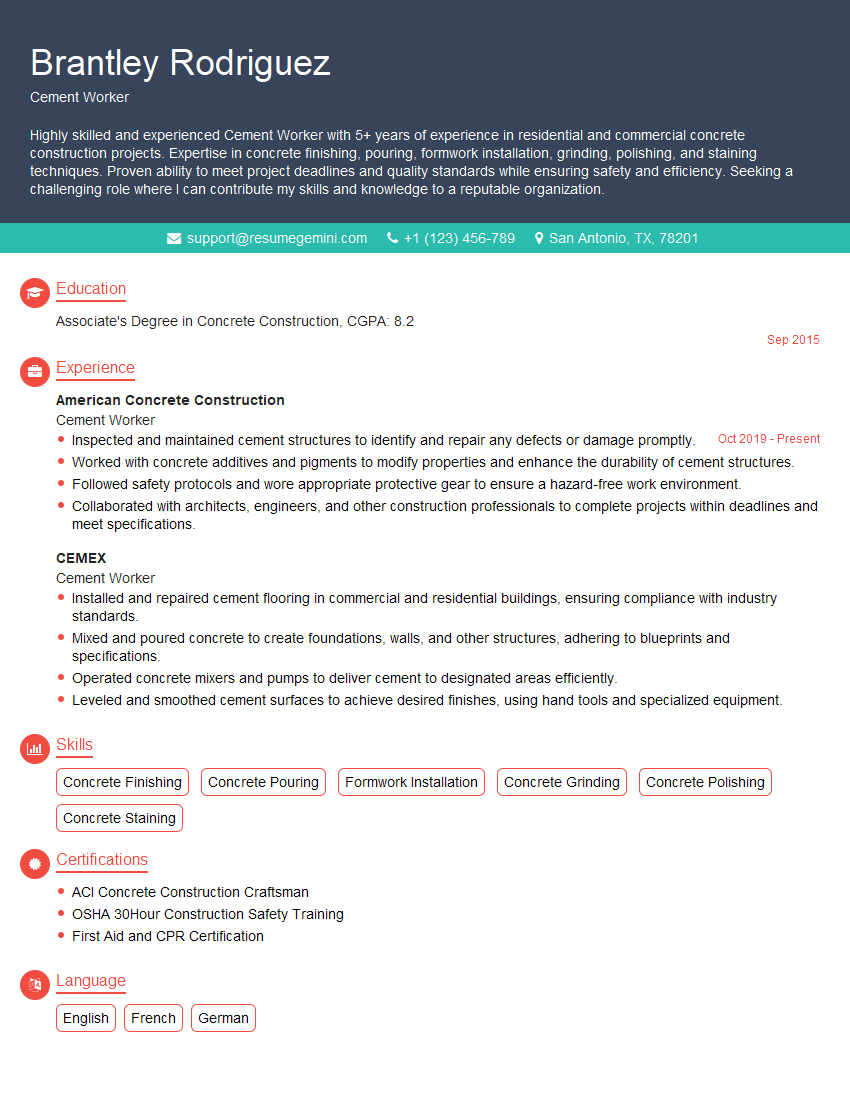
Acing the interview is crucial, but landing one requires a compelling resume that gets you noticed. Crafting a professional document that highlights your skills and experience is the first step toward interview success. ResumeGemini can help you build a standout resume that gets you called in for that dream job.






Essential Interview Questions For Cement Worker
1. What are the key properties of cement?
- Strength: Cement is a strong and durable material that can withstand high compressive and tensile forces.
- Durability: Cement is resistant to weathering, chemicals, and fire, making it suitable for use in a variety of applications.
- Versatility: Cement can be used in a wide range of applications, including concrete, mortar, and grout.
- Cost-effectiveness: Cement is a relatively inexpensive material, making it a good choice for large-scale construction projects.
2. What are the different types of cement?
Hydraulic Cement
- Portland cement: The most common type of cement, used in a wide range of applications.
- Masonry cement: Used for mortar and other masonry applications.
- Oil well cement: Used to seal oil wells.
Non-Hydraulic Cement
- Natural cement: Made from naturally occurring materials, used for less demanding applications.
- Pozzolan cement: Made from a blend of Portland cement and a pozzolan, such as fly ash or silica fume.
3. What are the steps involved in the production of cement?
- Quarrying: Raw materials such as limestone, clay, and sand are quarried.
- Crushing and grinding: The raw materials are crushed and ground into a fine powder.
- Mixing: The powdered materials are mixed together in a kiln.
- Burning: The kiln is heated to a high temperature, causing the materials to fuse and form clinker.
- Grinding: The clinker is ground into a fine powder to produce cement.
4. What are the factors that affect the quality of cement?
- Raw materials: The quality of the raw materials used in the production of cement can affect its strength and durability.
- Manufacturing process: The temperature and duration of the burning process can affect the quality of the cement.
- Storage conditions: Cement should be stored in a dry place to prevent it from absorbing moisture and losing its strength.
5. What are the safety precautions that should be taken when working with cement?
- Wear protective clothing, including gloves, goggles, and a respirator.
- Avoid contact with skin and eyes.
- Do not breathe in cement dust.
- Keep work areas clean and well-ventilated.
6. What are the different applications of cement?
- Concrete: Cement is used as a binder in concrete, which is used for a wide range of construction projects.
- Mortar: Cement is used as a binder in mortar, which is used for bonding bricks and other masonry units.
- Grout: Cement is used as a binder in grout, which is used for filling gaps and voids in concrete.
- Stucco: Cement is used as a binder in stucco, which is used for exterior wall finishes.
7. How can the performance of cement be improved?
- Using high-quality raw materials.
- Optimizing the manufacturing process.
- Adding additives to the cement, such as fly ash or silica fume.
8. What are the challenges facing the cement industry?
- Environmental regulations: The production of cement is a carbon-intensive process, which can lead to environmental concerns.
- Competition: The cement industry is a global industry, and there is competition from producers in other countries.
- Technology: The cement industry is constantly evolving, and new technologies are emerging that can improve the performance and sustainability of cement.
9. What are the latest trends in the cement industry?
- Increased use of alternative fuels: Cement producers are using alternative fuels, such as waste biomass and tires, to reduce their carbon footprint.
- Development of new cement types: New types of cement are being developed that are more sustainable and have improved performance.
- Digitalization: The cement industry is becoming increasingly digitalized, with the use of sensors and data analytics to improve efficiency and quality.
10. What is the future of the cement industry?
- The cement industry is expected to continue to grow in the future, as demand for construction materials increases.
- The industry is expected to become more sustainable, with the use of alternative fuels and new cement types.
- Digitalization will also continue to play a major role in the industry, with the use of sensors and data analytics to improve efficiency and quality.
Interviewers often ask about specific skills and experiences. With ResumeGemini‘s customizable templates, you can tailor your resume to showcase the skills most relevant to the position, making a powerful first impression. Also check out Resume Template specially tailored for Cement Worker.
Career Expert Tips:
- Ace those interviews! Prepare effectively by reviewing the Top 50 Most Common Interview Questions on ResumeGemini.
- Navigate your job search with confidence! Explore a wide range of Career Tips on ResumeGemini. Learn about common challenges and recommendations to overcome them.
- Craft the perfect resume! Master the Art of Resume Writing with ResumeGemini’s guide. Showcase your unique qualifications and achievements effectively.
- Great Savings With New Year Deals and Discounts! In 2025, boost your job search and build your dream resume with ResumeGemini’s ATS optimized templates.
Researching the company and tailoring your answers is essential. Once you have a clear understanding of the Cement Worker‘s requirements, you can use ResumeGemini to adjust your resume to perfectly match the job description.
Key Job Responsibilities
Cement Workers, also known as Concrete Finishers, play a crucial role in the construction industry, responsible for the placement, finishing, and curing of cement and concrete surfaces.
1. Mixing and Placing Concrete
Cement Workers mix and pour concrete according to specifications, ensuring the correct proportions of cement, aggregates, and water.
- Operate concrete mixers to prepare concrete according to required proportions.
- Pour concrete into forms or on surfaces, using hand tools or specialized equipment.
2. Finishing Concrete Surfaces
They level, smooth, and texture concrete surfaces to achieve desired finishes.
- Use hand tools, such as trowels and screeds, to level and smooth concrete surfaces.
- Apply various finishing techniques, such as brooming, stamping, or polishing, to create different surface textures.
3. Curing Concrete
Cement Workers ensure the proper curing of concrete to prevent cracking and ensure durability.
- Spray or apply curing compounds to concrete surfaces to prevent moisture loss.
- Monitor concrete temperature and humidity to ensure optimal curing conditions.
4. Inspecting and Repairing
They inspect concrete surfaces for defects, such as cracks or unevenness, and make necessary repairs.
- Identify and repair concrete defects using patching materials and techniques.
- Conduct quality control checks to ensure the integrity of concrete structures.
Interview Tips
Interview preparation is crucial for candidates to showcase their qualifications and increase the chances of securing a Cement Worker position.
1. Research the Company and Position
Familiarize yourself with the company’s history, values, and current projects. Research the specific job requirements to ensure you understand the role’s responsibilities and expectations.
- Visit the company website and social media pages to gather information about their business.
- Read industry publications and news articles to stay informed about the latest trends and technologies related to cement work.
2. Practice Your Answers
Prepare responses to common interview questions, such as why you’re interested in the position, your relevant skills and experience, and how you handle challenges on the job. Practice delivering your answers clearly and concisely.
- Use the STAR method to structure your answers: Situation, Task, Action, Result.
- Quantify your accomplishments whenever possible to demonstrate the impact of your work.
3. Highlight Your Skills and Experience
Emphasize your abilities in concrete mixing, placement, finishing, curing, and inspection. Showcase your knowledge of industry standards, safety protocols, and any specialized techniques you possess.
- Provide examples of projects where you demonstrated your skills in handling different types of concrete and creating various surface finishes.
- Discuss your experience with specific equipment and technologies used in cement work.
4. Prepare Questions to Ask
Asking thoughtful questions at the end of the interview shows your interest in the position and the company. Prepare questions related to the company’s culture, growth opportunities, or any specific aspects of the job that pique your curiosity.
- Ask about the company’s commitment to safety and quality in their projects.
- Inquire about opportunities for training and professional development.
Next Step:
Now that you’re armed with a solid understanding of what it takes to succeed as a Cement Worker, it’s time to turn that knowledge into action. Take a moment to revisit your resume, ensuring it highlights your relevant skills and experiences. Tailor it to reflect the insights you’ve gained from this blog and make it shine with your unique qualifications. Don’t wait for opportunities to come to you—start applying for Cement Worker positions today and take the first step towards your next career milestone. Your dream job is within reach, and with a polished resume and targeted applications, you’ll be well on your way to achieving your career goals! Build your resume now with ResumeGemini.