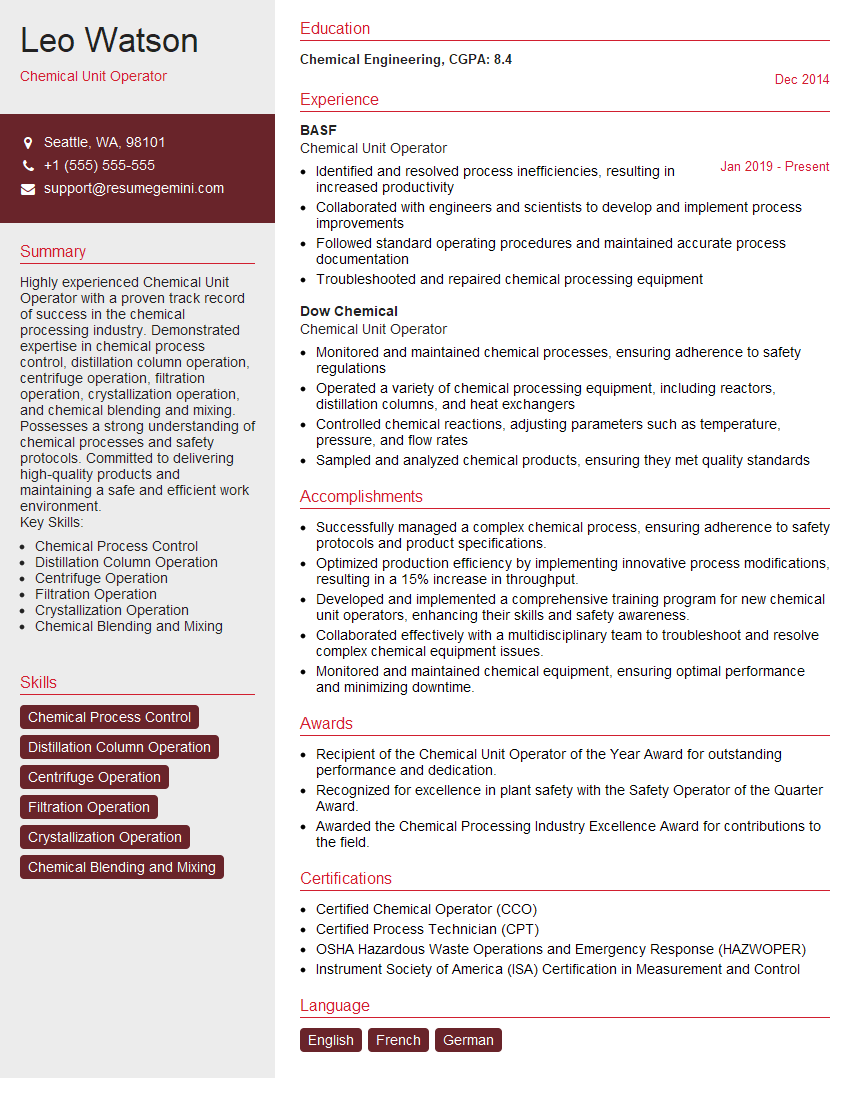
Are you gearing up for an interview for a Chemical Unit Operator position? Whether you’re a seasoned professional or just stepping into the role, understanding what’s expected can make all the difference. In this blog, we dive deep into the essential interview questions for Chemical Unit Operator and break down the key responsibilities of the role. By exploring these insights, you’ll gain a clearer picture of what employers are looking for and how you can stand out. Read on to equip yourself with the knowledge and confidence needed to ace your next interview and land your dream job!
Acing the interview is crucial, but landing one requires a compelling resume that gets you noticed. Crafting a professional document that highlights your skills and experience is the first step toward interview success. ResumeGemini can help you build a standout resume that gets you called in for that dream job.






Essential Interview Questions For Chemical Unit Operator
1. How do you maintain and calibrate various measuring instruments used in the chemical unit, such as pressure gauges, pH meters, and temperature sensors?
- Regular inspection and cleaning
- Calibration according to established procedures
- Documentation of calibration records
- Troubleshooting and repairing minor issues
- Reporting any discrepancies or maintenance needs
2. Describe the different types of chemical reactions involved in the production process and how you ensure safe and efficient operation.
Understanding of chemical reactions
- Types of reactions (e.g., exothermic, endothermic, acid-base)
- Reaction kinetics and thermodynamics
Safety measures
- Hazard identification and risk assessment
- Proper handling and storage of chemicals
- Emergency response procedures
Process efficiency
- Monitoring reaction conditions (temperature, pressure, pH)
- Adjusting process parameters to optimize yield and minimize waste
- Troubleshooting and resolving process issues
3. Explain how you monitor and control the quality of raw materials and finished products to ensure compliance with specifications.
- Sampling and testing techniques
- Understanding of quality control standards
- Interpretation of test results
- Implementation of corrective actions based on quality data
4. How do you handle and dispose of hazardous chemicals and waste generated in the chemical unit?
- Compliance with environmental regulations
- Proper labeling, storage, and handling techniques
- Waste characterization and disposal methods
- Emergency spill response procedures
5. Describe your experience with operating and maintaining pumps, compressors, and other mechanical equipment used in chemical production.
- Types of equipment operated (e.g., centrifugal pumps, reciprocating compressors)
- Maintenance schedules and troubleshooting procedures
- Condition monitoring and predictive maintenance
6. How do you ensure the safe and efficient operation of chemical reactors, including startup, shutdown, and troubleshooting?
Startup and shutdown procedures
- Following established protocols
- Monitoring process parameters and making necessary adjustments
Troubleshooting
- Identifying and diagnosing process deviations
- Implementing corrective actions to restore normal operation
7. How do you coordinate with other team members, such as operators, engineers, and maintenance technicians, to ensure smooth operation of the chemical unit?
- Communication and collaboration skills
- Understanding of team roles and responsibilities
- Ability to resolve conflicts and find solutions
8. Describe your experience with process optimization and how you have implemented improvements in the chemical unit.
- Process analysis techniques (e.g., Six Sigma, lean manufacturing)
- Identification of inefficiencies and bottlenecks
- Implementation of solutions to improve yield, reduce costs, or enhance safety
9. What are your strengths and weaknesses as a Chemical Unit Operator?
Strengths:
- Technical knowledge and skills
- Attention to detail and safety
- Problem-solving abilities
- Teamwork and communication skills
Weaknesses:
- Acknowledge any relevant areas for improvement
- Explain how you are actively addressing them
10. Do you have any questions for us about the role or the company?
- Asking thoughtful questions shows interest and engagement
- May relate to the company’s culture, growth opportunities, or specific aspects of the role
Interviewers often ask about specific skills and experiences. With ResumeGemini‘s customizable templates, you can tailor your resume to showcase the skills most relevant to the position, making a powerful first impression. Also check out Resume Template specially tailored for Chemical Unit Operator.
Career Expert Tips:
- Ace those interviews! Prepare effectively by reviewing the Top 50 Most Common Interview Questions on ResumeGemini.
- Navigate your job search with confidence! Explore a wide range of Career Tips on ResumeGemini. Learn about common challenges and recommendations to overcome them.
- Craft the perfect resume! Master the Art of Resume Writing with ResumeGemini’s guide. Showcase your unique qualifications and achievements effectively.
- Great Savings With New Year Deals and Discounts! In 2025, boost your job search and build your dream resume with ResumeGemini’s ATS optimized templates.
Researching the company and tailoring your answers is essential. Once you have a clear understanding of the Chemical Unit Operator‘s requirements, you can use ResumeGemini to adjust your resume to perfectly match the job description.
Key Job Responsibilities
Chemical Unit Operators are responsible for the safe and efficient operation of chemical processing equipment in a variety of industrial settings. As such, they are required to cover a range of operational aspects to ensure adherence to standard operating procedures, technical specifications, and quality standards. Their key responsibilities include but are not limited to:
1. Equipment Operation and Maintenance
Operators are tasked with monitoring, controlling, and operating chemical processing equipment such as reactors, pumps, and distillation columns. Regular maintenance duties meliputi performing routine inspections, calibrating instruments, and ensuring equipment is in optimal working condition to prevent breakages and malfunctions that could lead to downtime or safety hazards.
2. Process Monitoring and Control
Effective operators continuously survey process parameters, such as temperature, pH levels, and pressure, to ensure they align with established operating limits. By promptly responding to process deviations, they contribute to maintaining product quality and efficient production. They implement adjustments to operating conditions and equipment settings as needed, following established protocols and their own expert judgment.
3. Data Recording and Analysis
Accurate and timely data recording and analysis are essential duties of Chemical Unit Operators. They maintain logs and reports that capture operating data, process parameters, and any deviations or incidents that occur. These records are vital for process optimization, troubleshooting, and regulatory compliance. By analyzing data, operators can identify trends and patterns that can help improve efficiency and quality.
4. Safety and Compliance
Upholding safety protocols is paramount for Chemical Unit Operators. They adhere to safety regulations and guidelines, wearing appropriate protective equipment and following established procedures to prevent accidents and protect themselves, their colleagues, and the environment. They also actively participate in safety training programs and drills to stay up-to-date on best practices and emergency response procedures.
Interview Tips
Preparing for an interview for the role of a Chemical Unit Operator requires a combination of technical knowledge, industry expertise, and a strong understanding of safety protocols. Here are some interview tips and hacks to enhance your preparation and help you ace the interview:
1. Research the Company and Position
Before the interview, take the time to thoroughly research the company and the specific role you are applying for. Understand the company’s operations, their products/services, and their position within the industry. Demonstrating your knowledge of the company’s profile and the requirements of the role shows that you are genuinely interested in the position and have put in the effort to learn about the company.
2. Review and Refresh Technical Concepts
Chemical Unit Operators are expected to possess a solid understanding of chemical engineering principles and process control techniques. Refresh your knowledge of key concepts such as reaction kinetics, mass and energy balances, and process instrumentation. Review safety protocols and industry best practices to demonstrate your technical competence and commitment to safety.
3. Practice Answering Common Interview Questions
Dedicate time to practicing your responses to common interview questions. Consider questions related to your technical skills, experience in operating chemical processing equipment, and your approach to handling process deviations. Prepare concise and informative answers that highlight your strengths and align with the job requirements.
4. Showcase Your Safety Mindset
Employers in the chemical industry place a high value on safety. Emphasize your strong safety mindset and commitment to adhering to safety regulations and protocols. Share examples of your safety practices and risk assessment techniques during previous roles. Explain how you prioritize safety in your daily work and contribute to a positive safety culture.
5. Highlight Your Problem-Solving Abilities
Chemical Unit Operators often encounter unexpected situations and process deviations. In the interview, emphasize your problem-solving abilities and decision-making skills. Describe real-world examples of how you analyzed process data, identified root causes, and implemented solutions to resolve issues effectively.
Next Step:
Armed with this knowledge, you’re now well-equipped to tackle the Chemical Unit Operator interview with confidence. Remember, preparation is key. So, start crafting your resume, highlighting your relevant skills and experiences. Don’t be afraid to tailor your application to each specific job posting. With the right approach and a bit of practice, you’ll be well on your way to landing your dream job. Build your resume now from scratch or optimize your existing resume with ResumeGemini. Wish you luck in your career journey!