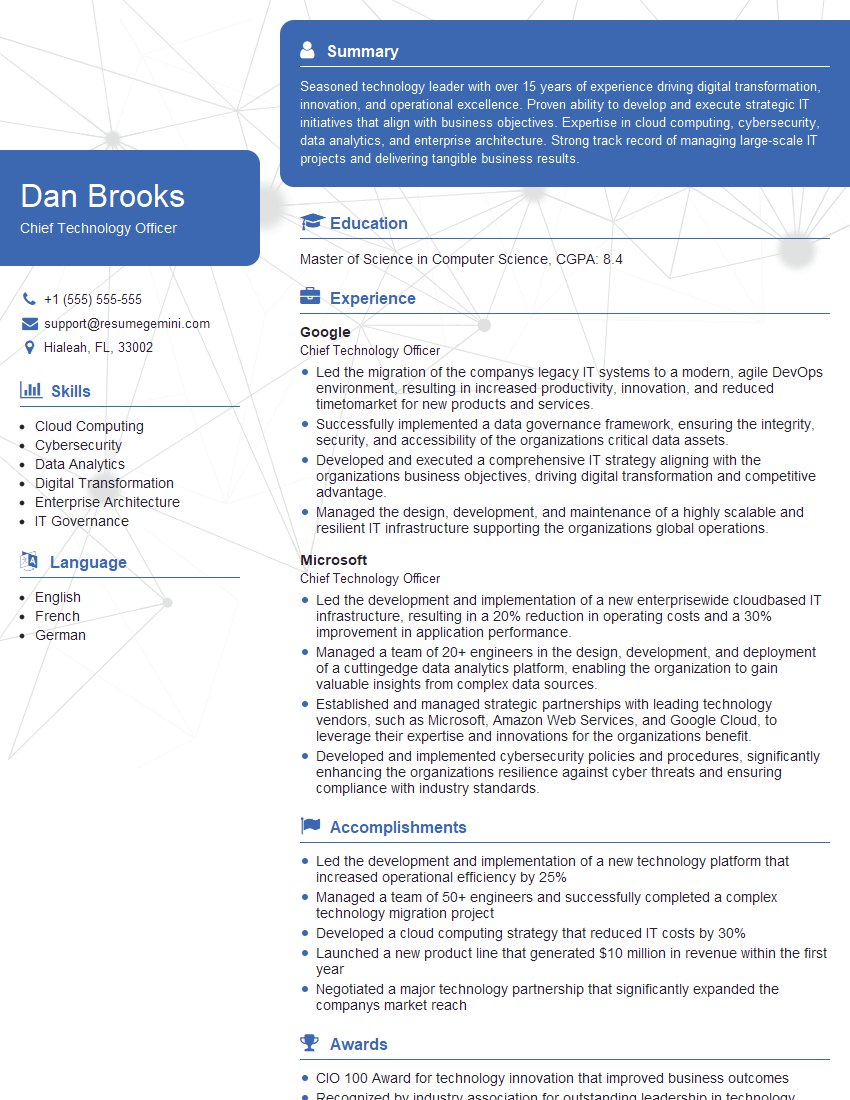
Are you gearing up for a career in Chief Technology Officer? Feeling nervous about the interview questions that might come your way? Don’t worry, you’re in the right place. In this blog post, we’ll dive deep into the most common interview questions for Chief Technology Officer and provide you with expert-backed answers. We’ll also explore the key responsibilities of this role so you can tailor your responses to showcase your perfect fit.
Acing the interview is crucial, but landing one requires a compelling resume that gets you noticed. Crafting a professional document that highlights your skills and experience is the first step toward interview success. ResumeGemini can help you build a standout resume that gets you called in for that dream job.






Essential Interview Questions For Chief Technology Officer
1. Tell us about a time when you had to make a difficult technological decision. What factors did you consider, and how did you arrive at your decision?
In my previous role as CTO, I was tasked with selecting a new cloud platform for our company. This was a highly complex decision, as we had to consider factors such as security, scalability, cost, and availability. I began by researching and evaluating different platforms, taking into account our specific business needs and constraints. I also consulted with our engineering team to gather their insights and recommendations. After careful consideration, I selected a platform that met our requirements while also providing the potential for future growth and innovation.
2. What are your thoughts on the latest trends in cloud computing and how do you see them impacting the future of technology?
Modernization and Agility
- Cloud computing enables businesses to modernize their infrastructure and applications, leading to greater agility and innovation.
- With cloud-based solutions, companies can quickly scale their operations up or down, responding to changing market demands and business needs.
Cost Optimization
- Cloud computing offers cost-effective solutions, eliminating the need for expensive hardware and maintenance.
- Businesses can pay only for the resources they consume, optimizing costs and improving financial flexibility.
Security and Compliance
- Cloud providers invest heavily in security measures, ensuring the protection of sensitive data and compliance with regulations.
- Cloud-based security solutions can enhance an organization’s overall security posture.
3. How do you stay up-to-date on the latest technological advancements and industry best practices?
- Attending conferences, webinars, and industry events to connect with experts and learn about new technologies.
- Reading technical articles, whitepapers, and research papers to stay informed about emerging trends and advancements.
- Participating in online forums and discussion groups to engage with peers and gain insights into different perspectives.
- Collaborating with thought leaders, researchers, and vendors to stay at the forefront of innovation.
4. What is your approach to building and managing a high-performing engineering team?
- Establishing a clear vision and strategic direction for the team, ensuring alignment with business objectives.
- Creating a culture of collaboration and open communication, fostering teamwork and knowledge sharing.
- Empowering engineers with decision-making authority and providing opportunities for growth and development.
- Investing in training and professional development to enhance team skills and stay competitive in the industry.
- Implementing performance management systems to track progress, provide feedback, and recognize achievements.
5. How do you approach risk management in a technology environment?
- Conducting thorough risk assessments to identify potential vulnerabilities and threats.
- Developing and implementing risk mitigation strategies, including security measures, data backup, and disaster recovery plans.
- Establishing monitoring systems to detect and respond to incidents promptly.
- Educating and training employees on risk management best practices.
- Collaborating with stakeholders across the organization to ensure a comprehensive risk management approach.
6. Can you describe your experience with implementing and managing DevOps practices?
- Introducing agile methodologies to streamline software development and delivery.
- Automating build, testing, and deployment processes using CI/CD tools.
- Establishing continuous integration and continuous delivery pipelines to enhance efficiency and reduce time to market.
- Fostering collaboration between development and operations teams to break down silos and improve communication.
- Measuring and tracking key metrics to monitor progress and identify areas for improvement.
7. How do you ensure that your technology strategy aligns with the overall business strategy?
- Understanding the business vision, mission, and strategic objectives.
- Collaborating with business leaders to identify technology needs and opportunities.
- Developing a technology roadmap that supports business goals and initiatives.
- Prioritizing technology investments based on their potential impact on business outcomes.
- Continuously monitoring and evaluating the alignment of technology strategy with business strategy.
8. What is your approach to managing technology vendors and partners?
- Conducting thorough vendor due diligence to assess capabilities, track record, and financial stability.
- Negotiating contracts that clearly define roles, responsibilities, and service level agreements.
- Establishing clear communication channels and regular review meetings to ensure alignment and progress.
- Evaluating vendor performance based on agreed-upon metrics and taking corrective action as needed.
- Seeking opportunities for collaboration and innovation with technology partners.
9. Can you provide an example of a successful technology project that you led? What were the key factors that contributed to its success?
In my previous role, I led a project to implement a new customer relationship management (CRM) system. The key factors that contributed to the success of the project included:
- Engaging stakeholders early on to gather requirements and ensure buy-in.
- Establishing a clear project plan and timeline.
- Utilizing agile methodologies to ensure flexibility and adaptability.
- Maintaining open communication channels and providing regular updates.
- Investing in training and support to ensure user adoption.
10. How do you measure the success of your work as a CTO?
- Alignment of technology strategy with business goals.
- Successful implementation and adoption of new technologies.
- Improved operational efficiency and cost savings.
- Increased customer satisfaction and loyalty.
- Recognition and industry awards for technology innovation.
Interviewers often ask about specific skills and experiences. With ResumeGemini‘s customizable templates, you can tailor your resume to showcase the skills most relevant to the position, making a powerful first impression. Also check out Resume Template specially tailored for Chief Technology Officer.
Career Expert Tips:
- Ace those interviews! Prepare effectively by reviewing the Top 50 Most Common Interview Questions on ResumeGemini.
- Navigate your job search with confidence! Explore a wide range of Career Tips on ResumeGemini. Learn about common challenges and recommendations to overcome them.
- Craft the perfect resume! Master the Art of Resume Writing with ResumeGemini’s guide. Showcase your unique qualifications and achievements effectively.
- Great Savings With New Year Deals and Discounts! In 2025, boost your job search and build your dream resume with ResumeGemini’s ATS optimized templates.
Researching the company and tailoring your answers is essential. Once you have a clear understanding of the Chief Technology Officer‘s requirements, you can use ResumeGemini to adjust your resume to perfectly match the job description.
Key Job Responsibilities
As Chief Technology Officer (CTO), you will play a pivotal role in driving the technological vision and strategy of our organization. Your responsibilities will encompass a wide range of areas, including:
1. Technology Strategy and Vision
Develop and articulate the organization’s technology strategy, aligning it with the overall business goals. Lead the development of a comprehensive technology roadmap and ensure its execution.
2. Technology Infrastructure and Operations
Manage and oversee the organization’s technology infrastructure, ensuring its reliability, security, and efficiency. Supervise the development and implementation of new technologies and systems.
3. Innovation and Research
Cultivate a culture of innovation, identifying and evaluating emerging technologies. Lead research and development initiatives to create competitive advantages for the organization.
4. Data Management and Analytics
Establish and manage data governance policies and strategies. Leverage data analytics to gain insights and drive informed decision-making.
Interview Tips
To ace your interview for the CTO position, thorough preparation is crucial. Here are some tips to help you stand out:
1. Research the Organization and Industry
Demonstrate your understanding of the organization’s business model, industry trends, and competitive landscape. This will show the interviewer that you are invested in the role and have a clear grasp of the company’s needs.
2. Highlight Your Strategic Vision
Articulate your vision for technology’s role in the organization’s future success. Explain how you will leverage technology to drive innovation, optimize operations, and enhance customer experience.
3. Showcase Your Technical Expertise
Provide specific examples of your expertise in key technology areas relevant to the organization’s industry. Emphasize your ability to identify and implement cutting-edge solutions that deliver tangible results.
4. Emphasize Your Leadership and Collaboration Skills
A CTO must be an effective leader and collaborator. Highlight your ability to motivate and inspire teams, foster a culture of innovation, and build strong relationships with stakeholders across the organization.
5. Practice Your Communication Skills
CTOs must be able to effectively communicate their vision, technical concepts, and recommendations to both technical and non-technical audiences. Practice your presentation and communication skills to ensure you can clearly articulate your ideas.
6. Prepare for Behavioral Questions
Behavioral questions are often used in interviews to assess your problem-solving, decision-making, and interpersonal skills. Be prepared to provide specific examples of how you have handled challenging situations and achieved positive outcomes.
Next Step:
Now that you’re armed with interview-winning answers and a deeper understanding of the Chief Technology Officer role, it’s time to take action! Does your resume accurately reflect your skills and experience for this position? If not, head over to ResumeGemini. Here, you’ll find all the tools and tips to craft a resume that gets noticed. Don’t let a weak resume hold you back from landing your dream job. Polish your resume, hit the “Build Your Resume” button, and watch your career take off! Remember, preparation is key, and ResumeGemini is your partner in interview success.