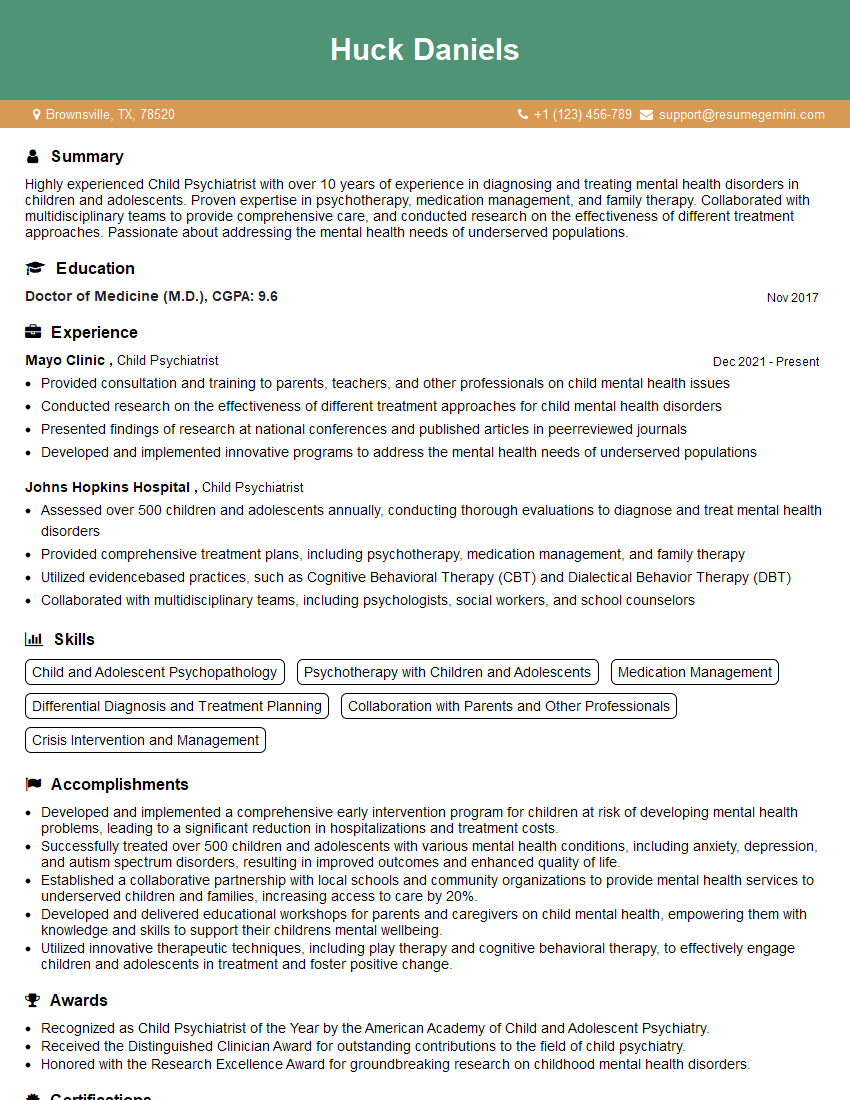
Feeling lost in a sea of interview questions? Landed that dream interview for Child Psychiatrist but worried you might not have the answers? You’re not alone! This blog is your guide for interview success. We’ll break down the most common Child Psychiatrist interview questions, providing insightful answers and tips to leave a lasting impression. Plus, we’ll delve into the key responsibilities of this exciting role, so you can walk into your interview feeling confident and prepared.
Acing the interview is crucial, but landing one requires a compelling resume that gets you noticed. Crafting a professional document that highlights your skills and experience is the first step toward interview success. ResumeGemini can help you build a standout resume that gets you called in for that dream job.






Essential Interview Questions For Child Psychiatrist
1. What is your understanding of the role of a child psychiatrist and how does it differ from child psychology?
Child psychiatrists are medical doctors who have completed additional training in child and adolescent psychiatry. They are able to prescribe medication and provide psychotherapy to children and adolescents. Child psychologists, on the other hand, have a doctorate in psychology and are able to provide psychotherapy but not prescribe medication.
- Child psychiatrists are able to prescribe medication, while child psychologists are not.
- Child psychiatrists have completed additional training in child and adolescent psychiatry, while child psychologists have completed a doctorate in psychology.
2. What are the most common mental health disorders that you see in children and adolescents?
Mental Health Disorders in Children
- Attention-deficit/hyperactivity disorder (ADHD)
- Anxiety disorders
- Depression
Mental Health Disorders in Adolescents
- Depression
- Anxiety disorders
- Eating disorders
3. How do you approach the diagnosis of a child or adolescent with a mental health disorder?
I would first take a thorough history of the child or adolescent, including their symptoms, family history, and any previous mental health treatment. I would then perform a physical exam and order any necessary laboratory tests. After gathering all of this information, I would make a diagnosis and develop a treatment plan.
- Take a thorough history of the child or adolescent.
- Perform a physical exam.
- Order any necessary laboratory tests.
- Make a diagnosis.
- Develop a treatment plan.
4. What are the different types of psychotherapy that you use with children and adolescents?
I use a variety of psychotherapy techniques with children and adolescents, including:
- Cognitive-behavioral therapy (CBT)
- Dialectical behavior therapy (DBT)
- Family therapy
- Play therapy
5. How do you work with parents and other caregivers of children and adolescents with mental health disorders?
I believe that it is important to work closely with parents and other caregivers of children and adolescents with mental health disorders. I provide them with education about the disorder, support, and guidance. I also involve them in the treatment process as much as possible.
- Provide education about the disorder.
- Offer support and guidance.
- Involve them in the treatment process.
6. What are the ethical considerations that you must be aware of when working with children and adolescents?
There are a number of ethical considerations that I must be aware of when working with children and adolescents, including:
- Confidentiality
- Informed consent
- Dual relationships
7. What are your thoughts on the use of medication in the treatment of mental health disorders in children and adolescents?
I believe that medication can be an effective treatment for mental health disorders in children and adolescents. However, I also believe that it should only be used when necessary and in conjunction with psychotherapy.
- Medication can be an effective treatment for mental health disorders in children and adolescents.
- Medication should only be used when necessary and in conjunction with psychotherapy.
8. What are the challenges and rewards of working as a child psychiatrist?
Challenges
- Working with children and adolescents can be challenging, as they may not be able to express their thoughts and feelings in the same way that adults can.
- The work can also be emotionally demanding, as I am often dealing with children and adolescents who are struggling with significant mental health issues.
Rewards
- The work can also be very rewarding, as I am able to make a real difference in the lives of children and adolescents.
- It is a privilege to be able to help children and adolescents overcome their mental health challenges and reach their full potential.
9. What are your plans for continuing your professional development?
I am committed to continuing my professional development and staying up-to-date on the latest research and treatment methods in child and adolescent psychiatry. I plan to attend conferences, workshops, and continuing education courses.
- Attend conferences.
- Attend workshops.
- Complete continuing education courses.
10. Do you have any questions for me?
This is your opportunity to ask the interviewer any questions that you have about the position or the organization.
Interviewers often ask about specific skills and experiences. With ResumeGemini‘s customizable templates, you can tailor your resume to showcase the skills most relevant to the position, making a powerful first impression. Also check out Resume Template specially tailored for Child Psychiatrist.
Career Expert Tips:
- Ace those interviews! Prepare effectively by reviewing the Top 50 Most Common Interview Questions on ResumeGemini.
- Navigate your job search with confidence! Explore a wide range of Career Tips on ResumeGemini. Learn about common challenges and recommendations to overcome them.
- Craft the perfect resume! Master the Art of Resume Writing with ResumeGemini’s guide. Showcase your unique qualifications and achievements effectively.
- Great Savings With New Year Deals and Discounts! In 2025, boost your job search and build your dream resume with ResumeGemini’s ATS optimized templates.
Researching the company and tailoring your answers is essential. Once you have a clear understanding of the Child Psychiatrist‘s requirements, you can use ResumeGemini to adjust your resume to perfectly match the job description.
Key Job Responsibilities
Child Psychiatrists play a crucial role in diagnosing, treating, and preventing mental, emotional, and behavioral disorders in children and adolescents.
1. Patient Care
Child Psychiatrists provide comprehensive diagnostic evaluations, develop treatment plans, and administer evidence-based therapies to address the unique needs of young patients.
- Conduct thorough psychiatric interviews and assessments to gather medical history, symptoms, and family dynamics.
- Diagnose mental health conditions, including anxiety disorders, depression, ADHD, autism spectrum disorder, and conduct disorders.
- Develop and implement individualized treatment plans that may include psychotherapy, medication management, behavioral interventions, and parent education.
- Monitor patient progress, adjust treatment plans as needed, and provide ongoing support and guidance.
2. Collaboration and Communication
Child Psychiatrists work closely with other healthcare professionals, educators, and family members to provide a holistic approach to patient care.
- Collaborate with pediatricians, therapists, school counselors, and social workers to ensure comprehensive care.
- Communicate effectively with parents, guardians, and other caregivers to provide updates on patient progress and discuss treatment options.
- Educate families, school staff, and community members about mental health disorders, prevention, and treatment.
3. Research and Education
Child Psychiatrists stay abreast of the latest research in child and adolescent mental health and engage in professional development activities.
- Conduct or participate in research studies to advance the understanding and treatment of mental health disorders in children.
- Attend conferences and workshops to stay updated on best practices and innovative approaches in the field.
- Teach and mentor medical students, residents, and other healthcare professionals interested in child and adolescent psychiatry.
4. Advocacy and Outreach
Child Psychiatrists advocate for the rights and well-being of children and adolescents with mental health needs.
- Participate in community outreach programs to raise awareness about mental health issues and reduce stigma.
- Advocate for policies and funding that support the mental health of children and adolescents.
- Collaborate with organizations and agencies to improve access to mental health services for young people.
Interview Tips
To ace an interview for a Child Psychiatrist position, it is crucial to prepare thoroughly and demonstrate your expertise, compassion, and commitment to providing quality care to young patients.
1. Research the Organization and Position
Before the interview, take the time to research the healthcare organization and the specific Child Psychiatrist position. This will help you understand their mission, values, and the scope of the role.
- Visit the organization’s website to learn about their history, services, and team.
- Review the job description carefully to identify the key responsibilities and qualifications required.
2. Highlight Your Experience and Skills
Prepare to discuss your experience and skills that are relevant to the role of a Child Psychiatrist. Use specific examples to demonstrate your:
- Clinical skills, including diagnostic assessments, treatment planning, and therapeutic interventions.
- Collaboration and communication abilities, such as working effectively with families, schools, and other healthcare professionals.
- Research and teaching experience, if applicable.
- Advocacy and outreach efforts to support children and adolescents with mental health needs.
3. Emphasize Your Passion and Commitment
In your interview, convey your passion for working with children and adolescents and your commitment to providing them with high-quality mental health care.
- Share personal anecdotes or experiences that highlight your empathy, understanding, and dedication to young patients.
- Explain why you chose child and adolescent psychiatry as a profession and what motivates you in this field.
4. Prepare for Behavioral Interview Questions
Behavioral interview questions are common in healthcare interviews. These questions ask you to provide specific examples of how you have demonstrated certain skills or behaviors in the past.
- Use the STAR method (Situation, Task, Action, Result) to structure your answers.
- Describe a specific situation when you faced a challenge, took action, and achieved a positive outcome.
5. Practice and Seek Feedback
Before the interview, practice answering common interview questions. Ask a friend, family member, or career counselor to provide feedback on your answers.
- Practice delivering your answers clearly and confidently.
- Get constructive criticism to improve your presentation and address any areas for improvement.
Next Step:
Armed with this knowledge, you’re now well-equipped to tackle the Child Psychiatrist interview with confidence. Remember, preparation is key. So, start crafting your resume, highlighting your relevant skills and experiences. Don’t be afraid to tailor your application to each specific job posting. With the right approach and a bit of practice, you’ll be well on your way to landing your dream job. Build your resume now from scratch or optimize your existing resume with ResumeGemini. Wish you luck in your career journey!