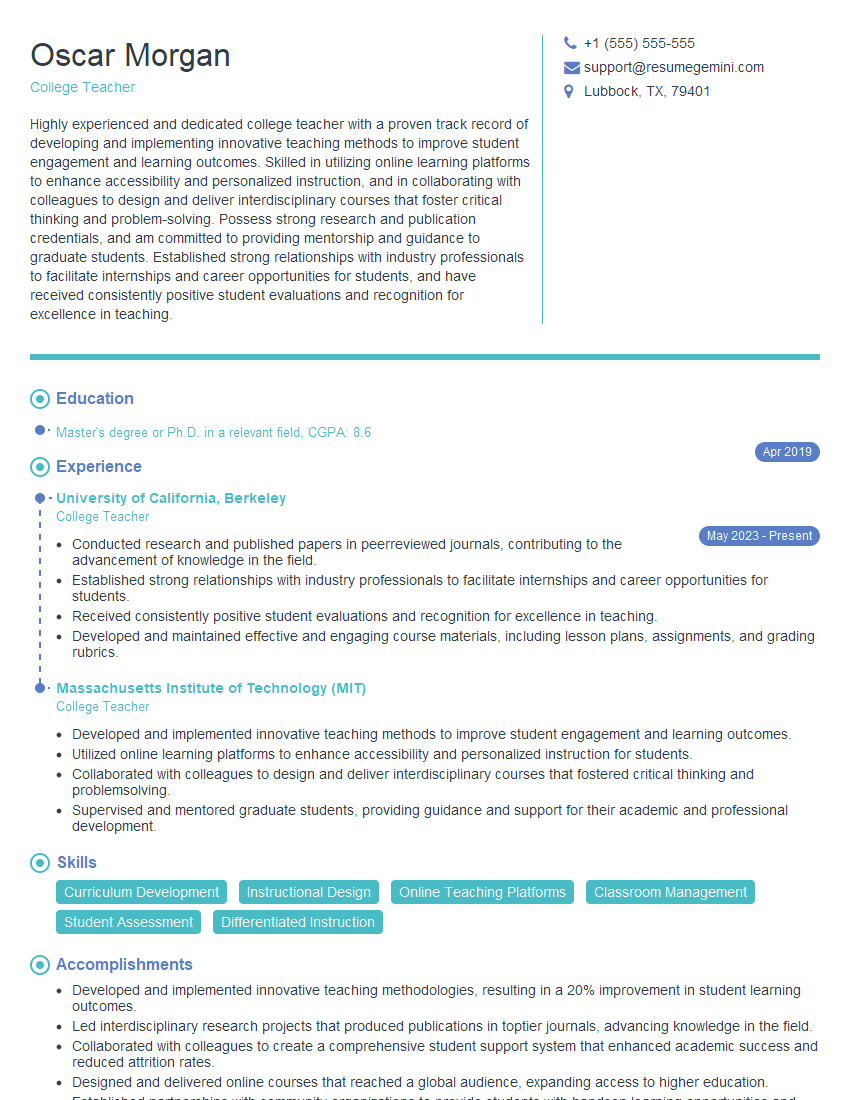
Are you gearing up for a career in College Teacher? Feeling nervous about the interview questions that might come your way? Don’t worry, you’re in the right place. In this blog post, we’ll dive deep into the most common interview questions for College Teacher and provide you with expert-backed answers. We’ll also explore the key responsibilities of this role so you can tailor your responses to showcase your perfect fit.
Acing the interview is crucial, but landing one requires a compelling resume that gets you noticed. Crafting a professional document that highlights your skills and experience is the first step toward interview success. ResumeGemini can help you build a standout resume that gets you called in for that dream job.






Essential Interview Questions For College Teacher
1. How do you plan and organize your lessons to ensure effective student learning?
- Describe your process for identifying learning objectives and aligning them with course content.
- Explain how you sequence and pace your lessons to optimize student engagement and understanding.
- Discuss your strategies for incorporating active learning activities and assessments to promote comprehension.
2. What approaches do you use to assess student learning effectively?
Assessment Methods
- Describe the different types of assessments you utilize, such as formative, summative, and diagnostic.
- Explain how you design assessments to measure student achievement and provide meaningful feedback.
Feedback and Evaluation
- Discuss your techniques for providing timely and constructive feedback to students.
- Explain how you use assessment data to evaluate your teaching effectiveness and make necessary adjustments.
3. How do you create a positive and inclusive classroom environment that supports diverse learners?
- Describe your strategies for establishing a respectful and supportive learning atmosphere.
- Explain how you address the needs of students with diverse backgrounds, learning styles, and abilities.
- Discuss your approaches for promoting collaboration and peer support within the classroom.
4. What is your experience with using technology to enhance student learning?
- Describe the different technologies you have integrated into your teaching practice.
- Explain how you utilize technology to enhance accessibility, promote active learning, and provide personalized learning experiences.
- Discuss your strategies for incorporating technology into your lesson planning and assessment.
5. How do you stay up-to-date with advancements in your field and best practices in education?
- Describe the resources you utilize to keep your knowledge current, such as attending conferences, reading journals, and engaging in professional development.
- Explain how you incorporate new knowledge into your teaching practice and share it with colleagues.
- Discuss your involvement in research or innovation projects related to your teaching field.
6. How do you handle challenging student behaviors and create a positive and productive learning environment?
- Describe your strategies for establishing clear expectations and rules for student conduct.
- Explain how you proactively address potential behavioral issues and promote self-regulation among students.
- Discuss your approaches for collaborating with parents and other stakeholders to address student behavior concerns.
7. What is your philosophy on student grading and feedback?
- Explain your rationale for the grading system you utilize and how it aligns with your learning objectives.
- Discuss your approaches for providing meaningful feedback to students that promotes growth and improvement.
- Describe your strategies for addressing grading disputes or challenges from students.
8. How do you foster a culture of academic integrity in your classroom?
- Describe your policies and strategies for preventing and addressing plagiarism, cheating, and other forms of academic misconduct.
- Explain how you promote honesty and ethical behavior among students and create an atmosphere of trust and respect.
- Discuss your approaches for responding to suspected cases of academic integrity violations and collaborating with relevant stakeholders.
9. How do you support students outside the classroom?
- Describe the office hours or other designated times you make yourself available to students for support.
- Explain how you provide guidance and assistance to students with academic, personal, or career-related matters.
- Discuss your strategies for connecting students with campus resources and other support services.
10. How do you contribute to the college or university community beyond teaching?
- Describe your involvement in faculty committees, research projects, or other initiatives that contribute to the institution.
- Explain how you share your expertise and collaborate with colleagues to enhance the teaching and learning environment.
- Discuss your commitment to service and outreach activities that benefit the community or profession.
Interviewers often ask about specific skills and experiences. With ResumeGemini‘s customizable templates, you can tailor your resume to showcase the skills most relevant to the position, making a powerful first impression. Also check out Resume Template specially tailored for College Teacher.
Career Expert Tips:
- Ace those interviews! Prepare effectively by reviewing the Top 50 Most Common Interview Questions on ResumeGemini.
- Navigate your job search with confidence! Explore a wide range of Career Tips on ResumeGemini. Learn about common challenges and recommendations to overcome them.
- Craft the perfect resume! Master the Art of Resume Writing with ResumeGemini’s guide. Showcase your unique qualifications and achievements effectively.
- Great Savings With New Year Deals and Discounts! In 2025, boost your job search and build your dream resume with ResumeGemini’s ATS optimized templates.
Researching the company and tailoring your answers is essential. Once you have a clear understanding of the College Teacher‘s requirements, you can use ResumeGemini to adjust your resume to perfectly match the job description.
Key Job Responsibilities
College Teachers, also known as college professors, are responsible for imparting knowledge and developing the intellectual abilities of students at colleges and universities. Their duties encompass a wide range of tasks, including lesson planning, classroom teaching, research, and student assessment.
1. Lesson Planning and Delivery
College Teachers design and deliver course curricula that align with learning objectives and student needs. They prepare lectures, presentations, and other materials to effectively convey course content to students.
- Plan lesson plans and develop course materials
- Deliver lectures and lead discussions
- Facilitate student understanding and engagement
2. Research and Scholarship
College Teachers engage in scholarly activities to expand knowledge and contribute to their respective fields. They conduct research, write papers, and present their findings at conferences and in academic journals.
- Conduct original research and publish in academic journals
- Attend conferences and present research findings
- Collaborate with other researchers and scholars
3. Student Assessment and Evaluation
College Teachers develop and administer assessments to evaluate student learning. They provide feedback and guidance to students to support their academic progress.
- Develop and administer tests, exams, and assignments
- Provide feedback to students on their performance
- Track student progress and make recommendations for improvement
4. Advising and Mentoring
College Teachers provide guidance and support to students outside of the classroom. They advise students on academic and career matters, offer mentorship, and encourage personal growth.
- Advise students on course selection and academic planning
- Provide career counseling and support
- Mentor students on research projects and other academic endeavors
Interview Tips
Preparing for a College Teacher interview requires thorough research and practice. Here are some tips to help candidates ace the interview:
1. Research the Institution and Position
Gather information about the college or university, the department, and the specific position you are applying for. This will provide you with a solid understanding of the institution’s mission, values, and expectations.
- Visit the institution’s website to learn about its history, programs, and faculty
- Read the department’s mission statement and curriculum to understand its focus and teaching philosophy
- Review the job description carefully to identify the key responsibilities and qualifications required for the position
2. Practice Answering Common Interview Questions
Prepare for common interview questions that relate to your teaching experience, research interests, and commitment to student success. Consider using the STAR method (Situation, Task, Action, Result) to structure your answers and provide specific examples.
- Tell me about your teaching experience and how it has prepared you for this role.
- Describe your research interests and how they align with the department’s focus.
- How do you plan to engage students and create a positive learning environment?
3. Prepare Questions for the Interviewers
Asking thoughtful questions at the end of the interview demonstrates your interest and engagement. Prepare questions that show you have done your research and are genuinely interested in the position and institution.
- What are the expectations for research productivity and student mentoring in this role?
- How does the department support faculty development and professional growth?
- What opportunities are there for collaboration with other faculty and researchers?
4. Dress Professionally and Arrive on Time
First impressions matter. Dress appropriately for an academic interview and arrive on time to show respect for the interviewers and the institution. A professional appearance and punctuality convey a sense of responsibility and commitment.
- Choose attire that is conservative and appropriate for an academic setting
- Be punctual and allow ample time for transportation and parking
- If the interview is virtual, ensure your background is professional and free from distractions
5. Be Yourself and Be Confident
Authenticity is key. Be yourself during the interview and let the interviewers see your genuine passion for teaching, research, and student success. Confidence in your abilities and experiences will shine through and make a positive impression.
- Speak clearly and confidently, but avoid sounding arrogant or overbearing
- Make eye contact and actively listen to the interviewers’ questions
- Be enthusiastic and passionate about your work
Next Step:
Now that you’re armed with the knowledge of College Teacher interview questions and responsibilities, it’s time to take the next step. Build or refine your resume to highlight your skills and experiences that align with this role. Don’t be afraid to tailor your resume to each specific job application. Finally, start applying for College Teacher positions with confidence. Remember, preparation is key, and with the right approach, you’ll be well on your way to landing your dream job. Build an amazing resume with ResumeGemini