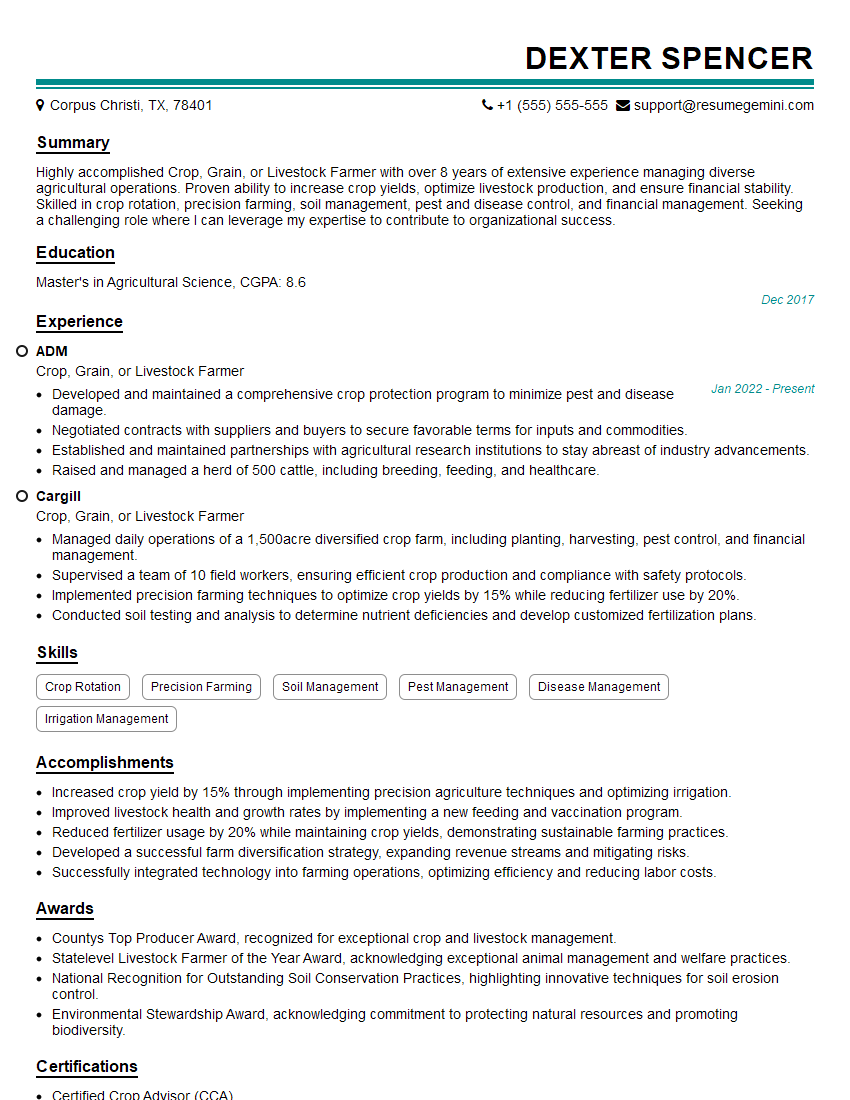
Are you gearing up for a career shift or aiming to ace your next interview? Look no further! We’ve curated a comprehensive guide to help you crack the interview for the coveted Crop, Grain, or Livestock Farmer position. From understanding the key responsibilities to mastering the most commonly asked questions, this blog has you covered. So, buckle up and let’s embark on this journey together.
Acing the interview is crucial, but landing one requires a compelling resume that gets you noticed. Crafting a professional document that highlights your skills and experience is the first step toward interview success. ResumeGemini can help you build a standout resume that gets you called in for that dream job.






Essential Interview Questions For Crop, Grain, or Livestock Farmer
1. What are the key factors to consider when selecting a crop for a particular field?
- Soil type and fertility
- Climate and water availability
- Market demand and profitability
- Pest and disease resistance
- Crop rotation and sustainability
2. Describe the different strategies for managing soil health on a crop farm.
Crop rotation
- Rotating crops with different nutrient and water requirements
- Preventing soil erosion and compaction
- Incorporating cover crops and green manure
Soil testing and nutrient management
- Regular soil testing to determine nutrient levels
- Applying fertilizers and amendments based on test results
- Managing soil pH and organic matter
3. How do you monitor and control pests and diseases in crop production?
- Regular field inspections for signs of pests and diseases
- Identification and diagnosis of pests and diseases
- Implementation of integrated pest management (IPM) strategies
- Use of pesticides and other control measures when necessary
- Record keeping and evaluation of pest and disease management programs
4. Explain the importance of water management in crop production.
- Ensuring adequate water supply for crop growth and development
- Preventing waterlogging and soil erosion
- Managing water resources efficiently through irrigation and drainage systems
- Monitoring soil moisture levels and adjusting irrigation schedules
- Implementing water conservation practices
5. Describe the different methods of harvesting and storing grain crops.
Harvesting
- Combine harvesting: mechanical harvesting using a combine harvester
- Manual harvesting: hand harvesting using sickles or scythes
- Stripping: removing grain from the head without cutting the stalk
Storage
- Grain bins: large, sealed containers used for long-term storage
- Silos: tall, cylindrical structures used for large-scale storage
- Bagged storage: grain stored in large bags or sacks
6. What are the key challenges and opportunities in modern livestock farming?
Challenges
- Disease and health management
- Environmental regulations and sustainability
- Feed costs and market fluctuations
- Animal welfare concerns
- Technological advancements and automation
Opportunities
- Increased demand for animal products
- Development of new technologies and practices
- Growing awareness of animal welfare and sustainability
- Export markets and international trade
- Value-added products and diversification
7. How do you select and breed livestock for specific traits?
- Identify desirable traits based on the production goals
- Select breeding stock with superior genetics
- Implement selective breeding programs to enhance desired traits
- Use artificial insemination and other reproductive technologies
- Keep accurate breeding records and track performance
8. Describe the different types of feed and feeding systems used in livestock farming.
Feed types
- Forages: grasses, legumes, and other plant materials
- Concentrates: energy-rich feeds such as grains and oilseeds
- Supplements: minerals, vitamins, and other nutrients
Feeding systems
- Pasture grazing: animals grazing on natural or improved pastures
- Feedlot feeding: intensive feeding of animals in confined areas
- Mixed feeding: combination of pasture grazing and supplemental feeding
9. How do you manage animal health and welfare on a livestock farm?
- Regular health checks and vaccinations
- Implementation of biosecurity measures to prevent disease outbreaks
- Treatment and management of sick or injured animals
- Monitoring animal behavior and well-being
- Ensuring access to clean water, food, and shelter
10. What are the key financial considerations in livestock farming?
- Startup and operating costs
- Feed costs and feed management
- Animal health and welfare expenses
- Marketing and sales revenue
- Profitability analysis and financial planning
Interviewers often ask about specific skills and experiences. With ResumeGemini‘s customizable templates, you can tailor your resume to showcase the skills most relevant to the position, making a powerful first impression. Also check out Resume Template specially tailored for Crop, Grain, or Livestock Farmer.
Career Expert Tips:
- Ace those interviews! Prepare effectively by reviewing the Top 50 Most Common Interview Questions on ResumeGemini.
- Navigate your job search with confidence! Explore a wide range of Career Tips on ResumeGemini. Learn about common challenges and recommendations to overcome them.
- Craft the perfect resume! Master the Art of Resume Writing with ResumeGemini’s guide. Showcase your unique qualifications and achievements effectively.
- Great Savings With New Year Deals and Discounts! In 2025, boost your job search and build your dream resume with ResumeGemini’s ATS optimized templates.
Researching the company and tailoring your answers is essential. Once you have a clear understanding of the Crop, Grain, or Livestock Farmer‘s requirements, you can use ResumeGemini to adjust your resume to perfectly match the job description.
Key Job Responsibilities
Crop, grain, and livestock farmers play a vital role in the production of food and fiber. Their responsibilities encompass a wide range of activities, from managing land and livestock to overseeing the production and harvesting of crops.
1. Crop Production
Farmers who specialize in crop production are responsible for the following tasks:
- Selecting and planting crops, such as corn, soybeans, or wheat
- Managing soil fertility and water resources
- Controlling pests and diseases
- Harvesting and storing crops
2. Grain Production
Grain farmers focus on the production of grains, such as wheat, corn, and barley. Their responsibilities include:
- Selecting and planting grain varieties
- Managing soil fertility and water resources
- Controlling pests and diseases
- Harvesting and storing grain
3. Livestock Production
Livestock farmers raise animals for food, fiber, or other products. Their responsibilities include:
- Selecting and breeding livestock
- Providing feed and water
- Monitoring animal health
- Marketing and selling livestock products
4. Business Management
In addition to their production responsibilities, crop, grain, and livestock farmers are also responsible for managing the business aspects of their operations. This includes:
- Developing and implementing business plans
- Managing finances
- Marketing and selling products
- Complying with government regulations
Interview Tips
Preparing for an interview for a crop, grain, or livestock farmer position can be daunting. However, by following these tips, you can increase your chances of success.
1. Research the Company and Position
Before the interview, take some time to research the company and the specific position you are applying for. This will help you understand the company’s culture, values, and goals. You should also review the job description and identify the key skills and experience required.
2. Practice Your Answers
Once you have a good understanding of the company and position, you can start practicing your answers to common interview questions. Some of the most common questions you may be asked include:
- Tell me about your experience in crop, grain, or livestock farming.
- What are your strengths and weaknesses as a farmer?
- Why are you interested in working for this company?
- What are your goals for your career?
By practicing your answers in advance, you can improve your confidence and delivery.
3. Be Prepared to Talk About Your Experience
In addition to practicing your answers, you should also be prepared to talk about your experience in detail. This includes providing specific examples of your accomplishments and skills. For example, if you are asked about your experience in crop production, you could talk about a time when you successfully managed a large-scale crop operation.
4. Ask Questions
At the end of the interview, you should have the opportunity to ask questions. This is a good time to learn more about the company, the position, and the interviewer. Asking well-thought-out questions shows that you are interested in the position and that you are taking the interview seriously.
Next Step:
Now that you’re armed with interview-winning answers and a deeper understanding of the Crop, Grain, or Livestock Farmer role, it’s time to take action! Does your resume accurately reflect your skills and experience for this position? If not, head over to ResumeGemini. Here, you’ll find all the tools and tips to craft a resume that gets noticed. Don’t let a weak resume hold you back from landing your dream job. Polish your resume, hit the “Build Your Resume” button, and watch your career take off! Remember, preparation is key, and ResumeGemini is your partner in interview success.