Feeling lost in a sea of interview questions? Landed that dream interview for Crop or Livestock Tenant Farmer but worried you might not have the answers? You’re not alone! This blog is your guide for interview success. We’ll break down the most common Crop or Livestock Tenant Farmer interview questions, providing insightful answers and tips to leave a lasting impression. Plus, we’ll delve into the key responsibilities of this exciting role, so you can walk into your interview feeling confident and prepared.
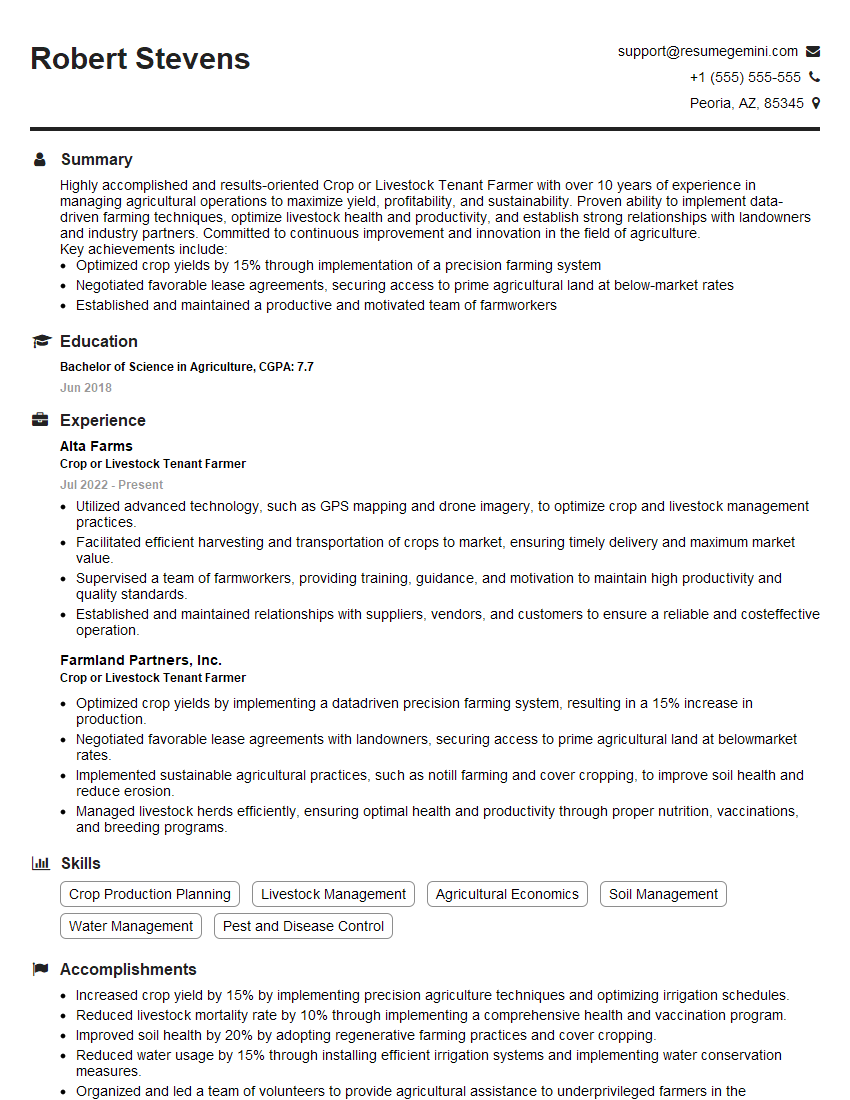
Acing the interview is crucial, but landing one requires a compelling resume that gets you noticed. Crafting a professional document that highlights your skills and experience is the first step toward interview success. ResumeGemini can help you build a standout resume that gets you called in for that dream job.






Essential Interview Questions For Crop or Livestock Tenant Farmer
1. What is the importance of crop rotation in agriculture?
- Improves soil health by restoring nutrients and preventing soil depletion.
- Reduces the risk of soil-borne diseases and pests by disrupting their life cycles.
- Enhances soil structure, texture, and water retention capacity.
- Fosters biodiversity and attracts beneficial insects and pollinators.
2. Discuss the key factors to consider when selecting livestock for a particular farm system.
Animal Characteristics
- Breed suitability for local climate, terrain, and feed resources.
- Growth rate, feed efficiency, and reproductive performance.
- Disease resistance and adaptability to management practices.
Farm System
- Available grazing land, feed sources, and water supply.
- Marketing channels, market demand, and product specifications.
- Labor and management availability.
3. How do you manage plant nutrition and soil fertility on your farm?
- Conduct soil testing to determine nutrient requirements.
- Apply appropriate fertilizers and soil amendments based on test results and crop needs.
- Utilize cover crops and crop rotation to improve soil health and nutrient cycling.
- Implement sustainable farming practices to minimize soil degradation and erosion.
4. Describe your experience in managing pests and diseases in livestock.
- Implementing biosecurity measures to prevent disease introduction.
- Monitoring livestock health and recognizing early signs of illness.
- Administering vaccinations, deworming, and other preventative treatments.
- Identifying and controlling insect pests using integrated pest management techniques.
5. How do you monitor the progress and performance of your livestock operation?
- Regularly track animal growth, health, and reproductive performance.
- Maintain accurate records of feed consumption, medication, and vaccinations.
- Compare performance data to industry benchmarks and set improvement goals.
- Consult with veterinarians, extension specialists, and other professionals for guidance.
6. Explain the importance of record-keeping in agricultural operations.
- Tracks financial performance, expenses, and income.
- Provides data for decision-making on crop selection, livestock management, and resource allocation.
- Facilitates tax preparation and compliance with government regulations.
- Allows for performance evaluation and continuous improvement.
7. How do you interact with the landowner and other stakeholders in your operation?
- Maintain open and regular communication to address lease terms, management practices, and updates.
- Seek feedback on performance and collaborate on decision-making.
- Respect the landowner’s property and comply with all contractual obligations.
- Engage with neighbors and community members to build positive relationships.
8. Discuss your knowledge of sustainable agriculture practices.
- Soil conservation techniques such as no-till farming and cover cropping.
- Water management strategies to reduce runoff and conserve resources.
- Integrated pest management to minimize chemical use and protect beneficial organisms.
- Precision agriculture technologies to optimize inputs and reduce environmental impact.
9. How do you stay updated on the latest advancements in agriculture?
- Attend industry conferences and workshops.
- Read agricultural publications, journals, and online resources.
- Connect with other farmers and professionals through networking groups.
- Seek advice and guidance from experts and extension services.
10. How do you motivate and lead a team of farmworkers?
- Set clear expectations and goals.
- Provide training and support to enhance skills and knowledge.
- Foster a positive and respectful work environment.
- Recognize and reward achievements and contributions.
- Encourage teamwork and collaboration.
Interviewers often ask about specific skills and experiences. With ResumeGemini‘s customizable templates, you can tailor your resume to showcase the skills most relevant to the position, making a powerful first impression. Also check out Resume Template specially tailored for Crop or Livestock Tenant Farmer.
Career Expert Tips:
- Ace those interviews! Prepare effectively by reviewing the Top 50 Most Common Interview Questions on ResumeGemini.
- Navigate your job search with confidence! Explore a wide range of Career Tips on ResumeGemini. Learn about common challenges and recommendations to overcome them.
- Craft the perfect resume! Master the Art of Resume Writing with ResumeGemini’s guide. Showcase your unique qualifications and achievements effectively.
- Great Savings With New Year Deals and Discounts! In 2025, boost your job search and build your dream resume with ResumeGemini’s ATS optimized templates.
Researching the company and tailoring your answers is essential. Once you have a clear understanding of the Crop or Livestock Tenant Farmer‘s requirements, you can use ResumeGemini to adjust your resume to perfectly match the job description.
Key Job Responsibilities
Crop or livestock tenant farmers are responsible for the day-to-day operations of a farm that they rent from a landowner. They typically work under the supervision of the landowner or a farm manager, and their duties can vary depending on the size and type of farm.
1. Crop Production
Tenant farmers who work on crop farms are responsible for all aspects of crop production, including:
- Preparing the soil
- Planting the crops
- Fertilizing and watering the crops
- Protecting the crops from pests and diseases
- Harvesting the crops
2. Livestock Production
Tenant farmers who work on livestock farms are responsible for all aspects of livestock production, including:
- Feeding and watering the animals
- Providing shelter for the animals
- Monitoring the animals for health problems
- Breeding the animals
- Marketing the animals
3. Farm Maintenance
In addition to crop or livestock production, tenant farmers are also responsible for maintaining the farm property, including:
- Repairing fences and buildings
- Maintaining farm equipment
- Keeping the farm clean and organized
4. Financial Management
Tenant farmers are also responsible for managing the financial aspects of the farm, including:
- Keeping track of income and expenses
- Paying bills
- Filing taxes
Interview Tips
To ace an interview for a crop or livestock tenant farmer position, it is important to be prepared to answer questions about your experience, skills, and qualifications. You should also be prepared to discuss your knowledge of farming practices and your financial management skills.
1. Research the Company
Before you go on an interview, take some time to research the company. This will help you understand the company’s culture, values, and goals. You can also learn about the specific farm that you will be working on.
2. Practice Your Answers
Once you have researched the company, take some time to practice answering common interview questions. This will help you feel more confident and prepared during the interview.
3. Dress Professionally
It is important to dress professionally for an interview, even if you will be working on a farm. This shows the interviewer that you are serious about the position.
4. Be Yourself
The most important thing is to be yourself during the interview. The interviewer wants to get to know the real you, so don’t try to be someone you’re not.
Next Step:
Armed with this knowledge, you’re now well-equipped to tackle the Crop or Livestock Tenant Farmer interview with confidence. Remember, a well-crafted resume is your first impression. Take the time to tailor your resume to highlight your relevant skills and experiences. And don’t forget to practice your answers to common interview questions. With a little preparation, you’ll be on your way to landing your dream job. So what are you waiting for? Start building your resume and start applying! Build an amazing resume with ResumeGemini.