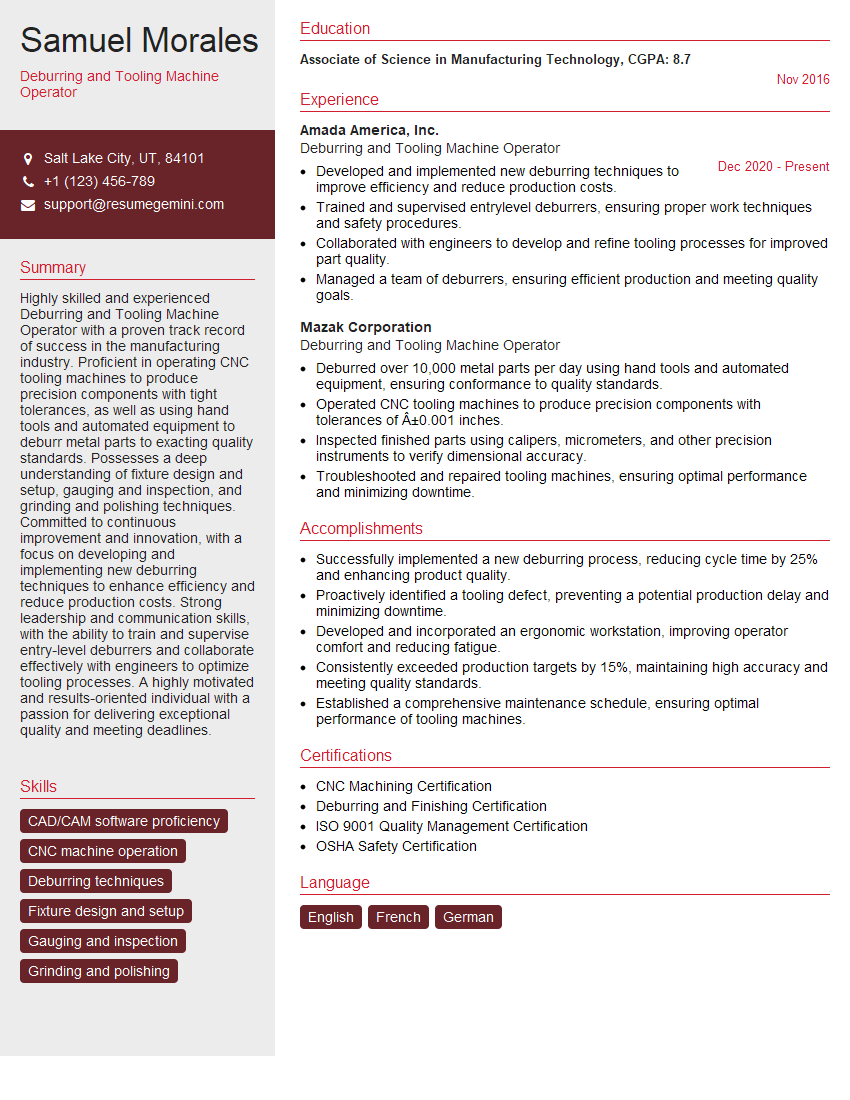
Feeling lost in a sea of interview questions? Landed that dream interview for Deburring and Tooling Machine Operator but worried you might not have the answers? You’re not alone! This blog is your guide for interview success. We’ll break down the most common Deburring and Tooling Machine Operator interview questions, providing insightful answers and tips to leave a lasting impression. Plus, we’ll delve into the key responsibilities of this exciting role, so you can walk into your interview feeling confident and prepared.
Acing the interview is crucial, but landing one requires a compelling resume that gets you noticed. Crafting a professional document that highlights your skills and experience is the first step toward interview success. ResumeGemini can help you build a standout resume that gets you called in for that dream job.






Essential Interview Questions For Deburring and Tooling Machine Operator
1. How do you ensure the accuracy of your deburring and tooling operations?
- Regularly calibrate and maintain all deburring and tooling equipment.
- Use precision measuring tools, such as calipers and micrometers, to verify part tolerances.
- Implement quality control procedures and inspections to identify and correct any errors.
- Adhere to established work instructions and specifications to ensure consistency.
2. Describe your experience in setting up and operating various deburring and tooling machines.
CNC Deburring Machine
- Program and operate CNC deburring machines to automate deburring processes.
- Set up and adjust various cutting tools, including carbide and diamond-tipped bits.
- Monitor machine parameters and make adjustments as needed to optimize performance.
Laser Deburring Machine
- Configure and operate laser deburring machines for precise and delicate operations.
- Select appropriate laser wavelength and power settings based on material properties.
- Maintain a sterile working environment to prevent contamination during laser deburring.
3. How do you handle complex deburring operations with intricate parts?
- Use specialized tooling, such as burring heads, scrapers, and files, to access hard-to-reach areas.
- Develop and implement custom deburring techniques to address specific part geometries.
- Collaborate with engineers and designers to identify optimal deburring solutions.
- Monitor the progress of deburring operations closely to ensure accuracy and surface finish requirements are met.
4. What techniques do you use to minimize burr formation during machining operations?
- Use sharp cutting tools and select appropriate feeds and speeds to reduce burring.
- Apply coolant or lubricant to the cutting area to minimize friction and heat generation.
- Design and use fixtures to secure parts properly and prevent vibration.
- Implement post-machining deburring processes as part of the overall workflow.
5. How do you ensure that deburred and tooled parts meet the specified surface finish requirements?
- Use specialized measuring equipment, such as profilometers and surface roughness testers, to quantify surface finish.
- Adjust deburring and tooling parameters to achieve the desired surface roughness.
- Implement quality control procedures to inspect and document surface finish results.
- Work closely with production engineers to establish and maintain surface finish standards.
6. What steps do you take to maintain and calibrate deburring and tooling equipment?
- Follow established maintenance schedules and procedures for all equipment.
- Inspect and clean equipment regularly to prevent breakdowns and ensure optimal performance.
- Calibrate measuring and cutting tools using certified standards.
- Keep detailed maintenance records for each piece of equipment.
7. How do you stay up-to-date on industry best practices and technological advancements in deburring and tooling?
- Attend industry conferences and exhibitions to learn about new technologies and techniques.
- Read trade publications and technical journals to stay informed about industry trends.
- Participate in online forums and discussion groups to connect with other professionals.
- Seek training and certification opportunities to enhance skills and knowledge.
8. Give an example of a time when you solved a complex problem or implemented a process improvement in the deburring or tooling area.
- Describe the problem or issue encountered.
- Explain the steps taken to analyze the problem and develop a solution.
- Highlight any innovative techniques or ideas used.
- State the results of the process improvement or problem-solving effort.
9. How do you manage your workflow and prioritize tasks in a fast-paced manufacturing environment?
- Use a task management system or software to track progress and set priorities.
- Communicate with production supervisors to understand production schedules and deadlines.
- Stay organized and maintain a clean and efficient workspace.
- Delegate tasks to colleagues when necessary to meet production demands.
10. Why are you interested in working as a Deburring and Tooling Machine Operator in our company?
- Express enthusiasm for the company’s products and reputation.
- Highlight your alignment with the company’s values and mission.
- Explain how your skills and experience match the job requirements.
- Convey your eagerness to contribute to the team and make a positive impact.
Interviewers often ask about specific skills and experiences. With ResumeGemini‘s customizable templates, you can tailor your resume to showcase the skills most relevant to the position, making a powerful first impression. Also check out Resume Template specially tailored for Deburring and Tooling Machine Operator.
Career Expert Tips:
- Ace those interviews! Prepare effectively by reviewing the Top 50 Most Common Interview Questions on ResumeGemini.
- Navigate your job search with confidence! Explore a wide range of Career Tips on ResumeGemini. Learn about common challenges and recommendations to overcome them.
- Craft the perfect resume! Master the Art of Resume Writing with ResumeGemini’s guide. Showcase your unique qualifications and achievements effectively.
- Great Savings With New Year Deals and Discounts! In 2025, boost your job search and build your dream resume with ResumeGemini’s ATS optimized templates.
Researching the company and tailoring your answers is essential. Once you have a clear understanding of the Deburring and Tooling Machine Operator‘s requirements, you can use ResumeGemini to adjust your resume to perfectly match the job description.
Key Job Responsibilities
1. Deburring
This process involves removing burrs (rough edges) and sharp corners from manufactured parts to ensure a smooth and safe finish.
- Using hand tools, such as files and scrapers, to manually deburr parts.
- Utilizing power tools, such as grinders and sanders, for faster and more efficient deburring.
- Inspecting parts to ensure that all burrs have been removed and meet quality standards.
2. Tooling Machine Operation
Operating tooling machines, such as lathes, mills, and grinders, to create or modify metal parts.
- Reading blueprints and specifications to understand the dimensions and tolerances required for each part.
- Setting up and adjusting tooling machines to ensure precision and accuracy.
- Monitoring machines during operation to detect any issues or deviations from specifications.
3. Quality Control
Performing quality checks on manufactured parts to ensure they meet established standards.
- Measuring and inspecting parts using precision instruments, such as calipers and micrometers.
- Identifying and documenting any defects or non-conformances.
- Reporting quality issues to supervisors and collaborating with them to implement corrective actions.
4. Machine Maintenance
Performing basic maintenance and upkeep on tooling machines to ensure optimal performance.
- Lubricating and cleaning machines regularly.
- Monitoring machine health and reporting any issues that require professional attention.
- Assisting with troubleshooting and repair of minor machine malfunctions.
Interview Tips
1. Research the Company and Position
- Visit the company’s website to learn about their mission, values, and products or services.
- Review the job description carefully and identify the key responsibilities and qualifications.
- Check industry news and websites to stay updated on the latest trends and technologies.
2. Practice Your Answers
- Prepare for common interview questions by reading online articles and watching videos.
- Rehearse your answers out loud to improve your delivery and confidence.
- Seek feedback from a friend, family member, or career counselor to refine your answers.
3. Showcase Your Skills and Experience
- Quantify your accomplishments whenever possible to demonstrate the impact of your work.
- Provide specific examples of how you have successfully deburred and operated tooling machines.
- Highlight your attention to detail and commitment to quality.
4. Be Enthusiastic and Professional
- Arrive on time and dress appropriately for the interview.
- Maintain eye contact, smile, and be polite to everyone you meet.
- Ask insightful questions to show your interest and engagement.
Next Step:
Armed with this knowledge, you’re now well-equipped to tackle the Deburring and Tooling Machine Operator interview with confidence. Remember, preparation is key. So, start crafting your resume, highlighting your relevant skills and experiences. Don’t be afraid to tailor your application to each specific job posting. With the right approach and a bit of practice, you’ll be well on your way to landing your dream job. Build your resume now from scratch or optimize your existing resume with ResumeGemini. Wish you luck in your career journey!