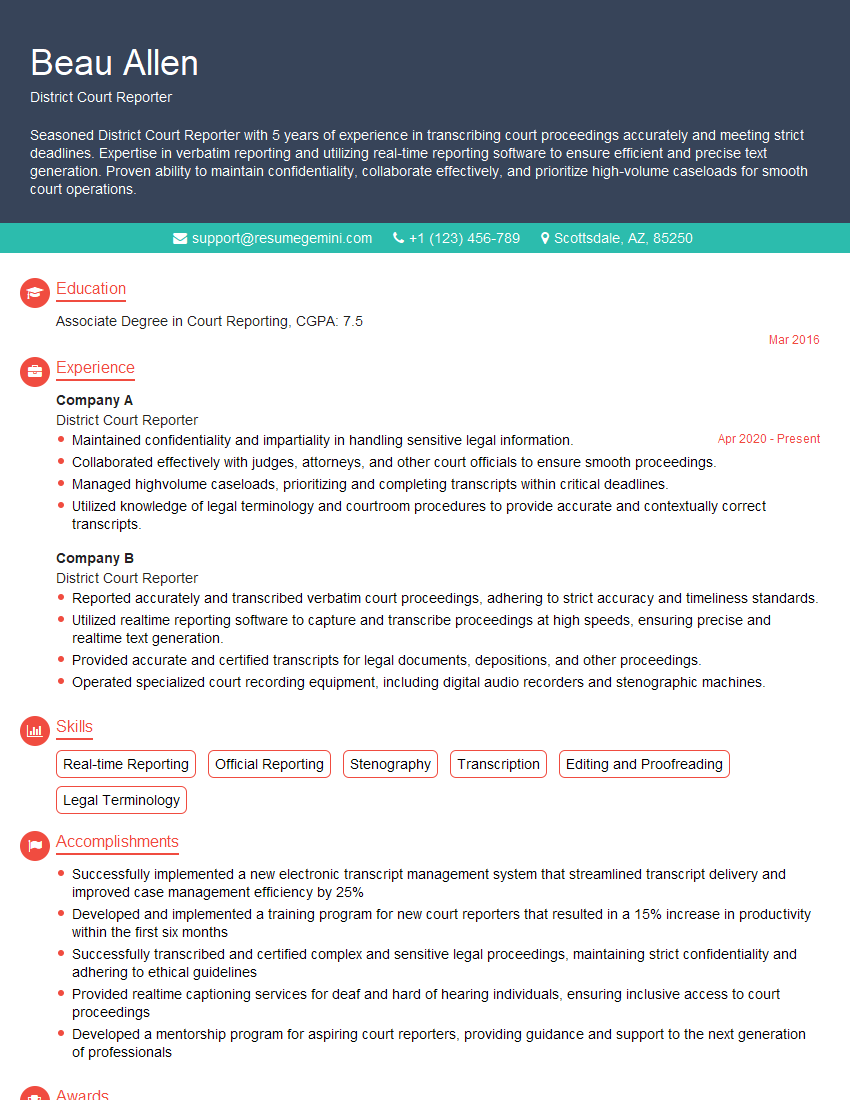
Are you gearing up for a career in District Court Reporter? Feeling nervous about the interview questions that might come your way? Don’t worry, you’re in the right place. In this blog post, we’ll dive deep into the most common interview questions for District Court Reporter and provide you with expert-backed answers. We’ll also explore the key responsibilities of this role so you can tailor your responses to showcase your perfect fit.
Acing the interview is crucial, but landing one requires a compelling resume that gets you noticed. Crafting a professional document that highlights your skills and experience is the first step toward interview success. ResumeGemini can help you build a standout resume that gets you called in for that dream job.






Essential Interview Questions For District Court Reporter
1. What are the essential qualities and skills required to excel as a District Court Reporter?
- Exceptional shorthand skills and speed
- Strong listening comprehension and attention to detail
- Accuracy and precision in recording proceedings
- Ability to handle pressure and work in a fast-paced environment
- Professionalism, confidentiality, and ethical conduct
2. Describe the process involved in preparing a transcript.
Transcription
- Reviewing the recording to ensure completeness and clarity
- Transcribing the recording using specialized software
- Proofreading and editing the transcript for accuracy and grammar
Formatting and Certification
- Formatting the transcript according to court standards
- Obtaining signatures from the judge or presiding officer
- Binding and distributing the transcript to relevant parties
3. How do you handle corrections and changes to the transcript after it has been finalized?
After the transcript has been finalized, any corrections or changes must be handled promptly and accurately.
- Review the requested changes carefully
- Consult with the judge or presiding officer if necessary
- Make the changes to the transcript
- Issue a revised transcript with an updated certification
4. What is the importance of maintaining confidentiality and ethical conduct as a District Court Reporter?
Maintaining confidentiality and ethical conduct is crucial for District Court Reporters due to the sensitive nature of the proceedings they record.
- Preserving the integrity and fairness of the legal process
- Protecting the privacy and privacy of individuals involved in the proceedings
- Following all applicable laws and regulations
- Avoiding conflicts of interest
- Maintaining a professional and impartial demeanor
5. How do you stay up-to-date with advancements in technology and best practices in court reporting?
- Attending industry conferences and workshops
- Participating in continuing legal education programs
- Consulting with experienced colleagues and mentors
- Monitoring professional journals and publications
- Exploring new technologies and software specifically designed for court reporters
6. What measures do you take to ensure the accuracy and completeness of your transcripts?
- Using reliable and high-quality recording equipment
- Carefully reviewing and proofreading transcripts
- Seeking clarification or repetition from the speaker when necessary
- Maintaining open communication with the judge or presiding officer
- Obtaining signatures for certification of the transcript
7. How do you handle challenging situations, such as speakers with heavy accents or technical interruptions?
- Seeking assistance from the speaker to clarify pronunciation
- Requesting the speaker to repeat or rephrase statements
- Using specialized software to enhance audio recordings
- Working with the court to resolve technical issues promptly
- Maintaining a professional and calm demeanor under pressure
8. Describe your experience in using transcription software and hardware.
- Proficient in using industry-standard transcription software (e.g., CaseCAT, Eclipse)
- Familiar with various stenotype machines and peripherals
- Understanding of transcription and editing techniques
- Ability to customize and configure transcription software
- Experience in using digital recording and playback equipment
9. How do you prioritize your duties and manage your time effectively, especially when handling multiple cases simultaneously?
- Establishing a clear workflow and prioritizing tasks
- Utilizing technology to streamline processes (e.g., case management software)
- Delegating tasks to colleagues when appropriate
- Communicating effectively with judges and attorneys to manage expectations
- Maintaining a flexible schedule and adaptability to changing deadlines
10. What are your strengths and weaknesses as a District Court Reporter?
Strengths
- Exceptional shorthand speed and accuracy
- Strong attention to detail and proofreading skills
- Excellent listening comprehension and communication skills
- Ability to work under pressure and meet tight deadlines
- Meticulous approach to ensuring confidentiality and ethics
Weaknesses
- Limited experience in a particular area of law or specialty
- Need for improvement in time management skills when handling multiple cases
- Desire to enhance technical proficiency in using new transcription software
Interviewers often ask about specific skills and experiences. With ResumeGemini‘s customizable templates, you can tailor your resume to showcase the skills most relevant to the position, making a powerful first impression. Also check out Resume Template specially tailored for District Court Reporter.
Career Expert Tips:
- Ace those interviews! Prepare effectively by reviewing the Top 50 Most Common Interview Questions on ResumeGemini.
- Navigate your job search with confidence! Explore a wide range of Career Tips on ResumeGemini. Learn about common challenges and recommendations to overcome them.
- Craft the perfect resume! Master the Art of Resume Writing with ResumeGemini’s guide. Showcase your unique qualifications and achievements effectively.
- Great Savings With New Year Deals and Discounts! In 2025, boost your job search and build your dream resume with ResumeGemini’s ATS optimized templates.
Researching the company and tailoring your answers is essential. Once you have a clear understanding of the District Court Reporter‘s requirements, you can use ResumeGemini to adjust your resume to perfectly match the job description.
Key Job Responsibilities
A District Court Reporter is responsible for recording and transcribing court proceedings, ensuring an accurate and impartial record of all proceedings for legal purposes.
1. Court Proceedings Recording
Record court proceedings verbatim using stenographic equipment or other approved methods, capturing all spoken words, objections, rulings, and other relevant information.
- Maintain a high level of accuracy and completeness in transcriptions.
- Use specialized software and technology to assist with recording and transcription tasks.
2. Transcript Preparation
Prepare transcripts of recorded proceedings, including formatting, editing, and proofreading to ensure accuracy and completeness.
- Adhere to established guidelines and standards for transcript preparation.
- Work closely with court officials and attorneys to ensure that transcripts meet specific requirements.
3. Case Management
Maintain and organize case files, including transcripts, exhibits, and other relevant documents.
- Track the status of cases and provide updates as needed.
- Assist with the preparation of case summaries and other reports.
4. Ethical and Professional Conduct
Maintain the highest ethical and professional standards, including confidentiality, impartiality, and adherence to applicable laws and regulations.
- Protect the privacy and confidentiality of sensitive information.
- Treat all parties involved in court proceedings with respect and professionalism.
Interview Tips
Preparing thoroughly for a District Court Reporter interview can significantly increase your chances of success. Here are some tips to help you ace the interview:
1. Research the Court and Position
Familiarize yourself with the specific court where you are applying and the responsibilities of the District Court Reporter position. This will demonstrate your interest and enthusiasm for the role.
- Visit the court’s website to learn about its history, jurisdiction, and recent cases.
- Read articles or news reports about the court and its proceedings to gain insights into its operations.
2. Practice Your Transcription Skills
Demonstrate your proficiency in transcription by practicing transcribing audio or video recordings using stenographic equipment or software.
- Consider taking a transcription test or certification program to enhance your skills.
- Ask a friend or family member to speak slowly and clearly while you practice transcribing their speech.
3. Prepare for Common Interview Questions
Research common interview questions for District Court Reporters and prepare thoughtful answers that highlight your relevant skills and experience.
- Explain your understanding of the role and responsibilities of a District Court Reporter.
- Share your experience in court proceedings or related fields, emphasizing your accuracy and attention to detail.
- Discuss your knowledge of legal terminology and procedures.
4. Dress Professionally and Be Punctual
First impressions matter, so dress professionally and arrive at the interview on time. This shows respect for the interviewers and the position you are applying for.
- Wear business attire, such as a suit or dress pants and a button-down shirt.
- Ensure your clothing is clean, pressed, and fits well.
- Plan your route to the interview location in advance to avoid any unexpected delays.
Next Step:
Now that you’re armed with the knowledge of District Court Reporter interview questions and responsibilities, it’s time to take the next step. Build or refine your resume to highlight your skills and experiences that align with this role. Don’t be afraid to tailor your resume to each specific job application. Finally, start applying for District Court Reporter positions with confidence. Remember, preparation is key, and with the right approach, you’ll be well on your way to landing your dream job. Build an amazing resume with ResumeGemini