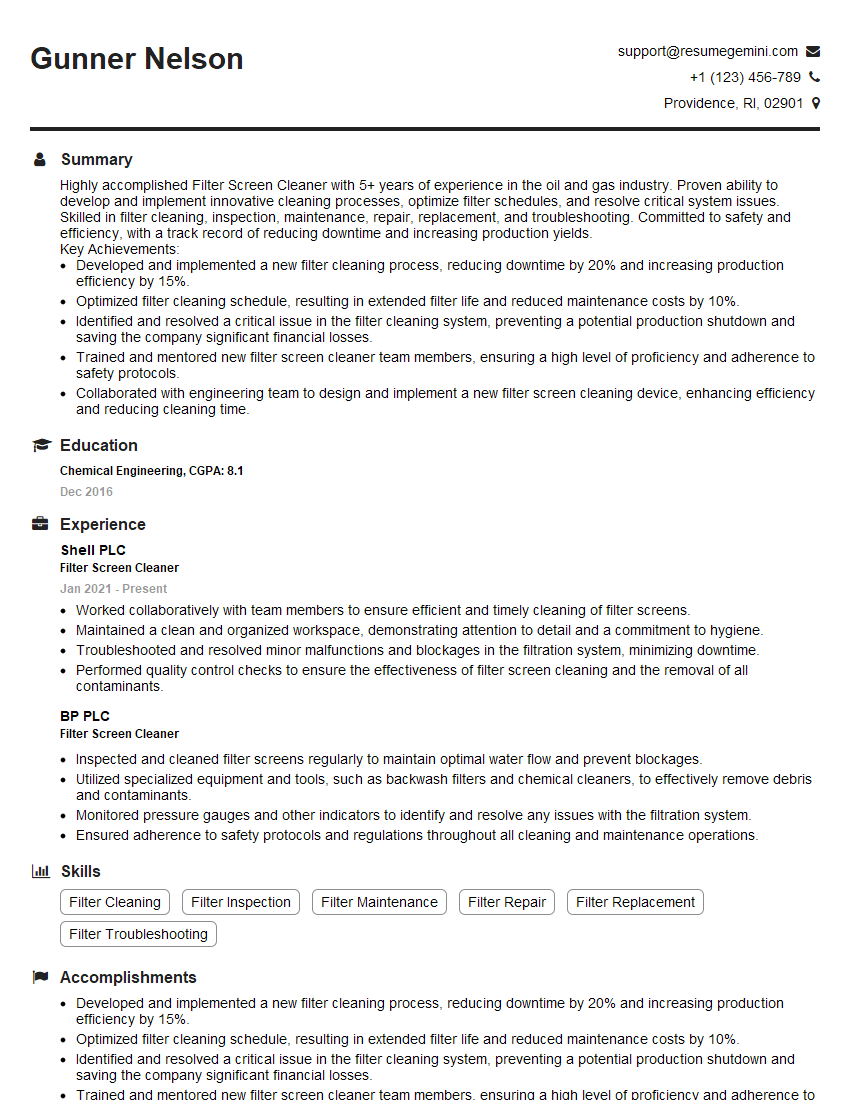
Feeling lost in a sea of interview questions? Landed that dream interview for Filter Screen Cleaner but worried you might not have the answers? You’re not alone! This blog is your guide for interview success. We’ll break down the most common Filter Screen Cleaner interview questions, providing insightful answers and tips to leave a lasting impression. Plus, we’ll delve into the key responsibilities of this exciting role, so you can walk into your interview feeling confident and prepared.
Acing the interview is crucial, but landing one requires a compelling resume that gets you noticed. Crafting a professional document that highlights your skills and experience is the first step toward interview success. ResumeGemini can help you build a standout resume that gets you called in for that dream job.






Essential Interview Questions For Filter Screen Cleaner
1. What are the different types of filter screens and their applications?
- Flat screens: These are commonly used in water treatment plants and swimming pools to remove solid particles from liquids.
- Cylindrical screens: These are used in the food industry to remove impurities from liquids like oil or beverages.
- Centrifuge screens: These are used to separate solids from liquids by centrifugal force.
- Vibratory screens: These are used to remove fine particles from solids using vibrations.
2. How do you determine the appropriate filter screen size for a given application?
Factors to consider:
- Particle size
- Flow rate
- Filtration efficiency
- Pressure drop
Steps to determine screen size:
- Determine the particle size that needs to be removed.
- Select a screen size that will allow smaller particles to pass through while retaining the desired particles.
- Consider the flow rate and pressure drop to ensure the system operates efficiently.
3. What are the cleaning methods for filter screens?
- Manual cleaning: Using a brush or cloth to remove debris from the screen.
- Backwashing: Using a reverse flow of liquid to flush debris from the screen.
- Ultrasonic cleaning: Using ultrasonic waves to dislodge particles from the screen.
- Chemical cleaning: Using cleaning agents to dissolve and remove contaminants.
4. How do you inspect and maintain filter screens for optimal performance?
- Regular visual inspection for damage or blockages.
- Flow rate monitoring to detect any drop in filtration efficiency.
- Pressure drop monitoring to ensure the system is operating efficiently.
- Periodic cleaning and maintenance as per the manufacturer’s instructions.
5. What are the common materials used for filter screens and their advantages?
- Stainless steel: Corrosion-resistant, durable, and easy to clean.
- Galvanized steel: Cost-effective, but less corrosion-resistant than stainless steel.
- Nylon: Lightweight, corrosion-resistant, and suitable for high-flow applications.
- Polyester: Durable, chemically resistant, and available in a wide range of mesh sizes.
6. What is the difference between a filter screen and a filter mesh?
- Filter screen: A rigid structure with openings that allow fluids to pass through while blocking larger particles.
- Filter mesh: A flexible material with woven or knitted openings that allow fluids and particles to pass through depending on the mesh size.
7. What are the factors to consider when selecting a filter screen supplier?
- Product quality and reliability.
- Customization options and design capabilities.
- Lead time and delivery time.
- Customer service and technical support.
- Reputation and industry experience.
8. What are the safety precautions to follow when working with filter screens?
- Wear appropriate protective gear, including gloves, safety glasses, and a dust mask.
- Handle sharp edges and debris with care.
- Follow proper cleaning and maintenance procedures.
- Dispose of spent filter screens properly.
9. What are the key quality control measures for filter screen manufacturing?
- Material inspection
- Dimensional accuracy
- Mesh size and uniformity
- Corrosion resistance
- Pressure and flow rate testing
10. How can you troubleshoot and resolve common issues related to filter screens?
- Clogged screens: Clean or replace the screen.
- Reduced flow rate: Clean the screen, check for leaks, or replace the screen with a larger mesh size.
- Pressure drop: Clean the screen, check for blockages, or replace the screen with a smaller mesh size.
- Corrosion: Replace the screen with a more corrosion-resistant material.
- Damage: Replace the screen if it is damaged beyond repair.
Interviewers often ask about specific skills and experiences. With ResumeGemini‘s customizable templates, you can tailor your resume to showcase the skills most relevant to the position, making a powerful first impression. Also check out Resume Template specially tailored for Filter Screen Cleaner.
Career Expert Tips:
- Ace those interviews! Prepare effectively by reviewing the Top 50 Most Common Interview Questions on ResumeGemini.
- Navigate your job search with confidence! Explore a wide range of Career Tips on ResumeGemini. Learn about common challenges and recommendations to overcome them.
- Craft the perfect resume! Master the Art of Resume Writing with ResumeGemini’s guide. Showcase your unique qualifications and achievements effectively.
- Great Savings With New Year Deals and Discounts! In 2025, boost your job search and build your dream resume with ResumeGemini’s ATS optimized templates.
Researching the company and tailoring your answers is essential. Once you have a clear understanding of the Filter Screen Cleaner‘s requirements, you can use ResumeGemini to adjust your resume to perfectly match the job description.
Key Job Responsibilities
Filter Screen Cleaners are responsible for the proper functioning and cleanliness of filter screens, ensuring efficient filtration and water flow in various industrial and municipal settings. Their key responsibilities include:
1. Filter Screen Cleaning and Maintenance
Clean filter screens regularly using manual or mechanical methods to remove debris, build-up, and other impurities that can obstruct water flow.
2. Equipment Inspection and Monitoring
Inspect filter screens, related equipment, and piping systems for damage, wear, or leaks. Monitor water pressure and flow rates to ensure optimal performance.
3. Troubleshooting and Repairs
Diagnose and resolve issues with filter screens and associated equipment. Perform minor repairs, such as replacing gaskets or tightening bolts, to maintain functionality.
4. Safety and Compliance
Adhere to safety protocols and regulations while handling water systems and chemicals. Ensure compliance with environmental standards and maintain accurate records of cleaning and maintenance activities.
Interview Tips
To ace an interview for a Filter Screen Cleaner position, consider the following tips:
1. Research the Company and Industry
Familiarize yourself with the company’s operations, industry trends, and specific requirements for the role. This demonstrates your interest and preparation.
2. Highlight Relevant Experience and Skills
Emphasize your experience in cleaning and maintaining filter screens, equipment inspection, and troubleshooting. Showcase your technical skills and ability to work independently.
3. Demonstrate Attention to Detail
Filter Screen Cleaners must be meticulous and pay close attention to detail. Highlight instances where you have successfully identified and resolved issues.
4. Prepare for Technical Questions
Be prepared to answer questions about filter screen cleaning techniques, equipment operation, and safety protocols. Consider practicing common questions beforehand.
5. Be Professional and Enthusiastic
Present yourself professionally and show enthusiasm for the role and industry. Demonstrate your eagerness to contribute to the team and maintain efficient water filtration systems.
Next Step:
Now that you’re armed with a solid understanding of what it takes to succeed as a Filter Screen Cleaner, it’s time to turn that knowledge into action. Take a moment to revisit your resume, ensuring it highlights your relevant skills and experiences. Tailor it to reflect the insights you’ve gained from this blog and make it shine with your unique qualifications. Don’t wait for opportunities to come to you—start applying for Filter Screen Cleaner positions today and take the first step towards your next career milestone. Your dream job is within reach, and with a polished resume and targeted applications, you’ll be well on your way to achieving your career goals! Build your resume now with ResumeGemini.