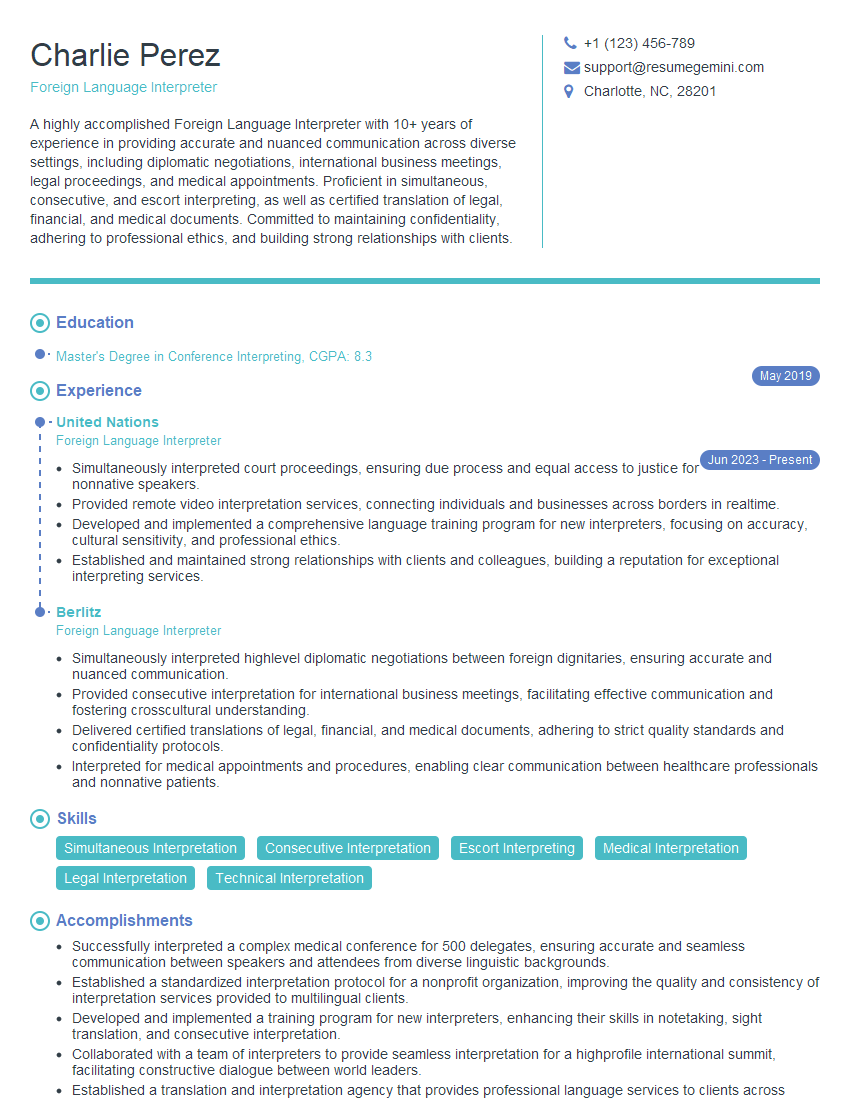
Are you gearing up for an interview for a Foreign Language Interpreter position? Whether you’re a seasoned professional or just stepping into the role, understanding what’s expected can make all the difference. In this blog, we dive deep into the essential interview questions for Foreign Language Interpreter and break down the key responsibilities of the role. By exploring these insights, you’ll gain a clearer picture of what employers are looking for and how you can stand out. Read on to equip yourself with the knowledge and confidence needed to ace your next interview and land your dream job!
Acing the interview is crucial, but landing one requires a compelling resume that gets you noticed. Crafting a professional document that highlights your skills and experience is the first step toward interview success. ResumeGemini can help you build a standout resume that gets you called in for that dream job.






Essential Interview Questions For Foreign Language Interpreter
1. What are the most important qualities and skills for a successful Foreign Language Interpreter?
- Fluency in both the source and target languages
- Excellent listening and speaking skills
- Strong cultural knowledge of both cultures
- Ability to interpret both verbal and nonverbal communication
- Professionalism and confidentiality
2. What are some of the challenges you have faced as a Foreign Language Interpreter?
Accuracy and Precision
- Interpreting technical or specialized language
- Interpreting idioms and cultural references
Cultural Differences
- Understanding and respecting cultural norms and values
- Bridging communication gaps due to different cultural backgrounds
3. How do you prepare for an interpreting assignment?
- Researching the topic and subject matter
- Identifying key terms and phrases
- Practicing interpretation techniques
- Familiarizing myself with the setting and participants
4. What are some of the ethical considerations in interpreting?
- Maintaining confidentiality
- Avoiding bias or prejudice
- Adhering to professional standards
- Respecting the rights of speakers and participants
5. How do you handle simultaneous interpreting?
- Listening attentively to the speaker
- Analyzing the message and identifying key points
- Interpreting in near real-time while keeping up with the speaker’s pace
- Using techniques such as note-taking and summarizing
6. What are some of the differences between interpreting in different settings, such as medical, legal, or business?
- Medical: Technical language, specialized terminology
- Legal: Formal language, legal jargon
- Business: Industry-specific vocabulary, negotiation
7. How do you stay up-to-date with language and cultural changes?
- Attending conferences and workshops
- Reading books, articles, and news
- Watching movies and listening to music in the target language
- Interacting with native speakers
8. What are some of the technologies used in interpreting today?
- Simultaneous interpreting equipment (booths, headsets)
- Remote interpreting software
- Translation memory tools
- Artificial intelligence for assisted interpreting
9. How do you handle situations where participants have different levels of language proficiency?
- Using clear and simplified language
- Checking for understanding and providing clarification
- Using visual aids or written translations if necessary
- Facilitating communication by breaking down complex ideas
10. What are some of the personal qualities that make you a successful Foreign Language Interpreter?
- Passion for languages and cultures
- Excellent communication and interpersonal skills
- Ability to work under pressure
- Adaptability and flexibility
- Strong work ethic and commitment to professionalism
Interviewers often ask about specific skills and experiences. With ResumeGemini‘s customizable templates, you can tailor your resume to showcase the skills most relevant to the position, making a powerful first impression. Also check out Resume Template specially tailored for Foreign Language Interpreter.
Career Expert Tips:
- Ace those interviews! Prepare effectively by reviewing the Top 50 Most Common Interview Questions on ResumeGemini.
- Navigate your job search with confidence! Explore a wide range of Career Tips on ResumeGemini. Learn about common challenges and recommendations to overcome them.
- Craft the perfect resume! Master the Art of Resume Writing with ResumeGemini’s guide. Showcase your unique qualifications and achievements effectively.
- Great Savings With New Year Deals and Discounts! In 2025, boost your job search and build your dream resume with ResumeGemini’s ATS optimized templates.
Researching the company and tailoring your answers is essential. Once you have a clear understanding of the Foreign Language Interpreter‘s requirements, you can use ResumeGemini to adjust your resume to perfectly match the job description.
Key Job Responsibilities
Foreign Language Interpreters are responsible for facilitating communication between individuals who do not speak the same language. They provide accurate and culturally sensitive interpretation in various settings, including legal proceedings, medical appointments, educational institutions, and business meetings.
1. Interpretation and Translation
Interpreters convey spoken or written messages from one language to another in real-time, ensuring clear and accurate communication.
- Provide simultaneous or consecutive interpretation for individuals or groups
- Translate written documents, including legal contracts, medical records, and transcripts
2. Cultural Sensitivity and Ethical Conduct
Interpreters must possess cultural sensitivity and adhere to ethical principles to foster understanding and prevent miscommunication.
- Respect the cultural norms and values of all parties involved
- Maintain confidentiality and privacy of sensitive information
3. Professional Development and Language Proficiency
Interpreters continuously enhance their language proficiency and professional knowledge to provide exceptional services.
- Maintain fluency in the primary and target languages
- Participate in professional development opportunities, such as workshops and conferences
4. Time Management and Communication Skills
Interpreters effectively manage time and communicate clearly with clients, ensuring timely and efficient services.
- Meet deadlines for interpretation or translation assignments
- Communicate effectively with clients to understand their needs and provide accurate services
Interview Tips
Preparing for an interview for a Foreign Language Interpreter position requires thorough preparation and a strategic approach. Here are some tips to help you ace the interview:
1. Research the Company and Role
Research the company’s background, industry, and specific requirements for the interpreter role. This demonstrates your interest and knowledge of the organization.
- Visit the company website to gather information about their services, clients, and values.
- Review the job description carefully to identify key responsibilities and qualifications.
2. Practice Interpretation and Translation Skills
Prepare by practicing your interpretation and translation skills. Engage in mock interviews or ask a friend or colleague to evaluate your performance.
- Select a sample text or audio recording and practice interpreting or translating it accurately.
- Focus on conveying the message clearly, concisely, and without losing the original intent.
3. Highlight Cultural Sensitivity and Ethical Conduct
Emphasize your understanding of cultural differences and your commitment to ethical behavior. Share examples of how you have successfully navigated cultural barriers in previous roles.
- Describe a situation where you had to respect the cultural norms of a specific group.
- Explain how you handled a confidential matter and maintained the privacy of the individuals involved.
4. Demonstrate Professionalism and Enthusiasm
Dress professionally, arrive on time, and maintain a positive attitude throughout the interview. Show your passion for the field and your desire to contribute to the organization.
- Prepare thoughtful questions to ask the interviewer that demonstrate your interest in the role.
- Be enthusiastic and articulate about your qualifications and how they align with the company’s needs.
Next Step:
Now that you’re armed with the knowledge of Foreign Language Interpreter interview questions and responsibilities, it’s time to take the next step. Build or refine your resume to highlight your skills and experiences that align with this role. Don’t be afraid to tailor your resume to each specific job application. Finally, start applying for Foreign Language Interpreter positions with confidence. Remember, preparation is key, and with the right approach, you’ll be well on your way to landing your dream job. Build an amazing resume with ResumeGemini