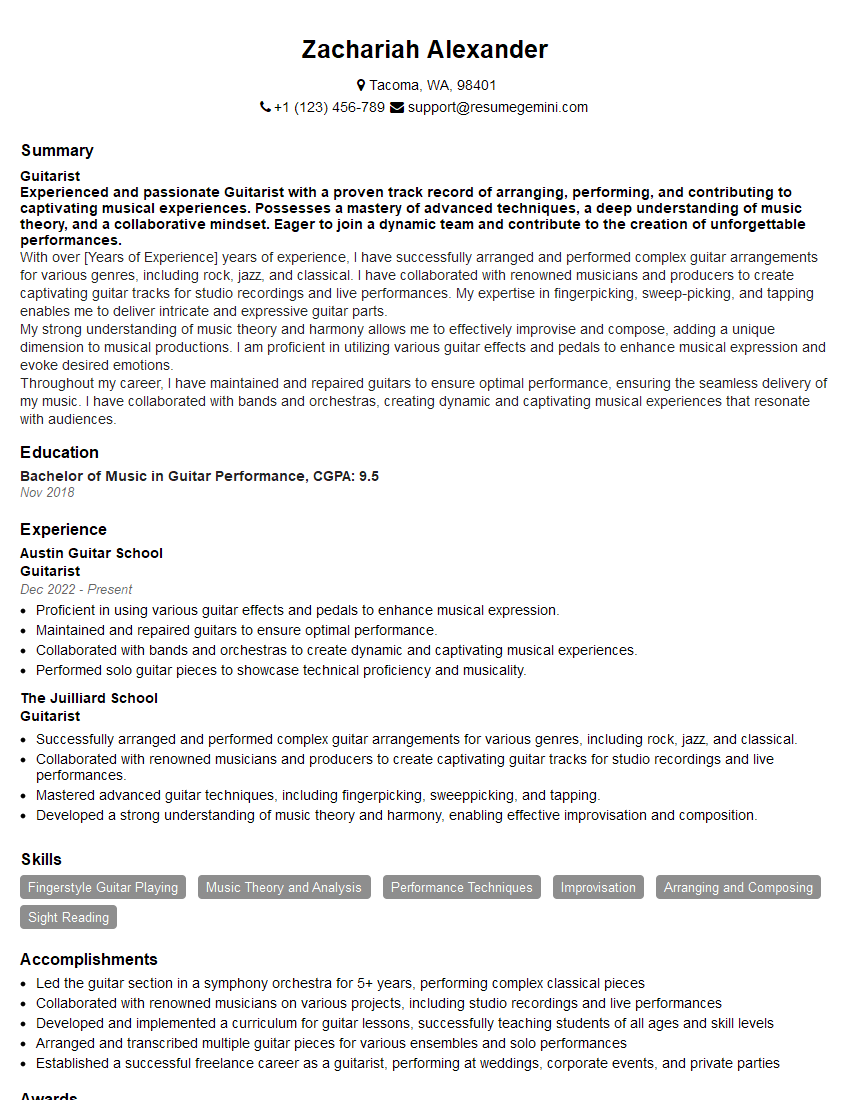
Are you gearing up for an interview for a Guitarist position? Whether you’re a seasoned professional or just stepping into the role, understanding what’s expected can make all the difference. In this blog, we dive deep into the essential interview questions for Guitarist and break down the key responsibilities of the role. By exploring these insights, you’ll gain a clearer picture of what employers are looking for and how you can stand out. Read on to equip yourself with the knowledge and confidence needed to ace your next interview and land your dream job!
Acing the interview is crucial, but landing one requires a compelling resume that gets you noticed. Crafting a professional document that highlights your skills and experience is the first step toward interview success. ResumeGemini can help you build a standout resume that gets you called in for that dream job.






Essential Interview Questions For Guitarist
1. Demonstrate your proficiency in different guitar techniques.
- Fingerstyle: Showcase your ability to play complex fingerpicking patterns and incorporate intricate arpeggios.
- Flatpicking: Display your command of bluegrass and country techniques, using a flatpick for fast and precise note execution.
- Hybrid picking: Combine fingerstyle and flatpicking techniques to create a unique and versatile sound.
- Slide guitar: Demonstrate your skills in using a slide to create expressive melodies and bluesy tones.
- Tapping: Show off your ability to tap on the fretboard, creating innovative and percussive sounds.
2. Discuss your experience in various guitar styles.
Classical
- Explain your knowledge of classical guitar repertoire.
- Highlight your understanding of fingerstyle techniques.
Jazz
- Describe your jazz improvisation skills.
- Discuss your understanding of jazz harmony and theory.
Rock
- Showcase your proficiency in electric guitar techniques.
- Explain your ability to navigate different rock subgenres.
3. Describe your songwriting process.
- Explain how you generate musical ideas.
- Discuss your approach to melody, harmony, and rhythm.
- Describe your experience in collaborating with other musicians.
4. How do you stay up-to-date with current guitar trends and techniques?
- Attend workshops and masterclasses.
- Subscribe to guitar magazines and online learning platforms.
- Collaborate with other guitarists.
- Experiment with different sounds and techniques.
5. Describe your experience in live performance.
- Discuss your stage presence and charisma.
- Explain how you manage stage fright and nerves.
- Describe your experience in interacting with the audience.
6. How do you handle criticism and feedback on your playing?
- Explain your approach to receiving constructive criticism.
- Discuss how you use feedback to improve your skills.
- Highlight your ability to separate personal feelings from professional feedback.
7. Describe your strengths and weaknesses as a guitarist.
- Explain your unique skills and talents.
- Discuss areas where you need improvement.
- Highlight your willingness to learn and grow.
8. How do you incorporate music theory into your guitar playing?
- Explain your understanding of scales, chords, and intervals.
- Discuss how you use music theory to create improvisations and compositions.
- Describe your approach to understanding and applying music theory.
9. How do you maintain and care for your guitars?
- Explain your approach to cleaning and stringing your guitars.
- Discuss proper storage techniques.
- Describe any repairs or modifications you have done on your guitars.
10. What are your future goals and aspirations as a guitarist?
- Explain your plans for ongoing musical development.
- Discuss your career goals and aspirations.
- Describe how you plan to contribute to the music industry.
Interviewers often ask about specific skills and experiences. With ResumeGemini‘s customizable templates, you can tailor your resume to showcase the skills most relevant to the position, making a powerful first impression. Also check out Resume Template specially tailored for Guitarist.
Career Expert Tips:
- Ace those interviews! Prepare effectively by reviewing the Top 50 Most Common Interview Questions on ResumeGemini.
- Navigate your job search with confidence! Explore a wide range of Career Tips on ResumeGemini. Learn about common challenges and recommendations to overcome them.
- Craft the perfect resume! Master the Art of Resume Writing with ResumeGemini’s guide. Showcase your unique qualifications and achievements effectively.
- Great Savings With New Year Deals and Discounts! In 2025, boost your job search and build your dream resume with ResumeGemini’s ATS optimized templates.
Researching the company and tailoring your answers is essential. Once you have a clear understanding of the Guitarist‘s requirements, you can use ResumeGemini to adjust your resume to perfectly match the job description.
Key Job Responsibilities
Guitarists play a vital role in a band or musical group. Their primary responsibility is to provide rhythmic and melodic accompaniment to the other instruments. They may also be required to perform solos or improvise during live performances or recording sessions.
1. Play guitar
The most important responsibility of a guitarist is to be able to play guitar. This includes being able to play both rhythm and lead guitar, and to be able to play in a variety of styles. Guitarists must also be able to read and understand music notation.
2. Rehearse and perform
Guitarists are expected to participate in rehearsals and performances. They must be able to work well with other musicians and to follow the direction of the bandleader or conductor.
3. Maintain their instruments
Guitarists must be able to maintain their own guitars. This includes cleaning and restringing the guitar, as well as making minor repairs.
4. Stay up-to-date on musical trends
Guitarists must stay up-to-date on musical trends. This includes listening to new music and learning new techniques.
5. Other duties
In addition to the above responsibilities, guitarists may also be required to perform other duties, such as:
- Teaching guitar lessons
- Writing or arranging music
- Performing in a variety of settings, such as weddings, parties, or corporate events
Interview Tips
Interviewing for a guitar player position can be a daunting task, but by following these tips, you can increase your chances of success.
1. Be prepared to play
The most important thing to do before an interview is to be prepared to play. This means practicing your guitar playing and preparing a few songs to play for the interviewer. You should also be able to talk about your experience playing guitar and your musical influences.
2. Dress professionally
First impressions matter, so it is important to dress professionally for your interview. This does not mean that you have to wear a suit and tie, but you should make sure that you are clean and well-groomed. Avoid wearing clothing that is too revealing or too casual.
3. Be on time
Punctuality is important in any job interview, but it is especially important for a guitar player interview. Arriving late for your interview will show the interviewer that you are not serious about the position.
4. Be polite and respectful
Be polite and respectful to the interviewer and to the other musicians who may be present. This will make a good impression and show that you are a team player.
5. Follow the interviewer’s instructions
The interviewer will likely give you specific instructions on what to play during your audition. Be sure to follow these instructions carefully. If you are not sure what to do, ask for clarification.
6. Be yourself
The most important thing is to be yourself and let the interviewer see your unique personality and musical style. Do not try to be someone you are not, because the interviewer will be able to tell.
Next Step:
Now that you’re armed with a solid understanding of what it takes to succeed as a Guitarist, it’s time to turn that knowledge into action. Take a moment to revisit your resume, ensuring it highlights your relevant skills and experiences. Tailor it to reflect the insights you’ve gained from this blog and make it shine with your unique qualifications. Don’t wait for opportunities to come to you—start applying for Guitarist positions today and take the first step towards your next career milestone. Your dream job is within reach, and with a polished resume and targeted applications, you’ll be well on your way to achieving your career goals! Build your resume now with ResumeGemini.