Are you gearing up for an interview for a Hospital Pharmacist position? Whether you’re a seasoned professional or just stepping into the role, understanding what’s expected can make all the difference. In this blog, we dive deep into the essential interview questions for Hospital Pharmacist and break down the key responsibilities of the role. By exploring these insights, you’ll gain a clearer picture of what employers are looking for and how you can stand out. Read on to equip yourself with the knowledge and confidence needed to ace your next interview and land your dream job!
Acing the interview is crucial, but landing one requires a compelling resume that gets you noticed. Crafting a professional document that highlights your skills and experience is the first step toward interview success. ResumeGemini can help you build a standout resume that gets you called in for that dream job.






Essential Interview Questions For Hospital Pharmacist
1. Describe the role and responsibilities of a Hospital Pharmacist.
As a Hospital Pharmacist, my primary responsibilities include:
- Providing pharmaceutical care to patients by reviewing their medical charts, assessing their medication needs, and making recommendations to healthcare providers.
- Dispensing and managing medications, including preparing, labeling, and administering medications according to prescriptions and protocols.
- Monitoring patient drug therapy to ensure the safe and effective use of medications, and identifying and resolving any drug-related problems.
- Providing drug information and education to patients, healthcare providers, and other members of the healthcare team.
- Participating in research and quality improvement initiatives to enhance patient care and optimize medication therapy.
2. Explain the importance of medication reconciliation in patient safety.
Medication reconciliation is a critical process in patient safety as it helps prevent medication errors and adverse drug events.
Benefits of medication reconciliation:
- Identifies and resolves discrepancies in a patient’s medication list.
- Ensures that patients receive the correct medications at the right dose, route, and frequency.
- Reduces the risk of medication errors and adverse events.
- Improves communication and coordination among healthcare providers.
- Enhances patient safety and medication adherence.
3. Discuss the different types of medication errors and their potential consequences.
Medication errors can be classified into different types:
- Prescription Errors: Errors in prescribing or ordering medications.
- Dispensing Errors: Errors in filling and dispensing medications.
- Administration Errors: Errors in giving medications to patients.
- Monitoring Errors: Errors in monitoring patient response to medications.
Potential consequences:
- Adverse drug events, including injuries, hospitalizations, and fatalities.
- Increased healthcare costs.
- Loss of patient trust and confidence.
- Legal liability for healthcare providers.
4. How do you stay up-to-date on the latest advancements in pharmaceutical care?
To stay current with advancements in pharmaceutical care, I engage in continuous learning and professional development:
- Attend conferences and workshops.
- Read medical journals and research papers.
- Complete online courses and webinars.
- Network with other healthcare professionals.
- Seek mentorship and guidance from experienced pharmacists.
5. Describe your experience in using technology to enhance patient care.
I have utilized technology in various ways to improve patient care:
- Electronic Health Records (EHRs): Used EHRs to access patient medical information, review medication histories, and communicate with healthcare providers.
- Automated Dispensing Cabinets (ADCs): Implemented ADCs to improve medication accuracy and reduce dispensing errors.
- Barcoding Systems: Utilized barcoding systems to ensure accurate medication identification and administration.
- Medication Therapy Management (MTM) Software: Employed MTM software to identify and manage drug-related problems and improve medication adherence.
6. Explain your role in ensuring the appropriate use of antibiotics and preventing antimicrobial resistance.
As a Hospital Pharmacist, I play a vital role in promoting the appropriate use of antibiotics and preventing antimicrobial resistance:
- Prescribing Review: Review antibiotic prescriptions to ensure they are appropriate for the patient’s condition and susceptibility testing.
- Education: Educate healthcare providers and patients on the importance of responsible antibiotic use.
- Antimicrobial Stewardship Programs: Participate in antimicrobial stewardship programs to monitor antibiotic use and develop guidelines for appropriate prescribing.
- Infection Control: Collaborate with infection control teams to prevent the spread of antibiotic-resistant infections.
7. How do you manage conflicts or disagreements with other healthcare professionals?
When conflicts or disagreements arise, I approach them professionally and effectively:
- Communication: Communicate openly and respectfully with other healthcare professionals, seeking to understand their perspectives.
- Collaboration: Seek common ground and work together to resolve issues.
- Evidence-Based Decision-Making: Base decisions on scientific evidence and best practices.
- Patient Advocacy: Always prioritize the patient’s best interests and advocate for their care.
- Escalation: If necessary, escalate the conflict to a supervisor or higher authority to seek support and resolution.
8. Describe your experience in pharmacy management and operations.
In my previous role, I was responsible for various aspects of pharmacy management and operations:
- Budget Management: Managed the pharmacy budget and ensured cost-effective operations.
- Inventory Control: Implemented inventory management systems to optimize medication stock levels and minimize waste.
- Staff Management: Supervised and trained pharmacy staff, ensuring a high level of patient care.
- Quality Assurance: Developed and implemented quality assurance programs to ensure compliance with regulations and standards.
- Technology Implementation: Led the implementation and integration of new technologies to improve pharmacy operations.
9. How do you handle high-pressure situations in the pharmacy setting?
In high-pressure situations, I remain calm and focused, using the following strategies:
- Prioritization: Identify and prioritize the most urgent tasks.
- Delegation: Delegate tasks to capable staff members when appropriate.
- Communication: Communicate clearly with patients, healthcare providers, and staff to reduce confusion.
- Problem-Solving: Use analytical skills to identify and resolve issues quickly and effectively.
- Self-Care: Practice self-care techniques, such as deep breathing and mindfulness, to manage stress.
10. Describe your experience in providing patient education and counseling.
Effective patient education is crucial in my role as a Hospital Pharmacist:
- Medication Information: Educate patients on their medications, including indications, side effects, and proper usage.
- Medication Adherence: Provide strategies to improve patient medication adherence.
- Lifestyle Modifications: Counsel patients on lifestyle changes to enhance their health outcomes.
- Disease Management: Educate patients about their disease conditions and empower them to manage their health.
- Medication Safety: Discuss medication safety practices to prevent medication errors and adverse reactions.
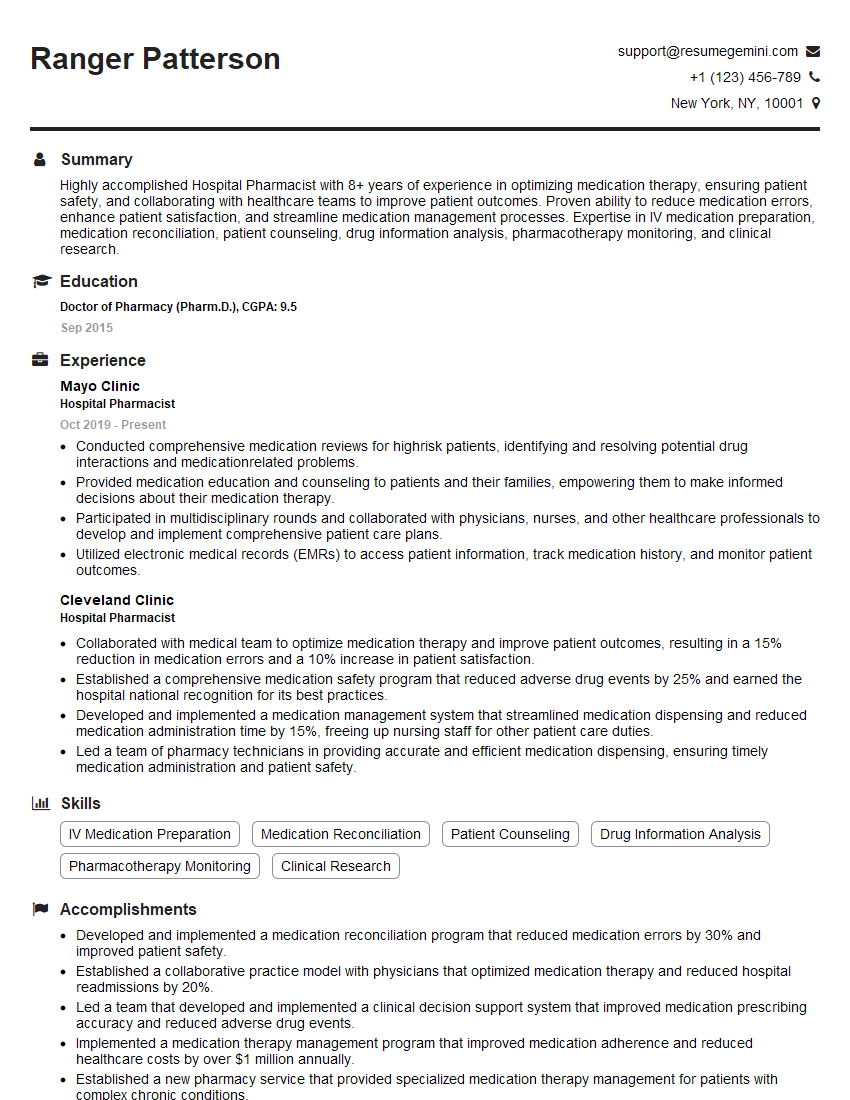
Interviewers often ask about specific skills and experiences. With ResumeGemini‘s customizable templates, you can tailor your resume to showcase the skills most relevant to the position, making a powerful first impression. Also check out Resume Template specially tailored for Hospital Pharmacist.
Career Expert Tips:
- Ace those interviews! Prepare effectively by reviewing the Top 50 Most Common Interview Questions on ResumeGemini.
- Navigate your job search with confidence! Explore a wide range of Career Tips on ResumeGemini. Learn about common challenges and recommendations to overcome them.
- Craft the perfect resume! Master the Art of Resume Writing with ResumeGemini’s guide. Showcase your unique qualifications and achievements effectively.
- Great Savings With New Year Deals and Discounts! In 2025, boost your job search and build your dream resume with ResumeGemini’s ATS optimized templates.
Researching the company and tailoring your answers is essential. Once you have a clear understanding of the Hospital Pharmacist‘s requirements, you can use ResumeGemini to adjust your resume to perfectly match the job description.
Key Job Responsibilities
Hospital Pharmacists are responsible for the safe and effective use of medications within a healthcare setting. Their key responsibilities include:
1. Medication Dispensing and Management
Dispensing medications to patients according to physician orders.
- Ensuring medication accuracy and patient safety.
- Maintaining medication inventory and ordering supplies.
2. Clinical Pharmacy Services
Providing clinical pharmacy services to patients and healthcare providers.
- Monitoring patient medication therapy and providing medication counseling.
- Participating in patient care rounds and medication reconciliation.
- Developing and implementing medication safety protocols.
3. Medication Education and Training
Educating patients and healthcare providers about medications.
- Providing medication information and counseling to patients and their families.
- Training healthcare staff on medication administration and safety.
4. Research and Development
Engaging in research and development activities related to medication use and safety.
- Conducting clinical trials and evaluating medication effectiveness.
- Developing new medication therapies and protocols.
Interview Tips
Preparing for a Hospital Pharmacist interview requires thorough research and practice. Here are some tips to help you ace the interview:
1. Research the Hospital and Position
Familiarize yourself with the hospital’s mission, values, and services. Research the specific role and responsibilities of the position you are applying for.
- Visit the hospital’s website and social media pages.
- Read articles and news about the hospital and industry.
- Review the job description carefully.
2. Highlight Your Clinical Skills and Experience
Emphasize your clinical pharmacy skills and experiences that align with the job requirements. Use specific examples to demonstrate your competency in medication management, patient counseling, and therapeutic monitoring.
- Provide examples of successful medication therapy optimization and patient outcomes.
- Describe your experience in implementing medication safety initiatives.
- Highlight your knowledge of clinical pharmacology and evidence-based medicine.
3. Showcase Your Communication and Interpersonal Skills
Hospital Pharmacists interact with a wide range of healthcare professionals and patients. Strong communication and interpersonal skills are essential. Demonstrate your ability to communicate effectively, build relationships, and collaborate with others.
- Share examples of effective communication with patients and healthcare providers.
- Provide evidence of your teamwork and collaboration skills.
- Emphasize your empathy and ability to connect with patients.
4. Prepare for Behavioral Questions
Behavioral questions assess your behavior and skills in specific situations. Research common behavioral interview questions and prepare your answers using the STAR method (Situation, Task, Action, Result).
- For example, describe a time you effectively managed a medication error.
- Explain how you handled a difficult patient interaction.
- Share an example of how you collaborated with a healthcare team to improve patient care.
Next Step:
Armed with this knowledge, you’re now well-equipped to tackle the Hospital Pharmacist interview with confidence. Remember, preparation is key. So, start crafting your resume, highlighting your relevant skills and experiences. Don’t be afraid to tailor your application to each specific job posting. With the right approach and a bit of practice, you’ll be well on your way to landing your dream job. Build your resume now from scratch or optimize your existing resume with ResumeGemini. Wish you luck in your career journey!