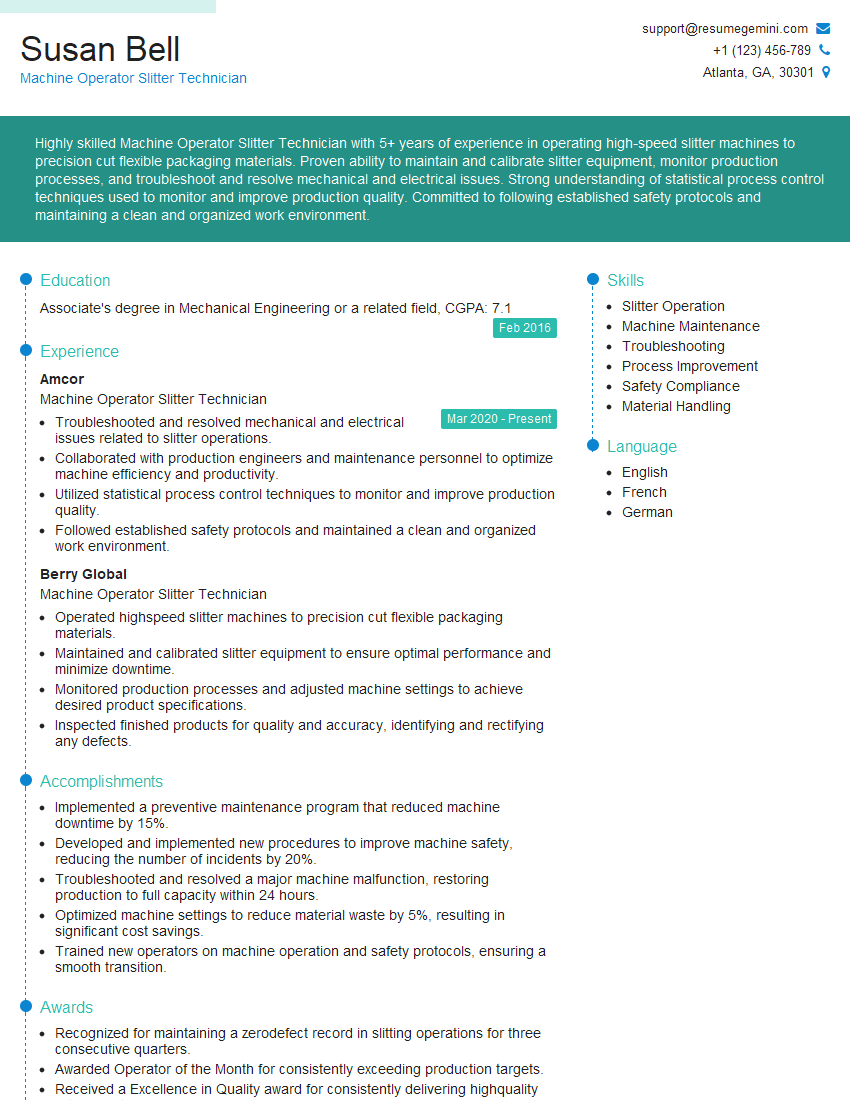
Are you gearing up for a career shift or aiming to ace your next interview? Look no further! We’ve curated a comprehensive guide to help you crack the interview for the coveted Machine Operator Slitter Technician position. From understanding the key responsibilities to mastering the most commonly asked questions, this blog has you covered. So, buckle up and let’s embark on this journey together
Acing the interview is crucial, but landing one requires a compelling resume that gets you noticed. Crafting a professional document that highlights your skills and experience is the first step toward interview success. ResumeGemini can help you build a standout resume that gets you called in for that dream job.






Essential Interview Questions For Machine Operator Slitter Technician
1. Describe the key responsibilities of a Machine Operator Slitter Technician?
As a Machine Operator Slitter Technician, I am responsible for operating and maintaining slitter machines, ensuring the production of high-quality slit products. My key responsibilities include:
- Operating slitter machines to slit materials such as paper, film, and foil to specified widths and tolerances.
- Setting up and adjusting machines, including loading and unloading rolls, threading material, and adjusting cutting blades.
- Monitoring machine operation and making adjustments as needed to ensure optimal performance and product quality.
- Maintaining and cleaning machines, performing regular inspections, and troubleshooting any issues that arise.
- Following safety protocols and adhering to established operating procedures.
2. Explain the process of setting up and calibrating a slitter machine?
Calibrating the Machine
- First, I ensure that the machine is properly leveled and aligned.
- Next, I calibrate the cutting blades using precision measuring tools to ensure accurate and consistent slitting.
- I also check and adjust the tension settings on the machine to prevent material from stretching or tearing during the slitting process.
Setting Up the Machine
- I load the material roll onto the machine and thread it through the cutting blades.
- I set the desired slitting width and speed using the machine’s control panel.
- Finally, I run a test cut to verify that the machine is set up correctly and producing the desired results.
3. How do you troubleshoot common problems that occur during the slitting process?
During the slitting process, I may encounter various problems, such as uneven cuts, material tearing, or machine jams. To troubleshoot these issues, I follow a systematic approach:
- First, I identify the problem and observe the machine’s behavior.
- Next, I check for any loose or damaged components, such as cutting blades or tension rollers.
- I also verify that the machine settings are correct and that the material is loaded properly.
- Based on my observations, I make necessary adjustments to the machine or replace faulty components.
- After troubleshooting, I run a test cut to ensure that the problem has been resolved.
4. What maintenance procedures do you perform to ensure the optimal performance of the slitter machine?
To maintain optimal performance of the slitter machine, I regularly perform the following maintenance procedures:
- Daily: I clean the machine, lubricate moving parts, and check for any signs of wear or damage.
- Weekly: I inspect the cutting blades for sharpness and adjust or replace them as needed.
- Monthly: I perform a thorough inspection of the entire machine, including electrical components and safety devices.
- Annually: I schedule a professional maintenance service to ensure the machine is operating at its best.
5. How do you ensure the safety of yourself and others while operating a slitter machine?
Safety is paramount when operating a slitter machine. I adhere to the following protocols:
- I always wear appropriate safety gear, including gloves, safety glasses, and earplugs.
- I ensure that the machine is properly guarded and that all safety devices are in place and functioning.
- I follow established lockout/tagout procedures before performing any maintenance or repairs.
- I am aware of the potential hazards associated with the machine and take precautions to avoid accidents.
- I report any unsafe conditions or incidents to my supervisor immediately.
6. Describe how you stay updated on the latest technologies and best practices in the slitter machine industry?
To stay abreast of advancements in the industry, I engage in continuous learning and development:
- I attend industry conferences and workshops to learn about new technologies and techniques.
- I read trade publications and technical journals to stay informed about best practices.
- I participate in online forums and discussions to connect with other professionals in the field.
- I seek opportunities for training and certification to enhance my skills and knowledge.
7. Can you explain the difference between a shear cut and a score cut, and when would you use each type?
Sure. A shear cut is a clean, straight cut made by two opposing blades. It is typically used for materials that require a precise and clean edge, such as paper, film, and foil. On the other hand, a score cut is a shallow cut made by a blade or wheel that weakens the material along a specific line. It is often used for materials that need to be folded or creased, such as cardboard and plastics.
8. What factors influence the quality of the slit product?
Several factors influence the quality of the slit product, including:
- Material properties: The type of material being slit, its thickness, and its grain direction can affect the quality of the cut.
- Machine condition: The sharpness of the cutting blades, the accuracy of the machine settings, and the overall condition of the machine can impact the quality of the slit.
- Operating parameters: The speed of the machine, the tension on the material, and the temperature of the blades can also affect the quality of the slit.
9. How do you minimize waste and optimize material utilization during the slitting process?
- Careful planning: I carefully plan the slitting process to minimize waste. This includes determining the optimal slit widths and utilizing the full width of the material.
- Accurate setup: I ensure that the machine is set up accurately to reduce the number of rejected or damaged products.
- Regular maintenance: I perform regular maintenance on the machine to keep it operating at optimal efficiency, which helps reduce waste.
- Employee training: I train employees on proper operating procedures to minimize errors and waste.
10. If you notice a deviation in the quality of the slit product, what steps do you take to identify and resolve the issue?
- Inspect the material: I inspect the material to identify any defects or variations that may be causing the quality issue.
- Check the machine settings: I verify that the machine settings are correct and make any necessary adjustments.
- Examine the cutting blades: I inspect the cutting blades for sharpness and damage and replace them if needed.
- Monitor the operating parameters: I monitor the speed of the machine, the tension on the material, and the temperature of the blades to ensure they are within the optimal range.
Interviewers often ask about specific skills and experiences. With ResumeGemini‘s customizable templates, you can tailor your resume to showcase the skills most relevant to the position, making a powerful first impression. Also check out Resume Template specially tailored for Machine Operator Slitter Technician.
Career Expert Tips:
- Ace those interviews! Prepare effectively by reviewing the Top 50 Most Common Interview Questions on ResumeGemini.
- Navigate your job search with confidence! Explore a wide range of Career Tips on ResumeGemini. Learn about common challenges and recommendations to overcome them.
- Craft the perfect resume! Master the Art of Resume Writing with ResumeGemini’s guide. Showcase your unique qualifications and achievements effectively.
- Great Savings With New Year Deals and Discounts! In 2025, boost your job search and build your dream resume with ResumeGemini’s ATS optimized templates.
Researching the company and tailoring your answers is essential. Once you have a clear understanding of the Machine Operator Slitter Technician‘s requirements, you can use ResumeGemini to adjust your resume to perfectly match the job description.
Key Job Responsibilities
Machine Operator Slitter Technicians are responsible for operating and maintaining slitter machines used in various industries to cut and rewind materials like paper, plastic, or metal.
1. Machine Operation
intro paragraph
- Operate slitter machines to cut and rewind materials according to specified dimensions and quality standards.
- Monitor machine performance, adjust settings, and troubleshoot any issues to ensure efficient operation.
2. Material Handling
intro paragraph
- Load and unload materials onto the slitter machine, ensuring proper alignment and tension.
- Inspect materials for defects, damage, or contamination before and during processing.
3. Quality Control
intro paragraph
- Perform quality checks on finished products to ensure they meet specifications and customer requirements.
- Identify and resolve any quality issues promptly to maintain production standards.
4. Preventive Maintenance
intro paragraph
- Conduct regular inspections and maintenance on slitter machines to prevent breakdowns and ensure optimal performance.
- Lubricate, clean, and adjust machine components as needed to minimize downtime and extend equipment life.
Interview Tips
To ace an interview for a Machine Operator Slitter Technician position, candidates should prepare thoroughly by researching the company, understanding the job requirements, and practicing their responses to common interview questions.
1. Research the Company and Position
Gather information about the company’s industry, products or services, and culture. Read the job description carefully and identify specific skills and experience required for the role.
2. Highlight Relevant Skills and Experience
Emphasize your technical proficiency in operating slitter machines, including your knowledge of machine components, maintenance procedures, and quality control techniques. Highlight any experience in troubleshooting and resolving machine issues.
3. Showcase Attention to Detail
Stress your ability to work meticulously and pay close attention to product quality. Explain how you ensure accuracy in measurements, maintain consistency in cutting and rewinding, and identify defects effectively.
4. Demonstrate Problem-Solving Abilities
Provide examples of how you have successfully diagnosed and resolved machine problems in the past. Describe your analytical approach, troubleshooting process, and the steps you took to restore machine functionality.
5. Prepare for Technical Questions
Anticipate technical questions related to slitter machine operations, such as blade selection, tension control, and safety protocols. Review your knowledge of machine components and their functions, as well as industry best practices for slitter operations.
Next Step:
Now that you’re armed with a solid understanding of what it takes to succeed as a Machine Operator Slitter Technician, it’s time to turn that knowledge into action. Take a moment to revisit your resume, ensuring it highlights your relevant skills and experiences. Tailor it to reflect the insights you’ve gained from this blog and make it shine with your unique qualifications. Don’t wait for opportunities to come to you—start applying for Machine Operator Slitter Technician positions today and take the first step towards your next career milestone. Your dream job is within reach, and with a polished resume and targeted applications, you’ll be well on your way to achieving your career goals! Build your resume now with ResumeGemini.