Are you gearing up for a career shift or aiming to ace your next interview? Look no further! We’ve curated a comprehensive guide to help you crack the interview for the coveted Mix Technician position. From understanding the key responsibilities to mastering the most commonly asked questions, this blog has you covered. So, buckle up and let’s embark on this journey together.
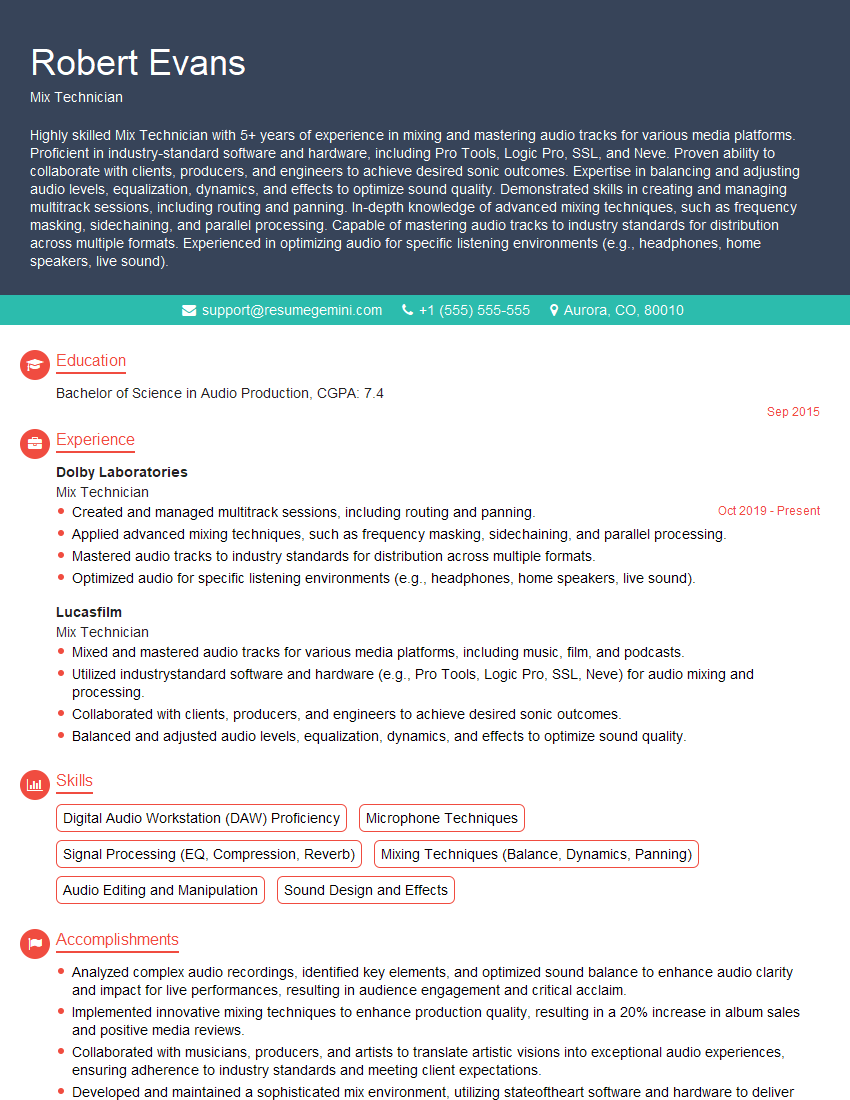
Acing the interview is crucial, but landing one requires a compelling resume that gets you noticed. Crafting a professional document that highlights your skills and experience is the first step toward interview success. ResumeGemini can help you build a standout resume that gets you called in for that dream job.






Essential Interview Questions For Mix Technician
1. What is the role of a Mix Technician?
As a Mix Technician, I am responsible for:
- Mixing and blending various ingredients to create customized concrete mixtures.
- Operating and maintaining concrete mixing equipment, including batching plants, mixers, and conveyors.
- Monitoring and adjusting the mixing process to ensure precise adherence to specifications.
- Performing quality control tests to verify the properties and consistency of the concrete.
- Maintaining a clean and organized work area, adhering to safety protocols and industry standards.
2. How do you handle variations in concrete mix designs?
Understanding Specifications
- Thoroughly review the mix design to grasp the required proportions and materials.
- Inquire about any special procedures or concerns related to the specific mix.
Adjusting Equipment
- Calibrate equipment to ensure accurate metering and blending of ingredients.
- Adjust mixing time and speed to optimize the properties of the concrete.
Quality Control
- Monitor the consistency and quality of the mix throughout the process.
- Make necessary adjustments to maintain specifications and meet customer requirements.
3. What are the common problems you encounter during the mixing process and how do you resolve them?
Some common problems and their solutions:
- Inconsistent Mixing: Check equipment calibration, adjust mixing time and speed, inspect blades for wear.
- Incorrect Aggregate Ratio: Verify batching accuracy, ensure proper material gradation, adjust batch sizes.
- Insufficient Workability: Add admixtures to modify concrete properties, adjust water content, check for entrapped air.
- Segregation: Optimize mixing time, use appropriate admixtures, avoid over-mixing, ensure proper placement methods.
- Air Entrapment: Inspect equipment for air leaks, add anti-foaming agents, modify mixing procedures.
4. Describe the quality control measures you implement to ensure the integrity of the concrete mix.
Quality Control Measures:
- Raw Material Inspection: Verify the quality and consistency of incoming materials (cement, aggregates, water).
- Mix Design Verification: Confirm compliance with the specified mix design, adjust as necessary to meet requirements.
- Slump and Air Content Tests: Conduct regular tests to assess workability and air content, ensuring adherence to specifications.
- Compressive Strength Tests: Perform standardized tests to determine the strength and durability of the concrete.
- Documentation and Reporting: Maintain detailed records of all quality control tests and any adjustments made to the mix.
5. How do you maintain the equipment used in the mixing process?
Equipment Maintenance Practices:
- Regular Cleaning and Inspection: Clean mixers, conveyors, and batching equipment to prevent buildup and maintain functionality.
- Lubrication: Lubricate moving parts to reduce wear and ensure smooth operation.
- Calibration and Adjustment: Calibrate scales, sensors, and other instruments to ensure accurate measurement and mixing.
- Preventive Maintenance: Conduct scheduled inspections and maintenance tasks to identify potential issues early on.
- Emergency Repairs: Respond promptly to equipment failures, diagnose the issue, and make necessary repairs to minimize downtime.
6. What safety precautions do you take when operating concrete mixing equipment?
Safety Precautions:
- Personal Protective Equipment (PPE): Wear appropriate PPE (hard hat, safety glasses, gloves, earplugs) at all times.
- Equipment Lockout/Tagout: Ensure proper lockout/tagout procedures are followed during maintenance or repairs.
- Guarding and Protection: Inspect and maintain guarding on moving parts and electrical components.
- Spill and Leakage Prevention: Implement measures to prevent spills and leaks of hazardous materials.
- Emergency Response: Be familiar with emergency response procedures and evacuation routes.
7. How do you calculate the quantity of materials required for a specific concrete mix?
Material Quantity Calculation:
- Review Mix Design: Understand the specified mix proportions and required concrete volume.
- Calculate Ingredients: Use mathematical formulas and conversion factors to determine the amount of cement, aggregates, water, and any admixtures.
- Adjust for Equipment: Account for equipment efficiency and batching capacity.
- Verify and Confirm: Double-check calculations to ensure accuracy and avoid errors.
- Optimize and Adjust: Make adjustments as needed to minimize material waste and meet project requirements.
8. What are the different types of admixtures used in concrete mixing and their applications?
Types and Applications of Admixtures:
- Water Reducers: Enhance workability, reduce water content, improve strength.
- Accelerators: Speed up setting and hardening time, suitable for cold weather or fast-track projects.
- Retarders: Delay setting time, prevent premature hardening during transportation or placement.
- Air-Entraining Agents: Introduce air bubbles to improve freeze-thaw resistance.
- Plasticizers: Increase workability and reduce slump loss, facilitating placement in congested areas.
9. How do you ensure proper curing of concrete after it has been mixed?
Curing Methods and Techniques:
- Water Curing: Keep the concrete surface moist by spraying, ponding, or covering with wet burlap.
- Membrane Curing: Apply a moisture-retaining membrane to prevent evaporation from the surface.
- Moist Room Curing: Cure in a controlled environment with high humidity and temperature.
- Insulation: Cover the concrete with insulation blankets or materials to retain heat and moisture.
- Monitoring and Inspection: Regularly inspect the curing process and adjust methods as needed to ensure proper hydration and strength development.
10. How do you troubleshoot and resolve common issues that may arise during the concrete mixing process?
Troubleshooting and Resolution:
- Inconsistent Mix: Check mix design, calibrate equipment, inspect blades for wear.
- Hardening Too Quickly: Adjust water content, use retarders, reduce concrete temperature.
- Segregation: Optimize mixing time, use anti-segregation admixtures, avoid over-mixing.
- Low Strength: Verify mix design, ensure proper curing, inspect for air entrainment or other defects.
- Equipment Malfunction: Diagnose the issue, refer to maintenance manuals, seek professional assistance if needed.
Interviewers often ask about specific skills and experiences. With ResumeGemini‘s customizable templates, you can tailor your resume to showcase the skills most relevant to the position, making a powerful first impression. Also check out Resume Template specially tailored for Mix Technician.
Career Expert Tips:
- Ace those interviews! Prepare effectively by reviewing the Top 50 Most Common Interview Questions on ResumeGemini.
- Navigate your job search with confidence! Explore a wide range of Career Tips on ResumeGemini. Learn about common challenges and recommendations to overcome them.
- Craft the perfect resume! Master the Art of Resume Writing with ResumeGemini’s guide. Showcase your unique qualifications and achievements effectively.
- Great Savings With New Year Deals and Discounts! In 2025, boost your job search and build your dream resume with ResumeGemini’s ATS optimized templates.
Researching the company and tailoring your answers is essential. Once you have a clear understanding of the Mix Technician‘s requirements, you can use ResumeGemini to adjust your resume to perfectly match the job description.
Key Job Responsibilities
Mix Technicians play a crucial role in the production of audio and video content. Their responsibilities encompass a wide range of tasks, ensuring the optimal sound and visual quality of the final product.
1. Audio Mixing
Mix Technicians are responsible for blending and balancing multiple audio sources into a cohesive mix. They adjust levels, panning, and equalization to create a well-defined and immersive soundscape.
- Balancing audio sources to ensure clarity and avoid distortion
- Adjusting panning to create depth and spatial awareness in the mix
2. Video Editing and Effects
In addition to audio mixing, Mix Technicians often assist with video editing. They trim, crop, and arrange video footage, adding visual effects such as transitions, filters, and titles.
- Utilizing video editing software to manipulate footage and create a cohesive sequence
- Applying visual effects to enhance the visual appeal and impact of the video
3. Equipment Maintenance and Troubleshooting
Mix Technicians are responsible for maintaining and troubleshooting the equipment used in the production process. They ensure that all equipment is properly calibrated and in good working order.
- Inspecting and maintaining audio mixing consoles, microphones, and other equipment
- Troubleshooting technical issues and resolving them efficiently
4. Collaboration and Communication
Mix Technicians often collaborate with other members of the production team, including producers, directors, and sound designers. They communicate effectively to ensure that the final product meets the desired specifications.
- Coordinating with the production team to understand their requirements and feedback
- Providing technical advice and guidance to other team members
Interview Tips
Preparing thoroughly for a Mix Technician interview can significantly increase your chances of success. Here are some valuable tips and hacks to help you ace your interview:
1. Research the Company and Position
Before the interview, take the time to research the company and the specific position you are applying for. Understand their values, culture, and the project or production they are currently working on.
2. Practice Your Skills and Prepare Examples
Mix Technicians are highly skilled professionals. Practice your audio mixing and video editing skills before the interview. Prepare examples of your work to showcase your proficiency and creativity.
3. Be Enthusiastic and Professional
Demonstrate your passion for audio and video production throughout the interview. Be enthusiastic about the role and show that you are eager to contribute to the team.
4. Ask Thoughtful Questions
Asking thoughtful questions shows that you are engaged and interested in the position. Prepare a few questions that relate to the company’s projects, production techniques, or the industry as a whole.
Next Step:
Armed with this knowledge, you’re now well-equipped to tackle the Mix Technician interview with confidence. Remember, preparation is key. So, start crafting your resume, highlighting your relevant skills and experiences. Don’t be afraid to tailor your application to each specific job posting. With the right approach and a bit of practice, you’ll be well on your way to landing your dream job. Build your resume now from scratch or optimize your existing resume with ResumeGemini. Wish you luck in your career journey!