Feeling lost in a sea of interview questions? Landed that dream interview for Municipal Engineer but worried you might not have the answers? You’re not alone! This blog is your guide for interview success. We’ll break down the most common Municipal Engineer interview questions, providing insightful answers and tips to leave a lasting impression. Plus, we’ll delve into the key responsibilities of this exciting role, so you can walk into your interview feeling confident and prepared.
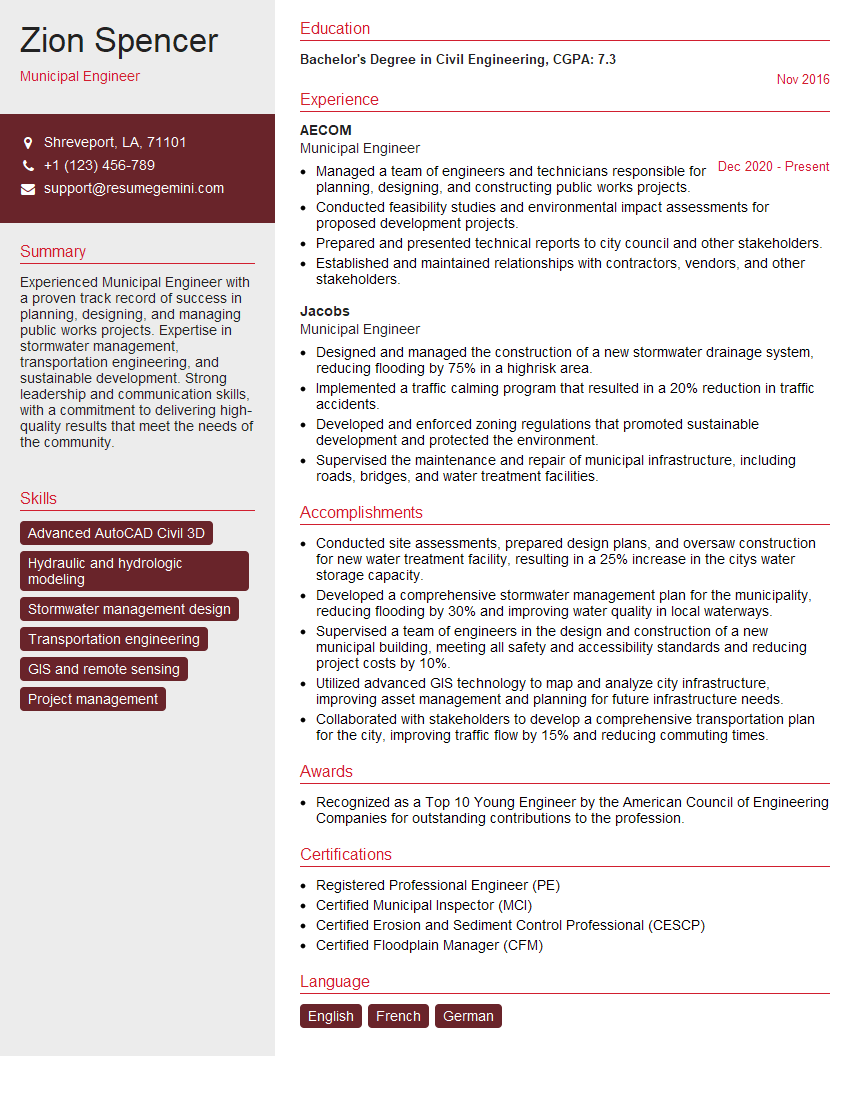
Acing the interview is crucial, but landing one requires a compelling resume that gets you noticed. Crafting a professional document that highlights your skills and experience is the first step toward interview success. ResumeGemini can help you build a standout resume that gets you called in for that dream job.






Essential Interview Questions For Municipal Engineer
1. What are the key responsibilities of a Municipal Engineer?
As a Municipal Engineer, I would be responsible for planning, designing, constructing, and maintaining public infrastructure within the municipality. This would include projects related to water distribution and treatment, wastewater collection and treatment, stormwater management, transportation, and public facilities. I would also be involved in developing and implementing policies and standards for the design and construction of municipal infrastructure, as well as overseeing the work of contractors and consultants.
2. What are the different types of water distribution systems?
Gravity-fed systems
- Rely on gravity to move water from a higher elevation to a lower elevation.
- Do not require pumps to operate.
- Are typically used in areas with a relatively flat topography.
Pumped systems
- Use pumps to move water from a lower elevation to a higher elevation.
- Are typically used in areas with a hilly or mountainous topography.
- Can also be used to boost the pressure in a gravity-fed system.
Combination systems
- Use a combination of gravity and pumping to move water throughout the system.
- Are typically used in areas with a varied topography.
3. What are the main components of a wastewater collection system?
- Sewer pipes
- Manholes
- Lift stations
- Treatment plants
4. What are the different types of stormwater management systems?
Green infrastructure
- Uses natural features and processes to manage stormwater runoff.
- Examples include rain gardens, bioswales, and permeable pavements.
- Can help to reduce flooding, improve water quality, and provide habitat for wildlife.
Gray infrastructure
- Uses engineered structures to manage stormwater runoff.
- Examples include detention ponds, culverts, and storm drains.
- Can help to reduce flooding and protect property, but can also have negative impacts on water quality and wildlife habitat.
Hybrid systems
- Use a combination of green and gray infrastructure to manage stormwater runoff.
- Can help to achieve the benefits of both green and gray infrastructure.
5. What are the different types of transportation infrastructure?
Roads
- Include highways, streets, and alleys.
- Provide a way for people and goods to move around.
Bridges
- Span bodies of water or other obstacles.
- Provide a way for people and goods to cross.
Tunnels
- Go underground or through mountains.
- Provide a way for people and goods to move through difficult terrain.
Public transit
- Includes buses, trains, and light rail.
- Provide a way for people to get around without driving.
6. What are the different types of public facilities?
Parks
- Provide a place for people to relax, play, and socialize.
- Can include playgrounds, picnic areas, and walking trails.
Libraries
- Provide access to books, computers, and other resources.
- Can also host programs and events.
Community centers
- Provide a place for people to gather and participate in activities.
- Can include meeting rooms, gyms, and pools.
7. What are the challenges facing Municipal Engineers today?
- Aging infrastructure
- Climate change
- Population growth
- Fiscal constraints
- Public expectations
8. What are the latest trends in Municipal Engineering?
- Sustainability
- Resilience
- Smart cities
- Data-driven decision making
- Public engagement
9. What are the qualities of a successful Municipal Engineer?
- Technical expertise
- Communication skills
- Project management skills
- Leadership skills
- Problem-solving skills
10. Why are you interested in this position?
I am interested in this position because it offers the opportunity to use my skills and experience to make a positive impact on the community. I am passionate about Municipal Engineering, and I believe that I have the knowledge and skills necessary to be successful in this role.
Interviewers often ask about specific skills and experiences. With ResumeGemini‘s customizable templates, you can tailor your resume to showcase the skills most relevant to the position, making a powerful first impression. Also check out Resume Template specially tailored for Municipal Engineer.
Career Expert Tips:
- Ace those interviews! Prepare effectively by reviewing the Top 50 Most Common Interview Questions on ResumeGemini.
- Navigate your job search with confidence! Explore a wide range of Career Tips on ResumeGemini. Learn about common challenges and recommendations to overcome them.
- Craft the perfect resume! Master the Art of Resume Writing with ResumeGemini’s guide. Showcase your unique qualifications and achievements effectively.
- Great Savings With New Year Deals and Discounts! In 2025, boost your job search and build your dream resume with ResumeGemini’s ATS optimized templates.
Researching the company and tailoring your answers is essential. Once you have a clear understanding of the Municipal Engineer‘s requirements, you can use ResumeGemini to adjust your resume to perfectly match the job description.
Key Job Responsibilities
Municipal Engineers play a vital role in the planning, design, construction, and maintenance of infrastructure within a municipality. Their responsibilities encompass a wide range of engineering disciplines, including civil, environmental, and transportation engineering.
1. Infrastructure Planning and Design
Municipal Engineers are responsible for planning and designing new infrastructure projects, such as roads, bridges, water and sewer systems, and public buildings. They work closely with other engineers, architects, and planners to ensure that projects meet the needs of the community and comply with all applicable regulations.
- Conduct feasibility studies and develop design plans for new infrastructure projects.
- Prepare cost estimates and manage project budgets.
- Obtain permits and approvals from regulatory agencies.
2. Construction Management
Once a project is approved, Municipal Engineers oversee the construction process to ensure that it is completed on time, within budget, and according to specifications. They work with contractors and subcontractors to coordinate schedules, resolve issues, and ensure that all work meets the required standards.
- Inspect construction sites and ensure compliance with plans and specifications.
- Monitor project progress and identify potential delays or problems.
- Coordinate with contractors and subcontractors to resolve issues and ensure timely completion.
3. Infrastructure Maintenance and Repair
Municipal Engineers are also responsible for maintaining and repairing existing infrastructure. They conduct regular inspections to identify potential problems and develop plans for maintenance and repair work. They also respond to emergencies, such as broken water mains or collapsed roads, to ensure public safety.
- Conduct regular inspections of infrastructure to identify potential problems.
- Develop and implement maintenance and repair plans.
- Respond to emergencies and coordinate repairs.
4. Public Relations and Outreach
Municipal Engineers often interact with the public to explain projects and address concerns. They may also give presentations to community groups and attend public meetings to provide information about upcoming projects or answer questions about existing infrastructure.
- Respond to public inquiries and concerns.
- Give presentations to community groups and attend public meetings.
- Develop and distribute public information materials.
Interview Tips
Preparing for a Municipal Engineer interview can help candidates demonstrate their qualifications and increase their chances of success. Here are some tips and hacks to help candidates ace the interview:
1. Research the Municipality and the Position
Before the interview, candidates should thoroughly research the municipality where they are applying for the position. They should learn about the municipality’s history, demographics, and current infrastructure projects. They should also review the job description carefully and identify the key qualifications and skills required for the position.
- Visit the municipality’s website to learn about its history, demographics, and current infrastructure projects.
- Review the job description carefully and identify the key qualifications and skills required for the position.
- Consider the municipality’s current events and challenges, and how your skills and experience could contribute to addressing them.
2. Highlight Relevant Experience and Skills
During the interview, candidates should emphasize their relevant experience and skills that align with the job requirements. They should provide specific examples of their work in infrastructure planning, design, construction management, or maintenance and repair.
- Quantify your accomplishments whenever possible, using specific metrics to demonstrate the impact of your work.
- Discuss projects that you have led or contributed to, highlighting your role and responsibilities.
- Be prepared to answer questions about your experience with specific engineering software or technologies.
3. Demonstrate Strong Communication and Interpersonal Skills
Municipal Engineers often work with a variety of stakeholders, including other engineers, contractors, and the public. Candidates should demonstrate strong communication and interpersonal skills during the interview. They should be able to articulate their ideas clearly and concisely, and they should be able to listen to and understand the needs of others.
- Practice your communication skills by giving a presentation or mock interview to a friend or family member.
- Be prepared to answer questions about your experience working with others, including contractors, consultants, and the public.
- Show that you are a team player and that you are willing to collaborate with others to achieve common goals.
4. Prepare Thoughtful Questions
At the end of the interview, candidates should be prepared to ask thoughtful questions about the position and the municipality. This shows that they are interested in the opportunity and that they have taken the time to prepare for the interview. Some good questions to ask include:
- What are the municipality’s current infrastructure priorities?
- What are the biggest challenges facing the municipality’s infrastructure?
- What opportunities are there for professional development and growth within the municipality?
Next Step:
Now that you’re armed with the knowledge of Municipal Engineer interview questions and responsibilities, it’s time to take the next step. Build or refine your resume to highlight your skills and experiences that align with this role. Don’t be afraid to tailor your resume to each specific job application. Finally, start applying for Municipal Engineer positions with confidence. Remember, preparation is key, and with the right approach, you’ll be well on your way to landing your dream job. Build an amazing resume with ResumeGemini