Are you gearing up for a career shift or aiming to ace your next interview? Look no further! We’ve curated a comprehensive guide to help you crack the interview for the coveted Officer In Charge, Aviation Unit Or Detachment position. From understanding the key responsibilities to mastering the most commonly asked questions, this blog has you covered. So, buckle up and let’s embark on this journey together.
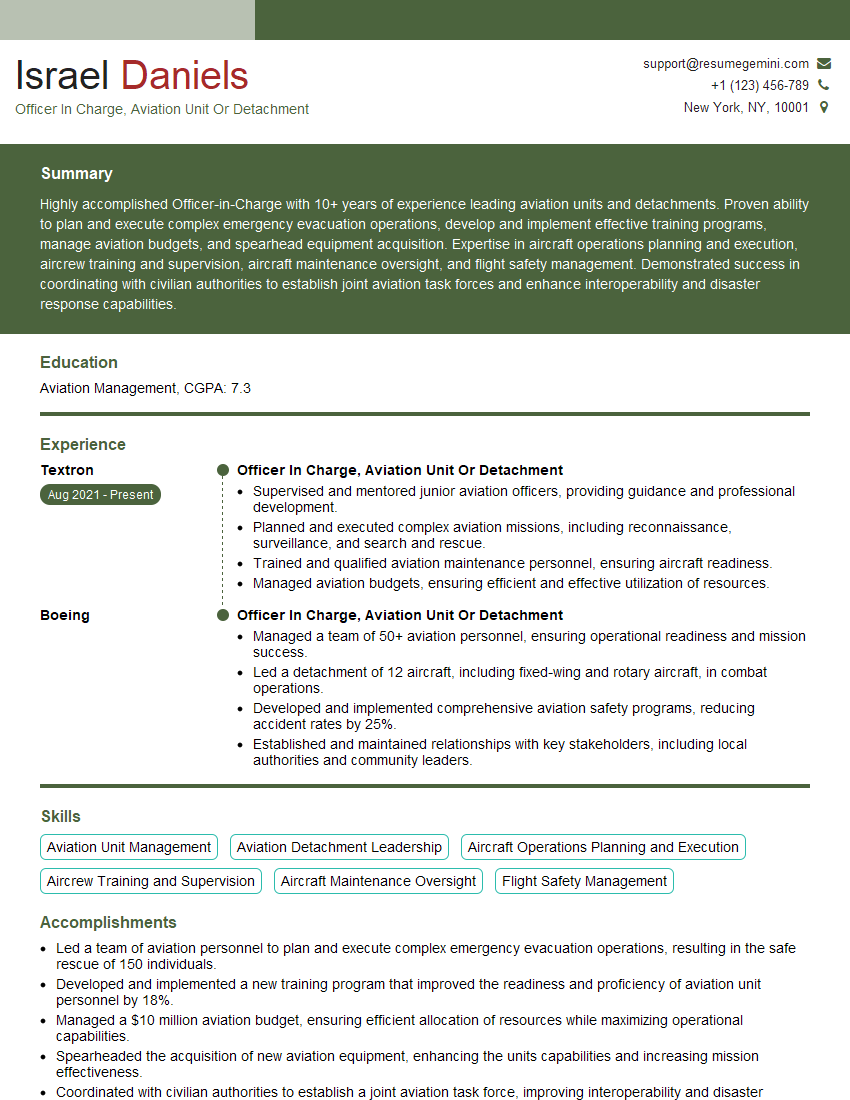
Acing the interview is crucial, but landing one requires a compelling resume that gets you noticed. Crafting a professional document that highlights your skills and experience is the first step toward interview success. ResumeGemini can help you build a standout resume that gets you called in for that dream job.






Essential Interview Questions For Officer In Charge, Aviation Unit Or Detachment
1. How do you ensure the safety and efficiency of aircraft operations within your unit or detachment?
- Establish and maintain comprehensive safety protocols and procedures.
- Conduct regular inspections and maintenance checks on all aircraft and equipment.
- Provide extensive training and certification programs for pilots and support staff.
- Foster a culture of safety awareness and accountability throughout the organization.
- Establish and maintain effective communication channels for incident reporting and risk management.
2. How do you prioritize and allocate aircraft resources to meet operational demands while optimizing utilization?
Resource Allocation Considerations
- Mission criticality and urgency
- Aircraft availability and maintenance schedules
- Pilot availability and qualifications
- Weather and environmental conditions
- Resource constraints and budget limitations
Optimization Techniques
- Centralized scheduling and coordination
- Real-time monitoring and adjustment of schedules
- Cross-utilization of aircraft across different missions
- Collaboration with other units and agencies
- Data analysis and optimization tools
3. Describe your approach to managing and developing your team of pilots, maintenance personnel, and support staff.
- Leadership: Provide clear vision, direction, and motivation to the team.
- Training and Development: Identify and address training needs, promote professional growth.
- Communication: Foster open communication, address concerns, build trust.
- Delegation and Empowerment: Delegate responsibilities and empower team members to make decisions.
- Performance Evaluation: Conduct regular assessments, provide feedback, and recognize achievements.
4. How do you stay abreast of advancements in aviation technology and best practices?
- Attend industry conferences and workshops
- Review technical publications and journals
- Collaborate with experts in the field
- Conduct research and analysis
- Explore new technologies and innovations
5. Describe a situation where you had to make a difficult decision related to aircraft operations. How did you approach the decision-making process and what was the outcome?
(Provide a specific example from previous experience)
6. How do you handle emergency situations and ensure the safety of personnel and aircraft?
- Establish clear emergency protocols and procedures
- Train personnel on emergency response drills
- Coordinate with emergency services and other agencies
- Conduct regular emergency simulations and exercises
- Debrief and evaluate emergency responses to identify areas for improvement
7. Describe your experience in managing airfield operations and ground support services.
- Airfield Management: Oversee airfield facilities, maintenance, and security.
- Ground Support Services: Coordinate refueling, towing, and other support functions.
- Emergency Response: Manage airfield emergency protocols and coordinate with emergency responders.
- Safety and Compliance: Ensure compliance with aviation regulations and safety standards.
8. How do you collaborate with other units and agencies to ensure seamless operations and support?
- Establish and maintain strong relationships with partner organizations
- Participate in joint exercises and training scenarios
- Develop standardized operating procedures and protocols
- Share information and resources to support common goals
- Coordinate inter-agency support during missions and emergencies
9. Describe your understanding of aviation regulations and how you ensure compliance within your unit or detachment.
- Regulatory Knowledge: Proficiency in aviation regulations related to operations, maintenance, and safety.
- Compliance Program: Implement systems and processes to ensure adherence to regulations.
- Inspections and Audits: Conduct regular inspections and audits to identify and address compliance gaps.
- Training and Education: Educate personnel on regulations and responsibilities.
- Collaboration and Support: Work with regulators and industry experts to stay informed and ensure compliance.
10. How do you measure the effectiveness of your aviation unit or detachment and identify areas for improvement?
- Key Performance Indicators: Define and monitor metrics related to safety, efficiency, and mission accomplishment.
- Data Analysis: Collect and analyze data to identify trends and performance gaps.
- Feedback and Input: Seek feedback from pilots, maintenance personnel, and other stakeholders.
- Continuous Improvement: Implement best practices and innovative solutions to enhance performance.
- External Evaluations: Participate in external evaluations and audits to gain independent insights and identify areas for improvement.
Interviewers often ask about specific skills and experiences. With ResumeGemini‘s customizable templates, you can tailor your resume to showcase the skills most relevant to the position, making a powerful first impression. Also check out Resume Template specially tailored for Officer In Charge, Aviation Unit Or Detachment.
Career Expert Tips:
- Ace those interviews! Prepare effectively by reviewing the Top 50 Most Common Interview Questions on ResumeGemini.
- Navigate your job search with confidence! Explore a wide range of Career Tips on ResumeGemini. Learn about common challenges and recommendations to overcome them.
- Craft the perfect resume! Master the Art of Resume Writing with ResumeGemini’s guide. Showcase your unique qualifications and achievements effectively.
- Great Savings With New Year Deals and Discounts! In 2025, boost your job search and build your dream resume with ResumeGemini’s ATS optimized templates.
Researching the company and tailoring your answers is essential. Once you have a clear understanding of the Officer In Charge, Aviation Unit Or Detachment‘s requirements, you can use ResumeGemini to adjust your resume to perfectly match the job description.
Key Job Responsibilities
The Officer In Charge (OIC) oversees aviation units or detachments, ensuring the effective and efficient operation of aviation assets. Their responsibilities encompass various aspects of aviation management, including:
1. Planning and Execution of Operations
The OIC plans, coordinates, and executes all aspects of aviation operations, including missions, exercises, and training. They assess mission requirements, allocate resources, and ensure compliance with safety regulations and procedures.
- Plan and conduct flight operations, ensuring adherence to safety standards.
- Assign aircraft and personnel to missions based on operational needs.
2. Resource Management
The OIC manages aviation assets, including aircraft, equipment, and personnel. They allocate resources effectively, ensuring optimal utilization while maintaining operational readiness.
- Allocate aircraft and equipment to meet mission requirements.
- Manage maintenance and logistics to ensure aircraft availability.
3. Personnel Management
The OIC leads, mentors, and evaluates aviation personnel. They ensure training, career development, and a positive work environment while maintaining discipline and morale.
- Supervise and evaluate aviation personnel, providing guidance and support.
- Identify training needs and coordinate professional development opportunities.
4. Safety and Compliance
The OIC prioritizes safety and compliance by enforcing aviation regulations, policies, and procedures. They conduct inspections, assess risks, and implement measures to mitigate hazards.
- Establish and enforce safety protocols and procedures.
- Conduct regular inspections to ensure compliance with regulations.
Interview Tips
To ace an interview for the position of Officer In Charge, Aviation Unit Or Detachment, candidates should prepare thoroughly and demonstrate their knowledge, skills, and experience in aviation management:
1. Research the Organization
Familiarize yourself with the organization’s mission, values, and aviation capabilities. Research the specific unit or detachment you are applying to, understanding its history, operations, and current challenges.
- Visit the organization’s website and read relevant materials.
- Attend industry events or connect with professionals in the field.
2. Highlight Relevant Experience
In your resume and during the interview, emphasize your experience in aviation operations, resource management, and personnel leadership. Quantify your accomplishments using specific metrics whenever possible.
- Describe your involvement in planning and executing successful aviation missions.
- Discuss your strategies for managing aviation resources efficiently.
3. Showcase Leadership Abilities
Demonstrate your leadership skills by providing examples of how you have motivated, mentored, and developed aviation personnel. Highlight your ability to create a positive and productive work environment.
- Share your experiences in leading and managing teams.
- Explain your approach to conflict resolution and employee motivation.
4. Emphasize Safety and Compliance
Stress your commitment to safety and compliance in aviation operations. Discuss your knowledge of aviation regulations and your experience in implementing and enforcing safety protocols.
- Provide examples of your involvement in safety inspections or investigations.
- Explain your understanding of risk assessment and mitigation strategies.
5. Practice Common Interview Questions
Prepare for common interview questions by practicing your answers. Anticipate questions about your aviation experience, leadership abilities, and knowledge of industry best practices.
- Use the STAR method (Situation, Task, Action, Result) to structure your answers.
- Be prepared to provide specific examples and anecdotes to support your claims.
Next Step:
Now that you’re armed with the knowledge of Officer In Charge, Aviation Unit Or Detachment interview questions and responsibilities, it’s time to take the next step. Build or refine your resume to highlight your skills and experiences that align with this role. Don’t be afraid to tailor your resume to each specific job application. Finally, start applying for Officer In Charge, Aviation Unit Or Detachment positions with confidence. Remember, preparation is key, and with the right approach, you’ll be well on your way to landing your dream job. Build an amazing resume with ResumeGemini