Feeling lost in a sea of interview questions? Landed that dream interview for Paintings Conservator but worried you might not have the answers? You’re not alone! This blog is your guide for interview success. We’ll break down the most common Paintings Conservator interview questions, providing insightful answers and tips to leave a lasting impression. Plus, we’ll delve into the key responsibilities of this exciting role, so you can walk into your interview feeling confident and prepared.
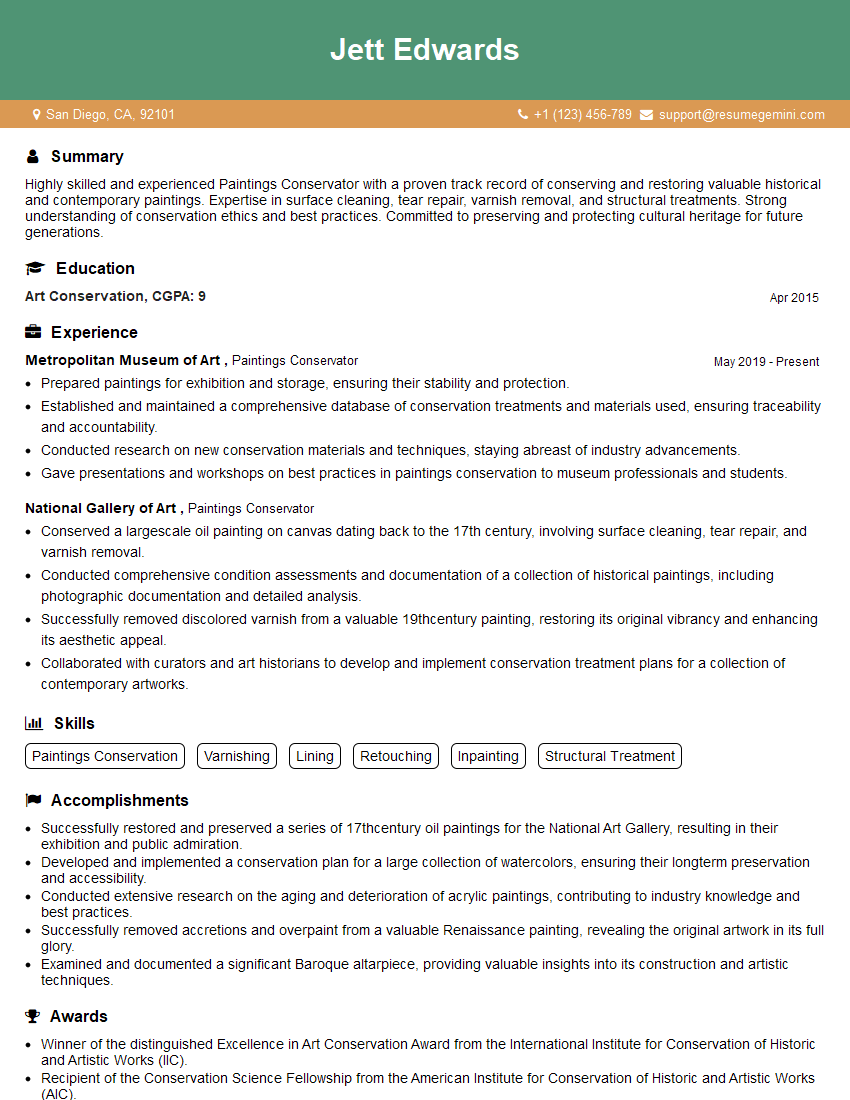
Acing the interview is crucial, but landing one requires a compelling resume that gets you noticed. Crafting a professional document that highlights your skills and experience is the first step toward interview success. ResumeGemini can help you build a standout resume that gets you called in for that dream job.






Essential Interview Questions For Paintings Conservator
1. How do you assess the condition of a painting before starting a conservation treatment?
To assess the condition of a painting before starting a conservation treatment, I would typically:
- Examine the painting visually to identify any visible damage or deterioration, such as tears, punctures, or abrasions.
- Use magnification to examine the paint surface and identify any areas of weakness or instability.
- Perform non-destructive testing, such as X-radiography or infrared reflectography, to reveal hidden damage or underdrawings.
- Consult with other experts, such as art historians or conservators specializing in specific materials or techniques, to gain a comprehensive understanding of the painting’s history, condition, and significance.
- Review any existing documentation or treatment records to gather information about previous interventions and the painting’s history.
2. What are the key considerations when choosing and applying adhesives for painting conservation?
Factors to consider when choosing an adhesive:
- The type of materials being bonded (e.g., canvas, wood, metal)
- The strength and flexibility required
- The reversibility and longevity of the adhesive
- The potential for staining or discoloration
- The working properties, such as viscosity and curing time
Factors to consider when applying adhesives:
- The proper preparation of the surfaces to be bonded
- The correct application method and quantity of adhesive
- The use of appropriate tools and techniques to ensure a strong and durable bond
- The monitoring of the curing process to ensure proper adhesion
3. How do you approach the conservation of a painting with water damage?
When conserving a painting with water damage, I would typically:
- Stabilize the painting by removing excess water and supporting the damaged areas.
- Assess the extent of the damage and identify areas that require treatment.
- Clean the affected areas to remove any dirt or debris and prevent further deterioration.
- Repair any tears or punctures in the canvas or paper support.
- Re-stretch or re-line the painting if necessary to provide additional support.
- Inpaint or retouch the damaged areas to restore the painting’s appearance and integrity.
4. What ethical principles guide your work as a Paintings Conservator?
My work as a Paintings Conservator is guided by the following ethical principles:
- Respect for the artist’s intent and the cultural significance of the artwork
- Preservation of the original materials and techniques as much as possible
- Minimization of intervention and use of reversible treatments
- Transparency and documentation of all conservation procedures
- Collaboration with other professionals to ensure the best possible outcome for the artwork
5. How do you stay up-to-date with the latest developments in painting conservation techniques and materials?
I stay up-to-date with the latest developments in painting conservation techniques and materials through a combination of the following:
- Attending conferences and workshops
- Reading professional journals and publications
- Participating in online forums and discussion groups
- Networking with other conservators and professionals in the field
- Experimenting with new techniques and materials in a controlled environment
6. How do you handle situations where you are asked to perform a treatment that you believe is not in the best interest of the artwork?
If I am asked to perform a treatment that I believe is not in the best interest of the artwork, I would:
- Explain my concerns to the client or decision-makers involved and provide alternative recommendations.
- Document my concerns and decision-making process clearly.
- If the client or decision-makers insist on the treatment, I may decline to perform it and refer them to another conservator who is willing to carry out the requested treatment.
7. What are your strengths as a Paintings Conservator?
My strengths as a Paintings Conservator include:
- Strong technical skills in painting conservation techniques
- In-depth knowledge of painting materials and their properties
- Expertise in the examination and analysis of paintings
- Ability to work independently and as part of a team
- Excellent communication and interpersonal skills
8. What are the challenges you have faced in your previous role as a Paintings Conservator?
Some of the challenges I have faced in my previous role as a Paintings Conservator include:
- Working with paintings that have significant damage or deterioration
- Balancing the need for conservation with the desire to preserve the artist’s intent
- Working within tight deadlines and budgetary constraints
- Coordinating with other professionals, such as art historians and curators
- Staying up-to-date with the latest developments in conservation techniques and materials
9. How do you stay organized and manage your time effectively in a busy conservation studio?
To stay organized and manage my time effectively in a busy conservation studio, I use a combination of the following strategies:
- Prioritize tasks and set realistic deadlines
- Use a to-do list or project management tool to keep track of assignments
- Delegate tasks to other team members when possible
- Take breaks throughout the day to stay focused and avoid burnout
- Maintain a clean and organized work area
10. What are your career goals as a Paintings Conservator?
My career goals as a Paintings Conservator are to:
- Continue to develop my skills and knowledge in the field of painting conservation
- Contribute to the preservation and restoration of historically and culturally significant paintings
- Educate the public about the importance of art conservation
- Mentor and train future generations of conservators
Interviewers often ask about specific skills and experiences. With ResumeGemini‘s customizable templates, you can tailor your resume to showcase the skills most relevant to the position, making a powerful first impression. Also check out Resume Template specially tailored for Paintings Conservator.
Career Expert Tips:
- Ace those interviews! Prepare effectively by reviewing the Top 50 Most Common Interview Questions on ResumeGemini.
- Navigate your job search with confidence! Explore a wide range of Career Tips on ResumeGemini. Learn about common challenges and recommendations to overcome them.
- Craft the perfect resume! Master the Art of Resume Writing with ResumeGemini’s guide. Showcase your unique qualifications and achievements effectively.
- Great Savings With New Year Deals and Discounts! In 2025, boost your job search and build your dream resume with ResumeGemini’s ATS optimized templates.
Researching the company and tailoring your answers is essential. Once you have a clear understanding of the Paintings Conservator‘s requirements, you can use ResumeGemini to adjust your resume to perfectly match the job description.
Key Job Responsibilities
As a Paintings Conservator, you will play a vital role in safeguarding and preserving the artistic heritage of paintings. Your responsibilities will encompass a diverse range of tasks, including:
1. Conservation Treatment
Conducting detailed examinations and diagnostics to assess the condition of paintings, identifying areas of deterioration or damage.
- Developing and implementing conservation treatments to stabilize and restore paintings, using appropriate techniques and materials.
- Cleaning, repairing, and inpainting damaged areas to restore the aesthetic and structural integrity of the artwork.
2. Research and Documentation
Undertaking thorough research on the history, materials, and techniques used in the creation of paintings.
- Documenting conservation treatments and research findings in detailed reports and publications.
- Maintaining up-to-date knowledge of conservation best practices and materials.
3. Preventive Conservation
Providing advice on the proper storage, display, and handling of paintings to prevent or minimize damage.
- Monitoring environmental conditions and implementing control measures to ensure the preservation of the collection.
- Conducting condition surveys and recommending appropriate conservation measures.
4. Outreach and Education
Engaging with the public through lectures, workshops, and exhibitions to promote awareness and understanding of conservation practices.
- Collaborating with curators, art historians, and other professionals to enhance the interpretation and appreciation of paintings.
- Providing training and mentorship to students and emerging conservators.
Interview Tips
To ace the interview for a Paintings Conservator position, it’s essential to showcase your technical expertise, passion for art conservation, and professional demeanor. Here are some tips to help you prepare:
1. Research the Institution
Familiarize yourself with the museum, gallery, or organization where you’re applying. Study their collection, conservation history, and any recent exhibitions or research projects that align with your interests.
- Demonstrate your knowledge of the institution’s mission and how your skills can contribute to its goals.
2. Highlight Your Skills and Experience
Emphasize your technical proficiency in conservation techniques, including cleaning, repair, and inpainting. Highlight your experience with different types of paintings, materials, and conservation issues.
- Provide specific examples of successful conservation projects you’ve completed, demonstrating your attention to detail and problem-solving abilities.
3. Articulate Your Passion
Express your genuine enthusiasm for art conservation and your commitment to preserving cultural heritage. Share examples of your involvement in conservation projects or research initiatives.
- Convey your appreciation for the historical and artistic significance of paintings and your dedication to preserving them for future generations.
4. Prepare Questions
Ask thoughtful questions during the interview to show your engagement and interest. Inquire about the institution’s conservation philosophy, ongoing projects, and opportunities for professional development.
- Questions demonstrate your curiosity and enthusiasm for the field, as well as your ability to think critically and engage in meaningful conversations.
Next Step:
Armed with this knowledge, you’re now well-equipped to tackle the Paintings Conservator interview with confidence. Remember, a well-crafted resume is your first impression. Take the time to tailor your resume to highlight your relevant skills and experiences. And don’t forget to practice your answers to common interview questions. With a little preparation, you’ll be on your way to landing your dream job. So what are you waiting for? Start building your resume and start applying! Build an amazing resume with ResumeGemini.