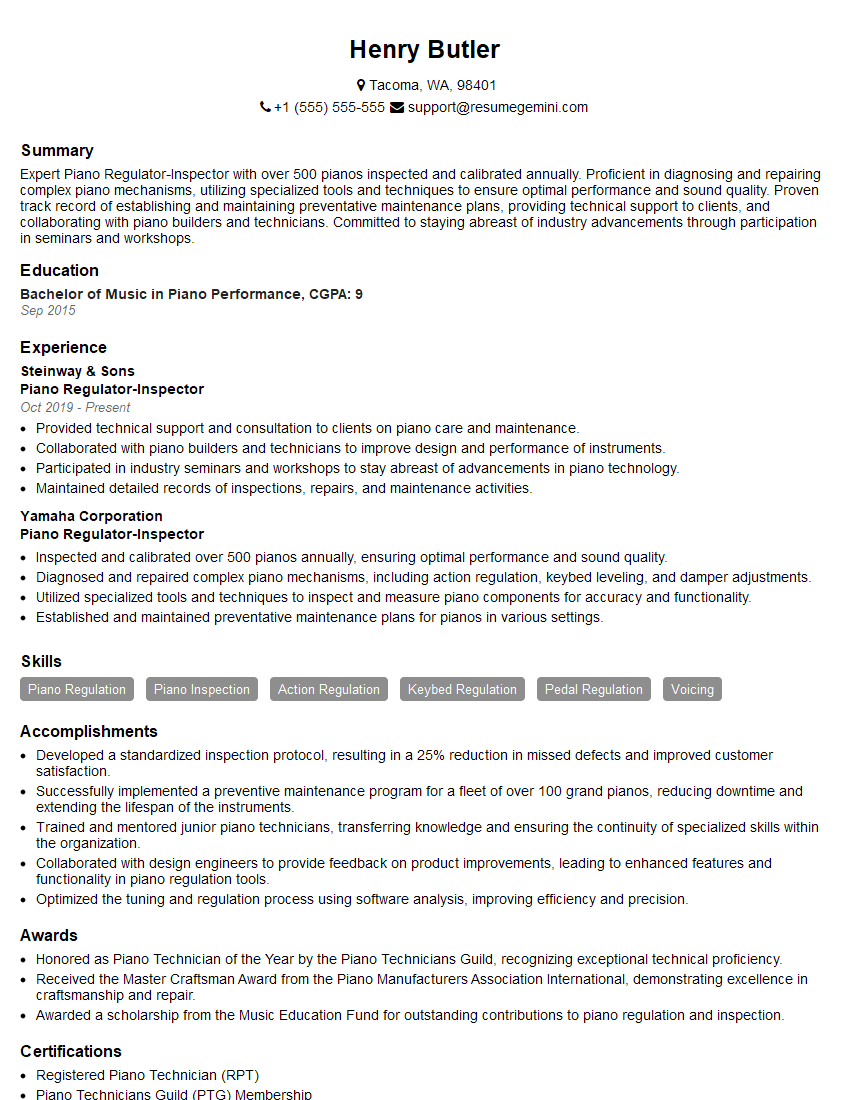
Ever felt underprepared for that crucial job interview? Or perhaps you’ve landed the interview but struggled to articulate your skills and experiences effectively? Fear not! We’ve got you covered. In this blog post, we’re diving deep into the Piano Regulator-Inspector interview questions that you’re most likely to encounter. But that’s not all. We’ll also provide expert insights into the key responsibilities of a Piano Regulator-Inspector so you can tailor your answers to impress potential employers.
Acing the interview is crucial, but landing one requires a compelling resume that gets you noticed. Crafting a professional document that highlights your skills and experience is the first step toward interview success. ResumeGemini can help you build a standout resume that gets you called in for that dream job.






Essential Interview Questions For Piano Regulator-Inspector
1. Explain the process of piano regulation?
- Assessing the piano’s overall condition and identifying any issues.
- Adjusting the action to optimize key travel, weight, and repetition.
- Equalizing the touch and tone across all keys.
- Balancing the pedals for smooth and consistent operation.
- Fine-tuning the instrument to meet the specific requirements of the pianist.
2. Describe the different types of piano actions and their unique characteristics?
Acoustic Action
- Utilizes wooden parts for key movement and sound production.
- Offers a warm and traditional sound.
Digital Action
- Uses electronic sensors and actuators to simulate key movement.
- Provides a consistent and versatile sound with customizable options.
Hybrid Action
- Combines elements of both acoustic and digital actions.
- Offers a balance between traditional feel and modern functionality.
3. What are the common tuning and regulation issues encountered during piano inspections?
- Sticking or sluggish keys due to worn or misaligned parts.
- Uneven touch and tone resulting from improper action regulation.
- Pedal problems such as uneven damping or difficulty sustaining notes.
- Structural issues affecting the frame or soundboard.
- Environmental factors like humidity and temperature causing expansion or contraction.
4. How do you determine the optimal string tension for a piano?
- Measure the string length, diameter, and material.
- Use a string tension gauge to measure the current tension.
- Refer to manufacturer specifications or industry standards to determine the ideal tension range.
- Tune the strings to the desired pitch while monitoring the tension.
- Ensure the tension is even across all strings to maintain stability.
5. Explain the importance of regulating the repetition speed and escapement in a piano action?
- Repetition speed affects the pianist’s ability to play rapid passages.
- Escapement allows the key to return to its rest position quickly after being played.
- Proper regulation ensures smooth and consistent repetition, enhancing playability.
6. How do you diagnose and resolve issues related to pedal mechanisms?
- Inspect the pedals for any loose connections or damaged components.
- Test the pedals’ function and identify any inconsistencies.
- Adjust the pedal height and angle to optimize comfort and efficiency.
- Lubricate moving parts to reduce friction and ensure smooth operation.
7. Describe the techniques used to adjust the voicing and tone of a piano?
- Hammer shaping to modify the strike point and hardness of the hammers.
- Needle voicing to soften or brighten the tone by inserting needles into the felt.
- Damper regulation to control the length and sustain of notes.
- Soundboard adjustments to enhance resonance and projection.
8. How do you ensure that a piano meets the specific requirements of a client or music venue?
- Discuss with the client or venue manager their desired sound and playability.
- Inspect the piano and identify any areas that need adjustment.
- Make the necessary regulations to achieve the desired results.
- Conduct a final assessment to ensure satisfaction.
9. What safety precautions should be observed when working on a piano?
- Always use appropriate tools and equipment.
- Wear protective gear such as gloves and safety glasses.
- Avoid reaching under the piano without proper support.
- Be aware of the weight and potential hazards of moving piano components.
- Handle sharp objects with care to prevent injuries.
10. How do you stay updated with the latest advancements in piano regulation and technology?
- Attend industry conferences and workshops.
- Read trade publications and online resources.
- Engage in discussions with other piano professionals.
- Explore new tools and techniques through hands-on experience.
- Seek mentorship from experienced piano technicians.
Interviewers often ask about specific skills and experiences. With ResumeGemini‘s customizable templates, you can tailor your resume to showcase the skills most relevant to the position, making a powerful first impression. Also check out Resume Template specially tailored for Piano Regulator-Inspector.
Career Expert Tips:
- Ace those interviews! Prepare effectively by reviewing the Top 50 Most Common Interview Questions on ResumeGemini.
- Navigate your job search with confidence! Explore a wide range of Career Tips on ResumeGemini. Learn about common challenges and recommendations to overcome them.
- Craft the perfect resume! Master the Art of Resume Writing with ResumeGemini’s guide. Showcase your unique qualifications and achievements effectively.
- Great Savings With New Year Deals and Discounts! In 2025, boost your job search and build your dream resume with ResumeGemini’s ATS optimized templates.
Researching the company and tailoring your answers is essential. Once you have a clear understanding of the Piano Regulator-Inspector‘s requirements, you can use ResumeGemini to adjust your resume to perfectly match the job description.
Key Job Responsibilities
1. Inspecting Pianos
Inspecting and evaluating pianos to ensure they perform to the highest standards.
- Examining the piano’s overall condition, including the soundboard, strings, and action.
- Identifying areas of concern or potential issues.
2. Regulating and Tuning
Adjusting and fine-tuning the mechanical parts of the piano to improve its performance.
- Using specialized tools to regulate the key action, damper system, and other components.
- Tuning the piano to achieve the desired pitch and temperament.
3. Repairing Pianos
Diagnosing and repairing various mechanical issues that may arise in a piano.
- Replacing worn or damaged parts, such as hammers, springs, and keys.
- Fixing problems with the action, such as sticking or sluggish keys.
4. Customer Service and Consultation
Providing excellent customer service and offering guidance to piano owners.
- Explaining technical details and answering questions about piano maintenance and care.
- Recommending appropriate repair or restoration services based on the piano’s condition.
Interview Tips
1. Showcase Your Technical Expertise
Highlight your in-depth understanding of piano mechanics and your ability to identify and resolve complex issues.
- Mention specific techniques and methodologies you use in your work.
- Provide examples of challenging repairs or inspections you have successfully completed.
2. Emphasize Your Passion for Pianos
Convey your genuine interest and enthusiasm for pianos and your desire to ensure they perform at their best.
- Share your knowledge of piano history, construction, and performance.
- Explain why the role of a piano regulator-inspector is personally meaningful to you.
3. Highlight Your Interdisciplinary Skills
Demonstrate your proficiency in both mechanical and musical aspects of piano maintenance.
- Discuss your understanding of musical theory and how it informs your approach to tuning and regulation.
- Emphasize your ability to work with both piano technicians and musicians to achieve optimal results.
4. Prepare for Common Interview Questions
Research and prepare for questions that are frequently asked in piano regulator-inspector interviews.
- Example question: “Describe your approach to diagnosing and repairing a sluggish piano action.”
- Example question: “How do you determine the appropriate level of regulation and tuning for a specific piano?”
Next Step:
Now that you’re armed with the knowledge of Piano Regulator-Inspector interview questions and responsibilities, it’s time to take the next step. Build or refine your resume to highlight your skills and experiences that align with this role. Don’t be afraid to tailor your resume to each specific job application. Finally, start applying for Piano Regulator-Inspector positions with confidence. Remember, preparation is key, and with the right approach, you’ll be well on your way to landing your dream job. Build an amazing resume with ResumeGemini