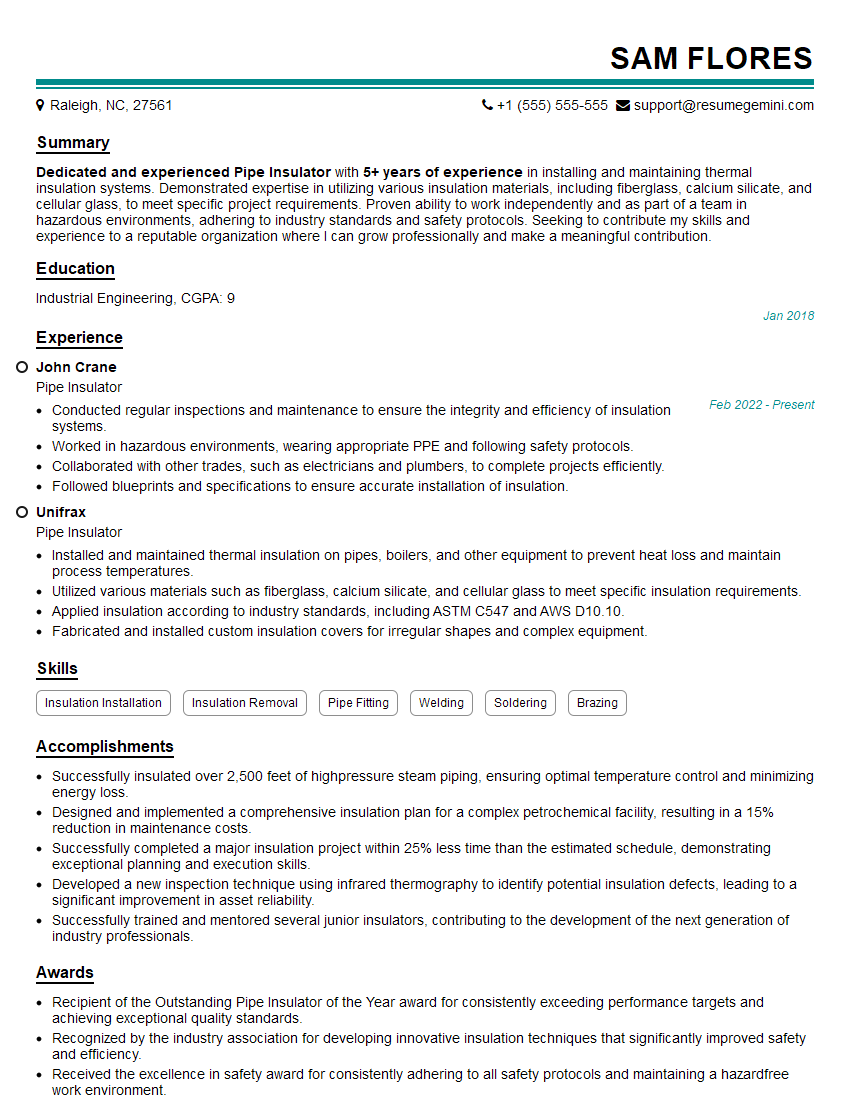
Feeling lost in a sea of interview questions? Landed that dream interview for Pipe Insulator but worried you might not have the answers? You’re not alone! This blog is your guide for interview success. We’ll break down the most common Pipe Insulator interview questions, providing insightful answers and tips to leave a lasting impression. Plus, we’ll delve into the key responsibilities of this exciting role, so you can walk into your interview feeling confident and prepared.
Acing the interview is crucial, but landing one requires a compelling resume that gets you noticed. Crafting a professional document that highlights your skills and experience is the first step toward interview success. ResumeGemini can help you build a standout resume that gets you called in for that dream job.






Essential Interview Questions For Pipe Insulator
1. What are the different types of pipe insulation materials used in the industry?
There are many different types of pipe insulation materials used in the industry, including:
- Fiberglass
- Cellular glass
- Polyurethane foam
- Polyethylene foam
- Rubber
- Cork
2. What are the factors to consider when selecting pipe insulation?
Important factors to consider:
- The temperature of the fluid flowing through the pipe
- The ambient temperature
- The location of the pipe
- The cost of the insulation
- The ease of installation
Additional factors:
- The life expectancy of the insulation
- The fire resistance of the insulation
- The soundproofing qualities of the insulation
3. What are the different methods of installing pipe insulation?
There are two main methods of installing pipe insulation:
- Slip-on insulation
- Wrapped insulation
Slip-on insulation is a pre-formed insulation that is simply slipped over the pipe. Wrapped insulation is a flexible insulation that is wrapped around the pipe and then sealed with tape or adhesive.
4. What are the safety precautions that should be taken when working with pipe insulation?
There are a number of safety precautions that should be taken when working with pipe insulation, including:
- Wear gloves and a dust mask when handling insulation
- Avoid inhaling insulation fibers
- Do not smoke or eat while working with insulation
- Keep insulation away from open flames
5. What are the common mistakes that are made when installing pipe insulation?
Some of the common mistakes that are made when installing pipe insulation include:
- Not properly sizing the insulation
- Not sealing the joints between sections of insulation
- Not installing the insulation in a way that prevents moisture from entering
- Not protecting the insulation from damage
6. What are the benefits of using pipe insulation?
There are many benefits to using pipe insulation, including:
- Reduces heat loss
- Prevents condensation
- Protects pipes from corrosion
- Improves the appearance of pipes
- Reduces noise
7. What are the different types of pipe insulation tools?
There are a variety of pipe insulation tools available, including:
- Insulation cutters
- Insulation saws
- Insulation staplers
- Insulation tape
- Insulation adhesive
8. How do you calculate the R-value of pipe insulation?
The R-value of pipe insulation is a measure of its thermal resistance. It is calculated by dividing the thickness of the insulation by its thermal conductivity.
R-value = Thickness / Thermal conductivity
9. What are the different codes and standards that apply to pipe insulation?
There are a number of codes and standards that apply to pipe insulation, including:
- International Building Code (IBC)
- International Mechanical Code (IMC)
- National Fire Protection Association (NFPA) 90A
- American Society of Heating, Refrigerating and Air-Conditioning Engineers (ASHRAE) Standard 90.1
10. What are the latest trends in pipe insulation?
Some of the latest trends in pipe insulation include:
- The use of more sustainable materials
- The development of new insulation products that are more efficient and easier to install
- The use of insulation to improve the acoustics of buildings
Interviewers often ask about specific skills and experiences. With ResumeGemini‘s customizable templates, you can tailor your resume to showcase the skills most relevant to the position, making a powerful first impression. Also check out Resume Template specially tailored for Pipe Insulator.
Career Expert Tips:
- Ace those interviews! Prepare effectively by reviewing the Top 50 Most Common Interview Questions on ResumeGemini.
- Navigate your job search with confidence! Explore a wide range of Career Tips on ResumeGemini. Learn about common challenges and recommendations to overcome them.
- Craft the perfect resume! Master the Art of Resume Writing with ResumeGemini’s guide. Showcase your unique qualifications and achievements effectively.
- Great Savings With New Year Deals and Discounts! In 2025, boost your job search and build your dream resume with ResumeGemini’s ATS optimized templates.
Researching the company and tailoring your answers is essential. Once you have a clear understanding of the Pipe Insulator‘s requirements, you can use ResumeGemini to adjust your resume to perfectly match the job description.
Key Job Responsibilities
Pipe Insulators are responsible for installing and maintaining insulation on pipes, ducts, and other surfaces to prevent heat loss or gain and improve energy efficiency. Key job responsibilities include:
1. Installation of Insulation
Insulators cut, fit, and install various types of insulation materials such as fiberglass, mineral wool, and polyurethane foam on pipes, ducts, and other surfaces.
- Measure and cut insulation materials to the appropriate size and shape.
- Apply adhesives, sealants, or mechanical fasteners to secure insulation in place.
2. Maintenance and Repair
Insulators regularly inspect insulation systems for damage or deterioration and perform necessary repairs to maintain their effectiveness.
- Inspect insulation for tears, gaps, or other damage.
- Repair or replace damaged insulation as needed.
3. Safety and Compliance
Insulators follow safety protocols and adhere to industry standards and regulations related to insulation installation and maintenance.
- Wear appropriate personal protective equipment (PPE) such as gloves, masks, and safety glasses.
- Follow established safety procedures to minimize risks associated with working with insulation materials.
4. Collaboration and Communication
Insulators work closely with other trades such as plumbers, electricians, and HVAC technicians to ensure proper installation and maintenance of insulation systems.
- Communicate with other trades to coordinate work schedules and ensure compatibility of insulation systems.
- Provide technical advice and support to clients and colleagues.
Interview Tips
To ace the interview for a Pipe Insulator position, candidates should:
1. Research the Company and Industry
Familiarize yourself with the company’s background, values, and industry trends to demonstrate your interest and knowledge of the field.
- Visit the company website and social media pages.
- Read industry publications and news articles.
2. Highlight Relevant Skills and Experience
Emphasize your proficiency in insulation installation, maintenance, and safety procedures. Provide specific examples of projects you have worked on that demonstrate your skills.
- Quantify your accomplishments whenever possible.
- Use the STAR method to structure your answers (Situation, Task, Action, Result).
3. Prepare for Technical Questions
Be prepared to answer questions about insulation materials, installation techniques, and safety protocols. Review industry standards and regulations related to insulation.
- Practice answering questions about different types of insulation materials and their properties.
- Be prepared to explain the importance of proper insulation installation for energy efficiency and safety.
4. Demonstrate Teamwork and Communication Skills
Highlight your ability to work effectively with other trades and communicate technical information clearly to clients and colleagues.
- Provide examples of successful collaboration on insulation projects.
- Emphasize your ability to explain technical concepts in a non-technical manner.
Next Step:
Now that you’re armed with interview-winning answers and a deeper understanding of the Pipe Insulator role, it’s time to take action! Does your resume accurately reflect your skills and experience for this position? If not, head over to ResumeGemini. Here, you’ll find all the tools and tips to craft a resume that gets noticed. Don’t let a weak resume hold you back from landing your dream job. Polish your resume, hit the “Build Your Resume” button, and watch your career take off! Remember, preparation is key, and ResumeGemini is your partner in interview success.