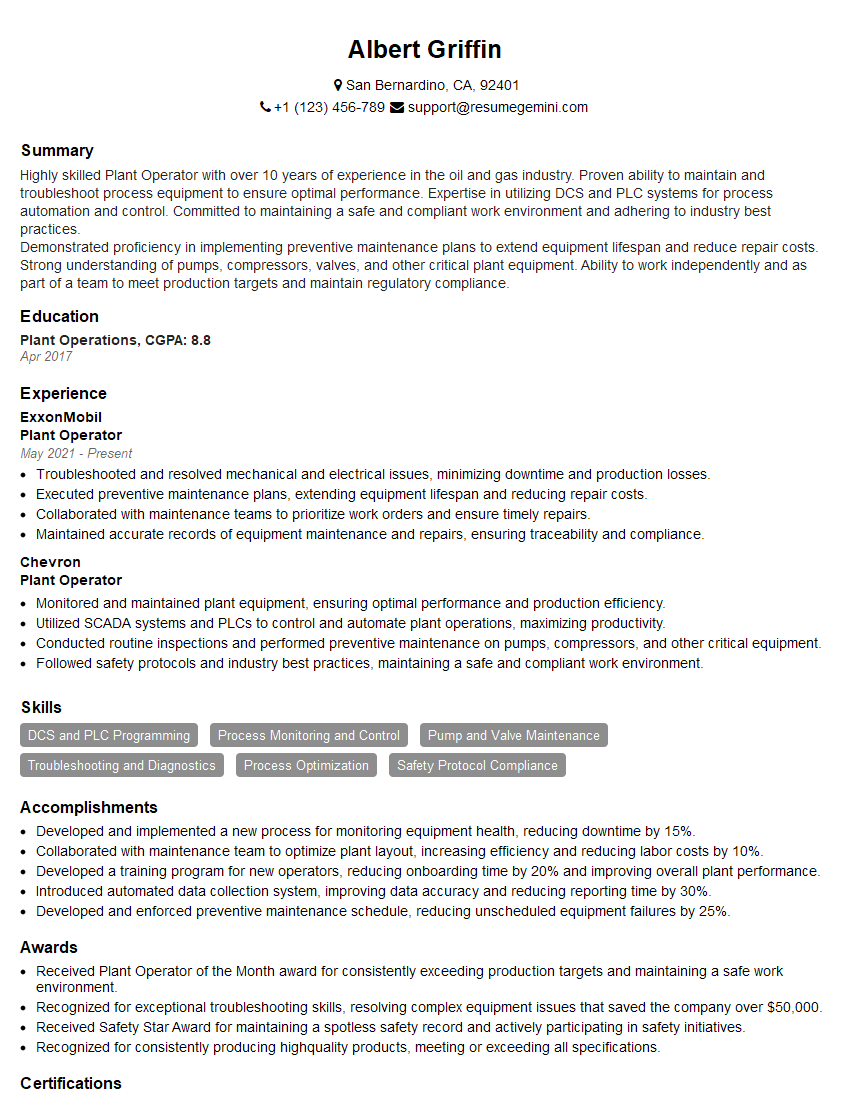
Ever felt underprepared for that crucial job interview? Or perhaps you’ve landed the interview but struggled to articulate your skills and experiences effectively? Fear not! We’ve got you covered. In this blog post, we’re diving deep into the Plant Operator interview questions that you’re most likely to encounter. But that’s not all. We’ll also provide expert insights into the key responsibilities of a Plant Operator so you can tailor your answers to impress potential employers.
Acing the interview is crucial, but landing one requires a compelling resume that gets you noticed. Crafting a professional document that highlights your skills and experience is the first step toward interview success. ResumeGemini can help you build a standout resume that gets you called in for that dream job.






Essential Interview Questions For Plant Operator
1. Can you describe the key performance indicators (KPIs) you have used to monitor and improve the efficiency of plant operations?
- Equipment availability and uptime
- Production output and quality
- Energy consumption and waste reduction
- Maintenance costs and downtime
- Employee productivity and safety
2. How do you manage and prioritize multiple tasks and responsibilities in a fast-paced plant environment?
Effective time management
- Prioritizing tasks based on urgency and importance
- Creating to-do lists and using scheduling tools
- Delegating tasks to team members when appropriate
Effective communication
- Communicating clearly with supervisors and team members
- Reporting on progress and potential issues promptly
- Seeking clarification and support when needed
3. Describe your experience in implementing and maintaining preventive maintenance programs.
- Developing and executing inspection and maintenance schedules
- Maintaining equipment records and tracking maintenance history
- Identifying and resolving maintenance issues proactively
- Using condition monitoring techniques to optimize maintenance efforts
- Collaborating with maintenance technicians and engineers
4. How do you troubleshoot and resolve process deviations and equipment failures?
- Analyzing operating parameters and identifying potential causes
- Using troubleshooting techniques and reference materials
- Applying knowledge of process chemistry and equipment mechanics
- Consulting with supervisors and technical experts as needed
- Implementing corrective actions and monitoring results
5. Describe your experience in managing and developing a team of plant operators.
Leadership and supervision
- Providing clear instructions and guidance
- Motivating and supporting team members
- Conducting performance evaluations and providing feedback
- Ensuring adherence to safety protocols
Training and development
- Identifying training needs and developing training programs
- Providing on-the-job training and mentorship
- Encouraging professional development opportunities
6. How do you optimize plant processes to improve productivity and efficiency?
- Analyzing process parameters and identifying improvement opportunities
- Implementing process modifications and automation solutions
- Reducing waste and minimizing downtime
- Monitoring process variables and making real-time adjustments
- Collaborating with engineers and production teams
7. Describe your experience in ensuring the safety and environmental compliance of plant operations.
Safety management
- Implementing and enforcing safety protocols
- Conducting safety inspections and audits
- Responding to safety incidents and emergencies
- Providing safety training to employees
Environmental compliance
- Understanding and adhering to environmental regulations
- Monitoring and reporting on environmental emissions
- Implementing waste management and pollution control practices
- Conducting environmental audits and assessments
8. How do you keep up-to-date on the latest technologies and best practices in plant operations?
- Attending industry conferences and workshops
- Reading technical journals and publications
- Participating in online forums and discussion groups
- Consulting with experts and vendors
- Seeking continuing education and professional development opportunities
9. Describe your experience in working with automated control systems (ACSs).
- Monitoring and controlling process parameters using ACSs
- Troubleshooting and resolving ACS malfunctions
- Working with engineers to optimize ACS performance
- Understanding the principles of process control theory
- Staying informed about the latest ACS technologies
10. What are your thoughts on the future of plant operations, and how do you see yourself contributing to it?
- Discussing the role of automation, digitization, and data analytics
- Exploring the importance of sustainability and environmental stewardship
- Sharing ideas on workforce development and training
- Expressing interest in emerging technologies and innovative approaches
- Conveying a passion for continuous improvement and learning
Interviewers often ask about specific skills and experiences. With ResumeGemini‘s customizable templates, you can tailor your resume to showcase the skills most relevant to the position, making a powerful first impression. Also check out Resume Template specially tailored for Plant Operator.
Career Expert Tips:
- Ace those interviews! Prepare effectively by reviewing the Top 50 Most Common Interview Questions on ResumeGemini.
- Navigate your job search with confidence! Explore a wide range of Career Tips on ResumeGemini. Learn about common challenges and recommendations to overcome them.
- Craft the perfect resume! Master the Art of Resume Writing with ResumeGemini’s guide. Showcase your unique qualifications and achievements effectively.
- Great Savings With New Year Deals and Discounts! In 2025, boost your job search and build your dream resume with ResumeGemini’s ATS optimized templates.
Researching the company and tailoring your answers is essential. Once you have a clear understanding of the Plant Operator‘s requirements, you can use ResumeGemini to adjust your resume to perfectly match the job description.
Key Job Responsibilities
Plant Operators play a crucial role in ensuring the efficient and safe operation of industrial plants, overseeing various processes to produce goods or generate energy.
1. Production Process Monitoring and Control
Monitor and control production processes, ensuring that they operate within specified parameters and meet quality standards.
- Adjust and calibrate equipment to optimize production rates.
- Troubleshoot and resolve production issues promptly.
2. Equipment Maintenance and Repair
Maintain and repair plant equipment, ensuring that it operates reliably and safely.
- Perform routine maintenance tasks, such as lubrication, cleaning, and inspection.
- Identify and repair equipment malfunctions, minimizing downtime.
3. Safety and Compliance
Adhere to all safety regulations and industry standards, ensuring the well-being of personnel and the protection of the environment.
- Wear appropriate safety gear and follow proper operating procedures.
- Report any safety hazards or potential risks promptly.
4. Data Collection and Analysis
Collect and analyze production data, identifying trends and areas for improvement.
- Monitor production records, such as output levels, downtime, and raw material consumption.
- Identify and address process inefficiencies or bottlenecks.
Interview Tips
Preparing for a Plant Operator interview involves not only researching the role but also understanding the company and its operations. Here are some tips to help you ace the interview:
1. Research the Company and Industry
Visit the company’s website, read industry publications, and gather information about their products, services, and market position. Understanding the company’s goals and values will demonstrate your interest and align your qualifications with their needs.
- Identify the specific plant or production line you’re applying for, if applicable.
- Research the industry standards and best practices.
2. Highlight Your Technical Skills and Experience
Emphasize your expertise in operating and maintaining industrial equipment, including any specific certifications or specialized training. Quantify your accomplishments and provide concrete examples of your impact on production efficiency and safety.
- Showcase your knowledge of specific equipment and software.
- Share your experience in troubleshooting and resolving production issues.
3. Demonstrate Your Safety Awareness and Compliance
Highlight your understanding of safety regulations and your commitment to maintaining a safe work environment. Emphasize your experience in identifying and mitigating risks and your ability to respond to emergency situations.
- Explain your adherence to safety protocols and standards.
- Share examples of your involvement in safety initiatives or training.
4. Prepare for Common Interview Questions
Be prepared to answer questions related to your experience, technical skills, and understanding of the industry.
- Practice describing your role in previous plant operations.
- Prepare examples of your problem-solving abilities and decision-making skills.
5. Ask Insightful Questions
Asking thoughtful questions not only demonstrates your interest but also allows you to gain insights into the company’s culture and operations. Ask about the plant’s production goals, challenges, and opportunities for growth.
- Inquire about the company’s commitment to safety and training.
- Ask about the opportunities for professional development and career advancement.
Next Step:
Armed with this knowledge, you’re now well-equipped to tackle the Plant Operator interview with confidence. Remember, preparation is key. So, start crafting your resume, highlighting your relevant skills and experiences. Don’t be afraid to tailor your application to each specific job posting. With the right approach and a bit of practice, you’ll be well on your way to landing your dream job. Build your resume now from scratch or optimize your existing resume with ResumeGemini. Wish you luck in your career journey!