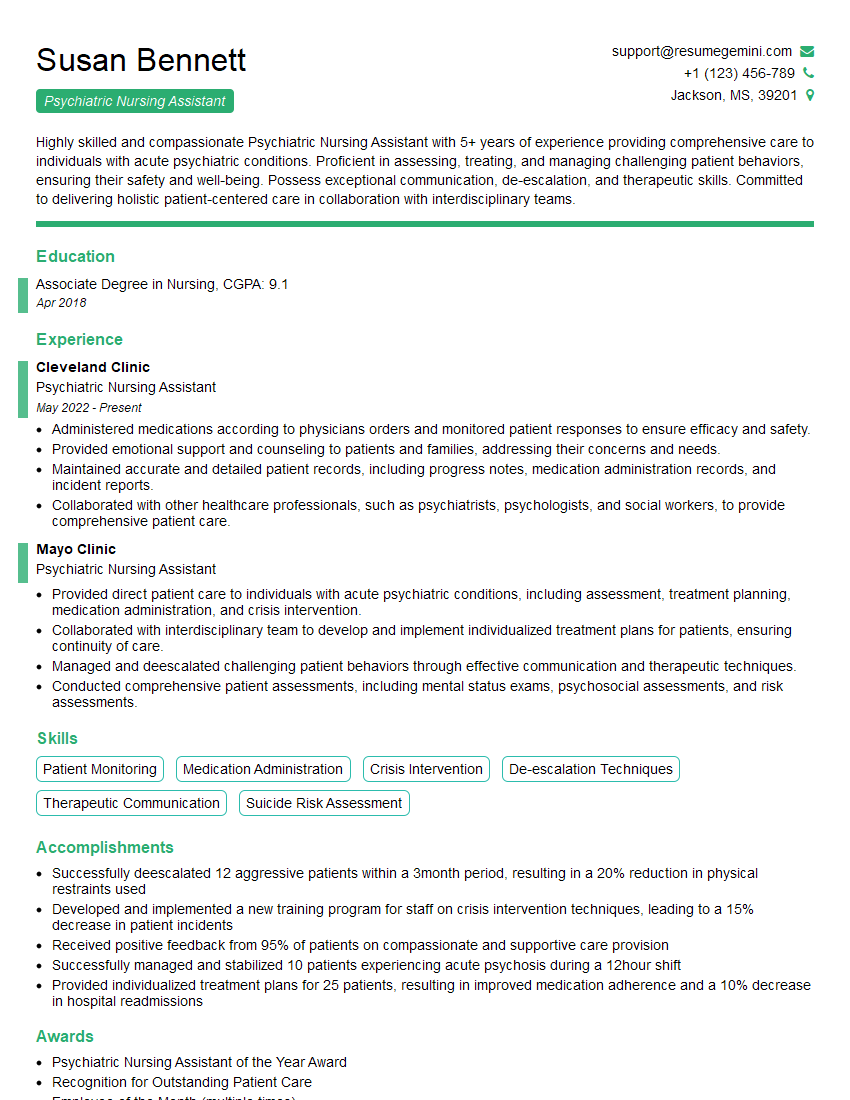
Are you gearing up for an interview for a Psychiatric Nursing Assistant position? Whether you’re a seasoned professional or just stepping into the role, understanding what’s expected can make all the difference. In this blog, we dive deep into the essential interview questions for Psychiatric Nursing Assistant and break down the key responsibilities of the role. By exploring these insights, you’ll gain a clearer picture of what employers are looking for and how you can stand out. Read on to equip yourself with the knowledge and confidence needed to ace your next interview and land your dream job!
Acing the interview is crucial, but landing one requires a compelling resume that gets you noticed. Crafting a professional document that highlights your skills and experience is the first step toward interview success. ResumeGemini can help you build a standout resume that gets you called in for that dream job.






Essential Interview Questions For Psychiatric Nursing Assistant
1. How would you respond to a patient who is experiencing hallucinations?
In a calm and reassuring manner, I would:
- Validate the patient’s experience and let them know that I understand they are seeing/hearing things that aren’t real.
- Avoid arguing or dismissing the hallucinations, but gently redirect the patient’s focus to reality by asking questions about their surroundings or engaging them in a conversation.
- Create a safe and comforting environment by dimming the lights, offering a blanket, or playing soothing music.
- Inform the charge nurse or psychiatrist of the patient’s symptoms and any interventions I have implemented.
2. What are some strategies for de-escalating an agitated patient?
Therapeutic Communication
- Use a calm and respectful tone of voice.
- Avoid using confrontational language or threats.
- Listen actively to the patient’s concerns and try to understand their perspective.
Behavioral Interventions
- Create a safe space for the patient, away from crowds or potential triggers.
- Provide distractions such as music, art, or sensory activities.
- If necessary, administer prescribed calming medications as directed.
3. How would you handle a patient who is refusing to take their medication?
I would:
- Approach the patient calmly and respectfully, explaining the importance of taking their medication for their well-being.
- Listen to the patient’s reasons for refusing and try to address any concerns or misconceptions they may have.
- Collaborate with the psychiatrist or charge nurse to explore alternative options or adjust the medication regimen if necessary.
- Document the patient’s refusal and any interventions implemented.
4. What is your understanding of the importance of confidentiality in psychiatric nursing?
Confidentiality in psychiatric nursing is crucial for establishing trust and fostering a therapeutic relationship with patients. I understand that:
- Patient information, including their diagnosis, treatment, and personal details, should be kept strictly confidential.
- I have a legal and ethical obligation to protect patient privacy, except in cases where there is a clear and imminent danger to the patient or others.
- Breach of confidentiality can damage the patient’s trust, disrupt their treatment, and have legal consequences.
5. What role does empathy play in providing effective psychiatric nursing care?
Empathy is essential for providing effective psychiatric nursing care as it allows me to:
- Understand the patient’s subjective experiences and emotions on a deeper level.
- Build a genuine connection with the patient, which fosters trust and rapport.
- Provide tailored care that is responsive to the patient’s unique needs and perspectives.
- Create a supportive and non-judgmental environment that promotes healing.
6. How do you maintain professional boundaries with patients?
Maintaining professional boundaries with patients is essential for ensuring ethical and therapeutic interactions. I adhere to boundaries by:
- Treating patients with respect and dignity, regardless of their diagnosis or behavior.
- Avoiding personal relationships or inappropriate conversations with patients.
- Setting clear limits and expectations regarding physical contact and emotional involvement.
- Seeking supervision or support when necessary to manage challenging interactions.
7. What are some common signs and symptoms of mental health disorders that you should be able to recognize?
Common signs and symptoms of mental health disorders include:
- Changes in mood, behavior, or thinking
- Difficulty sleeping, eating, or concentrating
- Withdrawal from social activities or relationships
- Excessive worry, fear, or anxiety
- Substance abuse or misuse
- Thoughts of harming oneself or others
8. How would you approach a patient who is experiencing a panic attack?
To approach a patient experiencing a panic attack, I would:
- Remain calm and reassuring, letting the patient know that I am there to help.
- Create a safe and supportive environment by removing or reducing stressors.
- Use calming techniques such as deep breathing exercises or mindfulness.
- Encourage the patient to talk about their feelings and experiences.
- If necessary, administer prescribed medications to alleviate symptoms.
9. What is your understanding of the role of milieu therapy in psychiatric nursing?
Milieu therapy is an integral part of psychiatric nursing that involves using the therapeutic environment to promote healing and recovery. I understand that:
- The environment should be structured, safe, and supportive.
- Therapeutic activities and interactions are planned to foster social skills, problem-solving, and coping mechanisms.
- Milieu therapy helps patients learn to manage their symptoms and live independently.
10. How would you document a patient’s progress or setbacks?
Effective documentation is crucial in psychiatric nursing. I would document patient progress or setbacks by:
- Using a standardized assessment tool to track changes in symptoms and behavior.
- Recording observations of the patient’s interactions, mood, and response to interventions.
- Documenting any changes in medication or treatment plans.
- Communicating regularly with the charge nurse, psychiatrist, and other healthcare professionals involved in the patient’s care.
Interviewers often ask about specific skills and experiences. With ResumeGemini‘s customizable templates, you can tailor your resume to showcase the skills most relevant to the position, making a powerful first impression. Also check out Resume Template specially tailored for Psychiatric Nursing Assistant.
Career Expert Tips:
- Ace those interviews! Prepare effectively by reviewing the Top 50 Most Common Interview Questions on ResumeGemini.
- Navigate your job search with confidence! Explore a wide range of Career Tips on ResumeGemini. Learn about common challenges and recommendations to overcome them.
- Craft the perfect resume! Master the Art of Resume Writing with ResumeGemini’s guide. Showcase your unique qualifications and achievements effectively.
- Great Savings With New Year Deals and Discounts! In 2025, boost your job search and build your dream resume with ResumeGemini’s ATS optimized templates.
Researching the company and tailoring your answers is essential. Once you have a clear understanding of the Psychiatric Nursing Assistant‘s requirements, you can use ResumeGemini to adjust your resume to perfectly match the job description.
Key Job Responsibilities
Psychiatric Nursing Assistants (PNAs) play a crucial role in providing support and care to individuals with mental health conditions. Their key job responsibilities include:
1. Direct Patient Care
PNAs assist patients with daily living activities such as bathing, dressing, feeding, and grooming. They also monitor patients’ physical and mental health, providing basic medical care and administering medications as directed by nurses.
- Assist patients with bathing, dressing, feeding, and grooming
- Monitor patients’ physical and mental health
- Administer medications as directed by nurses
2. Therapeutic Interventions
PNAs engage in therapeutic interventions to help patients improve their mental health and well-being. They provide emotional support, encourage socialization, and facilitate activities that promote recovery.
- Provide emotional support to patients
- Encourage socialization
- Facilitate activities that promote recovery
3. Crisis Management
PNAs play a vital role in managing crises and emergencies involving patients with mental health conditions. They assess the situation, calm patients down, and assist in de-escalating difficult situations.
- Assess the situation in a crisis
- Calm patients down
- Assist in de-escalating difficult situations
4. Communication and Collaboration
PNAs communicate effectively with patients, family members, and healthcare professionals. They provide updates on patients’ condition, report any concerns, and collaborate with the team to develop and implement care plans.
- Communicate effectively with patients, family members, and healthcare professionals
- Provide updates on patients’ condition
- Report any concerns
- Collaborate with the team to develop and implement care plans
Interview Tips
To ace the interview for a Psychiatric Nursing Assistant position, candidates should consider the following tips:
1. Research and Preparation
Thoroughly research the healthcare organization and the specific role you are applying for. Familiarize yourself with the organization’s mission, values, and target population. This knowledge will help you demonstrate your understanding of the organization and its goals.
- Research the healthcare organization and the specific role you are applying for
- Familiarize yourself with the organization’s mission, values, and target population
- Practice answering common interview questions
2. Highlight Relevant Skills and Experience
Emphasize your skills and experience that are most relevant to the role of a Psychiatric Nursing Assistant. Showcase your ability to provide compassionate and empathetic care, manage crises effectively, and communicate well with patients and other healthcare professionals.
- Highlight your skills and experience that are most relevant to the role of a Psychiatric Nursing Assistant
- Showcase your ability to provide compassionate and empathetic care
- Demonstrate your crisis management skills
3. Dress Professionally and Arrive on Time
First impressions matter in an interview. Dress professionally and arrive on time to show that you respect the interviewer and the organization’s time. Your attire and punctuality will reflect your professionalism and commitment to the role.
- Dress professionally
- Arrive on time
4. Be Enthusiastic and Ask Thoughtful Questions
Show your enthusiasm for the role and the organization by asking thoughtful questions. This will demonstrate your interest in the position and your willingness to learn and grow within the organization. Asking informed questions will also impress the interviewer.
- Be enthusiastic about the role and the organization
- Ask thoughtful questions
5. Follow Up
After the interview, send a thank-you note to the interviewer within 24 hours. Express your gratitude for the opportunity to interview and reiterate your interest in the position. You can also use this opportunity to address any additional questions or concerns the interviewer may have raised during the interview.
- Send a thank-you note to the interviewer within 24 hours
- Express your gratitude for the opportunity to interview
- Reiterate your interest in the position
- Address any additional questions or concerns the interviewer may have raised during the interview
Next Step:
Armed with this knowledge, you’re now well-equipped to tackle the Psychiatric Nursing Assistant interview with confidence. Remember, preparation is key. So, start crafting your resume, highlighting your relevant skills and experiences. Don’t be afraid to tailor your application to each specific job posting. With the right approach and a bit of practice, you’ll be well on your way to landing your dream job. Build your resume now from scratch or optimize your existing resume with ResumeGemini. Wish you luck in your career journey!