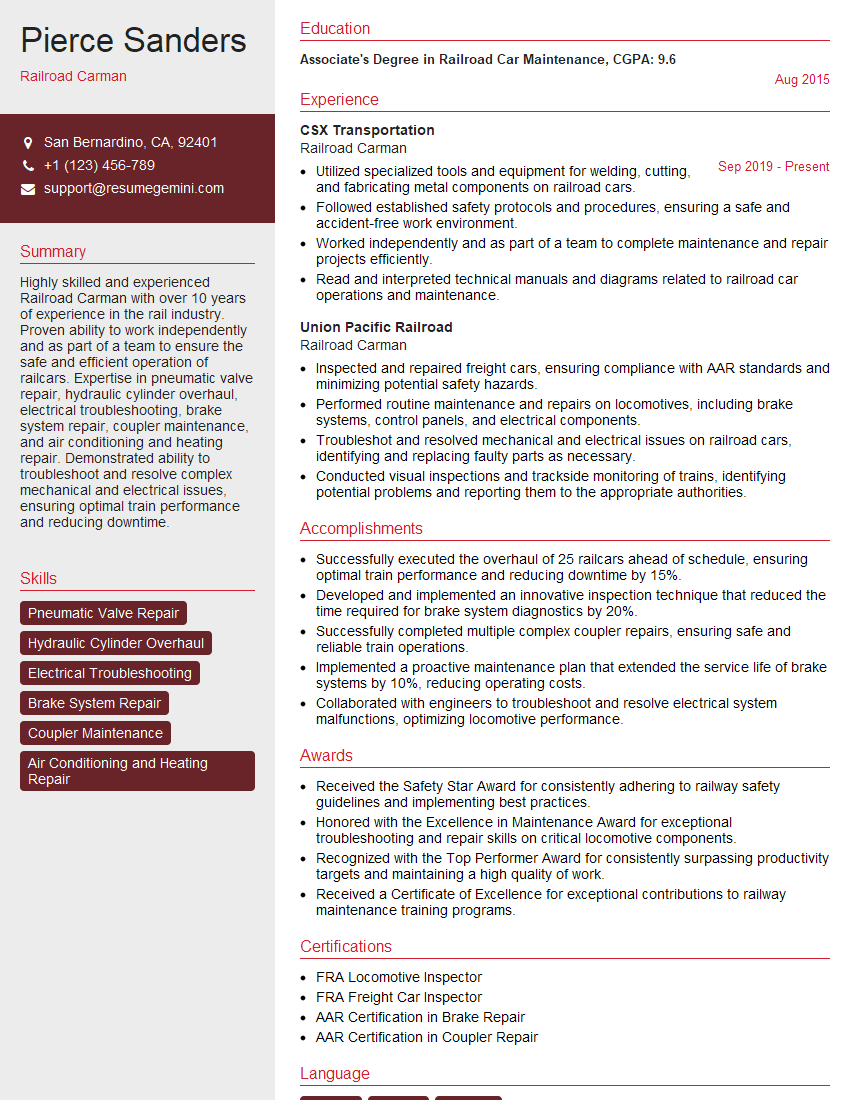
Ever felt underprepared for that crucial job interview? Or perhaps you’ve landed the interview but struggled to articulate your skills and experiences effectively? Fear not! We’ve got you covered. In this blog post, we’re diving deep into the Railroad Carman interview questions that you’re most likely to encounter. But that’s not all. We’ll also provide expert insights into the key responsibilities of a Railroad Carman so you can tailor your answers to impress potential employers.
Acing the interview is crucial, but landing one requires a compelling resume that gets you noticed. Crafting a professional document that highlights your skills and experience is the first step toward interview success. ResumeGemini can help you build a standout resume that gets you called in for that dream job.






Essential Interview Questions For Railroad Carman
1. What are the different types of railroad cars and their purposes?
There are various types of railroad cars, each designed for specific purposes. Some common types include:
- Boxcars: Enclosed cars used to transport general freight.
- Flatcars: Open cars used to carry heavy equipment, vehicles, and containers.
- Gondola cars: Open cars with high sides, used to transport bulk materials like coal and ore.
- Hopper cars: Enclosed cars with bottom-dumping mechanisms, used to transport grains, coal, and other bulk materials.
- Tank cars: Enclosed cars designed to transport liquids, gases, or hazardous materials.
2. What are the basic steps involved in repairing a damaged railroad car?
Safety Procedures
- Secure and isolate the affected area.
- Wear appropriate personal protective equipment (PPE).
Assessment and Diagnosis
- Inspect the damage to determine its extent and severity.
- Identify the underlying causes of the damage.
Repair Process
- Remove damaged components or sections.
- Replace or repair damaged parts with new or refurbished ones.
- Inspect and test the repaired area to ensure its integrity.
3. What are the common tools and equipment used by railroad carman?
Railroad carmen rely on a variety of tools and equipment to perform their duties, including:
- Welding and cutting equipment: MIG and TIG welders, power saws, and grinders.
- Inspection equipment: Non-destructive testing (NDT) devices, calipers, micrometers, and rulers.
- Lifting and moving equipment: Cranes, hoists, and forklifts.
- Safety gear: PPE, hard hats, safety glasses, and earplugs.
- Hand tools: Wrenches, screwdrivers, hammers, and pliers.
4. How do you ensure the safety of yourself and others while working on railroad cars?
Safety is paramount when working on railroad cars. I always adhere to the following practices:
- Follow all safety regulations and procedures established by your company.
- Wear proper PPE and never enter a hazardous area without authorization.
- Identify and control potential hazards before starting work, such as electrical hazards, heavy equipment, and moving trains.
- Communicate with colleagues and supervisors to coordinate work and ensure everyone’s safety.
- Be aware of your surroundings and remain alert to any potential dangers.
5. How do you handle and store hazardous materials found in railroad cars?
Handling and storing hazardous materials requires meticulous care and adherence to regulations:
- Identify and classify hazardous materials using material safety data sheets (MSDSs).
- Store hazardous materials in designated, secure, and well-ventilated areas.
- Wear proper PPE and follow safety procedures when handling hazardous materials.
- Dispose of hazardous materials in accordance with environmental regulations.
- Train in the proper handling and storage of hazardous materials.
6. What is the importance of proper lubrication in railroad car maintenance?
Proper lubrication plays a crucial role in railroad car maintenance by:
- Reducing friction and wear on moving parts.
- Preventing corrosion and rust.
- Ensuring smooth operation and extending the lifespan of components.
- Detecting potential problems early on by monitoring lubrication levels.
7. How do you inspect and test brake systems on railroad cars?
Inspecting and testing brake systems involves following a systematic approach:
Visual Inspection
- Check for leaks, damage, or missing components.
- Examine brake pads, shoes, and discs for wear and tear.
Functional Testing
- Perform air brake tests to ensure proper pressure and response.
- Test hand brakes to verify their holding power.
- Conduct dynamic brake tests to assess braking performance under simulated conditions.
Documentation
- Record inspection and test results for future reference and compliance.
8. How do you work effectively with other members of the maintenance team?
Collaboration and teamwork are essential in railroad car maintenance:
- Communicate clearly and regularly with colleagues to share information and coordinate tasks.
- Respect and value the expertise and experience of others.
- Assist colleagues when needed and ask for help when necessary.
- Maintain a positive and supportive work environment.
9. What are the key performance indicators (KPIs) used to evaluate the performance of railroad carman?
Common KPIs include:
- Number of cars repaired or maintained per shift.
- Quality of repairs and level of customer satisfaction.
- Safety record and adherence to regulations.
- Efficiency and productivity in performing tasks.
- Continuous professional development and training.
10. How do you stay up-to-date with the latest advancements and technologies in railroad car maintenance?
To stay current, I pursue various strategies:
- Attend industry conferences, workshops, and training sessions.
- Read technical journals, articles, and manufacturer manuals.
- Engage in discussions with colleagues and experts in the field.
- Explore online resources and participate in industry forums.
Interviewers often ask about specific skills and experiences. With ResumeGemini‘s customizable templates, you can tailor your resume to showcase the skills most relevant to the position, making a powerful first impression. Also check out Resume Template specially tailored for Railroad Carman.
Career Expert Tips:
- Ace those interviews! Prepare effectively by reviewing the Top 50 Most Common Interview Questions on ResumeGemini.
- Navigate your job search with confidence! Explore a wide range of Career Tips on ResumeGemini. Learn about common challenges and recommendations to overcome them.
- Craft the perfect resume! Master the Art of Resume Writing with ResumeGemini’s guide. Showcase your unique qualifications and achievements effectively.
- Great Savings With New Year Deals and Discounts! In 2025, boost your job search and build your dream resume with ResumeGemini’s ATS optimized templates.
Researching the company and tailoring your answers is essential. Once you have a clear understanding of the Railroad Carman‘s requirements, you can use ResumeGemini to adjust your resume to perfectly match the job description.
Key Job Responsibilities
Railroad Carman play a crucial role in ensuring the safe and efficient operation of rail transportation through the maintenance and repair of railroad cars.
1. Car Maintenance and Repair
Perform routine inspections, maintenance, and repairs on various types of rolling stock including locomotives, rail cars, and freight cars.
- Inspect vehicles for defects, damage, or wear and tear.
- Troubleshoot and resolve mechanical, electrical, and structural issues.
2. Component Replacement and Installation
Remove, replace, and install critical components such as axles, wheels, brakes, and suspension systems.
- Ensure proper alignment, adjustment, and operation of replaced components.
- Adhere to safety protocols and industry standards during repair procedures.
3. Electrical and Mechanical Troubleshooting
Diagnose and resolve electrical and mechanical problems in rail cars and associated equipment.
- Use electrical testing equipment to identify electrical faults.
- Repair or replace faulty wiring, electrical components, and mechanical systems.
4. Safety and Compliance
Prioritize safety and follow regulatory requirements while performing maintenance and repair tasks.
- Comply with safety regulations and industry best practices.
- Ensure that rail cars meet safety and operational standards.
Interview Tips
To ace the Railroad Carman interview, preparation is key. Here are valuable tips and hacks to help you succeed:
1. Research the Company and Position
Thoroughly research the railroad company and the specific Railroad Carman position. Understand their operations, values, and current projects.
- Visit the company website and read their mission statement.
- Check industry news and articles to stay updated on current trends.
2. Highlight Relevant Skills and Experience
Tailor your resume and interview responses to showcase your relevant skills and experience in railroad car maintenance. Quantify your accomplishments whenever possible.
- Emphasize your hands-on experience in repairing and maintaining rail cars.
- Provide specific examples of troubleshooting and resolving complex issues.
3. Demonstrate Safety Consciousness
Railroad Carman must prioritize safety. Emphasize your strong safety record and adherence to safety protocols.
- Discuss your understanding of railroad safety regulations.
- Provide examples of situations where you ensured the safety of yourself and others.
4. Practice Common Interview Questions
Prepare for common interview questions by practicing your responses in advance. This will boost your confidence and help you present your qualifications effectively.
- Prepare for questions about your experience, skills, and safety consciousness.
- Consider scenarios and provide well-thought-out answers that highlight your problem-solving abilities.
5. Ask Informed Questions
Asking thoughtful questions during the interview demonstrates your interest and engagement.
- Inquire about the company’s safety initiatives and employee training programs.
- Ask about opportunities for professional development and advancement.
Next Step:
Now that you’re armed with the knowledge of Railroad Carman interview questions and responsibilities, it’s time to take the next step. Build or refine your resume to highlight your skills and experiences that align with this role. Don’t be afraid to tailor your resume to each specific job application. Finally, start applying for Railroad Carman positions with confidence. Remember, preparation is key, and with the right approach, you’ll be well on your way to landing your dream job. Build an amazing resume with ResumeGemini