Ever felt underprepared for that crucial job interview? Or perhaps you’ve landed the interview but struggled to articulate your skills and experiences effectively? Fear not! We’ve got you covered. In this blog post, we’re diving deep into the Rat Exterminator interview questions that you’re most likely to encounter. But that’s not all. We’ll also provide expert insights into the key responsibilities of a Rat Exterminator so you can tailor your answers to impress potential employers.
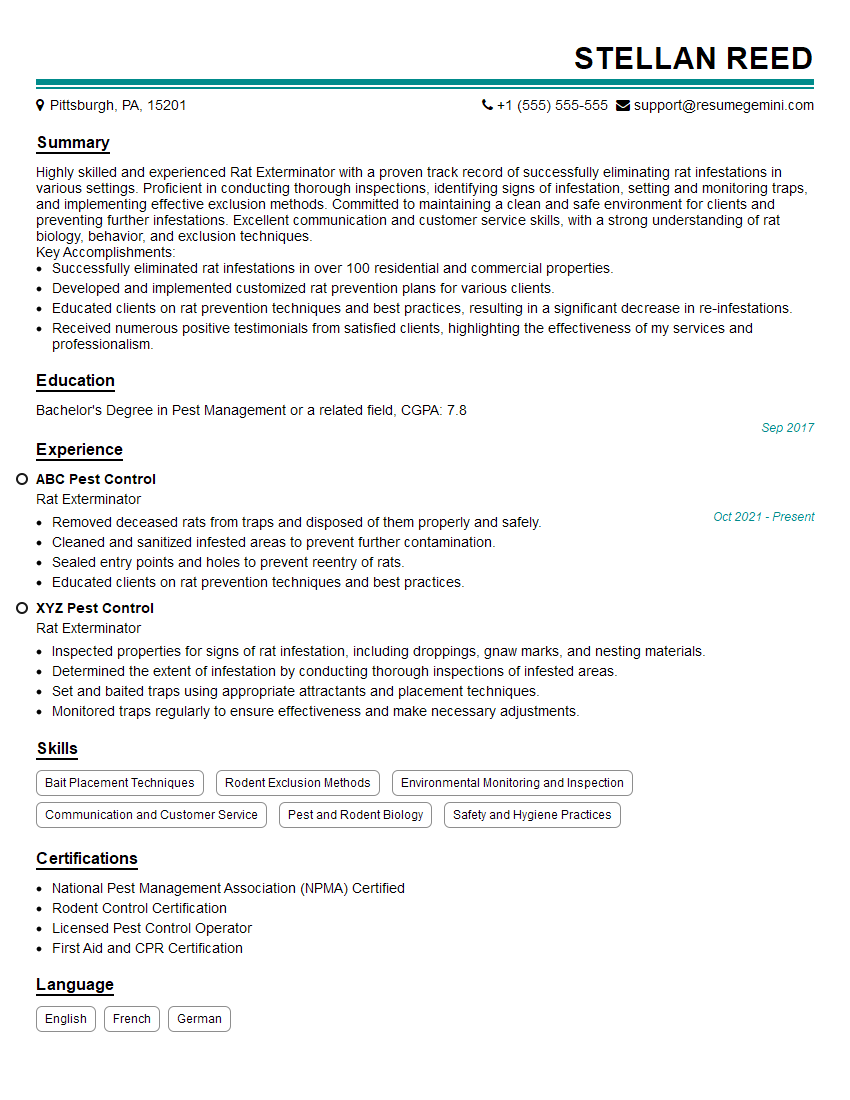
Acing the interview is crucial, but landing one requires a compelling resume that gets you noticed. Crafting a professional document that highlights your skills and experience is the first step toward interview success. ResumeGemini can help you build a standout resume that gets you called in for that dream job.






Essential Interview Questions For Rat Exterminator
1. What are the different types of rat traps and how do you choose the best one for a particular situation?
- Snap traps: These are the most common type of rat trap and work by snapping shut when a rat trips a trigger. They are inexpensive and easy to use, but can be dangerous if not set properly.
- Live traps: These traps capture rats alive so that they can be released elsewhere. They are more expensive than snap traps, but are more humane and can be reused.
- Glue traps: These traps use a sticky substance to hold rats in place. They are relatively inexpensive, but can be cruel and inhumane.
2. What are the signs of a rat infestation?
Droppings
- Rat droppings are typically dark in color and about the size of a grain of rice.
- They can be found in areas where rats are active, such as along walls, in corners, and in drawers.
Urine
- Rat urine is a yellow liquid that can have a strong odor.
- It can be found in areas where rats are active, such as on floors, walls, and furniture.
Gnaw marks
- Rats have sharp teeth that they use to gnaw on objects.
- Gnaw marks can be found on wood, plastic, and even metal.
Scratching noises
- Rats are nocturnal animals and can be heard scratching and scurrying around at night.
- These noises can be especially noticeable in quiet areas, such as attics and basements.
Tracks
- Rats leave behind small footprints that can be seen in dusty areas.
- These footprints can be used to track the movement of rats and to identify their entry points.
3. What are the dangers of rat infestations?
- Rats can carry diseases that can be transmitted to humans, such as salmonella, typhus, and hantavirus.
- Rats can also cause damage to property by gnawing on wires, furniture, and other objects.
- Rats can contaminate food and water sources, making them unsafe for human consumption.
4. What are the steps involved in rat proofing a home or business?
- Seal up any holes or cracks in the exterior of the building.
- Install rodent-proof screens on windows and doors.
- Remove any food or water sources that may attract rats.
- Keep garbage in covered containers.
- Trim trees and shrubs around the building to reduce hiding places for rats.
5. What are the different methods of rat extermination?
- Trapping: This is the most common method of rat extermination and involves using traps to capture rats.
- Poisoning: This method involves using poison to kill rats. It is important to use poison safely and according to the manufacturer’s instructions.
- Fumigation: This method involves using gas to kill rats. It is typically used in large areas, such as warehouses or factories.
6. How do you prevent rats from coming back after they have been exterminated?
- Continue to seal up any holes or cracks in the exterior of the building.
- Keep garbage in covered containers.
- Trim trees and shrubs around the building to reduce hiding places for rats.
- Educate employees about the importance of keeping the workplace clean and free of food and water sources that may attract rats.
7. What are the challenges of working as a rat exterminator?
- Rats can be difficult to catch, as they are intelligent and adaptable.
- Rat extermination can be dangerous, as rats can carry diseases and can bite or scratch.
- Rat extermination can be physically demanding, as it often involves working in tight spaces and lifting heavy objects.
8. What are the most important qualities of a successful rat exterminator?
- Patience
- Persistence
- Attention to detail
- Physical fitness
- Customer service skills
9. Why do you think you are the right person for this job?
- I have several years of experience in rat extermination and have a proven track record of success.
- I am patient, persistent, and attentive to detail.
- I am physically fit and have excellent customer service skills.
- I am confident that I can help you to solve your rat problem.
10. What are your salary expectations?
My salary expectations are in line with the industry average for rat exterminators with my experience and qualifications. I am willing to negotiate a salary that is fair and commensurate with my value to your company.
Interviewers often ask about specific skills and experiences. With ResumeGemini‘s customizable templates, you can tailor your resume to showcase the skills most relevant to the position, making a powerful first impression. Also check out Resume Template specially tailored for Rat Exterminator.
Career Expert Tips:
- Ace those interviews! Prepare effectively by reviewing the Top 50 Most Common Interview Questions on ResumeGemini.
- Navigate your job search with confidence! Explore a wide range of Career Tips on ResumeGemini. Learn about common challenges and recommendations to overcome them.
- Craft the perfect resume! Master the Art of Resume Writing with ResumeGemini’s guide. Showcase your unique qualifications and achievements effectively.
- Great Savings With New Year Deals and Discounts! In 2025, boost your job search and build your dream resume with ResumeGemini’s ATS optimized templates.
Researching the company and tailoring your answers is essential. Once you have a clear understanding of the Rat Exterminator‘s requirements, you can use ResumeGemini to adjust your resume to perfectly match the job description.
Key Job Responsibilities
Rat Exterminators are responsible for the safe and effective removal of rats from various properties. Their key job responsibilities include:
1. Rat Inspection and Identification
Conduct thorough property inspections to identify rat infestation areas, entry points, and species of rats present.
2. Rodenticide Application
Safely and strategically place rodenticides in areas where rats are active, using appropriate methods to minimize exposure to non-target animals and humans.
3. Trapping and Removal
Set up and monitor traps to capture rats humanely, ensuring their prompt removal and proper disposal.
4. Exclusion and Prevention
Seal entry points, repair damaged areas, and provide recommendations to prevent future rat infestations.
5. Pest Monitoring and Documentation
Regularly monitor treated areas for rat activity and maintain accurate records of pest control activities for reporting and compliance purposes.
6. Sanitation Management
Inspect and make recommendations for improving sanitation practices to eliminate food sources and attractants for rats.
7. Customer Communication
Educate clients on rat behavior, prevention techniques, and safety precautions related to pest control.
Interview Tips
Preparing well for a Rat Exterminator interview is crucial to ace the process. Here are some key tips and hacks:
1. Research the Industry and Company
Get familiar with the pest control industry, common rat species, and effective extermination techniques. Research the specific company you are applying to and understand their approach to rat control.
2. Highlight Relevant Experience and Skills
Emphasize your experience in rat extermination, trapping, or pest control. Showcase your skills in rodent identification, sanitation management, and problem-solving.
3. Showcase Safety and Compliance Knowledge
Demonstrate your understanding of safety protocols for handling rodenticides and other pest control chemicals. Emphasize your commitment to following industry regulations and ethical practices.
4. Prepare for Specific Questions
Anticipate common interview questions related to rat extermination, such as:
- Describe your experience in rat trapping and removal.
- How do you identify different rat species and determine the best control methods?
- What safety precautions do you take when applying rodenticides?
- How do you prevent future rat infestations after treatment?
5. Ask Thoughtful Questions
During the interview, ask informed questions to show your interest and engagement. Seek information about the company’s pest control practices, training opportunities, and commitment to environmental protection.
6. Dress Professionally and Be Punctual
First impressions matter. Dress professionally and arrive on time for your interview. This demonstrates your respect for the interviewer and the position.
Next Step:
Now that you’re armed with a solid understanding of what it takes to succeed as a Rat Exterminator, it’s time to turn that knowledge into action. Take a moment to revisit your resume, ensuring it highlights your relevant skills and experiences. Tailor it to reflect the insights you’ve gained from this blog and make it shine with your unique qualifications. Don’t wait for opportunities to come to you—start applying for Rat Exterminator positions today and take the first step towards your next career milestone. Your dream job is within reach, and with a polished resume and targeted applications, you’ll be well on your way to achieving your career goals! Build your resume now with ResumeGemini.