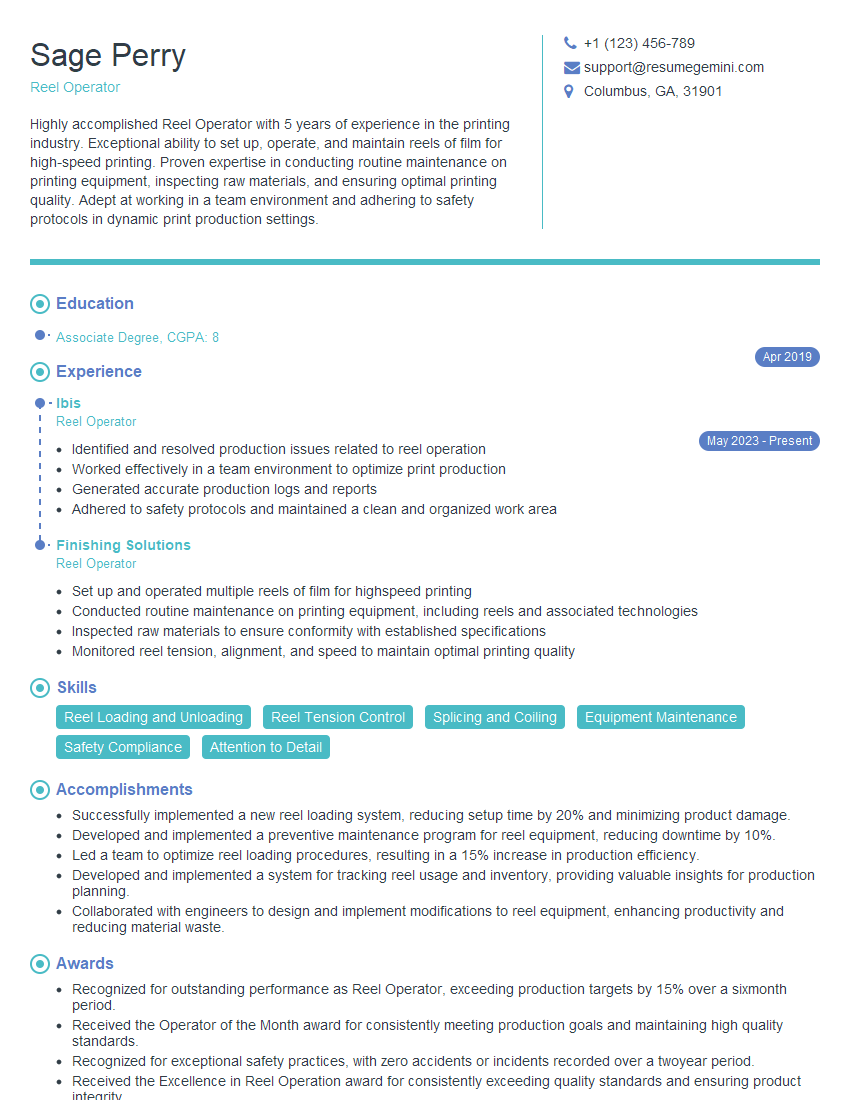
Are you gearing up for an interview for a Reel Operator position? Whether you’re a seasoned professional or just stepping into the role, understanding what’s expected can make all the difference. In this blog, we dive deep into the essential interview questions for Reel Operator and break down the key responsibilities of the role. By exploring these insights, you’ll gain a clearer picture of what employers are looking for and how you can stand out. Read on to equip yourself with the knowledge and confidence needed to ace your next interview and land your dream job!
Acing the interview is crucial, but landing one requires a compelling resume that gets you noticed. Crafting a professional document that highlights your skills and experience is the first step toward interview success. ResumeGemini can help you build a standout resume that gets you called in for that dream job.






Essential Interview Questions For Reel Operator
1. What are the key responsibilities of a Reel Operator?
As a Reel Operator, I would be responsible for the following key tasks:
- Monitoring and controlling the winding and unwinding of reels to ensure proper tension and alignment.
- Inspecting reels for defects and damage, and performing necessary repairs or replacements.
2. Describe the different types of reels used in the industry and their respective applications.
Wooden Reels
- Commonly used for packaging heavy-duty products like cable, wire, and rope.
- Provide excellent strength and durability for long-term storage and transportation.
Plastic Reels
- Suitable for lightweight products, such as films, tapes, and fabrics.
- Offer corrosion resistance, moisture protection, and are less prone to damage.
3. What safety precautions should be taken when operating a reel machine?
- Always wear appropriate personal protective equipment (PPE), including safety glasses, gloves, and earplugs.
- Ensure the machine is properly grounded and regularly maintained to prevent electrical hazards.
- Keep the work area clean and free of obstructions to avoid accidents.
4. Describe the process of loading and unloading reels onto the machine.
- Use a forklift or other appropriate lifting equipment to carefully place the reel onto the machine’s spindle.
- Secure the reel using clamps or other locking mechanisms to prevent slippage.
- Unload reels in a controlled manner, ensuring they are placed on a stable surface to prevent damage.
5. How do you adjust the tension and speed of the winding or unwinding process?
- Operate the machine’s tension control knob to increase or decrease the tension applied to the material.
- Adjust the speed of the winding or unwinding process using the designated controls to ensure the desired tension is maintained.
6. What procedures do you follow to identify and resolve common reel-related issues?
- Inspect reels for any visible damage, such as cracks, splinters, or loose components.
- Check the tension settings and adjust if necessary to prevent material breakage or tangling.
- Identify and repair any mechanical issues with the reel machine promptly to ensure smooth operation.
7. How do you ensure the quality and accuracy of the winding or unwinding process?
- Maintain consistent tension throughout the process to prevent stretching or tearing of the material.
- Use measuring devices to ensure the correct amount of material is wound or unwound onto the reel.
- Inspect the finished product for any defects or irregularities before packaging or shipping.
8. What is your experience with different types of winding and unwinding machines?
I have experience operating both manual and automated winding and unwinding machines. I am proficient in using various types of spindles, chucks, and tension control systems.
9. How do you prioritize and manage your tasks in a fast-paced production environment?
- Prioritize tasks based on urgency and importance, ensuring critical tasks are completed first.
- Plan my work schedule to maximize efficiency and minimize downtime.
10. What are your strengths and weaknesses as a Reel Operator?
Strengths
- Strong attention to detail and accuracy.
- Ability to operate different types of winding and unwinding machines.
- Proficient in identifying and resolving common reel-related issues.
Weaknesses
- Limited experience with certain specialized types of reels.
- Working in a fast-paced environment can sometimes lead to increased stress levels.
Interviewers often ask about specific skills and experiences. With ResumeGemini‘s customizable templates, you can tailor your resume to showcase the skills most relevant to the position, making a powerful first impression. Also check out Resume Template specially tailored for Reel Operator.
Career Expert Tips:
- Ace those interviews! Prepare effectively by reviewing the Top 50 Most Common Interview Questions on ResumeGemini.
- Navigate your job search with confidence! Explore a wide range of Career Tips on ResumeGemini. Learn about common challenges and recommendations to overcome them.
- Craft the perfect resume! Master the Art of Resume Writing with ResumeGemini’s guide. Showcase your unique qualifications and achievements effectively.
- Great Savings With New Year Deals and Discounts! In 2025, boost your job search and build your dream resume with ResumeGemini’s ATS optimized templates.
Researching the company and tailoring your answers is essential. Once you have a clear understanding of the Reel Operator‘s requirements, you can use ResumeGemini to adjust your resume to perfectly match the job description.
Key Job Responsibilities
The Reel Operator plays a crucial role in managing and maintaining film reels, ensuring the efficient operation of film projection and production equipment.
1. Reel Handling and Maintenance
This involves carefully handling and storing film reels to prevent damage or loss. They also inspect and clean reels to ensure optimal performance.
- Safely mount and dismount reels on projectors and rewinders.
- Inspect reels for any damage or wear, and take corrective action if necessary.
2. Machine Operation
Reel Operators are responsible for operating film projectors and rewinders with precision and accuracy. This includes threading film correctly, adjusting tension, and ensuring smooth operation.
- Operate film projectors and rewinders according to established procedures.
- Adjust tension and alignment settings to ensure proper film tracking and projection.
3. Trouble Shooting
In the event of any technical issues with the equipment, Reel Operators must be able to quickly identify and resolve problems to minimize downtime and maintain a seamless projection experience.
- Troubleshoot and resolve common issues with film projectors and rewinders.
- Report any major issues to supervisors or engineers for timely assistance.
4. Inventory Management
Reel Operators are also responsible for managing the inventory of film reels, tracking their location and usage. This helps ensure that the right reels are available when needed.
- Maintain an accurate inventory of film reels, including location and usage.
- Coordinate with other departments to ensure timely delivery and retrieval of reels.
Interview Tips
Preparing thoroughly for a Reel Operator interview can significantly increase your chances of success. Here are some key tips to help you ace it:
1. Research the Company and Industry
Demonstrate your interest in the company and the film industry by researching their background, recent projects, and industry trends. This knowledge will help you answer questions thoughtfully and show that you’re passionate about the role.
- Visit the company website, read news articles, and follow industry blogs to stay informed.
- Identify any specific projects or initiatives that you find particularly interesting and be prepared to discuss them.
2. Showcase Your Technical Skills
Highlight your proficiency in operating film projectors and rewinders, as well as your ability to troubleshoot and resolve technical issues. Provide specific examples from your experience to demonstrate your expertise.
- Describe a time when you successfully resolved a complex issue with a film projector.
- Explain your understanding of film tension and alignment settings, and how you ensure optimal performance.
3. Emphasize Your Attention to Detail
Reel Operators must have a keen eye for detail to handle and maintain reels properly. Highlight your ability to inspect reels for damage and ensure accurate threading and operation.
- Share an example of a time when you detected a minor flaw on a reel and took appropriate action to prevent damage.
- Explain your process for carefully threading film through the projector to ensure smooth and uninterrupted playback.
4. Demonstrate Your Teamwork and Communication Skills
Reel Operators often work as part of a team and collaborate with other departments. Showcase your ability to work effectively with others and communicate clearly and professionally.
- Describe a situation where you had to coordinate with other team members to ensure timely delivery of reels.
- Provide an example of how you effectively communicated with supervisors or engineers to resolve a technical issue.
Next Step:
Now that you’re armed with the knowledge of Reel Operator interview questions and responsibilities, it’s time to take the next step. Build or refine your resume to highlight your skills and experiences that align with this role. Don’t be afraid to tailor your resume to each specific job application. Finally, start applying for Reel Operator positions with confidence. Remember, preparation is key, and with the right approach, you’ll be well on your way to landing your dream job. Build an amazing resume with ResumeGemini