Are you gearing up for an interview for a Refrigerating Oiler position? Whether you’re a seasoned professional or just stepping into the role, understanding what’s expected can make all the difference. In this blog, we dive deep into the essential interview questions for Refrigerating Oiler and break down the key responsibilities of the role. By exploring these insights, you’ll gain a clearer picture of what employers are looking for and how you can stand out. Read on to equip yourself with the knowledge and confidence needed to ace your next interview and land your dream job!
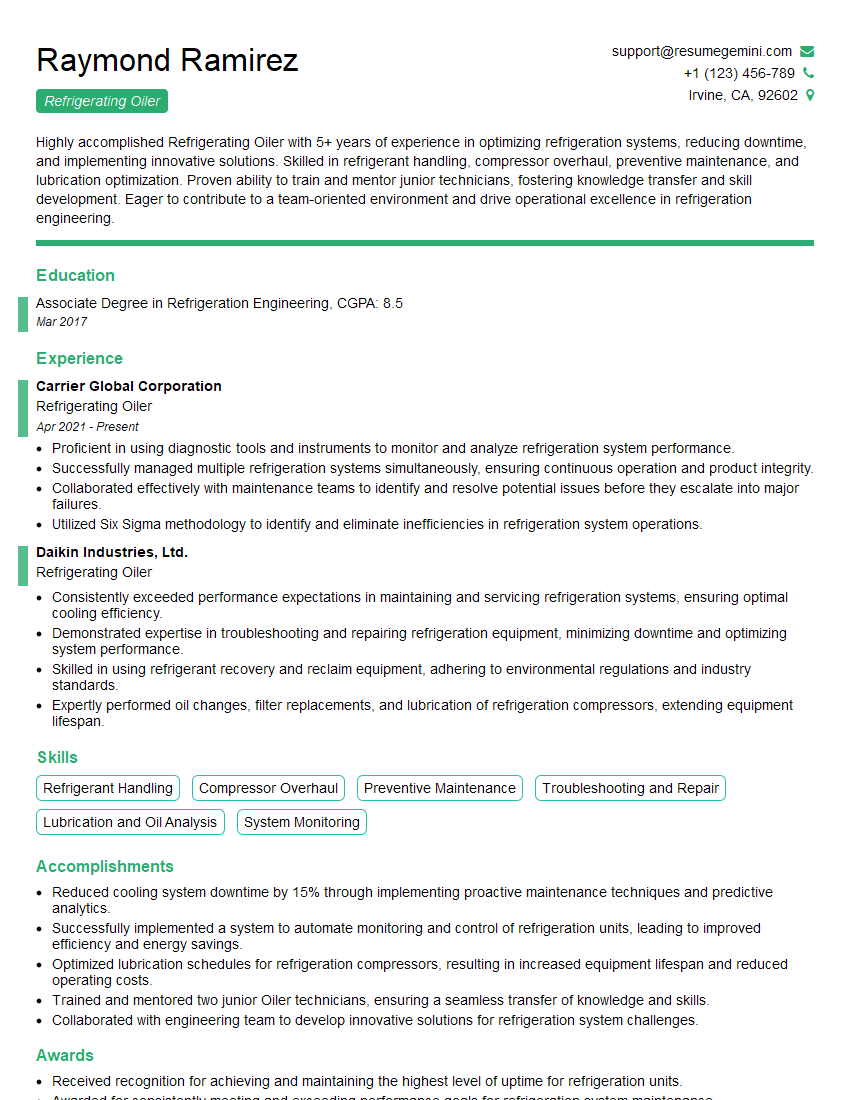
Acing the interview is crucial, but landing one requires a compelling resume that gets you noticed. Crafting a professional document that highlights your skills and experience is the first step toward interview success. ResumeGemini can help you build a standout resume that gets you called in for that dream job.






Essential Interview Questions For Refrigerating Oiler
1. Describe the steps involved in the process of oiling a refrigeration system.
- Stop the refrigeration system and isolate it from the power source.
- Remove the oil filter and drain the old oil into a suitable container.
- Clean the oil filter and replace it with a new one.
- Pour new oil into the refrigeration system, following the manufacturer’s instructions.
- Start the refrigeration system and check for oil leaks.
2. What are the different types of oils used in refrigeration systems?
Mineral oils
- Most common type of oil used in refrigeration systems
- Derived from petroleum
- Good lubricating properties and thermal stability
Synthetic oils
- Man-made oils that offer several advantages over mineral oils
- Higher viscosity index, which means they maintain their viscosity over a wider temperature range
- Better thermal stability, which means they can withstand higher temperatures without breaking down
- Lower pour point, which means they can be used in colder climates
Alkylbenzene oils
- Type of synthetic oil that is specifically designed for use in refrigeration systems
- Excellent lubricating properties and thermal stability
- Compatible with all refrigerants
3. What are the consequences of using the wrong type of oil in a refrigeration system?
- Reduced efficiency of the refrigeration system
- Increased wear and tear on the compressor
- Failure of the refrigeration system
4. What are the signs that a refrigeration system needs to be oiled?
- Noisy compressor
- Reduced cooling capacity
- Increased energy consumption
- Oil leaks
5. What are the safety precautions that must be taken when oiling a refrigeration system?
- Wear appropriate safety gear, including gloves, safety glasses, and a respirator.
- Work in a well-ventilated area.
- Avoid contact with the skin and eyes.
- Do not smoke or eat while working.
6. What are the different methods used to monitor the oil level in a refrigeration system?
- Sight glass
- Oil level sensor
- Dip stick
7. What are the factors that affect the oil level in a refrigeration system?
- Refrigerant leaks
- Oil leaks
- Compressor wear
- Evaporator icing
8. What are the steps involved in troubleshooting a refrigeration system that is low on oil?
- Check the oil level.
- Inspect the refrigeration system for leaks.
- Check the compressor for wear.
- Inspect the evaporator for icing.
9. What are the benefits of using a synthetic oil in a refrigeration system?
- Longer oil life
- Improved compressor performance
- Reduced energy consumption
- Lower maintenance costs
10. What are the environmental considerations that must be taken into account when using and disposing of refrigeration oil?
- Refrigeration oil is a hazardous waste and must be disposed of properly.
- Use a recycling program to dispose of used refrigeration oil.
- Do not pour used refrigeration oil down the drain or into the ground.
Interviewers often ask about specific skills and experiences. With ResumeGemini‘s customizable templates, you can tailor your resume to showcase the skills most relevant to the position, making a powerful first impression. Also check out Resume Template specially tailored for Refrigerating Oiler.
Career Expert Tips:
- Ace those interviews! Prepare effectively by reviewing the Top 50 Most Common Interview Questions on ResumeGemini.
- Navigate your job search with confidence! Explore a wide range of Career Tips on ResumeGemini. Learn about common challenges and recommendations to overcome them.
- Craft the perfect resume! Master the Art of Resume Writing with ResumeGemini’s guide. Showcase your unique qualifications and achievements effectively.
- Great Savings With New Year Deals and Discounts! In 2025, boost your job search and build your dream resume with ResumeGemini’s ATS optimized templates.
Researching the company and tailoring your answers is essential. Once you have a clear understanding of the Refrigerating Oiler‘s requirements, you can use ResumeGemini to adjust your resume to perfectly match the job description.
Key Job Responsibilities
A Refrigerating Oiler is responsible for the maintenance and repair of refrigeration systems. They may work in a variety of settings, such as food processing plants, grocery stores, and hospitals. The main duties of the job include:
1. Lubricating and oiling refrigeration equipment
This is done to prevent wear and tear on the equipment and to ensure that it runs smoothly.
- Checking oil levels and adding oil as needed
- Inspecting oil filters and changing them when necessary
- Lubricating moving parts, such as bearings and gears
2. Inspecting and repairing refrigeration systems
This involves looking for signs of wear or damage and making repairs as needed.
- Checking for leaks in the system
- Testing the temperature and pressure of the system
- Repairing or replacing damaged parts
3. Monitoring the operation of refrigeration systems
This is done to ensure that the systems are running efficiently and safely.
- Checking gauges to monitor the temperature and pressure of the system
- Observing the system for any unusual noises or vibrations
- Taking readings from sensors and recording them in a logbook
4. Performing preventive maintenance on refrigeration systems
This involves taking steps to prevent problems from occurring and to extend the life of the systems.
- Cleaning the systems and removing any debris
- Tightening bolts and nuts
- Checking belts and hoses for wear and tear
Interview Tips
To prepare for an interview for a Refrigerating Oiler position, it is important to:
1. Research the company and the position
This will help you to understand the company’s culture and the specific requirements of the job.
- Visit the company’s website and read about its history, mission, and values.
- Review the job description carefully and identify the key skills and experience required.
- Practice answering common interview questions, such as “Tell me about yourself” and “Why are you interested in this position?”
2. Highlight your experience and skills
Make sure to highlight your experience and skills that are relevant to the job requirements.
- In your resume, use keywords from the job description to describe your experience and skills.
- In your interview, be prepared to give specific examples of your experience and skills.
- Quantify your accomplishments whenever possible, using numbers and metrics to demonstrate the impact of your work.
3. Demonstrate your knowledge of refrigeration systems
Be prepared to answer questions about your knowledge of refrigeration systems.
- Review the basics of refrigeration, including the principles of thermodynamics and heat transfer.
- Familiarize yourself with the different types of refrigeration systems and their components.
- Practice troubleshooting common problems with refrigeration systems.
4. Show your passion for the work
Let the interviewer know that you are passionate about working with refrigeration systems.
- Share your reasons for being interested in the position.
- Talk about your experience with refrigeration systems and how you have enjoyed working in this field.
- Express your enthusiasm for learning new things and solving problems.
Next Step:
Armed with this knowledge, you’re now well-equipped to tackle the Refrigerating Oiler interview with confidence. Remember, a well-crafted resume is your first impression. Take the time to tailor your resume to highlight your relevant skills and experiences. And don’t forget to practice your answers to common interview questions. With a little preparation, you’ll be on your way to landing your dream job. So what are you waiting for? Start building your resume and start applying! Build an amazing resume with ResumeGemini.