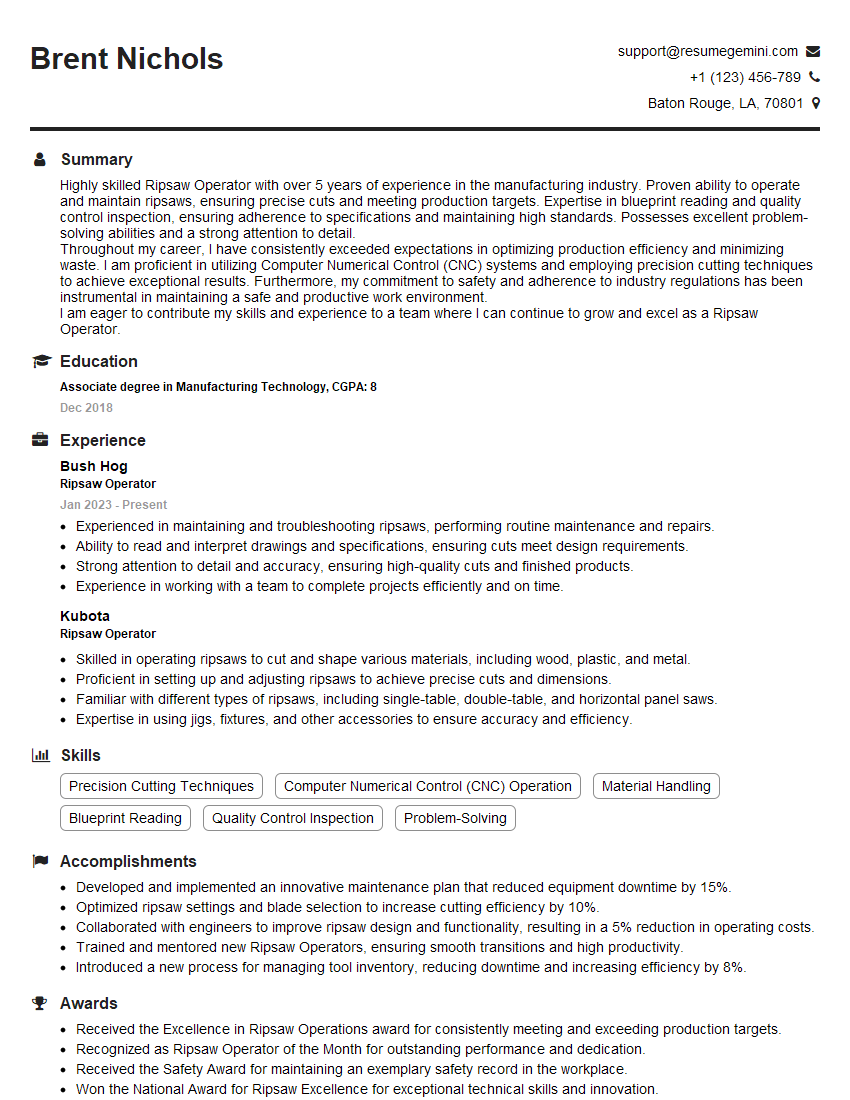
Are you gearing up for a career shift or aiming to ace your next interview? Look no further! We’ve curated a comprehensive guide to help you crack the interview for the coveted Ripsaw Operator position. From understanding the key responsibilities to mastering the most commonly asked questions, this blog has you covered. So, buckle up and let’s embark on this journey together.
Acing the interview is crucial, but landing one requires a compelling resume that gets you noticed. Crafting a professional document that highlights your skills and experience is the first step toward interview success. ResumeGemini can help you build a standout resume that gets you called in for that dream job.






Essential Interview Questions For Ripsaw Operator
1. Can you describe the process of setting up a Ripsaw machine?
- Inspect the machine and ensure it is in good working order.
- Install the appropriate blade for the material being cut.
- Adjust the blade height, fence, and other settings according to the manufacturer’s specifications.
- Calibrate the machine using a test piece.
2. What are the different types of cuts that can be made with a Ripsaw machine?
Straight cuts
- Cutting along the grain of the wood.
- Used for ripping boards, creating panels, etc.
Crosscuts
- Cutting across the grain of the wood.
- Used for cutting boards to length, squaring up ends, etc.
Bevel cuts
- Cutting at an angle to the grain of the wood.
- Used for creating mitered joints, picture frames, etc.
Compound cuts
- Combining two or more types of cuts.
- Used for creating complex shapes, such as dovetails or finger joints.
3. What safety precautions should be taken when operating a Ripsaw machine?
- Wear appropriate safety gear, such as eye protection, ear protection, and gloves.
- Ensure the machine is properly guarded and grounded.
- Keep hands and other body parts away from the blade.
- Do not operate the machine if you are tired or under the influence of drugs or alcohol.
4. What are the common causes of Ripsaw accidents?
- Kickback: Occurs when the wood being cut is caught by the blade and thrown back at the operator.
- Blade breakage: Can occur due to improper blade selection, dull blades, or excessive force.
- Contact with the blade: Can occur if the operator’s hands or other body parts get too close to the blade.
- Improper machine setup: Can increase the risk of kickback and other accidents.
5. How do you troubleshoot a Ripsaw machine that is not cutting properly?
- Check the blade for sharpness and damage.
- Check the blade height and fence settings.
- Check the machine for any loose or damaged parts.
- Check the power supply to the machine.
6. What is the difference between a Ripsaw machine and a tablesaw?
- Ripsaw machines are designed specifically for cutting long, straight cuts.
- Tablesaws are more versatile and can be used for a wider variety of cuts.
- Ripsaw machines typically have a larger table and a more powerful motor than tablesaws.
7. What are the advantages of using a Ripsaw machine over a handheld circular saw?
- Greater accuracy and precision.
- Increased safety due to the use of guards and other safety features.
- Higher productivity due to the faster cutting speed and larger cutting capacity.
8. What is your experience with different types of Ripsaw machines?
- Describe your experience with specific models or brands.
- Explain your understanding of the different features and capabilities of different machines.
- Discuss how your experience has prepared you for this role.
9. How do you stay up-to-date on the latest Ripsaw machine technologies?
- Attend industry trade shows and conferences.
- Read industry publications and online resources.
- Consult with manufacturers and other industry professionals.
10. What is your availability for work?
- State your availability for work, including any restrictions or preferences.
- Be prepared to discuss your willingness to work overtime or on weekends.
Interviewers often ask about specific skills and experiences. With ResumeGemini‘s customizable templates, you can tailor your resume to showcase the skills most relevant to the position, making a powerful first impression. Also check out Resume Template specially tailored for Ripsaw Operator.
Career Expert Tips:
- Ace those interviews! Prepare effectively by reviewing the Top 50 Most Common Interview Questions on ResumeGemini.
- Navigate your job search with confidence! Explore a wide range of Career Tips on ResumeGemini. Learn about common challenges and recommendations to overcome them.
- Craft the perfect resume! Master the Art of Resume Writing with ResumeGemini’s guide. Showcase your unique qualifications and achievements effectively.
- Great Savings With New Year Deals and Discounts! In 2025, boost your job search and build your dream resume with ResumeGemini’s ATS optimized templates.
Researching the company and tailoring your answers is essential. Once you have a clear understanding of the Ripsaw Operator‘s requirements, you can use ResumeGemini to adjust your resume to perfectly match the job description.
Key Job Responsibilities
Ripsaw Operators are responsible for the safe and efficient operation of ripsaws, which are machines used to cut lumber into smaller pieces. This critical role ensures the smooth flow of production in the lumber industry.
1. Preparing the Machine
Before starting the ripsaw, operators make meticulous preparations. They ensure the machine is clean, lubricated, and properly adjusted to achieve the desired cut quality.
- Cleaning and lubricating the ripsaw’s components
- Inspecting blades for sharpness and replacing them if necessary
- Setting the appropriate feed rate and blade height based on the lumber’s thickness
2. Operating the Ripsaw
Operating the ripsaw requires precision and attention to detail. Operators carefully feed lumber through the machine, ensuring it is positioned correctly for the desired cut.
- Loading and unloading lumber from the ripsaw
- Monitoring the cutting process, ensuring the lumber is cut to the correct dimensions
- Adjusting the machine’s settings as needed to maintain optimal cutting quality
3. Maintaining the Ripsaw
Regular maintenance is essential to ensure the ripsaw operates efficiently and safely. Operators perform routine checks and maintenance tasks.
- Checking oil levels and replenishing as necessary
- Inspecting belts, chains, and other components for wear or damage
- Cleaning and removing sawdust and debris from the machine
4. Safety and Compliance
Safety is paramount in this role. Operators adhere to established safety protocols and wear appropriate personal protective equipment.
- Following established safety procedures, including lockout/tagout
- Wearing appropriate safety gear, such as safety glasses, earplugs, and gloves
- Maintaining a clean and organized work area
Interview Tips
Preparing thoroughly for a Ripsaw Operator interview can significantly increase your chances of success. Here are some valuable tips:
1. Research the Industry and Company
Gain a deep understanding of the lumber industry and the company you’re applying to. Research their products, services, and safety protocols.
- Visit the company’s website and social media pages
- Read industry publications and news articles
- Connect with professionals in the field on LinkedIn
2. Highlight Your Skills and Experience
Emphasize your relevant skills, including your ability to operate ripsaws safely and efficiently. Quantify your accomplishments with specific examples.
- Mention the types of ripsaws you’ve operated and the lumber you’ve cut
- Provide examples of how you’ve maintained and repaired ripsaws
- Highlight your safety record and adherence to industry standards
3. Prepare for Common Interview Questions
Research common interview questions and prepare thoughtful answers. Practice your responses to ensure they are clear and concise.
- Why are you interested in this role?
- What are your strengths and weaknesses as a Ripsaw Operator?
- How do you ensure safety while operating a ripsaw?
4. Dress Professionally and Arrive Punctually
First impressions matter. Dress professionally and arrive on time for your interview. This demonstrates respect for the interviewer and the company.
- Wear clean, business casual attire
- Be punctual and arrive at the interview location a few minutes early
- Bring copies of your resume and any relevant certifications
Next Step:
Armed with this knowledge, you’re now well-equipped to tackle the Ripsaw Operator interview with confidence. Remember, a well-crafted resume is your first impression. Take the time to tailor your resume to highlight your relevant skills and experiences. And don’t forget to practice your answers to common interview questions. With a little preparation, you’ll be on your way to landing your dream job. So what are you waiting for? Start building your resume and start applying! Build an amazing resume with ResumeGemini.