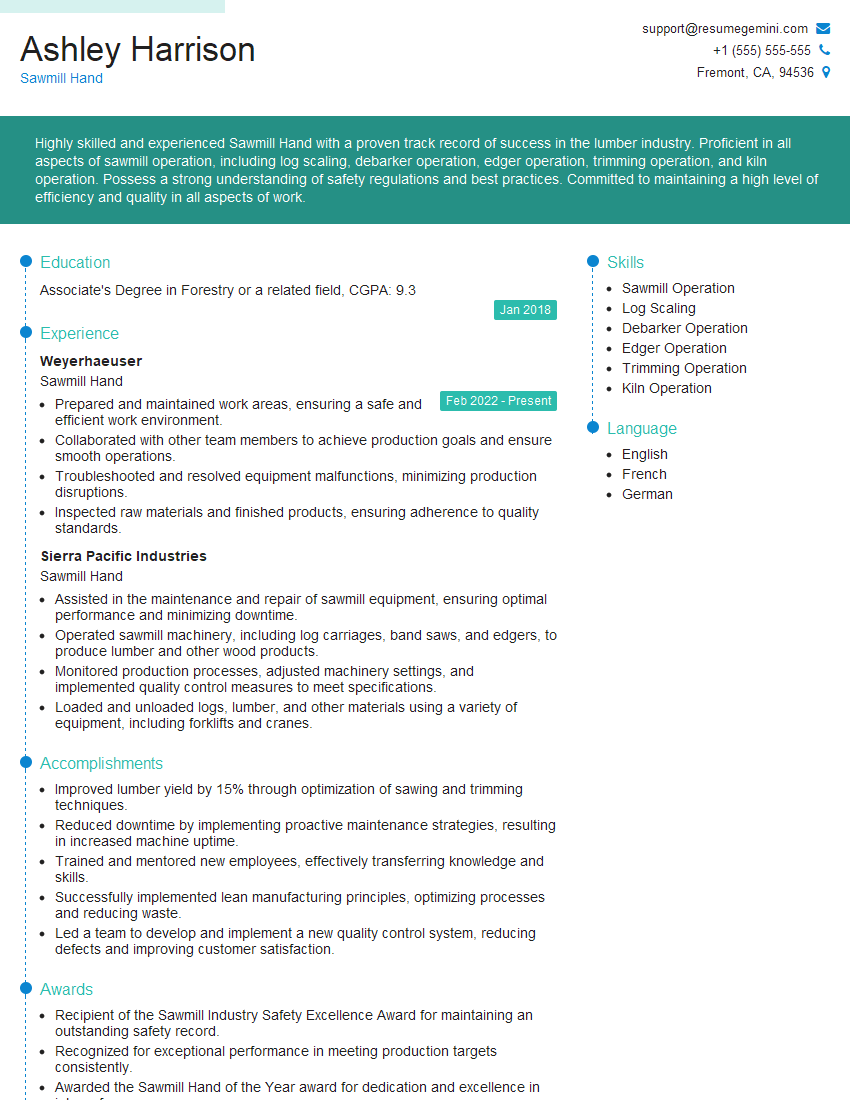
Are you gearing up for a career shift or aiming to ace your next interview? Look no further! We’ve curated a comprehensive guide to help you crack the interview for the coveted Sawmill Hand position. From understanding the key responsibilities to mastering the most commonly asked questions, this blog has you covered. So, buckle up and let’s embark on this journey together.
Acing the interview is crucial, but landing one requires a compelling resume that gets you noticed. Crafting a professional document that highlights your skills and experience is the first step toward interview success. ResumeGemini can help you build a standout resume that gets you called in for that dream job.






Essential Interview Questions For Sawmill Hand
1. Describe the different types of saws used in a sawmill and their specific applications?
- Headsaw: Used to cut logs into lumber or cants.
- Resaw: Used to cut lumber into thinner boards or dimension lumber.
- Trim saw: Used to trim the ends of boards or lumber.
- Ripsaw: Used to cut boards lengthwise into smaller strips.
- Gang saw: Used to cut multiple boards simultaneously from a single log.
2. How do you ensure that the saws are properly calibrated and maintained to achieve optimal cutting performance?
Daily Maintenance
- Inspect saws for wear or damage.
- Sharpen or replace saw blades as needed.
- Check and adjust saw guides and guards.
Weekly Maintenance
- Lubricate moving parts of the saw.
- Inspect and clean electrical components.
- Calibrate the saw using precision measuring equipment.
3. Explain the importance of log preparation prior to sawing in a sawmill?
- Ensures logs are free from bark and debris.
- Reduces the risk of saw damage from foreign objects.
- Optimizes lumber yield by removing defects and maximizing usable wood.
- Facilitates smooth and efficient cutting, minimizing downtime.
4. Describe the process of loading and positioning logs on the sawmill carriage to ensure accurate and safe cutting?
- Inspect logs for size, shape, and defects.
- Use cranes or log loaders to carefully lift logs onto the carriage.
- Position logs securely using chains, dogs, or clamps.
- Ensure logs are level, centered, and aligned with the saw.
- Follow safety protocols and wear appropriate personal protective equipment.
5. How do you monitor and adjust the feed rate of the sawmill to maximize lumber recovery while maintaining product quality?
- Monitor lumber thickness, width, and surface smoothness.
- Adjust feed rate based on log size, species, and desired lumber specifications.
- Use sensors and automation to optimize the feed rate in real-time.
- Conduct regular calibration and maintenance of the feed system.
6. Explain the techniques used to minimize lumber defects and maximize the quality of the finished product?
- Proper log preparation and positioning.
- Using sharp and well-maintained saw blades.
- Optimizing feed rate and cutting parameters.
- Regular inspection and removal of defects during and after cutting.
- Sorting and grading lumber based on quality standards.
7. Describe the safety protocols and procedures you follow in a sawmill environment?
- Wear personal protective equipment (PPE) including hard hat, safety glasses, hearing protection, and non-slip shoes.
- Maintain a clean and organized work area.
- Operate equipment safely and never work under suspended loads.
- Report any hazards or unsafe conditions immediately.
- Receive regular safety training and updates.
8. How do you troubleshoot and resolve common sawmill equipment issues, such as saw blade problems or feed system malfunctions?
- Identify the cause of the issue based on symptoms and observations.
- Inspect and repair or replace faulty components.
- Calibrate and adjust equipment using precision measuring tools.
- Follow manufacturer’s guidelines and consult with technical support if necessary.
- Document repairs and maintenance actions for future reference.
9. Explain the importance of teamwork and communication in a sawmill setting?
- Ensures smooth and efficient operation of the sawmill.
- Prevents accidents and injuries by coordinating tasks and providing support.
- Facilitates knowledge sharing and problem-solving.
- Improves overall productivity and product quality.
10. Describe your experience in managing a team of sawmill hands and how you motivate and train them to achieve performance goals?
Motivating the Team
- Setting clear expectations and goals.
- Recognizing and rewarding achievements.
- Creating a positive and supportive work environment.
- Providing opportunities for professional development.
Training and Development
- Conducting on-the-job training and demonstrations.
- Providing access to training materials and resources.
- Mentoring and guiding less experienced workers.
- Encouraging continuous improvement and skill development.
Interviewers often ask about specific skills and experiences. With ResumeGemini‘s customizable templates, you can tailor your resume to showcase the skills most relevant to the position, making a powerful first impression. Also check out Resume Template specially tailored for Sawmill Hand.
Career Expert Tips:
- Ace those interviews! Prepare effectively by reviewing the Top 50 Most Common Interview Questions on ResumeGemini.
- Navigate your job search with confidence! Explore a wide range of Career Tips on ResumeGemini. Learn about common challenges and recommendations to overcome them.
- Craft the perfect resume! Master the Art of Resume Writing with ResumeGemini’s guide. Showcase your unique qualifications and achievements effectively.
- Great Savings With New Year Deals and Discounts! In 2025, boost your job search and build your dream resume with ResumeGemini’s ATS optimized templates.
Researching the company and tailoring your answers is essential. Once you have a clear understanding of the Sawmill Hand‘s requirements, you can use ResumeGemini to adjust your resume to perfectly match the job description.
Key Job Responsibilities
Sawmill Hands are responsible for operating and maintaining equipment in a sawmill. They cut logs into lumber, and perform a variety of other tasks to ensure that the mill operates smoothly.
1. Operating Sawmill Equipment
Sawmill Hands operate a variety of equipment, including:
- Band saws
- Circular saws
- Headrigs
- Trimmers
- Edgers
2. Monitoring and Maintaining Equipment
Sawmill Hands monitor equipment to ensure that it is functioning properly. They also perform preventive maintenance, such as:
- Lubricating equipment
- Adjusting equipment
- Replacing worn parts
3. Troubleshooting Equipment Problems
When equipment problems occur, Sawmill Hands troubleshoot the problem and make repairs. They also work with other staff members to resolve problems.
4. Cleaning and Maintaining Work Area
Sawmill Hands clean and maintain the work area to ensure that it is safe and efficient. They also dispose of waste materials.
Interview Tips
Preparing for an interview can be daunting, but by following these tips, you can increase your chances of success.
1. Research the Company and the Position
Take the time to learn about the company you’re applying to and the position you’re interviewing for. This will help you to understand the company’s culture, values, and goals, and to tailor your answers to the interviewer’s questions.
2. Practice Your Answers to Common Interview Questions
There are a number of common interview questions that you’re likely to be asked, such as “Tell me about yourself” or “Why are you interested in this position?”. Practice answering these questions in advance so that you can deliver confident and well-thought-out responses.
3. Be Enthusiastic and Engaged
Interviewers want to see that you’re passionate about the position and the company. Be enthusiastic and engaged throughout the interview, and make sure to ask questions about the company and the position.
4. Dress Professionally
First impressions matter, so make sure to dress professionally for your interview. This means wearing a suit or business casual attire, and being well-groomed.
5. Be on Time
Punctuality is important, so make sure to arrive for your interview on time. If you’re running late, be sure to call or email the interviewer to let them know.
6. Follow Up
After the interview, be sure to follow up with the interviewer. Thank them for their time, and reiterate your interest in the position. You can also ask if there’s anything else you can provide them with.
Next Step:
Now that you’re armed with a solid understanding of what it takes to succeed as a Sawmill Hand, it’s time to turn that knowledge into action. Take a moment to revisit your resume, ensuring it highlights your relevant skills and experiences. Tailor it to reflect the insights you’ve gained from this blog and make it shine with your unique qualifications. Don’t wait for opportunities to come to you—start applying for Sawmill Hand positions today and take the first step towards your next career milestone. Your dream job is within reach, and with a polished resume and targeted applications, you’ll be well on your way to achieving your career goals! Build your resume now with ResumeGemini.