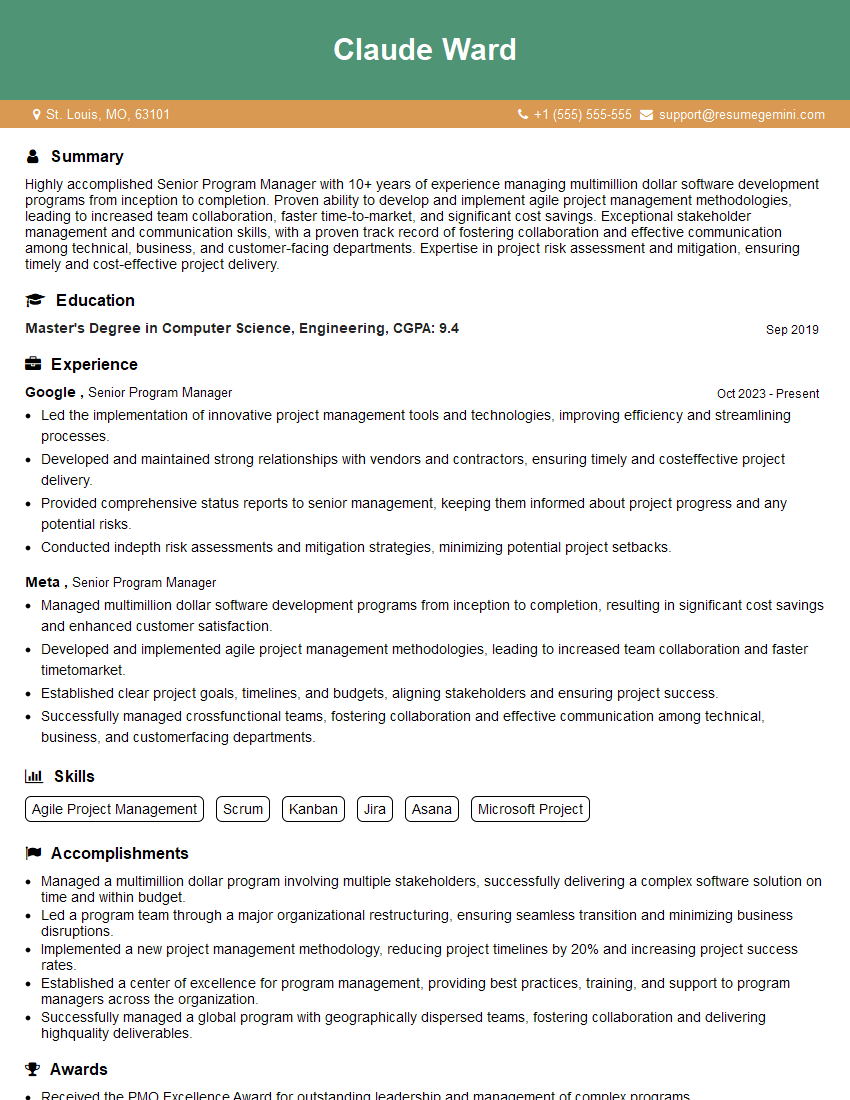
Are you gearing up for an interview for a Senior Program Manager position? Whether you’re a seasoned professional or just stepping into the role, understanding what’s expected can make all the difference. In this blog, we dive deep into the essential interview questions for Senior Program Manager and break down the key responsibilities of the role. By exploring these insights, you’ll gain a clearer picture of what employers are looking for and how you can stand out. Read on to equip yourself with the knowledge and confidence needed to ace your next interview and land your dream job!
Acing the interview is crucial, but landing one requires a compelling resume that gets you noticed. Crafting a professional document that highlights your skills and experience is the first step toward interview success. ResumeGemini can help you build a standout resume that gets you called in for that dream job.






Essential Interview Questions For Senior Program Manager
1. Describe the key responsibilities and challenges that you faced in your previous role as a Senior Program Manager?
- Managed a portfolio of software development projects, coordinating cross-functional teams to deliver successful outcomes.
- Developed and implemented project plans, ensuring alignment with business objectives and stakeholder expectations.
- Monitored project progress, identified risks, and implemented mitigation strategies to ensure on-time and within-budget delivery.
- Communicated effectively with stakeholders, providing regular updates and managing expectations.
- Faced challenges in managing complex projects with tight deadlines and limited resources, requiring strong negotiation, problem-solving, and stakeholder management skills.
2. How do you prioritize projects and tasks in a fast-paced and demanding environment?
Time Management
- Utilize time management techniques, such as prioritization matrices and task lists, to identify critical tasks.
- Allocate time effectively based on urgency, importance, and dependencies.
- Delegate responsibilities to team members and empower them to make decisions.
Resource Allocation
- Assess project requirements and allocate resources accordingly.
- Identify resource constraints and develop mitigation plans.
- Negotiate with stakeholders to secure additional resources when necessary.
3. Explain your approach to stakeholder management in complex projects?
- Identify and engage key stakeholders, understanding their needs and expectations.
- Communicate regularly, providing transparent updates and proactively addressing concerns.
- Build relationships and establish trust by actively listening and seeking input.
- Involve stakeholders in decision-making processes to ensure buy-in and commitment.
- Resolve conflicts and negotiate compromises to maintain stakeholder satisfaction.
4. How do you ensure that project risks are identified and mitigated effectively?
- Conduct risk assessments to identify potential threats and vulnerabilities.
- Analyze risks, assess their likelihood and impact, and prioritize them accordingly.
- Develop mitigation plans for high-priority risks, outlining strategies to prevent or minimize their impact.
- Monitor risks throughout the project lifecycle and make adjustments as needed.
- Involve stakeholders in risk management to ensure shared understanding and support.
5. Describe your experience in managing cross-functional teams and fostering collaboration?
- Established clear communication channels and defined roles and responsibilities.
- Organized regular team meetings to facilitate information sharing and decision-making.
- Promoted a positive and inclusive work environment, encouraging team members to share ideas and perspectives.
- Recognized and rewarded team contributions, fostering a sense of ownership and motivation.
- Utilized collaboration tools and techniques to enhance efficiency and streamline workflows.
6. How do you measure the success of projects and evaluate the impact of your work?
- Define clear project success metrics aligned with business objectives.
- Collect and analyze data throughout the project lifecycle using dashboards and reporting tools.
- Compare actual results to planned targets and identify areas for improvement.
- Seek feedback from stakeholders and team members to gain insights into project outcomes.
- Use lessons learned to continuously refine project management practices and enhance future performance.
7. Describe your experience in developing and managing project budgets?
- Analyzed project requirements and estimated costs accordingly.
- Negotiated with vendors and contractors to secure favorable terms.
- Monitored project expenses and identified areas for optimization.
- Prepared regular budget reports and provided updates to stakeholders.
- Managed project contingencies and developed plans to address potential budget overruns.
8. How do you handle project setbacks and unexpected challenges?
- Remain calm and assess the situation, identifying the root cause of the problem.
- Communicate openly with stakeholders and keep them informed.
- Brainstorm solutions and develop contingency plans.
- Reprioritize tasks, adjust timelines, and reallocate resources as necessary.
- Learn from the experience and implement measures to prevent similar setbacks in the future.
9. Discuss your approach to quality assurance and how you ensure project deliverables meet expectations?
- Established clear quality standards and defined acceptance criteria.
- Implemented quality assurance processes throughout the development lifecycle.
- Conducted regular testing, code reviews, and stakeholder demonstrations.
- Utilized automated testing tools and techniques to enhance efficiency.
- Collaborated with development teams to resolve defects and improve overall product quality.
10. Describe your understanding of emerging trends in project management, such as agile methodologies or data-driven decision-making?
- Agile Methodologies:
- – Familiar with agile frameworks, such as Scrum and Kanban.
- – Understand the principles of iterative development, continuous improvement, and stakeholder involvement.
- Data-driven Decision-making:
- – Leveraged data analysis and reporting tools to gain insights into project performance.
- – Utilized data to inform decision-making and improve project outcomes.
Interviewers often ask about specific skills and experiences. With ResumeGemini‘s customizable templates, you can tailor your resume to showcase the skills most relevant to the position, making a powerful first impression. Also check out Resume Template specially tailored for Senior Program Manager.
Career Expert Tips:
- Ace those interviews! Prepare effectively by reviewing the Top 50 Most Common Interview Questions on ResumeGemini.
- Navigate your job search with confidence! Explore a wide range of Career Tips on ResumeGemini. Learn about common challenges and recommendations to overcome them.
- Craft the perfect resume! Master the Art of Resume Writing with ResumeGemini’s guide. Showcase your unique qualifications and achievements effectively.
- Great Savings With New Year Deals and Discounts! In 2025, boost your job search and build your dream resume with ResumeGemini’s ATS optimized templates.
Researching the company and tailoring your answers is essential. Once you have a clear understanding of the Senior Program Manager‘s requirements, you can use ResumeGemini to adjust your resume to perfectly match the job description.
Key Job Responsibilities
Senior Program Managers play a crucial role in overseeing the successful execution of complex programs and projects. Their responsibilities encompass a wide range of tasks, including:
1. Strategic Planning and Execution
Collaborating with stakeholders to define program goals and objectives, develop strategic plans, and ensure alignment with organizational priorities.
- Conducting thorough research and analysis to identify opportunities and mitigate risks.
- Developing and implementing project timelines, budgets, and resource plans.
2. Stakeholder Management
Managing relationships with key stakeholders, including clients, partners, vendors, and team members.
- Communicating effectively, building consensus, and resolving conflicts.
- Negotiating contracts, managing expectations, and ensuring stakeholder satisfaction.
3. Resource Management
Allocating and managing resources, including human, financial, and technological.
- Identifying and acquiring necessary resources.
- Optimizing resource utilization and tracking expenses.
4. Team Leadership and Management
Leading and motivating a team of project managers and staff.
- Providing guidance, mentorship, and support.
- Evaluating performance and providing feedback.
5. Risk Management
Identifying, assessing, and mitigating risks throughout the program lifecycle.
- Developing risk management plans and implementing risk mitigation strategies.
- Monitoring risks and taking corrective actions as necessary.
6. Quality Control
Ensuring the quality of program deliverables and outcomes.
- Developing quality standards and procedures.
- Conducting regular quality reviews and audits.
7. Performance Evaluation and Reporting
Tracking program progress and evaluating outcomes.
- Collecting and analyzing data to measure program performance.
- Reporting on progress to stakeholders and making recommendations for improvement.
Interview Tips
Preparing for an interview for a Senior Program Manager position requires thorough research and practice. Here are some tips to help you ace the interview:
1. Research the Company and Role
Familiarize yourself with the company’s background, culture, and industry. Understand the specific requirements of the Senior Program Manager role and how your skills and experience align with them.
- Visit the company’s website and social media pages.
- Read industry publications and news articles.
- Network with individuals working in the company or industry.
2. Practice Your Answers
Prepare responses to common interview questions that highlight your relevant skills and experience. Consider using the STAR method (Situation, Task, Action, Result) to structure your answers and provide specific examples.
- Describe a time you successfully managed a complex program from start to finish.
- Give an example of how you built strong stakeholder relationships and negotiated effectively.
- Explain how you implemented risk management strategies and mitigated potential problems.
3. Be Enthusiastic and Confident
Convey your passion for program management and demonstrate your confidence in your abilities. Show the interviewer that you are eager to contribute to the company’s success and that you are a proactive and highly motivated individual.
- Share examples of your accomplishments and how you made a positive impact.
- Express your interest in the company and the role, and explain why you are a suitable candidate.
- Maintain eye contact, speak clearly, and be assertive in your responses.
4. Ask Insightful Questions
Prepare questions to ask the interviewer about the company, the role, and the industry. This demonstrates your engagement and interest in the position.
- Inquire about the company’s strategic goals and how the Senior Program Manager fits into them.
- Ask about the team structure and reporting relationships.
- Seek information about the company’s culture and values.
5. Follow Up
After the interview, send a thank-you note to the interviewer, reiterating your interest in the position and highlighting key points from your discussion. This shows your professionalism and appreciation for the opportunity.
Next Step:
Now that you’re armed with the knowledge of Senior Program Manager interview questions and responsibilities, it’s time to take the next step. Build or refine your resume to highlight your skills and experiences that align with this role. Don’t be afraid to tailor your resume to each specific job application. Finally, start applying for Senior Program Manager positions with confidence. Remember, preparation is key, and with the right approach, you’ll be well on your way to landing your dream job. Build an amazing resume with ResumeGemini