Are you gearing up for a career shift or aiming to ace your next interview? Look no further! We’ve curated a comprehensive guide to help you crack the interview for the coveted Subway Train Driver position. From understanding the key responsibilities to mastering the most commonly asked questions, this blog has you covered. So, buckle up and let’s embark on this journey together
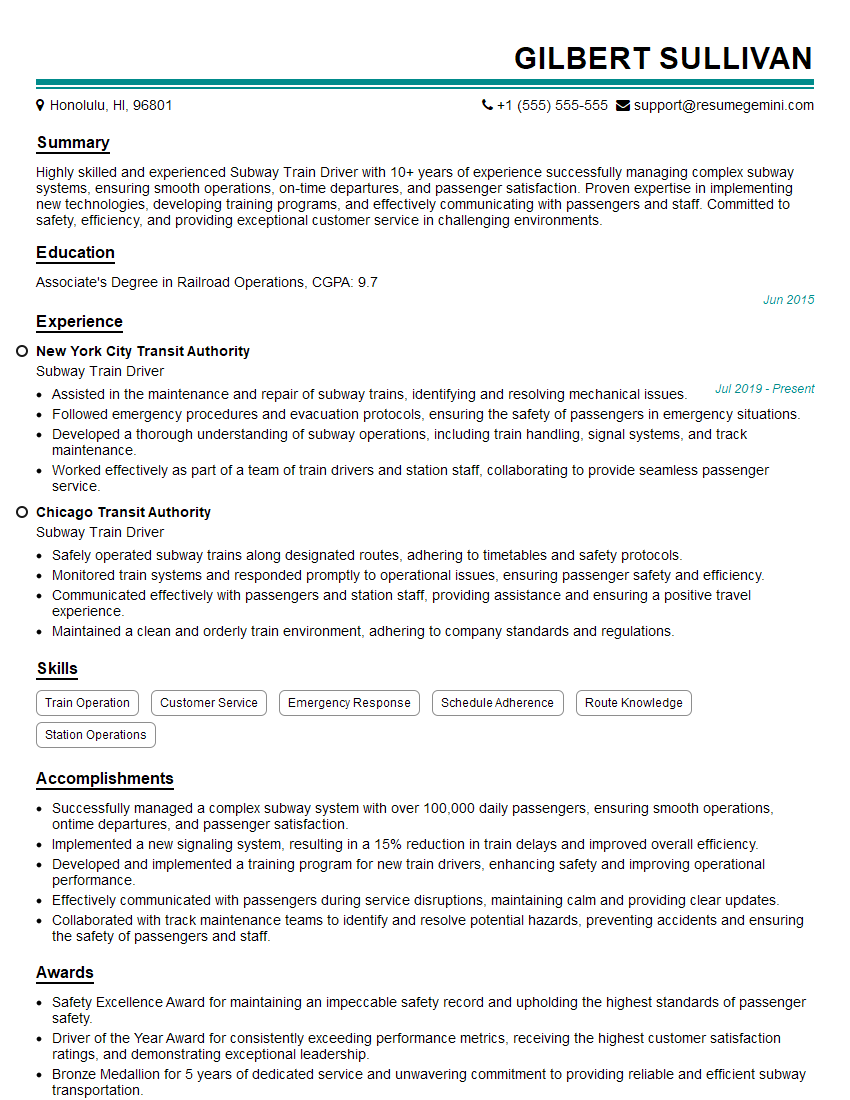
Acing the interview is crucial, but landing one requires a compelling resume that gets you noticed. Crafting a professional document that highlights your skills and experience is the first step toward interview success. ResumeGemini can help you build a standout resume that gets you called in for that dream job.






Essential Interview Questions For Subway Train Driver
1. Explain the role and responsibilities of a Subway Train Driver?
As a Subway Train Driver, my primary duty is to operate subway trains safely and efficiently, ensuring the smooth and timely transportation of passengers. my responsibilities include:
- Operating subway trains according to established schedules and routes.
- Monitoring train systems and adhering to operational procedures.
- Ensuring the safety and security of passengers and maintaining a clean and comfortable environment.
2. Describe the subway train control system and how you monitor train movement?
Train Control System Overview
- Explain the principles of the Automatic Train Control (ATC) system and its components.
- Describe the role of the train operator in the ATC system.
Train Movement Monitoring
- Describe the instruments and displays used to monitor train speed, position, and other operating parameters.
- Explain the procedures for maintaining safe following distances and adhering to speed limits.
3. Describe the emergency procedures for dealing with train malfunctions, passenger emergencies, and other incidents?
- Explain the steps involved in responding to train breakdowns, including power failures, equipment malfunctions, and derailments.
- Describe the procedures for handling passenger emergencies, such as medical emergencies, unruly passengers, and suspicious activity.
- Outline the communication protocols and coordination with emergency services during incident response.
4. Explain how you prioritize passenger safety and maintain a safe working environment?
- Describe the safety protocols and procedures implemented to prevent accidents and injuries to passengers.
- Explain the importance of situational awareness, vigilance, and communication in maintaining a safe environment.
- Discuss your understanding of the company’s safety policies and regulations and your commitment to adhering to them.
5. Describe the procedures for handling passenger complaints and requests for assistance?
- Explain the communication skills and conflict-resolution techniques you employ to address passenger concerns.
- Describe the protocols for providing assistance to passengers with disabilities, elderly passengers, and other individuals with special needs.
- Discuss how you maintain professionalism and a positive attitude when dealing with challenging passengers.
6. Explain the role of technology in modern subway train operations and how you stay updated with advancements?
- Discuss the various technological systems used in subway train operations, such as automated train control, passenger information displays, and communication systems.
- Explain how you stay informed about new technologies and advancements in the industry.
- Describe your willingness to embrace new technologies and adapt to changing operational requirements.
7. How do you handle stressful situations and maintain composure under pressure during emergency situations and peak hours?
- Describe your coping mechanisms and stress management techniques for handling high-pressure situations.
- Explain how you prioritize tasks, delegate responsibilities, and communicate effectively during emergencies.
- Discuss your ability to remain calm, focused, and in control even under intense pressure.
8. Describe your experience in managing train operations in a complex and demanding urban environment?
- Discuss your knowledge of the local subway system, including routes, stations, and infrastructure.
- Explain how you navigate challenges such as traffic congestion, track maintenance, and passenger volume fluctuations.
- Describe your ability to adapt to changing operating conditions and ensure efficient and reliable service.
9. How do you contribute to maintaining a positive and collaborative work environment among your colleagues and with other departments?
- Describe your communication and interpersonal skills for building rapport with colleagues and supervisors.
- Explain how you foster teamwork and cooperation to achieve operational goals.
- Discuss your commitment to maintaining a positive and supportive work atmosphere.
10. What are your career goals and how do you see this position contributing to your professional development?
- Express your interest in the Subway Train Driver role and the specific aspects that align with your career aspirations.
- Describe how the responsibilities and experiences associated with this position will contribute to your growth as a professional.
- Explain how you envision leveraging the opportunities provided by this role to advance your career.
Interviewers often ask about specific skills and experiences. With ResumeGemini‘s customizable templates, you can tailor your resume to showcase the skills most relevant to the position, making a powerful first impression. Also check out Resume Template specially tailored for Subway Train Driver.
Career Expert Tips:
- Ace those interviews! Prepare effectively by reviewing the Top 50 Most Common Interview Questions on ResumeGemini.
- Navigate your job search with confidence! Explore a wide range of Career Tips on ResumeGemini. Learn about common challenges and recommendations to overcome them.
- Craft the perfect resume! Master the Art of Resume Writing with ResumeGemini’s guide. Showcase your unique qualifications and achievements effectively.
- Great Savings With New Year Deals and Discounts! In 2025, boost your job search and build your dream resume with ResumeGemini’s ATS optimized templates.
Researching the company and tailoring your answers is essential. Once you have a clear understanding of the Subway Train Driver‘s requirements, you can use ResumeGemini to adjust your resume to perfectly match the job description.
Key Job Responsibilities
A Subway Train Driver is responsible for operating and maintaining a subway train. They oversee the safety and comfort of passengers, adhere to schedules and regulations, and monitor the train’s performance.
1. Train Operation
Operate subway trains during scheduled runs, ensuring safe and efficient transport of passengers.
- Control train speed, braking, and acceleration.
- Monitor track conditions and respond promptly to obstacles.
2. Passenger Safety and Comfort
Prioritize the well-being of passengers by adhering to safety protocols and providing courteous service.
- Ensure passenger safety during boarding, travel, and disembarkation.
- Maintain a clean and comfortable train environment.
3. Schedule Management
Follow established timetables, ensuring timely arrival at stations.
- Adhere to speed limits and station stop durations.
- Adjust schedules as needed based on unforeseen circumstances.
4. Train Maintenance
Perform basic inspections and report any malfunctions or issues to the appropriate personnel.
- Monitor train performance, including air conditioning, lighting, and intercom systems.
- Report any irregularities or defects promptly.
Interview Tips
Preparing thoroughly for a Subway Train Driver interview is essential to showcase your skills and suitability for the role. Here are some key interview preparation tips:
1. Research the Company and Industry
Gain in-depth knowledge about the subway system, its operations, and the company’s values. This demonstrates your interest and commitment to the industry.
- Visit the company website and social media pages.
- Read industry news and articles.
2. Highlight Relevant Skills and Experience
Emphasize your relevant skills and experience, particularly those related to train operation, safety procedures, and customer service.
- Quantify your accomplishments using specific metrics.
- Provide examples that demonstrate your ability to handle challenging situations.
3. Prepare for Common Interview Questions
Anticipate common interview questions and prepare thoughtful responses. This conveys confidence and professionalism.
- Practice answering questions about your experience, qualifications, and motivations.
- Research common behavioral interview questions and develop STAR (Situation, Task, Action, Result) method answers.
4. Seek Feedback and Practice
Consider seeking feedback from a career counselor or mentor. Practice your answers with a friend or family member to gain constructive criticism and improve your delivery.
- Attend mock interviews or participate in online interview simulations.
- Record yourself practicing and analyze your performance.
Next Step:
Now that you’re armed with a solid understanding of what it takes to succeed as a Subway Train Driver, it’s time to turn that knowledge into action. Take a moment to revisit your resume, ensuring it highlights your relevant skills and experiences. Tailor it to reflect the insights you’ve gained from this blog and make it shine with your unique qualifications. Don’t wait for opportunities to come to you—start applying for Subway Train Driver positions today and take the first step towards your next career milestone. Your dream job is within reach, and with a polished resume and targeted applications, you’ll be well on your way to achieving your career goals! Build your resume now with ResumeGemini.