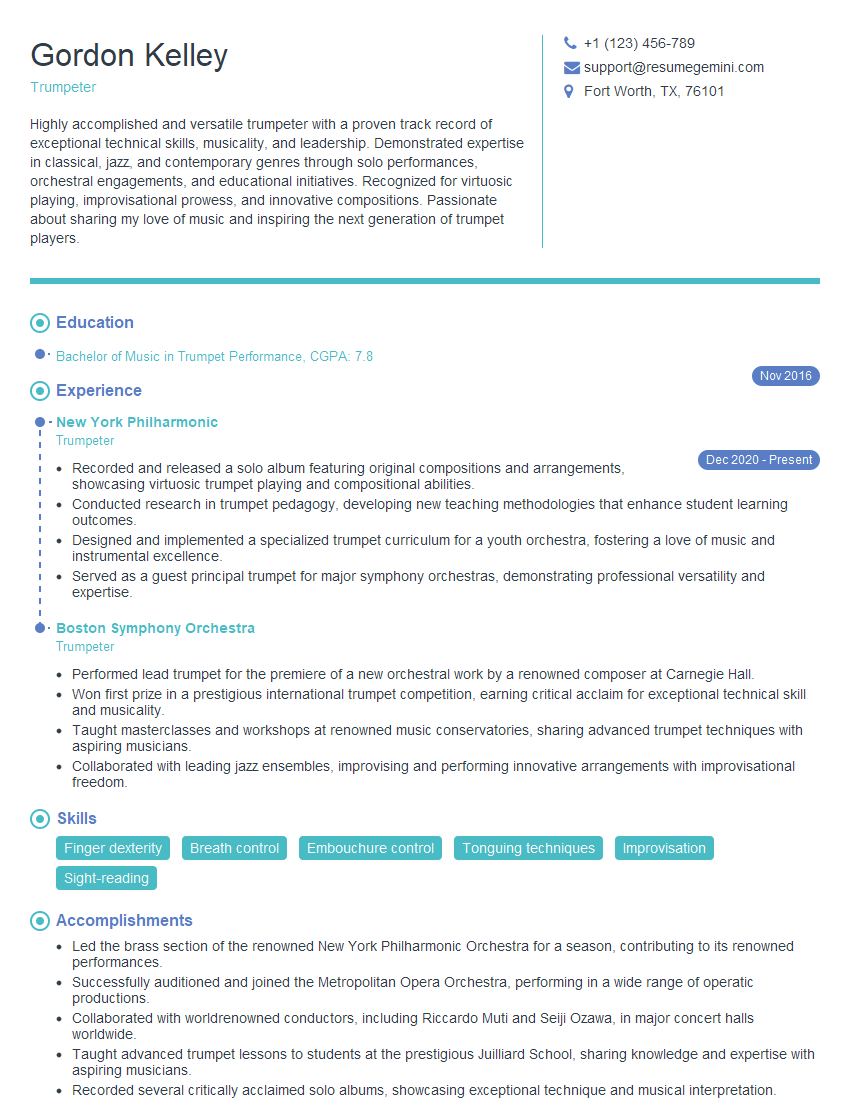
Ever felt underprepared for that crucial job interview? Or perhaps you’ve landed the interview but struggled to articulate your skills and experiences effectively? Fear not! We’ve got you covered. In this blog post, we’re diving deep into the Trumpeter interview questions that you’re most likely to encounter. But that’s not all. We’ll also provide expert insights into the key responsibilities of a Trumpeter so you can tailor your answers to impress potential employers.
Acing the interview is crucial, but landing one requires a compelling resume that gets you noticed. Crafting a professional document that highlights your skills and experience is the first step toward interview success. ResumeGemini can help you build a standout resume that gets you called in for that dream job.






Essential Interview Questions For Trumpeter
1. What are the different types of trumpets and their uses?
- Piccolo Trumpet: A small trumpet pitched in Bb and is used for playing high notes.
- C Trumpet: A trumpet pitched in C and commonly used in classical and jazz music.
- B♭ Trumpet: The most common trumpet used in various genres such as jazz, classical, and popular music.
- Eb Trumpet: A trumpet pitched in Eb and often used in brass bands and some jazz ensembles.
- Bass Trumpet: A larger trumpet pitched in Bb or C and used for playing lower notes.
2. How do you maintain a trumpet to ensure its longevity?
Regular Cleaning:
- Daily use of a mouthpiece brush and cleaning snake to remove saliva and debris.
- Periodically disassemble the trumpet and soak the parts in warm soapy water.
Lubrication:
- Apply valve oil to the valve slides regularly to ensure smooth operation.
- Use slide grease on the outer slides to prevent sticking.
Storage:
- Store the trumpet in a case with a dehumidifying pack to prevent corrosion.
- Avoid storing the trumpet in extreme temperatures or excessive humidity.
3. How do you improve your trumpet playing technique?
- Regular Practice: Consistent practice is essential for developing muscle memory and improving coordination.
- Proper Posture: Maintaining good posture supports proper breathing and playing technique.
- Embouchure Development: Focus on developing a strong and flexible embouchure for optimal airflow and tone production.
- Finger Technique: Improve finger dexterity through exercises and scales to enhance accuracy and speed.
- Listening and Analysis: Actively listen to recordings of great trumpet players and analyze their techniques to identify areas for improvement.
4. What are the key elements of a successful trumpet solo?
- Technical Proficiency: Displaying command over the instrument through accurate intonation, phrasing, and articulation.
- Musicality: Infusing the performance with emotion, expression, and musicality.
- Stage Presence: Engaging the audience through confident body language and showmanship.
- Interpretation: Understanding the composer’s intent and conveying it effectively through the performance.
- Rehearsal and Preparation: Thorough practice and preparation to ensure a polished and confident performance.
5. How do you handle performance anxiety as a trumpet player?
- Mental Preparation: Visualizing the performance and practicing self-talk techniques to build confidence.
- Breathing Exercises: Deep breathing and relaxation techniques can help calm nerves and improve focus.
- Warm-up Routine: Engaging in a thorough warm-up before performing reduces physical tension and improves readiness.
- Positive Self-Talk: Using affirmations and positive internal dialogue to encourage self-assurance.
- Experience and Practice: Regular performance experiences gradually reduce anxiety levels and build confidence.
6. What are the important roles and responsibilities of a trumpet player in a jazz ensemble?
- Melodic Interpretation: Playing improvised solos and melodic phrases that contribute to the overall musical narrative.
- Harmonic Support: Providing chordal support and harmonic embellishments within the ensemble.
- Rhythmic Drive: Maintaining a steady pulse and contributing to the rhythmic vitality of the group.
- Ensemble Playing: Listening attentively and adjusting dynamics, articulation, and phrasing to blend well with other musicians.
- Collaboration: Interacting with other musicians to create a cohesive and improvisational performance.
7. How do you approach playing a trumpet in a classical orchestra setting?
- Accuracy and Precision: Adhering to the written music and maintaining accurate intonation and phrasing.
- Dynamic ContrasT: Carefully observing dynamic markings and adjusting volume to contribute to the overall orchestral balance.
- Ensemble Playing: Blending with other trumpet players and the orchestra to achieve a cohesive sound.
- Musicality and Expression: Interpreting the composer’s intent and conveying emotions through the performance.
- Sight-Reading Ability: Being able to read and perform new music with minimal preparation.
8. What are some of the challenges you have faced as a trumpet player and how did you overcome them?
- Embouchure Issues: Persistent embouchure fatigue or endurance problems can be addressed through proper warm-up techniques and exercises.
- Technical Limitations: Overcoming technical obstacles requires focused practice, setting achievable goals, and seeking guidance from experienced players.
- Performance Anxiety: Managing stage fright involves developing self-confidence, practicing relaxation techniques, and preparing thoroughly.
- Repertoire Expansion: Expanding one’s repertoire presents challenges but can be achieved through dedicated practice and studying a variety of musical styles.
- Collaboration: Navigating interpersonal dynamics and collaborating effectively in group settings can be improved through communication, active listening, and a positive attitude.
9. Can you describe your experiences playing in different musical ensembles and how they have influenced your growth as a trumpet player?
- Jazz Ensemble: Improvisation, rhythmic feel, and ensemble collaboration.
- Classical Orchestra: Precision, intonation, and blending with other instruments.
- Brass Band: Powerful sound, stamina, and outdoor performance techniques.
- Solo Recitals: Developing confidence, musical interpretation, and stage presence.
- Collaborations with Other Musicians: Expanding repertoire, exploring different genres, and building connections.
10. What are your career goals as a trumpet player and how do you plan to achieve them?
- Performing in a renowned orchestra or ensemble.
- Developing a successful solo career.
- Teaching and mentoring young trumpet players.
- Composing and arranging music for trumpet.
- Exploring diverse musical genres and collaborations.
Interviewers often ask about specific skills and experiences. With ResumeGemini‘s customizable templates, you can tailor your resume to showcase the skills most relevant to the position, making a powerful first impression. Also check out Resume Template specially tailored for Trumpeter.
Career Expert Tips:
- Ace those interviews! Prepare effectively by reviewing the Top 50 Most Common Interview Questions on ResumeGemini.
- Navigate your job search with confidence! Explore a wide range of Career Tips on ResumeGemini. Learn about common challenges and recommendations to overcome them.
- Craft the perfect resume! Master the Art of Resume Writing with ResumeGemini’s guide. Showcase your unique qualifications and achievements effectively.
- Great Savings With New Year Deals and Discounts! In 2025, boost your job search and build your dream resume with ResumeGemini’s ATS optimized templates.
Researching the company and tailoring your answers is essential. Once you have a clear understanding of the Trumpeter‘s requirements, you can use ResumeGemini to adjust your resume to perfectly match the job description.
Key Job Responsibilities
Trumpeters are musicians who play the trumpet, a brass instrument. They perform in a variety of musical settings, including orchestras, bands, and jazz ensembles. Key job responsibilities of a trumpet player include:
1. Playing the Trumpet
Trumpeters must be able to play the trumpet with a high degree of skill. They must be able to produce a clear, resonant sound and play with accurate intonation. They must also be able to play a variety of musical styles, from classical to jazz to pop.
2. Reading Music
Trumpeters must be able to read music fluently. They must be able to sight-read music and play from a variety of scores. They must also be able to transpose music into different keys.
3. Performing in Ensembles
Trumpeters often perform in ensembles, such as orchestras, bands, and jazz groups. They must be able to play well with others and follow the conductor’s or bandleader’s instructions.
4. Practicing Regularly
Trumpeters must practice regularly to maintain their skills. They must practice scales, exercises, and pieces of music. They must also practice playing with others.
Interview Tips
In order to ace an interview for a trumpet player position, there are a few tips you should follow:
1. Practice Your Trumpet
The most important thing you can do to prepare for an interview is to practice your trumpet. Make sure you are playing at your best and that you are comfortable playing a variety of musical styles.
2. Prepare Your Resume and Portfolio
Your resume and portfolio should showcase your skills and experience as a trumpet player. Make sure to include any relevant work experience, education, and awards. You should also include recordings of your playing, if possible.
3. Research the Orchestra or Band
Before your interview, take some time to research the orchestra or band you are auditioning for. This will help you to understand their musical style and what they are looking for in a trumpet player.
4. Dress Professionally
Dress professionally for your interview. This will show the interviewer that you are serious about the position and that you respect the orchestra or band.
5. Be Enthusiastic and Confident
Be enthusiastic and confident during your interview. This will show the interviewer that you are passionate about music and that you are confident in your abilities.
Next Step:
Armed with this knowledge, you’re now well-equipped to tackle the Trumpeter interview with confidence. Remember, a well-crafted resume is your first impression. Take the time to tailor your resume to highlight your relevant skills and experiences. And don’t forget to practice your answers to common interview questions. With a little preparation, you’ll be on your way to landing your dream job. So what are you waiting for? Start building your resume and start applying! Build an amazing resume with ResumeGemini.