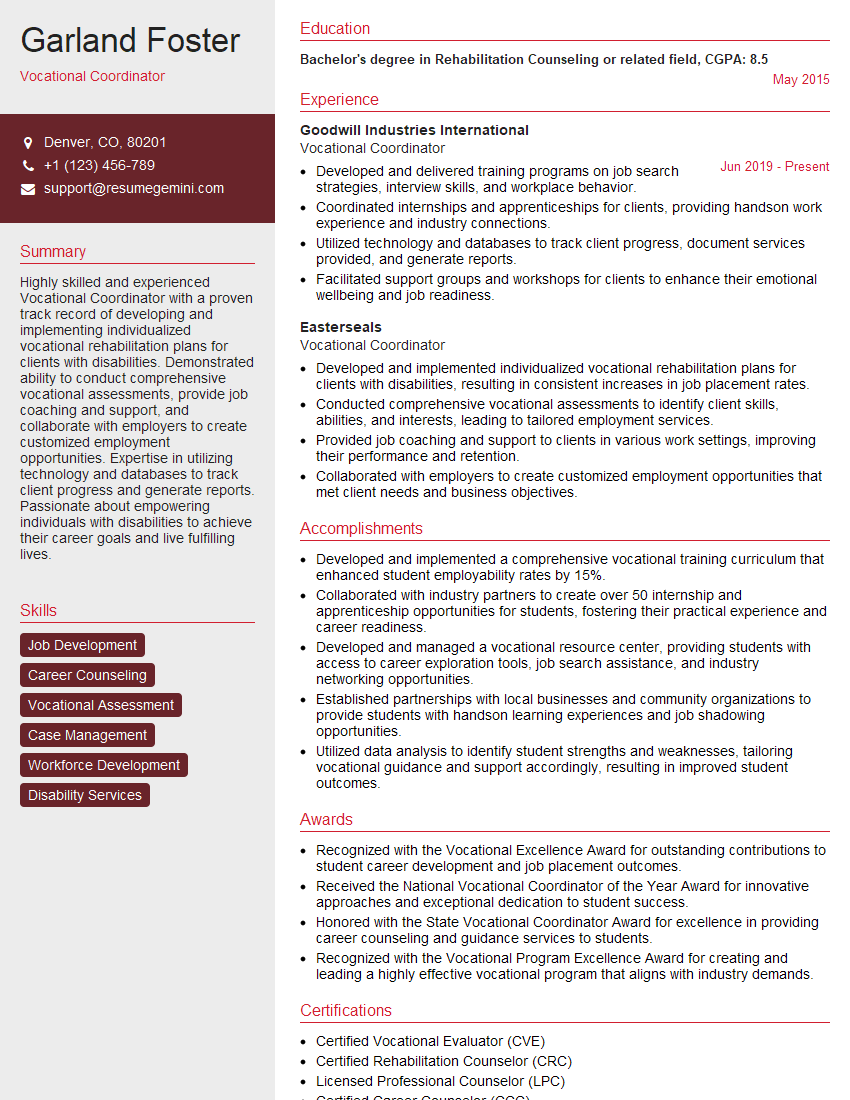
Are you gearing up for a career in Vocational Coordinator? Feeling nervous about the interview questions that might come your way? Don’t worry, you’re in the right place. In this blog post, we’ll dive deep into the most common interview questions for Vocational Coordinator and provide you with expert-backed answers. We’ll also explore the key responsibilities of this role so you can tailor your responses to showcase your perfect fit.
Acing the interview is crucial, but landing one requires a compelling resume that gets you noticed. Crafting a professional document that highlights your skills and experience is the first step toward interview success. ResumeGemini can help you build a standout resume that gets you called in for that dream job.






Essential Interview Questions For Vocational Coordinator
1. Describe your understanding of the role of a Vocational Coordinator?
A Vocational Coordinator plays a crucial role in helping individuals explore their career options and prepare for successful employment. The responsibilities of a Vocational Coordinator typically include:
- Assessing client needs and interests through interviews and evaluations
- Developing individualized vocational plans tailored to each client’s unique goals
2. How do you stay abreast of current trends in the job market and emerging industries?
Networking and Industry Involvement
- Attend industry conferences and workshops to connect with professionals and learn about new developments
- Maintain relationships with local businesses and organizations to gain insights into job opportunities and hiring trends
Research and Data Analysis
- Review industry publications, reports, and labor market data to stay informed about economic conditions and job growth projections
- Conduct research on specific occupations and industries to identify emerging trends and skills in demand
3. Can you elaborate on your experience in developing and implementing individualized vocational plans?
In my previous role as a Vocational Coordinator at XYZ Organization, I was responsible for developing and implementing individualized vocational plans for clients with diverse needs. My approach involved the following steps:
- Conducting thorough intake assessments to gather information about client interests, skills, and career goals
- Collaborating with clients to identify their strengths and areas for development
- Researching and exploring suitable career options and training programs
- Developing detailed vocational plans that outlined specific goals, objectives, and timelines
- Monitoring client progress and making necessary adjustments to the plan to ensure successful outcomes
4. How do you collaborate with other professionals to support clients’ vocational goals?
Collaboration is essential in providing comprehensive support to clients. I have experience working closely with the following professionals:
- Career Counselors to provide guidance on career exploration and decision-making
- Educators and Training Providers to identify and enroll clients in appropriate training programs
- Social Workers and Case Managers to address clients’ social and emotional needs that may impact their vocational success
- Employers and Business Partners to secure job placements and internships
5. Can you provide an example of a successful vocational plan that you implemented?
In my previous role, I worked with a client named John, who had a strong interest in the construction industry but lacked the necessary skills and qualifications. Through our collaboration, we developed a vocational plan that included the following components:
- Enrolling John in a pre-apprenticeship program to gain foundational knowledge and skills
- Connecting John with a local construction company for a paid internship to apply his skills in a real-world setting
- Providing John with ongoing support and guidance to help him navigate the challenges of the program and internship
As a result of this plan, John successfully completed the pre-apprenticeship program, excelled in his internship, and was offered a full-time position as a construction apprentice.
6. How do you assess client progress and ensure that they are meeting their vocational goals?
Assessing client progress is crucial to ensure that they are on track towards achieving their vocational goals. I typically employ the following methods:
- Conducting regular progress check-ins to review client accomplishments and identify areas for improvement
- Administering standardized assessments to measure client skills and knowledge
- Seeking feedback from employers, training providers, and other professionals involved in the client’s vocational journey
- Analyzing client data to track progress over time and make data-driven decisions
7. How do you handle challenging situations or setbacks that clients may encounter?
It is inevitable that clients may face challenges or setbacks in their vocational journeys. In such situations, I adopt the following approach:
- Acknowledge the client’s concerns and provide emotional support
- Collaborate with the client to identify the root causes of the challenge or setback
- Explore alternative solutions and strategies to overcome the obstacles
- Provide resources and support to help the client develop coping mechanisms and resilience
- Adjust the vocational plan as needed to account for unforeseen circumstances
8. How do you promote diversity and inclusion in your work as a Vocational Coordinator?
Promoting diversity and inclusion is essential in ensuring that all clients have equal access to opportunities and support. I incorporate the following practices into my work:
- Providing culturally sensitive and bias-free services to clients from diverse backgrounds
- Outreaching to underserved communities to connect with potential clients who may not have access to traditional vocational services
- Collaborating with organizations that specialize in supporting individuals with disabilities or other barriers to employment
- Continuously educating myself about diversity and inclusion best practices
9. How do you stay motivated and passionate about your work as a Vocational Coordinator?
My passion for helping individuals achieve their vocational goals drives my motivation. I find fulfillment in witnessing the transformation that clients undergo as they gain skills, confidence, and independence. Additionally, I am inspired by the resilience and determination that my clients demonstrate in overcoming challenges.
10. What are your strengths and weaknesses as a Vocational Coordinator?
My strengths as a Vocational Coordinator include my ability to build rapport with clients, assess their needs effectively, and develop individualized plans that meet their unique goals. I am also a strong communicator, collaborator, and advocate for my clients. As for areas for improvement, I am always seeking opportunities to enhance my knowledge of emerging trends in the job market and expand my network of professional contacts.
Interviewers often ask about specific skills and experiences. With ResumeGemini‘s customizable templates, you can tailor your resume to showcase the skills most relevant to the position, making a powerful first impression. Also check out Resume Template specially tailored for Vocational Coordinator.
Career Expert Tips:
- Ace those interviews! Prepare effectively by reviewing the Top 50 Most Common Interview Questions on ResumeGemini.
- Navigate your job search with confidence! Explore a wide range of Career Tips on ResumeGemini. Learn about common challenges and recommendations to overcome them.
- Craft the perfect resume! Master the Art of Resume Writing with ResumeGemini’s guide. Showcase your unique qualifications and achievements effectively.
- Great Savings With New Year Deals and Discounts! In 2025, boost your job search and build your dream resume with ResumeGemini’s ATS optimized templates.
Researching the company and tailoring your answers is essential. Once you have a clear understanding of the Vocational Coordinator‘s requirements, you can use ResumeGemini to adjust your resume to perfectly match the job description.
Key Job Responsibilities
Vocational Coordinators, also known as Career Counselors, guide individuals to make informed career decisions and successfully transition into the workforce. Their key responsibilities include:
1. Career Exploration and Planning
Vocational Coordinators assist individuals in exploring their career interests, skills, and values. They conduct assessments, provide career information, and help clients identify suitable career paths.
- Conduct and interpret career assessments
- Provide information on job markets and career trends
2. Job Search Assistance
Vocational Coordinators empower individuals with job search strategies. They provide guidance on resume writing, interview skills, and networking techniques.
- Assist in developing effective resumes and cover letters
- Prepare clients for job interviews and practice mock interviews
3. Job Placement and Follow-up
Vocational Coordinators facilitate job placement by connecting clients with potential employers. They provide guidance on job offers and assist individuals in negotiating salaries and benefits.
- Establish relationships with employers and explore job openings
- Refer clients to job opportunities and assist in the hiring process
4. Support and Advocacy
Vocational Coordinators provide emotional support and guidance throughout the career development process. They advocate for clients’ rights and ensure they have access to necessary resources.
- Provide support and encouragement during the job search process
- Liaise with other professionals, such as social workers and educators
Interview Tips
To ace your Vocational Coordinator interview, consider the following tips:
1. Research the Organization and Role
Demonstrate your enthusiasm by researching the organization’s mission, values, and the specific responsibilities of the Vocational Coordinator role.
- Visit the organization’s website and social media pages.
- Review job descriptions and news articles related to the role.
2. Highlight Your Skills and Experience
Emphasize your relevant skills and experience, such as career counseling, job search assistance, and client support. Quantify your accomplishments and provide specific examples.
- Showcase your success in helping clients find jobs and advance their careers.
- Describe your ability to build strong relationships with employers and community partners.
3. Prepare for Common Interview Questions
Familiarize yourself with common interview questions for Vocational Coordinators. Practice your responses to questions about your career counseling approach, job placement strategies, and ethical considerations.
- Tell me about your experience in career counseling and how you help individuals achieve their vocational goals.
- Describe a time when you successfully placed a client in a meaningful job.
4. Dress Professionally and Arrive on Time
First impressions matter. Dress appropriately and arrive for your interview on time. Punctuality and professional attire demonstrate respect for the interviewer and the organization.
- Choose attire that is appropriate for an office setting.
- Allow ample time for travel and parking to ensure timely arrival.
5. Ask Informed Questions
Show your interest by asking thoughtful questions about the organization, the role, and the team you would be joining. This demonstrates your engagement and desire to learn more.
- Inquire about the organization’s commitment to career development and employee growth.
- Ask about the team dynamics and the support system available for Vocational Coordinators.
Next Step:
Armed with this knowledge, you’re now well-equipped to tackle the Vocational Coordinator interview with confidence. Remember, preparation is key. So, start crafting your resume, highlighting your relevant skills and experiences. Don’t be afraid to tailor your application to each specific job posting. With the right approach and a bit of practice, you’ll be well on your way to landing your dream job. Build your resume now from scratch or optimize your existing resume with ResumeGemini. Wish you luck in your career journey!