Are you gearing up for an interview for a Welder-Fitter position? Whether you’re a seasoned professional or just stepping into the role, understanding what’s expected can make all the difference. In this blog, we dive deep into the essential interview questions for Welder-Fitter and break down the key responsibilities of the role. By exploring these insights, you’ll gain a clearer picture of what employers are looking for and how you can stand out. Read on to equip yourself with the knowledge and confidence needed to ace your next interview and land your dream job!
Acing the interview is crucial, but landing one requires a compelling resume that gets you noticed. Crafting a professional document that highlights your skills and experience is the first step toward interview success. ResumeGemini can help you build a standout resume that gets you called in for that dream job.






Essential Interview Questions For Welder-Fitter
1. Describe the different welding processes you are familiar with and their applications.
- Shielded Metal Arc Welding (SMAW): Used for welding carbon steel and low-alloy steels in various thicknesses and applications. It is commonly known as stick welding.
- Gas Metal Arc Welding (GMAW): Also known as Metal Inert Gas (MIG) welding, it is used for welding thin metals and is commonly used in automotive and manufacturing industries.
- Gas Tungsten Arc Welding (GTAW): Also known as Tungsten Inert Gas (TIG) welding, it is used for welding stainless steel, aluminum, and other non-ferrous metals, providing high-quality welds.
- Flux-Cored Arc Welding (FCAW): Similar to MIG welding, it uses a flux-filled wire as the electrode, producing welds with less spatter and higher deposition rates.
- Submerged Arc Welding (SAW): Used for welding heavy plates and pipes, it involves a continuous feed of granular flux over the weld area, protecting the weld from the atmosphere and producing high-quality welds.
2. Explain the factors that affect the quality of a welded joint.
Material Properties:
- Base metal thickness and composition
- Filler metal composition and properties
Welding Parameters:
- Welding process and equipment
- Welding speed and heat input
- Joint design and fit-up
Environmental Conditions:
- Temperature and humidity
- Wind and shielding gas
Operator Skill:
- Experience and training
- Proper welding technique
3. What are the different types of welding defects and how can they be prevented?
- Porosity: Gas bubbles trapped in the weld metal, caused by moisture or impurities. Prevention: Ensure clean base metal, dry shielding gas, and proper welding technique.
- Lack of Fusion: Incomplete joining of base metals, caused by insufficient heat input or poor joint fit-up. Prevention: Increase welding heat, prepare joints properly, and select appropriate welding process.
- Undercut: Grooves formed along the edges of the weld, caused by excessive heat input or improper welding angle. Prevention: Reduce heat input, maintain proper welding speed, and use the correct torch angle.
- Cracking: Breaks in the weld metal or base metal, caused by excessive stress, lack of ductility, or improper preheating. Prevention: Use proper welding procedures, preheat the base metal when necessary, and reduce stress on the weld.
- Distortion: Warping or bending of the base metal due to welding heat. Prevention: Use proper fixturing, sequence welding to minimize heat buildup, and apply countermeasures such as peening or shrinking.
4. How do you measure and interpret weld quality?
- Visual Inspection: Examination of the weld surface for defects, proper profile, and adherence to specifications.
- Non-Destructive Testing (NDT): Techniques such as radiography, ultrasonic testing, and magnetic particle inspection to detect internal defects.
- Destructive Testing: Mechanical testing of weld specimens to determine strength, ductility, and other properties.
- Weld Standards and Codes: Comparing welds to established standards and codes to ensure compliance with required quality levels.
5. Describe the importance of preheating and post-heating in welding.
Preheating:
- Reduces the risk of cracking in hardenable steels and thick sections.
- Improves weldability by reducing the temperature gradient between the weld and base metal.
- Allows for slower cooling rates, preventing the formation of brittle martensite.
Post-heating:
- Stress relieves the weld and base metal, reducing the risk of distortion and cracking.
- Improves toughness and ductility of the weld by tempering the hardened weld metal.
- Accelerates the aging process in precipitation-hardening alloys, enhancing the material’s strength.
6. What safety precautions should be taken when welding?
- Wear appropriate personal protective equipment (PPE), including protective clothing, gloves, eye protection, and respiratory protection.
- Ensure proper ventilation to avoid inhalation of fumes.
- Handle and store welding consumables and equipment safely.
- Follow established safety protocols and procedures.
- Inspect equipment regularly and maintain it in good condition.
7. How do you stay updated with the latest advancements and best practices in welding?
- Attend industry conferences, workshops, and training programs.
- Read technical publications and research articles.
- Obtain industry certifications and qualifications.
- Network with other professionals and share knowledge.
- Utilize online resources and manufacturer technical support.
8. Describe your experience in welding different types of materials.
- Carbon Steel: Emphasize your experience in welding various thicknesses and grades of carbon steel, using appropriate welding processes and techniques.
- Stainless Steel: Highlight your knowledge of different stainless steel grades, their welding characteristics, and the use of appropriate filler metals and shielding gases.
- Aluminum: Discuss your experience in welding aluminum alloys, focusing on proper surface preparation, joint design, and shielding gas selection.
- Exotic Metals: If applicable, mention your experience in welding exotic metals such as titanium, zirconium, or inconel, highlighting the specialized techniques and precautions involved.
9. How do you handle complex welding projects that require precision and accuracy?
- Emphasize your ability to analyze welding specifications and drawings.
- Describe your approach to planning and preparing for complex welds, including joint preparation, fixturing, and welding sequence.
- Explain how you ensure precision and accuracy through the use of specialized tools and techniques, such as precision measuring devices, alignment fixtures, and quality control procedures.
10. Describe a challenging welding project you have worked on and how you overcame the challenges.
- Provide a specific example of a challenging welding project that required problem-solving and technical expertise.
- Explain the challenges you faced, including material thickness, joint configuration, or environmental conditions.
- Describe the steps you took to research, analyze, and develop a solution.
- Highlight the techniques and tools you employed to overcome the challenges and achieve a successful outcome.
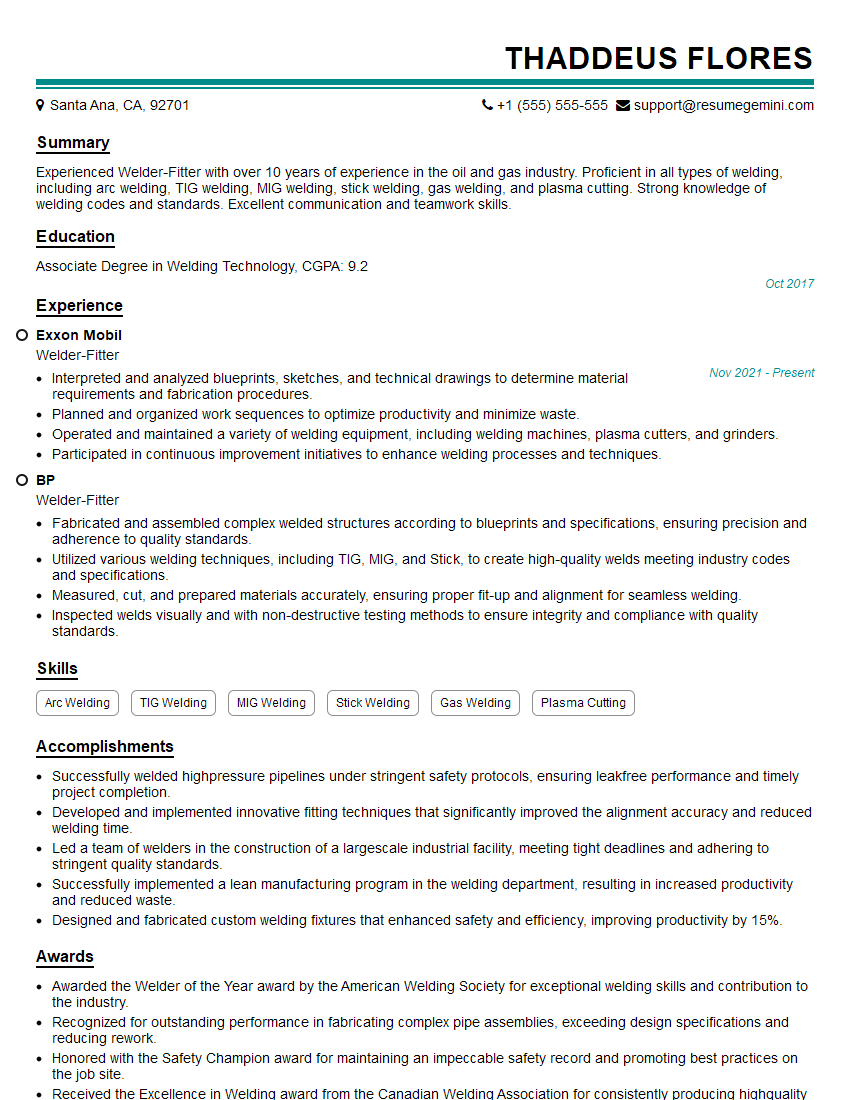
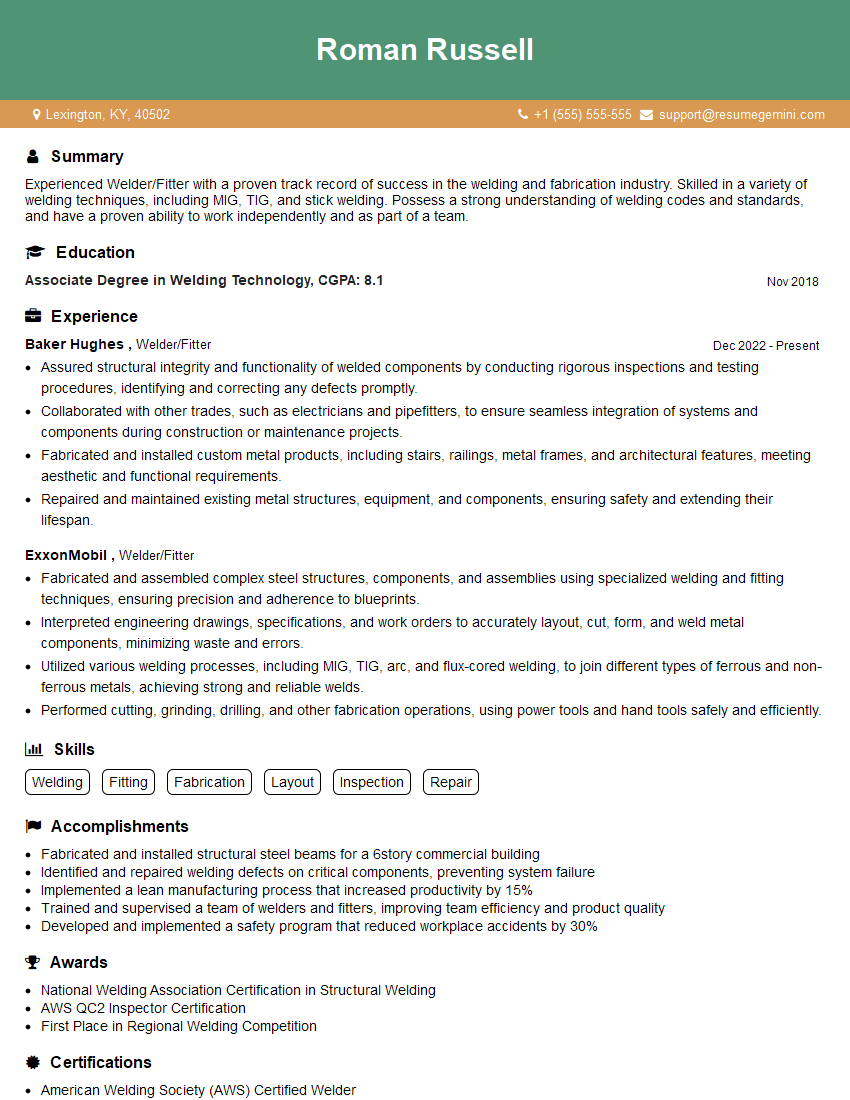
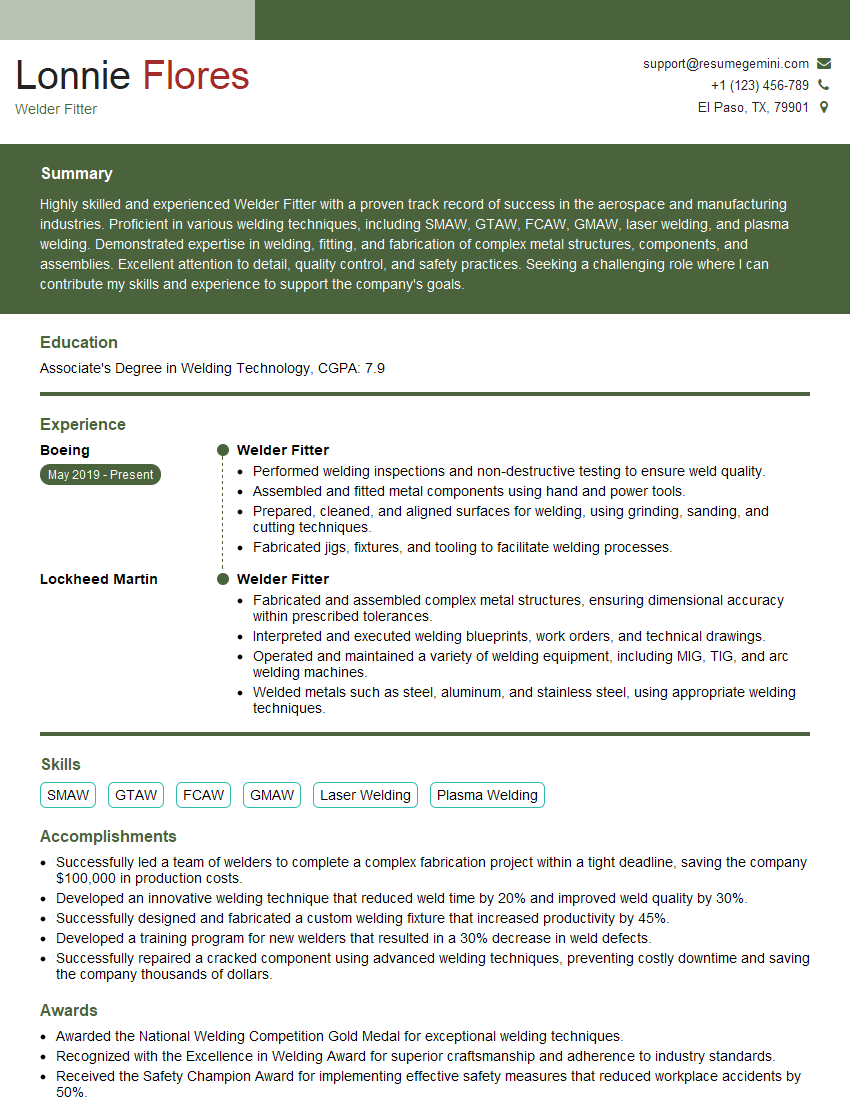
Interviewers often ask about specific skills and experiences. With ResumeGemini‘s customizable templates, you can tailor your resume to showcase the skills most relevant to the position, making a powerful first impression. Also check out Resume Template specially tailored for Welder-Fitter.
Career Expert Tips:
- Ace those interviews! Prepare effectively by reviewing the Top 50 Most Common Interview Questions on ResumeGemini.
- Navigate your job search with confidence! Explore a wide range of Career Tips on ResumeGemini. Learn about common challenges and recommendations to overcome them.
- Craft the perfect resume! Master the Art of Resume Writing with ResumeGemini’s guide. Showcase your unique qualifications and achievements effectively.
- Great Savings With New Year Deals and Discounts! In 2025, boost your job search and build your dream resume with ResumeGemini’s ATS optimized templates.
Researching the company and tailoring your answers is essential. Once you have a clear understanding of the Welder-Fitter‘s requirements, you can use ResumeGemini to adjust your resume to perfectly match the job description.
Key Job Responsibilities
As a Welder-Fitter, you will be responsible for a wide range of duties, including:
1. Fabrication and Welding
You will be responsible for fabricating and welding metal components and structures according to blueprints and specifications.
- Lay out and mark materials
- Cut, shape, and fit metal components
- Weld metal components together using various welding techniques
2. Equipment Operation and Maintenance
You will be responsible for operating and maintaining welding and cutting equipment, as well as other related tools and machinery.
- Set up and operate welding and cutting equipment
- Maintain and repair welding and cutting equipment
- Inspect welding and cutting equipment for safety and performance
3. Quality Control and Inspection
You will be responsible for ensuring the quality of welded components and structures by conducting inspections and tests.
- Inspect welded components and structures for defects
- Perform non-destructive testing (NDT) on welded components and structures
- Document and report inspection and test results
4. Safety and Compliance
You will be responsible for adhering to all safety regulations and procedures, and for ensuring that your work complies with industry standards.
- Follow all safety regulations and procedures
- Wear appropriate personal protective equipment (PPE)
- Keep work area clean and organized
Interview Tips
Here are some tips to help you ace your Welder-Fitter interview:
1. Research the Company and Position
Before your interview, take some time to research the company and the specific position you are applying for. This will help you to understand the company’s culture and values, and to tailor your answers to the interviewer’s questions.
2. Prepare Your Answers to Common Interview Questions
There are a number of common interview questions that you are likely to be asked, such as “Tell me about yourself,” “Why are you interested in this position?” and “What are your strengths and weaknesses?” Prepare your answers to these questions in advance so that you can deliver them confidently and concisely.
3. Highlight Your Skills and Experience
In your interview, be sure to highlight your skills and experience as a Welder-Fitter. Use specific examples to demonstrate your abilities, and be sure to quantify your accomplishments whenever possible.
4. Be Enthuastic and Professional
First impressions matter, so be sure to be enthusiastic and professional in your interview. Dress appropriately, arrive on time, and make eye contact with the interviewer. Throughout the interview, maintain a positive attitude and demonstrate your interest in the position.
Next Step:
Armed with this knowledge, you’re now well-equipped to tackle the Welder-Fitter interview with confidence. Remember, preparation is key. So, start crafting your resume, highlighting your relevant skills and experiences. Don’t be afraid to tailor your application to each specific job posting. With the right approach and a bit of practice, you’ll be well on your way to landing your dream job. Build your resume now from scratch or optimize your existing resume with ResumeGemini. Wish you luck in your career journey!