Are you a seasoned Antique Finisher seeking a new career path? Discover our professionally built Antique Finisher Resume Template. This time-saving tool provides a solid foundation for your job search. Simply click “Edit Resume” to customize it with your unique experiences and achievements. Customize fonts and colors to match your personal style and increase your chances of landing your dream job. Explore more Resume Templates for additional options.






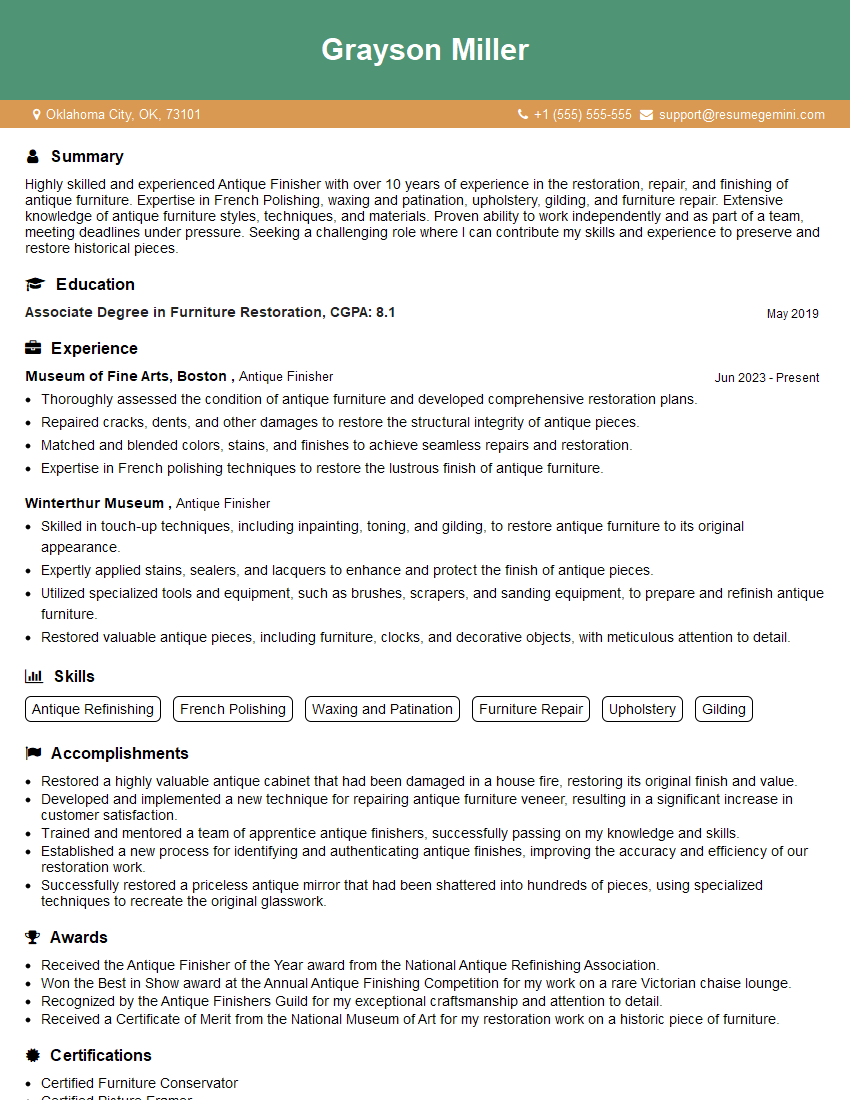
Grayson Miller
Antique Finisher
Summary
Highly skilled and experienced Antique Finisher with over 10 years of experience in the restoration, repair, and finishing of antique furniture. Expertise in French Polishing, waxing and patination, upholstery, gilding, and furniture repair. Extensive knowledge of antique furniture styles, techniques, and materials. Proven ability to work independently and as part of a team, meeting deadlines under pressure. Seeking a challenging role where I can contribute my skills and experience to preserve and restore historical pieces.
Education
Associate Degree in Furniture Restoration
May 2019
Skills
- Antique Refinishing
- French Polishing
- Waxing and Patination
- Furniture Repair
- Upholstery
- Gilding
Work Experience
Antique Finisher
- Thoroughly assessed the condition of antique furniture and developed comprehensive restoration plans.
- Repaired cracks, dents, and other damages to restore the structural integrity of antique pieces.
- Matched and blended colors, stains, and finishes to achieve seamless repairs and restoration.
- Expertise in French polishing techniques to restore the lustrous finish of antique furniture.
Antique Finisher
- Skilled in touch-up techniques, including inpainting, toning, and gilding, to restore antique furniture to its original appearance.
- Expertly applied stains, sealers, and lacquers to enhance and protect the finish of antique pieces.
- Utilized specialized tools and equipment, such as brushes, scrapers, and sanding equipment, to prepare and refinish antique furniture.
- Restored valuable antique pieces, including furniture, clocks, and decorative objects, with meticulous attention to detail.
Accomplishments
- Restored a highly valuable antique cabinet that had been damaged in a house fire, restoring its original finish and value.
- Developed and implemented a new technique for repairing antique furniture veneer, resulting in a significant increase in customer satisfaction.
- Trained and mentored a team of apprentice antique finishers, successfully passing on my knowledge and skills.
- Established a new process for identifying and authenticating antique finishes, improving the accuracy and efficiency of our restoration work.
- Successfully restored a priceless antique mirror that had been shattered into hundreds of pieces, using specialized techniques to recreate the original glasswork.
Awards
- Received the Antique Finisher of the Year award from the National Antique Refinishing Association.
- Won the Best in Show award at the Annual Antique Finishing Competition for my work on a rare Victorian chaise lounge.
- Recognized by the Antique Finishers Guild for my exceptional craftsmanship and attention to detail.
- Received a Certificate of Merit from the National Museum of Art for my restoration work on a historic piece of furniture.
Certificates
- Certified Furniture Conservator
- Certified Picture Framer
- Certified Upholsterer
- Certified Gilder
Career Expert Tips:
- Select the ideal resume template to showcase your professional experience effectively.
- Master the art of resume writing to highlight your unique qualifications and achievements.
- Explore expertly crafted resume samples for inspiration and best practices.
- Build your best resume for free this new year with ResumeGemini. Enjoy exclusive discounts on ATS optimized resume templates.
How To Write Resume For Antique Finisher
- Highlight your experience restoring and refinishing antique furniture using traditional techniques.
- Showcase your knowledge of different furniture styles, techniques, and materials.
- Emphasize your ability to work independently and as part of a team.
- Quantify your accomplishments whenever possible, for example, the number of pieces restored or the value of the collection you worked on.
Essential Experience Highlights for a Strong Antique Finisher Resume
- Restore and refinish antique furniture using traditional techniques such as French Polishing, waxing, and patination.
- Repair and fix antique furniture, including structural repairs, upholstery, and hardware replacement.
- Assess the condition of antique furniture and determine the appropriate restoration methods.
- Document and photograph the restoration process for insurance and provenance purposes.
- Maintain a clean and organized work area, ensuring the safety of antiques and tools.
- Work collaboratively with conservators, curators, and other professionals to ensure the integrity of antique furniture collections.
- Stay up-to-date on the latest restoration techniques and materials.
Frequently Asked Questions (FAQ’s) For Antique Finisher
What are the most important skills for an Antique Finisher?
The most important skills for an Antique Finisher include: French Polishing, waxing and patination, furniture repair, upholstery, gilding, and knowledge of antique furniture styles, techniques, and materials.
What is the difference between refinishing and restoring antique furniture?
Refinishing antique furniture involves changing the surface appearance of the piece, while restoration involves repairing and preserving the original materials and construction of the piece.
What are the most common types of antique furniture?
The most common types of antique furniture include: chairs, tables, chests, desks, and beds.
What is the best way to care for antique furniture?
The best way to care for antique furniture is to keep it clean and dry, and to avoid exposure to extreme temperatures or humidity.
How can I find an experienced Antique Finisher?
You can find an experienced Antique Finisher by contacting local museums, historical societies, or antique dealers.