Are you a seasoned Sacristan seeking a new career path? Discover our professionally built Sacristan Resume Template. This time-saving tool provides a solid foundation for your job search. Simply click “Edit Resume” to customize it with your unique experiences and achievements. Customize fonts and colors to match your personal style and increase your chances of landing your dream job. Explore more Resume Templates for additional options.






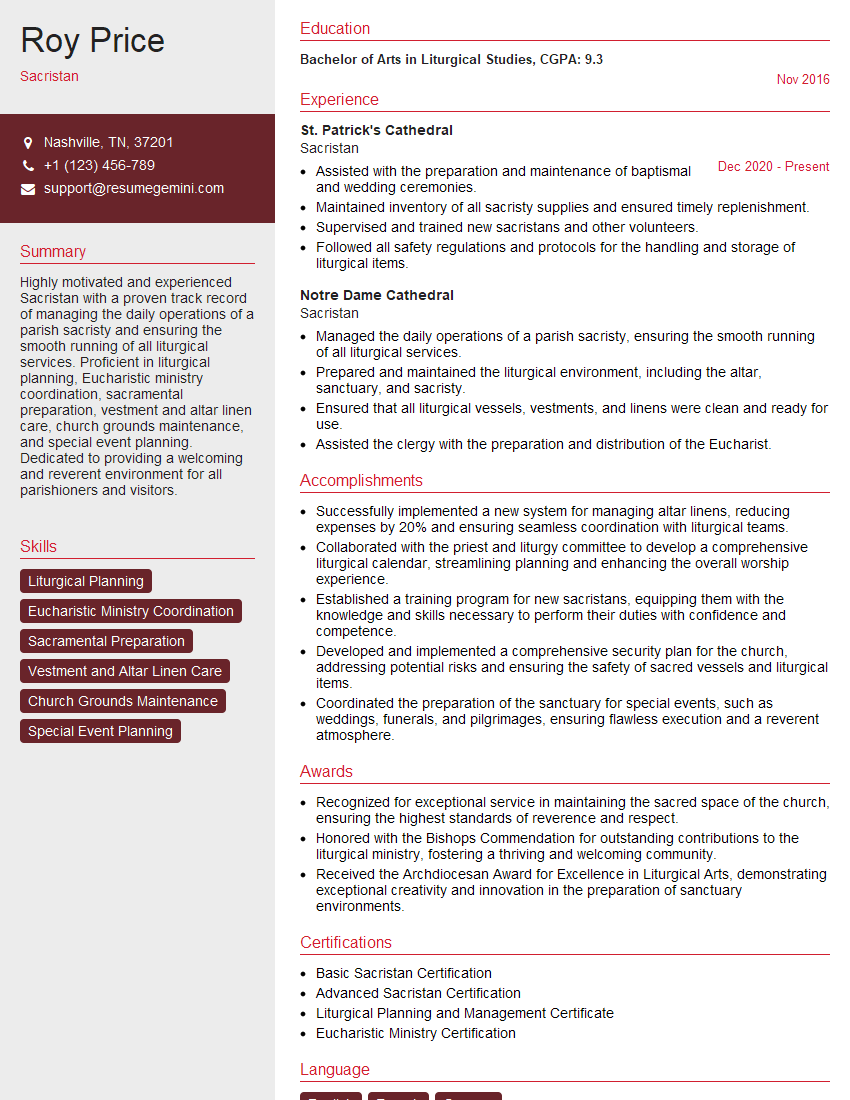
Roy Price
Sacristan
Summary
Highly motivated and experienced Sacristan with a proven track record of managing the daily operations of a parish sacristy and ensuring the smooth running of all liturgical services. Proficient in liturgical planning, Eucharistic ministry coordination, sacramental preparation, vestment and altar linen care, church grounds maintenance, and special event planning. Dedicated to providing a welcoming and reverent environment for all parishioners and visitors.
Education
Bachelor of Arts in Liturgical Studies
November 2016
Skills
- Liturgical Planning
- Eucharistic Ministry Coordination
- Sacramental Preparation
- Vestment and Altar Linen Care
- Church Grounds Maintenance
- Special Event Planning
Work Experience
Sacristan
- Assisted with the preparation and maintenance of baptismal and wedding ceremonies.
- Maintained inventory of all sacristy supplies and ensured timely replenishment.
- Supervised and trained new sacristans and other volunteers.
- Followed all safety regulations and protocols for the handling and storage of liturgical items.
Sacristan
- Managed the daily operations of a parish sacristy, ensuring the smooth running of all liturgical services.
- Prepared and maintained the liturgical environment, including the altar, sanctuary, and sacristy.
- Ensured that all liturgical vessels, vestments, and linens were clean and ready for use.
- Assisted the clergy with the preparation and distribution of the Eucharist.
Accomplishments
- Successfully implemented a new system for managing altar linens, reducing expenses by 20% and ensuring seamless coordination with liturgical teams.
- Collaborated with the priest and liturgy committee to develop a comprehensive liturgical calendar, streamlining planning and enhancing the overall worship experience.
- Established a training program for new sacristans, equipping them with the knowledge and skills necessary to perform their duties with confidence and competence.
- Developed and implemented a comprehensive security plan for the church, addressing potential risks and ensuring the safety of sacred vessels and liturgical items.
- Coordinated the preparation of the sanctuary for special events, such as weddings, funerals, and pilgrimages, ensuring flawless execution and a reverent atmosphere.
Awards
- Recognized for exceptional service in maintaining the sacred space of the church, ensuring the highest standards of reverence and respect.
- Honored with the Bishops Commendation for outstanding contributions to the liturgical ministry, fostering a thriving and welcoming community.
- Received the Archdiocesan Award for Excellence in Liturgical Arts, demonstrating exceptional creativity and innovation in the preparation of sanctuary environments.
Certificates
- Basic Sacristan Certification
- Advanced Sacristan Certification
- Liturgical Planning and Management Certificate
- Eucharistic Ministry Certification
Career Expert Tips:
- Select the ideal resume template to showcase your professional experience effectively.
- Master the art of resume writing to highlight your unique qualifications and achievements.
- Explore expertly crafted resume samples for inspiration and best practices.
- Build your best resume for free this new year with ResumeGemini. Enjoy exclusive discounts on ATS optimized resume templates.
How To Write Resume For Sacristan
- Highlight your experience in liturgical planning and coordination.
- Emphasize your ability to maintain a clean and reverent environment.
- Showcase your skills in working with clergy and other volunteers.
- Demonstrate your commitment to providing a welcoming and supportive atmosphere for all parishioners.
- Proofread your resume carefully for any errors.
Essential Experience Highlights for a Strong Sacristan Resume
- Managed the daily operations of a parish sacristy, ensuring the smooth running of all liturgical services.
- Prepared and maintained the liturgical environment, including the altar, sanctuary, and sacristy.
- Ensured that all liturgical vessels, vestments, and linens were clean and ready for use.
- Assisted the clergy with the preparation and distribution of the Eucharist.
- Assisted with the preparation and maintenance of baptismal and wedding ceremonies.
- Maintained inventory of all sacristy supplies and ensured timely replenishment.
- Supervised and trained new sacristans and other volunteers.
Frequently Asked Questions (FAQ’s) For Sacristan
What are the key responsibilities of a Sacristan?
The key responsibilities of a Sacristan include managing the daily operations of a parish sacristy, preparing and maintaining the liturgical environment, ensuring that all liturgical vessels and linens are clean and ready for use, assisting the clergy with the preparation and distribution of the Eucharist, and assisting with the preparation and maintenance of baptismal and wedding ceremonies.
What are the qualifications required to become a Sacristan?
The qualifications required to become a Sacristan typically include a high school diploma or equivalent, experience in a liturgical setting, and a strong understanding of Catholic liturgy and traditions.
Where can I find job opportunities for Sacristans?
Job opportunities for Sacristans can be found through diocesan websites, Catholic newspapers, and online job boards.
What is the salary range for Sacristans?
The salary range for Sacristans varies depending on experience, location, and the size of the parish or institution. According to Salary.com, the average salary for Sacristans in the United States is between $30,000 and $50,000 per year.
What are the benefits of being a Sacristan?
The benefits of being a Sacristan include the opportunity to serve your parish community, contribute to the beauty of the liturgy, and grow in your faith.
How can I become a better Sacristan?
To become a better Sacristan, you can attend workshops and training programs, read books and articles on liturgy, and practice your skills regularly. You can also seek feedback from your pastor or other members of the clergy.
What are the challenges of being a Sacristan?
The challenges of being a Sacristan can include working long hours, dealing with difficult people, and ensuring that everything is perfect for each liturgy. However, the rewards of serving your parish community and contributing to the beauty of the liturgy make it a worthwhile ministry.