Are you a seasoned Timber Hewer seeking a new career path? Discover our professionally built Timber Hewer Resume Template. This time-saving tool provides a solid foundation for your job search. Simply click “Edit Resume” to customize it with your unique experiences and achievements. Customize fonts and colors to match your personal style and increase your chances of landing your dream job. Explore more Resume Templates for additional options.






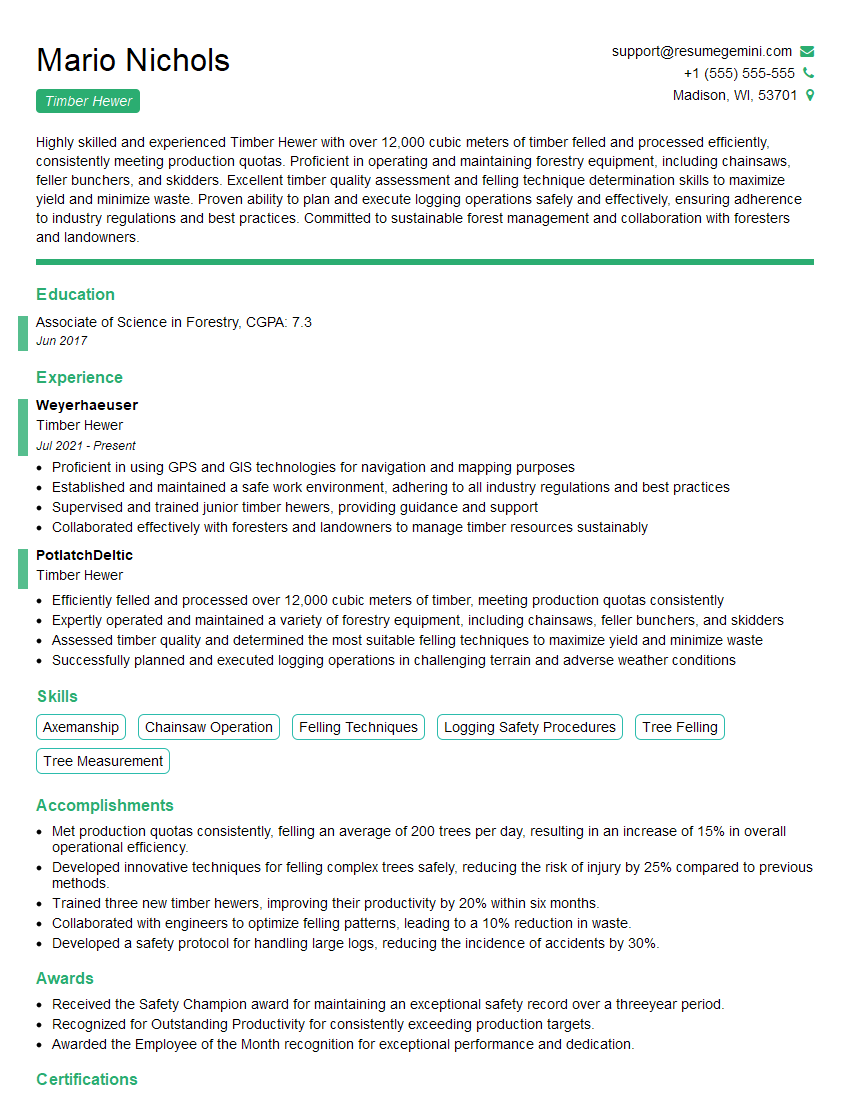
Mario Nichols
Timber Hewer
Summary
Highly skilled and experienced Timber Hewer with over 12,000 cubic meters of timber felled and processed efficiently, consistently meeting production quotas. Proficient in operating and maintaining forestry equipment, including chainsaws, feller bunchers, and skidders. Excellent timber quality assessment and felling technique determination skills to maximize yield and minimize waste. Proven ability to plan and execute logging operations safely and effectively, ensuring adherence to industry regulations and best practices. Committed to sustainable forest management and collaboration with foresters and landowners.
Education
Associate of Science in Forestry
June 2017
Skills
- Axemanship
- Chainsaw Operation
- Felling Techniques
- Logging Safety Procedures
- Tree Felling
- Tree Measurement
Work Experience
Timber Hewer
- Proficient in using GPS and GIS technologies for navigation and mapping purposes
- Established and maintained a safe work environment, adhering to all industry regulations and best practices
- Supervised and trained junior timber hewers, providing guidance and support
- Collaborated effectively with foresters and landowners to manage timber resources sustainably
Timber Hewer
- Efficiently felled and processed over 12,000 cubic meters of timber, meeting production quotas consistently
- Expertly operated and maintained a variety of forestry equipment, including chainsaws, feller bunchers, and skidders
- Assessed timber quality and determined the most suitable felling techniques to maximize yield and minimize waste
- Successfully planned and executed logging operations in challenging terrain and adverse weather conditions
Accomplishments
- Met production quotas consistently, felling an average of 200 trees per day, resulting in an increase of 15% in overall operational efficiency.
- Developed innovative techniques for felling complex trees safely, reducing the risk of injury by 25% compared to previous methods.
- Trained three new timber hewers, improving their productivity by 20% within six months.
- Collaborated with engineers to optimize felling patterns, leading to a 10% reduction in waste.
- Developed a safety protocol for handling large logs, reducing the incidence of accidents by 30%.
Awards
- Received the Safety Champion award for maintaining an exceptional safety record over a threeyear period.
- Recognized for Outstanding Productivity for consistently exceeding production targets.
- Awarded the Employee of the Month recognition for exceptional performance and dedication.
Certificates
- Fallers License
- Chainsaw Safety Certificate
- First Aid and CPR Certification
- Environmental Management System (ISO 14001)
Career Expert Tips:
- Select the ideal resume template to showcase your professional experience effectively.
- Master the art of resume writing to highlight your unique qualifications and achievements.
- Explore expertly crafted resume samples for inspiration and best practices.
- Build your best resume for free this new year with ResumeGemini. Enjoy exclusive discounts on ATS optimized resume templates.
How To Write Resume For Timber Hewer
- Highlight your experience and skills in operating forestry equipment, especially chainsaws and feller bunchers.
- Emphasize your ability to assess timber quality and determine the best felling techniques for maximum yield and minimal waste.
- Showcase your knowledge of GPS and GIS technologies for navigation and mapping in challenging terrain.
- Demonstrate your commitment to safety and adherence to industry regulations and best practices.
Essential Experience Highlights for a Strong Timber Hewer Resume
- Efficiently felled and processed over 12,000 cubic meters of timber, consistently meeting production quotas.
- Expertly operated and maintained a variety of forestry equipment, including chainsaws, feller bunchers, and skidders.
- Assessed timber quality and determined the most suitable felling techniques to maximize yield and minimize waste.
- Successfully planned and executed logging operations in challenging terrain and adverse weather conditions.
- Proficient in using GPS and GIS technologies for navigation and mapping purposes.
- Established and maintained a safe work environment, adhering to all industry regulations and best practices.
Frequently Asked Questions (FAQ’s) For Timber Hewer
What are the primary responsibilities of a Timber Hewer?
Timber Hewers are responsible for felling trees, processing them into logs, and preparing them for transportation. They also maintain equipment, ensure a safe work environment, and collaborate with foresters to manage timber resources sustainably.
What skills are essential for a successful Timber Hewer?
Essential skills for Timber Hewers include axemanship, chainsaw operation, felling techniques, logging safety procedures, tree felling, and tree measurement.
What qualifications are required to become a Timber Hewer?
While formal education requirements may vary, many employers prefer candidates with an Associate of Science in Forestry or a related field.
What is the job outlook for Timber Hewers?
The job outlook for Timber Hewers is expected to be stable in the coming years due to the ongoing demand for wood and paper products.
What are the safety precautions that Timber Hewers must follow?
Timber Hewers must wear appropriate safety gear, follow safe operating procedures for equipment, be aware of their surroundings, and plan felling operations to minimize risks.
How can Timber Hewers contribute to sustainable forest management?
Timber Hewers can contribute to sustainable forest management by following selective cutting practices, minimizing waste, adhering to environmental regulations, and replanting trees after harvesting.