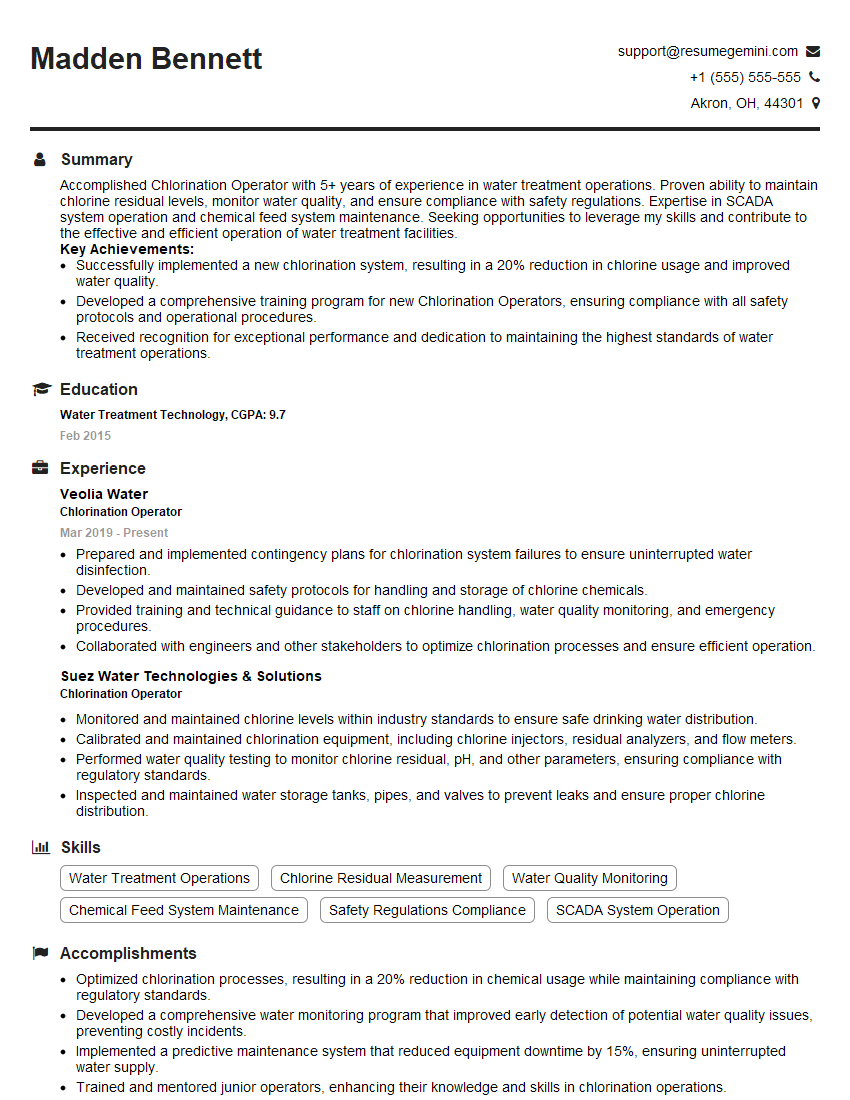
Are you gearing up for a career shift or aiming to ace your next interview? Look no further! We’ve curated a comprehensive guide to help you crack the interview for the coveted Chlorination Operator position. From understanding the key responsibilities to mastering the most commonly asked questions, this blog has you covered. So, buckle up and let’s embark on this journey together
Acing the interview is crucial, but landing one requires a compelling resume that gets you noticed. Crafting a professional document that highlights your skills and experience is the first step toward interview success. ResumeGemini can help you build a standout resume that gets you called in for that dream job.






Essential Interview Questions For Chlorination Operator
1. What are the key responsibilities of a Chlorination Operator?
- Monitoring and controlling the chlorination process to ensure disinfection of water
- Performing routine and preventive maintenance on chlorination equipment and systems
- Maintaining accurate records of chlorination operations and water quality
- Troubleshooting and resolving any issues related to the chlorination process
- Adhering to safety protocols and regulations related to chlorination
2. Describe the principles of chlorination and its role in water treatment.
Chemical Reaction
- Chlorination involves the addition of chlorine to water
- Chlorine reacts with water to form hypochlorous acid (HOCl), which is a strong disinfectant
Disinfection Mechanism
- HOCl penetrates the cell wall of microorganisms
- It oxidizes essential cell components, causing disruption of cell metabolism and ultimately leading to cell death
3. What are the different methods of chlorination?
- Gas Chlorination: Using chlorine gas as the source of chlorine
- Sodium Hypochlorite Chlorination: Using sodium hypochlorite solution as the source of chlorine
- Calcium Hypochlorite Chlorination: Using calcium hypochlorite tablets or granules as the source of chlorine
4. How do you determine the appropriate chlorine dosage for a water treatment system?
- Consider the source water quality (e.g., organic matter, turbidity)
- Determine the desired level of disinfection
- Calculate the chlorine demand of the water
- Factor in safety and regulatory requirements
- Monitor water quality and adjust the dosage as needed
5. What are the safety precautions to be taken when handling chlorine and chlorine compounds?
- Wear appropriate personal protective equipment (PPE) such as gloves, eye protection, and respirators
- Handle chlorine in well-ventilated areas
- Store chlorine and chlorine compounds securely in designated areas
- Be aware of potential hazards such as gas leaks and spills
- Follow emergency response protocols in case of accidents
6. Describe the process of troubleshooting and resolving common issues related to chlorination systems.
- Identify the problem (e.g., insufficient disinfection, chlorine leaks, equipment malfunction)
- Check chlorine levels and adjust dosage if necessary
- Inspect equipment for leaks, damage, or blockages
- Clean and calibrate sensors and instruments
- Consult with manufacturer or technical experts if needed
7. What are the regulatory requirements and standards that apply to chlorination in water treatment?
- Safe Drinking Water Act (SDWA): Sets maximum residual disinfectant levels (MRDLs) for chlorine
- Environmental Protection Agency (EPA) Regulations: Cover chlorine handling, storage, and disposal
- Occupational Safety and Health Administration (OSHA) Standards: Address worker safety and exposure limits for chlorine
- Local and state regulations: May have specific requirements for chlorination in water treatment systems
8. How do you ensure the accuracy and reliability of chlorine monitoring equipment?
- Regularly calibrate instruments using standard solutions
- Perform preventative maintenance on equipment to ensure proper functioning
- Participate in proficiency testing programs to verify accuracy
- Maintain records of calibration and maintenance activities
- Follow manufacturer’s instructions for operation and maintenance
9. How do you stay updated on the latest advancements and best practices in chlorination?
- Attend industry conferences and workshops
- Read technical journals and publications
- Participate in online forums and discussion groups
- Consult with experts and mentors in the field
- Pursue continuing education opportunities
10. What factors influence the effectiveness of chlorination in water treatment?
- Contact time: Adequate time for chlorine to react with microorganisms
- pH: Chlorine is more effective at lower pH levels
- Temperature: Higher temperatures increase the reaction rate of chlorine
- Organic matter: Can react with chlorine and reduce its effectiveness
- Suspended solids: Can shield microorganisms from chlorine
Interviewers often ask about specific skills and experiences. With ResumeGemini‘s customizable templates, you can tailor your resume to showcase the skills most relevant to the position, making a powerful first impression. Also check out Resume Template specially tailored for Chlorination Operator.
Career Expert Tips:
- Ace those interviews! Prepare effectively by reviewing the Top 50 Most Common Interview Questions on ResumeGemini.
- Navigate your job search with confidence! Explore a wide range of Career Tips on ResumeGemini. Learn about common challenges and recommendations to overcome them.
- Craft the perfect resume! Master the Art of Resume Writing with ResumeGemini’s guide. Showcase your unique qualifications and achievements effectively.
- Great Savings With New Year Deals and Discounts! In 2025, boost your job search and build your dream resume with ResumeGemini’s ATS optimized templates.
Researching the company and tailoring your answers is essential. Once you have a clear understanding of the Chlorination Operator‘s requirements, you can use ResumeGemini to adjust your resume to perfectly match the job description.
Key Job Responsibilities
A Chlorination Operator is a crucial member of a water treatment team, tasked with ensuring the safety and quality of water supplies. Their key responsibilities encompass:
1. Water Treatment and Chlorination
Operate and maintain chlorination systems to disinfect water and eliminate harmful microorganisms.
- Monitor chlorine levels and adjust dosages to meet regulatory standards.
- Conduct routine inspections and maintenance of chlorination equipment.
2. Water Quality Monitoring and Analysis
Monitor and analyze water quality parameters to ensure compliance with safety regulations.
- Collect and test water samples for chlorine residual, pH, and other parameters.
- Interpret results and take corrective actions to maintain water quality.
3. System Maintenance and Repairs
Maintain and repair chlorination systems and related equipment.
- Inspect and clean pumps, filters, and chlorinators.
- Perform preventive maintenance and repairs to ensure optimal system performance.
4. Safety and Compliance
Follow safety protocols and comply with all regulatory requirements related to water treatment and chlorination.
- Wear appropriate protective gear and observe safety guidelines.
- Maintain accurate records and report any incidents or non-compliance issues.
Interview Tips
Preparing thoroughly for an interview as a Chlorination Operator can significantly increase your chances of success. Here are some tips to guide you:
1. Research the Company and Position
Familiarize yourself with the organization’s values, mission, and the specific responsibilities of the Chlorination Operator role.
- Visit the company website and LinkedIn page.
- Read industry publications and news articles to stay updated on the latest trends in water treatment.
2. Highlight Your Technical Skills and Experience
Emphasize your technical knowledge and experience in water treatment, particularly in chlorination. Quantify your accomplishments and provide specific examples of your work.
- Discuss your experience in operating and maintaining chlorination systems.
- Share examples of how you have resolved water quality issues and ensured compliance with regulations.
3. Demonstrate Your Understanding of Safety Protocols
Safety is paramount in water treatment. Highlight your commitment to following safety protocols and your understanding of the potential hazards associated with chlorine handling.
- Explain your knowledge of proper safety gear and procedures.
- Discuss your experience in handling and storing chlorine safely.
4. Prepare Questions for the Interviewer
Asking thoughtful questions shows interest and engagement. Prepare questions related to the organization’s water treatment practices and their goals for the Chlorination Operator position.
- Inquire about the organization’s approach to ensuring water quality and meeting regulatory standards.
- Ask about opportunities for professional development and advancement within the company.
5. Dress Professionally and Arrive on Time
First impressions matter. Dress professionally and arrive at the interview on time to demonstrate your respect for the interviewer and the opportunity.
- Choose attire that is clean, ironed, and appropriate for an office setting.
- Arrive for your interview 10-15 minutes early to allow ample time for any unexpected delays.
Next Step:
Now that you’re armed with a solid understanding of what it takes to succeed as a Chlorination Operator, it’s time to turn that knowledge into action. Take a moment to revisit your resume, ensuring it highlights your relevant skills and experiences. Tailor it to reflect the insights you’ve gained from this blog and make it shine with your unique qualifications. Don’t wait for opportunities to come to you—start applying for Chlorination Operator positions today and take the first step towards your next career milestone. Your dream job is within reach, and with a polished resume and targeted applications, you’ll be well on your way to achieving your career goals! Build your resume now with ResumeGemini.