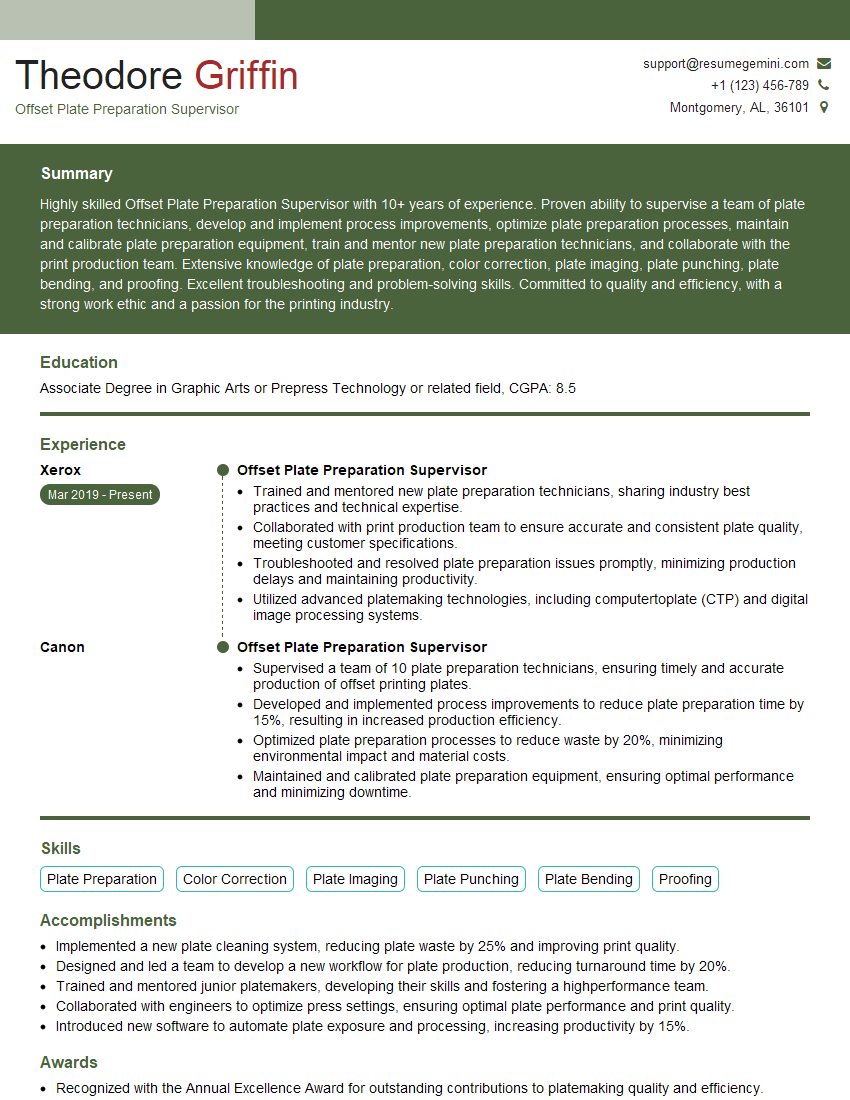
Are you gearing up for a career shift or aiming to ace your next interview? Look no further! We’ve curated a comprehensive guide to help you crack the interview for the coveted Offset Plate Preparation Supervisor position. From understanding the key responsibilities to mastering the most commonly asked questions, this blog has you covered. So, buckle up and let’s embark on this journey together.
Acing the interview is crucial, but landing one requires a compelling resume that gets you noticed. Crafting a professional document that highlights your skills and experience is the first step toward interview success. ResumeGemini can help you build a standout resume that gets you called in for that dream job.






Essential Interview Questions For Offset Plate Preparation Supervisor
1. How do you ensure the accuracy and consistency of plate preparation for different printing jobs?
To ensure accuracy and consistency in plate preparation, I follow a systematic approach that includes the following steps:
- Thorough review of job specifications: I carefully review the job specifications to understand the required print quality, size, and other technical details.
- Prepress file examination: I thoroughly examine the prepress files to check for any errors or inconsistencies that could affect plate quality.
- Plate exposure and processing: I meticulously expose the plates using standardized procedures and equipment to achieve consistent and high-quality results.
- Plate inspection and quality control: I conduct thorough inspections of the finished plates to ensure they meet the required specifications and identify any potential issues.
- Calibration and maintenance: I regularly calibrate and maintain the plate preparation equipment to ensure optimal performance and accuracy.
2. How do you handle complex or challenging plate preparation tasks, such as those involving intricate designs or specialized substrates?
Specialized techniques
- For intricate designs, I utilize advanced imaging techniques like stochastic screening or micro-dotting to achieve high-resolution and sharp details.
- For specialized substrates, I select appropriate plate materials and adjust exposure and processing parameters to optimize adhesion and print quality.
Collaboration and problem-solving
- I actively collaborate with prepress and printing teams to identify potential challenges and develop effective solutions.
- I stay updated on industry best practices and emerging technologies to address complex plate preparation tasks.
3. How do you prioritize and manage multiple plate preparation tasks simultaneously to meet tight deadlines?
- Effective scheduling: I prioritize tasks based on urgency and complexity, ensuring that critical jobs are completed on time.
- Team coordination: I collaborate with my team to optimize workflow and allocate resources effectively.
- Optimization and automation: I leverage workflow automation tools and process improvements to increase efficiency and reduce turnaround time.
- Communication and transparency: I keep stakeholders informed about progress and any potential delays through regular updates.
4. What measures do you take to ensure the safety and well-being of yourself and others in the plate preparation area?
- Adherence to safety protocols: I strictly follow established safety guidelines and protocols, including proper handling of chemicals and wearing protective gear.
- Equipment maintenance: I regularly inspect and maintain equipment to prevent potential hazards.
- Training and awareness: I participate in safety training programs and actively promote safety awareness among my team.
- Emergency preparedness: I am familiar with emergency procedures and am trained to respond appropriately in case of any incidents.
5. How do you stay up-to-date on the latest advancements and best practices in offset plate preparation?
- Industry events and conferences: I attend industry events and conferences to connect with experts and learn about new technologies.
- Technical publications and online resources: I subscribe to technical publications and explore online forums to stay informed about emerging trends and best practices.
- Collaboration with suppliers: I engage with suppliers and manufacturers to gain insights into innovative materials and equipment.
- Continuing education: I pursue ongoing education opportunities, such as workshops and certifications, to enhance my knowledge and skills.
6. How do you manage and motivate your team to achieve high levels of performance and productivity?
- Clear communication and expectations: I establish clear performance expectations and provide regular feedback to my team.
- Skill development and training: I prioritize training and skill development opportunities to empower my team and enhance their capabilities.
- Recognition and appreciation: I acknowledge and reward team members for their contributions and successes.
- Positive work environment: I foster a positive and supportive work environment that promotes teamwork and collaboration.
7. How do you handle conflicts or differing opinions within your team or with clients?
- Open communication: I encourage open communication and provide a platform for team members to express their views respectfully.
- Active listening: I actively listen to different perspectives and seek to understand the underlying reasons behind conflicts.
- Collaborative problem-solving: I facilitate constructive discussions and work towards finding mutually acceptable solutions.
- Professional demeanor: I maintain a professional demeanor and approach conflicts with a focus on finding common ground and resolving issues amicably.
8. How do you measure and evaluate the efficiency and effectiveness of your plate preparation process?
- Key performance indicators (KPIs): I establish KPIs to track metrics such as turnaround time, plate quality, and customer satisfaction.
- Regular audits and reviews: I conduct regular audits and reviews of the plate preparation process to identify areas for improvement.
- Customer feedback: I gather feedback from clients to assess their satisfaction with the quality and efficiency of our services.
- Benchmarking: I compare our performance against industry benchmarks to identify areas where we can enhance our processes.
9. How do you ensure that your team adheres to quality standards and maintains a high level of accuracy in plate preparation?
- Established quality procedures: I implement clear quality procedures and ensure that all team members are trained on them.
- Regular quality checks: I conduct regular quality checks throughout the plate preparation process to identify and address any deviations from standards.
- Calibration and maintenance: I ensure that all equipment used in plate preparation is regularly calibrated and maintained to prevent errors.
- Corrective action and continuous improvement: I encourage my team to report any quality issues and work together to implement corrective actions and continuously improve our processes.
10. What strategies do you employ to optimize the use of resources in the plate preparation process, such as chemicals, materials, and equipment?
- Efficient chemical usage: I optimize chemical usage by implementing controlled dispensing systems and recycling or reusing chemicals whenever possible.
- Material conservation: I minimize material waste by using plate sizes efficiently and exploring alternative materials with reduced environmental impact.
- Equipment maintenance and calibration: I ensure that equipment is regularly maintained and calibrated to prevent breakdowns and extend its lifespan.
- Energy conservation: I implement energy-saving measures, such as optimizing lighting and using energy-efficient equipment.
Interviewers often ask about specific skills and experiences. With ResumeGemini‘s customizable templates, you can tailor your resume to showcase the skills most relevant to the position, making a powerful first impression. Also check out Resume Template specially tailored for Offset Plate Preparation Supervisor.
Career Expert Tips:
- Ace those interviews! Prepare effectively by reviewing the Top 50 Most Common Interview Questions on ResumeGemini.
- Navigate your job search with confidence! Explore a wide range of Career Tips on ResumeGemini. Learn about common challenges and recommendations to overcome them.
- Craft the perfect resume! Master the Art of Resume Writing with ResumeGemini’s guide. Showcase your unique qualifications and achievements effectively.
- Great Savings With New Year Deals and Discounts! In 2025, boost your job search and build your dream resume with ResumeGemini’s ATS optimized templates.
Researching the company and tailoring your answers is essential. Once you have a clear understanding of the Offset Plate Preparation Supervisor‘s requirements, you can use ResumeGemini to adjust your resume to perfectly match the job description.
Key Job Responsibilities
The Offset Plate Preparation Supervisor is responsible for overseeing the production of offset printing plates, ensuring high-quality and timely delivery. Key responsibilities include:
1. Plate Preparation and Quality Control
Supervise and monitor the production of offset printing plates, ensuring adherence to specifications.
- Establish and maintain quality control standards for plate production.
- Inspect plates for defects and approve them for press runs.
2. Equipment Maintenance and Operation
Maintain and operate plate preparation equipment, including platemakers, exposure units, and processors.
- Troubleshoot and resolve equipment malfunctions.
- Schedule and oversee equipment maintenance and repairs.
3. Process Optimization and Efficiency
Analyze production processes and implement improvements to enhance efficiency and reduce waste.
- Optimize plate production speeds and throughput.
- Reduce production costs and minimize material usage.
4. Team Management and Supervision
Supervise and lead a team of plate preparation operators.
- Train and develop team members.
- Foster a collaborative and safe work environment.
Interview Tips
To ace an interview for an Offset Plate Preparation Supervisor position, consider the following tips:
1. Research the Company and Industry
Demonstrate knowledge of the company, its products, and the printing industry.
- Read the company website and industry publications.
- Attend industry events and network with professionals.
2. Highlight Relevant Experience and Skills
Emphasize your experience in plate preparation, equipment operation, and process improvement.
- Quantify your accomplishments using specific metrics.
- Provide examples of how you have enhanced efficiency and quality.
3. Showcase Leadership and Communication Skills
Convince the interviewer of your ability to lead and motivate a team.
- Discuss your experience in supervising and developing others.
- Highlight your communication skills and ability to work effectively in a team environment.
4. Prepare Questions for the Interviewer
Ask thoughtful questions that demonstrate your interest and engagement in the position.
- Inquire about the company’s growth plans and future projects.
- Ask about the team structure and the expectations of the role.
5. Dress Professionally and Arrive Punctually
Make a positive first impression by dressing professionally and arriving on time for the interview.
- Wear business formal attire.
- Arrive at the interview location early to avoid any delays.
Next Step:
Armed with this knowledge, you’re now well-equipped to tackle the Offset Plate Preparation Supervisor interview with confidence. Remember, preparation is key. So, start crafting your resume, highlighting your relevant skills and experiences. Don’t be afraid to tailor your application to each specific job posting. With the right approach and a bit of practice, you’ll be well on your way to landing your dream job. Build your resume now from scratch or optimize your existing resume with ResumeGemini. Wish you luck in your career journey!