Are you gearing up for a career shift or aiming to ace your next interview? Look no further! We’ve curated a comprehensive guide to help you crack the interview for the coveted Roller Operator position. From understanding the key responsibilities to mastering the most commonly asked questions, this blog has you covered. So, buckle up and let’s embark on this journey together.
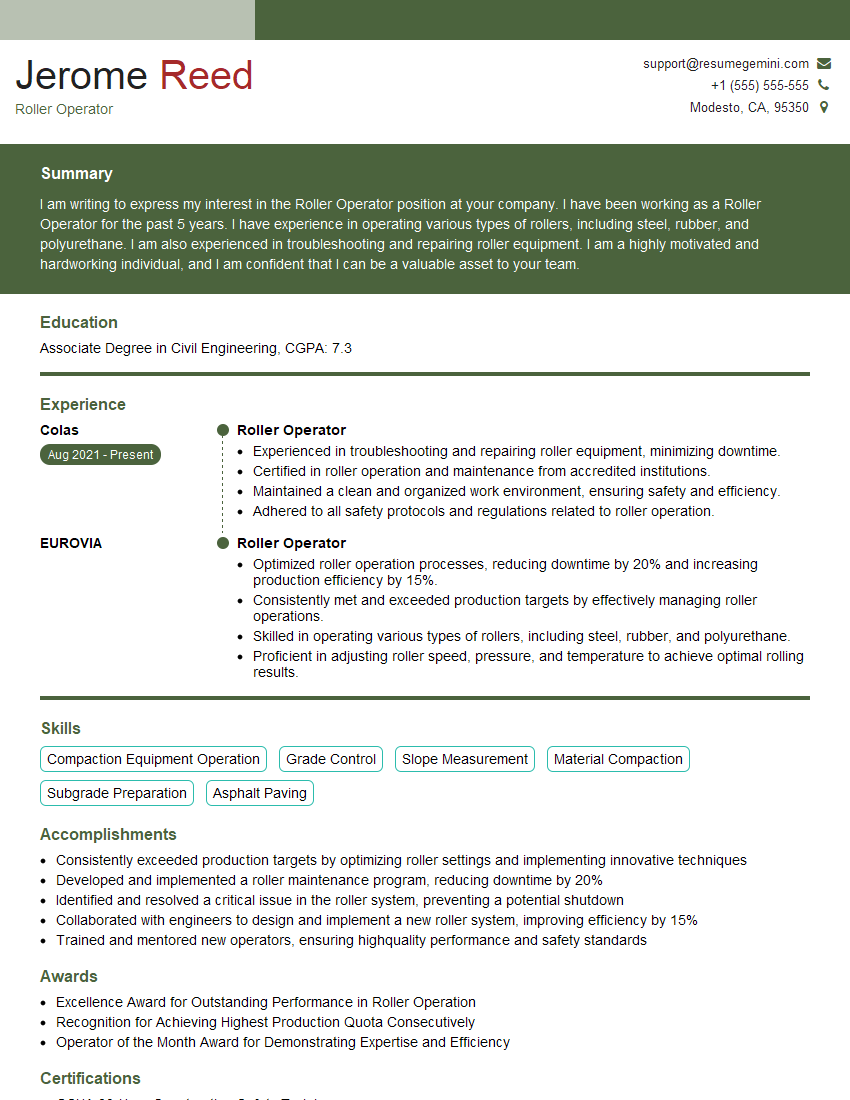
Acing the interview is crucial, but landing one requires a compelling resume that gets you noticed. Crafting a professional document that highlights your skills and experience is the first step toward interview success. ResumeGemini can help you build a standout resume that gets you called in for that dream job.






Essential Interview Questions For Roller Operator
1. Describe the key responsibilities of a Roller Operator?
As a Roller Operator, my key responsibilities include:
- Operating and maintaining rollers for asphalt paving and compaction.
- Ensuring proper compaction of asphalt surfaces to meet specifications.
- Setting up and leveling the roller before operation.
- Monitoring the compaction process and making adjustments as needed.
- Performing routine maintenance and repairs on the roller.
2. What are the different types of rollers used in asphalt paving?
Types of Rollers:
- Static Rollers: Used for initial compaction and provide a smooth surface finish.
- Vibratory Rollers: Generate vibrations to compact asphalt deeper into the surface.
- Pneumatic Rollers: Use tires to provide a smooth finish and reduce surface cracking.
Applications:
- Static rollers are suitable for thin asphalt layers and delicate surfaces.
- Vibratory rollers are ideal for medium to thick asphalt layers and require less passes.
- Pneumatic rollers are used for top layers and provide a non-marring finish.
3. How do you determine the correct rolling pattern to achieve optimal compaction?
The rolling pattern depends on the asphalt mix design, thickness, and desired compaction level. I consider the following factors:
- Asphalt Mix Design: Different mixes require specific compaction temperatures and pressures.
- Asphalt Layer Thickness: Thicker layers require more passes and different roller types.
- Desired Compaction Level: Determine the target density and adjust rolling parameters accordingly.
- Site Conditions: Consider weather conditions, subgrade stability, and obstacles.
4. What are the common problems encountered when operating a roller and how do you troubleshoot them?
Common problems and their troubleshooting steps:
- Engine Overheating: Check coolant levels, inspect for leaks, and ensure proper airflow.
- Hydraulic System Failure: Inspect hoses and fittings for leaks, check fluid levels, and test pressure.
- Roller Vibration Issues: Ensure proper roller balance, check bearings for wear, and inspect hydraulic circuits.
- Asphalt Sticking to the Roller: Clean the roller surface with water or release agents, apply anti-stick coatings, and adjust compaction settings.
5. What safety precautions do you observe when operating a roller?
Safety is paramount, and I adhere to the following precautions:
- Wear appropriate PPE (hard hat, gloves, safety glasses).
- Conduct pre-operation inspections and ensure the roller is in good working order.
- Maintain a safe distance from workers and obstacles.
- Use hand signals and communicate effectively with other crew members.
- Be aware of surroundings and potential hazards.
6. How do you ensure that the asphalt surface meets the required compaction specifications?
To ensure proper compaction, I:
- Use a nuclear density gauge or other testing equipment to measure compaction levels.
- Monitor the compaction process visually and make adjustments to rolling patterns and settings.
- Compare test results to specifications and make necessary modifications.
- Document compaction data and maintain quality control records.
7. Describe your experience in operating different types of rollers.
Throughout my career, I have operated various roller types, including:
- Static Steel Wheel Rollers
- Vibratory Drum Rollers
- Pneumatic Tire Rollers
- Combination Rollers
I am proficient in setting up, operating, and maintaining these rollers for a wide range of asphalt paving projects.
8. How do you handle working in challenging weather conditions, such as extreme heat or cold?
In extreme heat, I:
- Stay hydrated by drinking plenty of water.
- Take breaks in shaded areas and avoid prolonged sun exposure.
- Adjust operating hours to cooler times of the day.
In extreme cold, I:
- Wear appropriate warm clothing and footwear.
- Use heaters to maintain a comfortable working environment.
- Start the roller and warm up the engine before operation.
9. How do you maintain a positive and collaborative work environment with other crew members?
I believe in teamwork and open communication. I:
- Communicate effectively with crew members and supervisors.
- Share knowledge and expertise to assist others.
- Maintain a positive and respectful attitude.
- Offer support and assistance when needed.
10. Why do you think you are the best candidate for this Roller Operator position?
With my extensive experience in asphalt paving and roller operation, I am confident that I possess the skills and knowledge necessary to excel in this role. I am:
- Highly proficient in operating and maintaining different types of rollers.
- Dedicated to achieving optimal compaction and meeting project specifications.
- Experienced in working in various weather conditions and challenging environments.
- Committed to safety and maintaining a positive work environment.
- Eager to contribute my expertise to your team.
Interviewers often ask about specific skills and experiences. With ResumeGemini‘s customizable templates, you can tailor your resume to showcase the skills most relevant to the position, making a powerful first impression. Also check out Resume Template specially tailored for Roller Operator.
Career Expert Tips:
- Ace those interviews! Prepare effectively by reviewing the Top 50 Most Common Interview Questions on ResumeGemini.
- Navigate your job search with confidence! Explore a wide range of Career Tips on ResumeGemini. Learn about common challenges and recommendations to overcome them.
- Craft the perfect resume! Master the Art of Resume Writing with ResumeGemini’s guide. Showcase your unique qualifications and achievements effectively.
- Great Savings With New Year Deals and Discounts! In 2025, boost your job search and build your dream resume with ResumeGemini’s ATS optimized templates.
Researching the company and tailoring your answers is essential. Once you have a clear understanding of the Roller Operator‘s requirements, you can use ResumeGemini to adjust your resume to perfectly match the job description.
Key Job Responsibilities
Roller Operators play a crucial role in the construction and maintenance of roads, highways, and other paved surfaces. Their primary responsibility is to operate various types of rollers to compact and smooth asphalt, soil, and gravel.
1. Roller Operation
Proficiently operate different types of rollers, including single-drum, double-drum, and tandem rollers.
- Adjust roller settings according to material types and compaction requirements.
- Guide the roller precisely to achieve desired compaction levels and surface smoothness.
2. Site Preparation and Material Placement
Assist with site preparation activities, such as spreading and leveling materials before compaction.
- Inspect materials to ensure they meet specifications.
- Handle materials using hand tools and equipment as needed.
3. Quality Control and Inspection
Continuously monitor compaction progress and adjust roller operations accordingly.
- Use compaction testing equipment to ensure that the desired density is achieved.
- Identify and report any irregularities or defects in the compacted surface.
4. Equipment Maintenance and Repair
Perform basic maintenance and troubleshooting on rollers and other equipment.
- Inspect and lubricate rollers regularly.
- Identify potential mechanical issues and report them for timely repairs.
Interview Tips
Preparing thoroughly for a Roller Operator interview can significantly enhance your chances of success. Here are some tips and hacks to help you ace the interview:
1. Research the Company and Position
Familiarize yourself with the company’s history, values, and the specific requirements of the Roller Operator position. This will demonstrate your interest and enthusiasm for the role.
2. Highlight Relevant Experience and Skills
Emphasize your hands-on experience operating rollers and your knowledge of compaction techniques. Quantify your accomplishments whenever possible, using specific examples to showcase your abilities.
3. Practice Common Interview Questions
Prepare for common interview questions related to your experience, skills, and motivation. Practice answering these questions concisely and effectively.
Example Outline:
- Tell us about your experience operating different types of rollers.
- Describe a time when you had to troubleshoot and resolve a mechanical issue with a roller.
- How do you ensure that you achieve the desired compaction levels and surface smoothness?
4. Prepare Questions for the Interviewer
Asking thoughtful questions at the end of the interview shows your engagement and interest in the position. Prepare questions about the company’s projects, safety protocols, or opportunities for growth.
5. Dress Professionally and Arrive on Time
First impressions matter. Dress appropriately and arrive on time for the interview. Maintain a professional demeanor throughout the process.
Next Step:
Now that you’re armed with interview-winning answers and a deeper understanding of the Roller Operator role, it’s time to take action! Does your resume accurately reflect your skills and experience for this position? If not, head over to ResumeGemini. Here, you’ll find all the tools and tips to craft a resume that gets noticed. Don’t let a weak resume hold you back from landing your dream job. Polish your resume, hit the “Build Your Resume” button, and watch your career take off! Remember, preparation is key, and ResumeGemini is your partner in interview success.